Category Archives: Tutorials

Autumn Dusk Kaleidoscope Pillow Tutorial

Today I’m going to share a quick tutorial on how to make your very own Kaleidoscope pillow using the Sizzix BigZ L Kaleidoscope die and six fat quarters (I used my Autumn Dusk blogger bundle from Fiddlehead Artisan Supply). For those of you who do not have a Sizzix die cutting machine, I will also include a printable foundation paper piecing option, so read on!
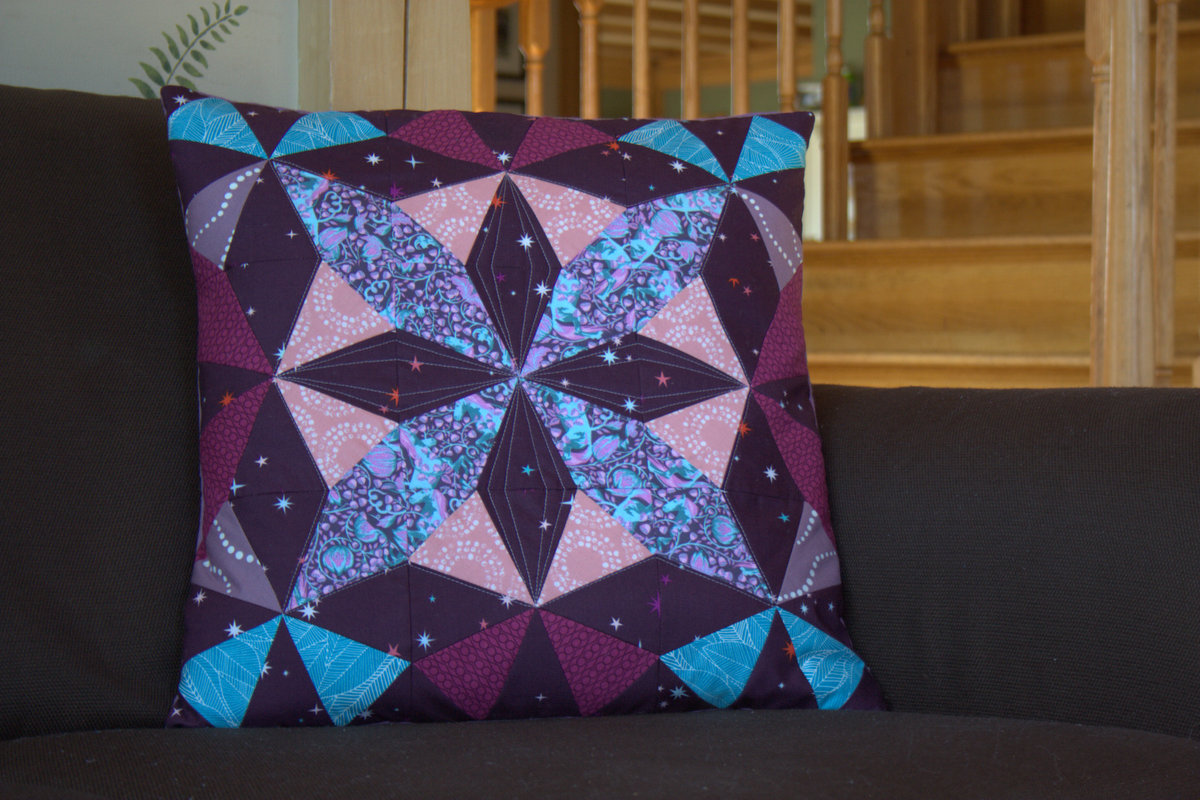
kaleidoscope pillow tutorialA month or so ago, I selected a blogger bundle for my local quilt shop Fiddlehead Artisan Supply, and called it Autumn Dusk. The colors made me think of the calm at dusk, and I thought it would be a perfect palette for a pillow. Our couch doesn’t have a single handmade pillow, and that needed to change. In thinking about pattern ideas, I came across my Kaleidoscope die from Sizzix and decided to play. Do you have ANY idea how many different patterns you can make with the Kaleidoscope pattern!? It boggles my mind. Peek at the results from a quick “kaleidoscope quilt” google search HERE to give you an idea of the potential.
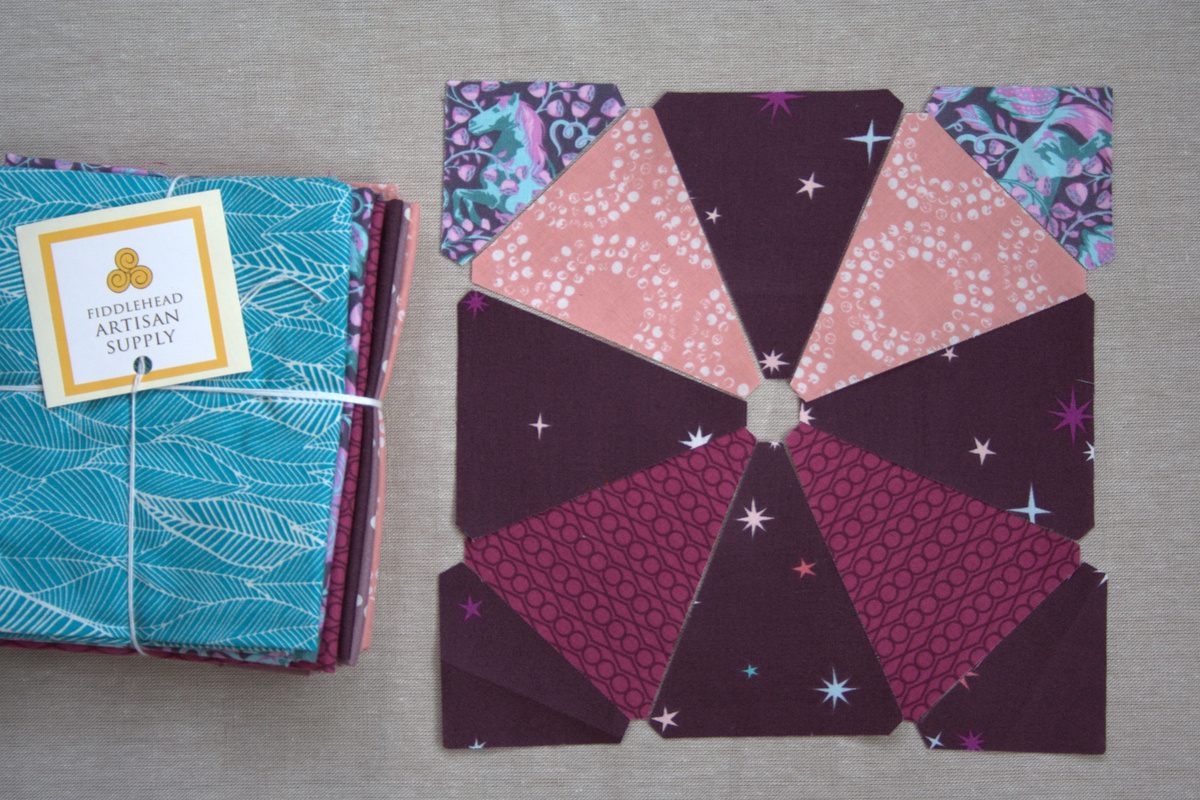
fiddlehead artisan supply autumn dusk kaleidoscope pillow sizzix tutorialTrust me when I say the most difficult part is deciding on fabrics and fabric placement.
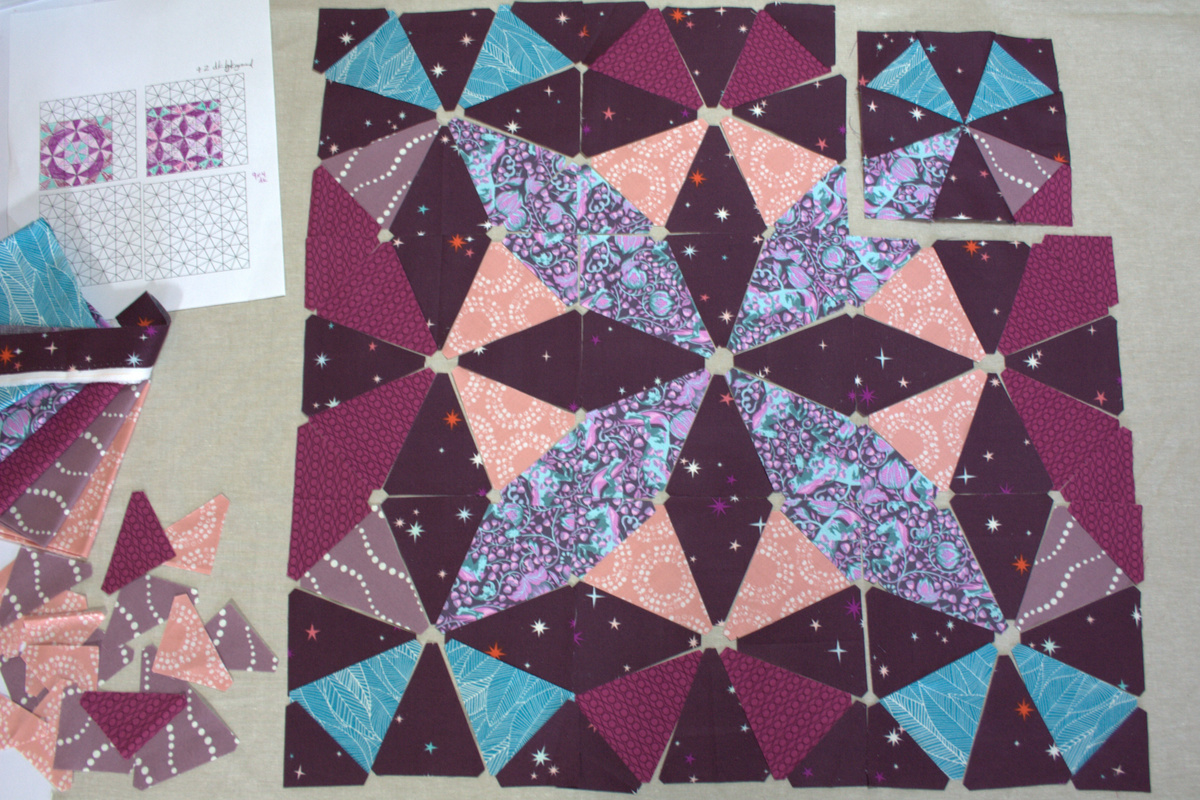
autumn dusk kaleidoscope pillow tutorial sizzixThis tutorial will include cutting instructions for the same arrangement of nine (9) blocks made from six (6) fat quarters of fabric as I used, as well as assembly and finishing instructions for an envelope-backed 18″ square pillow. If you want to make an identical pillow, you can buy the Autumn Dusk bundle from Fiddlehead HERE, or enter to win a bundle by commenting on yesterday’s post HERE. I have included some affiliate links in this post so that if you click through, I will get a small commission. I only share products I love and use.

Let’s get started!
TUTORIAL- Kaleidoscope PillowMaterials Needed:

If you are creating your own kaleidoscope version, print out this printable provided by Debby at Quilter by Design and start playing with color combinations. Note that you can emphasize a windmill shape, a star shape, or a circular movement depending on where you position your colors and values of fabric. Once your design and fabric choices have been made, it’s time to cut!
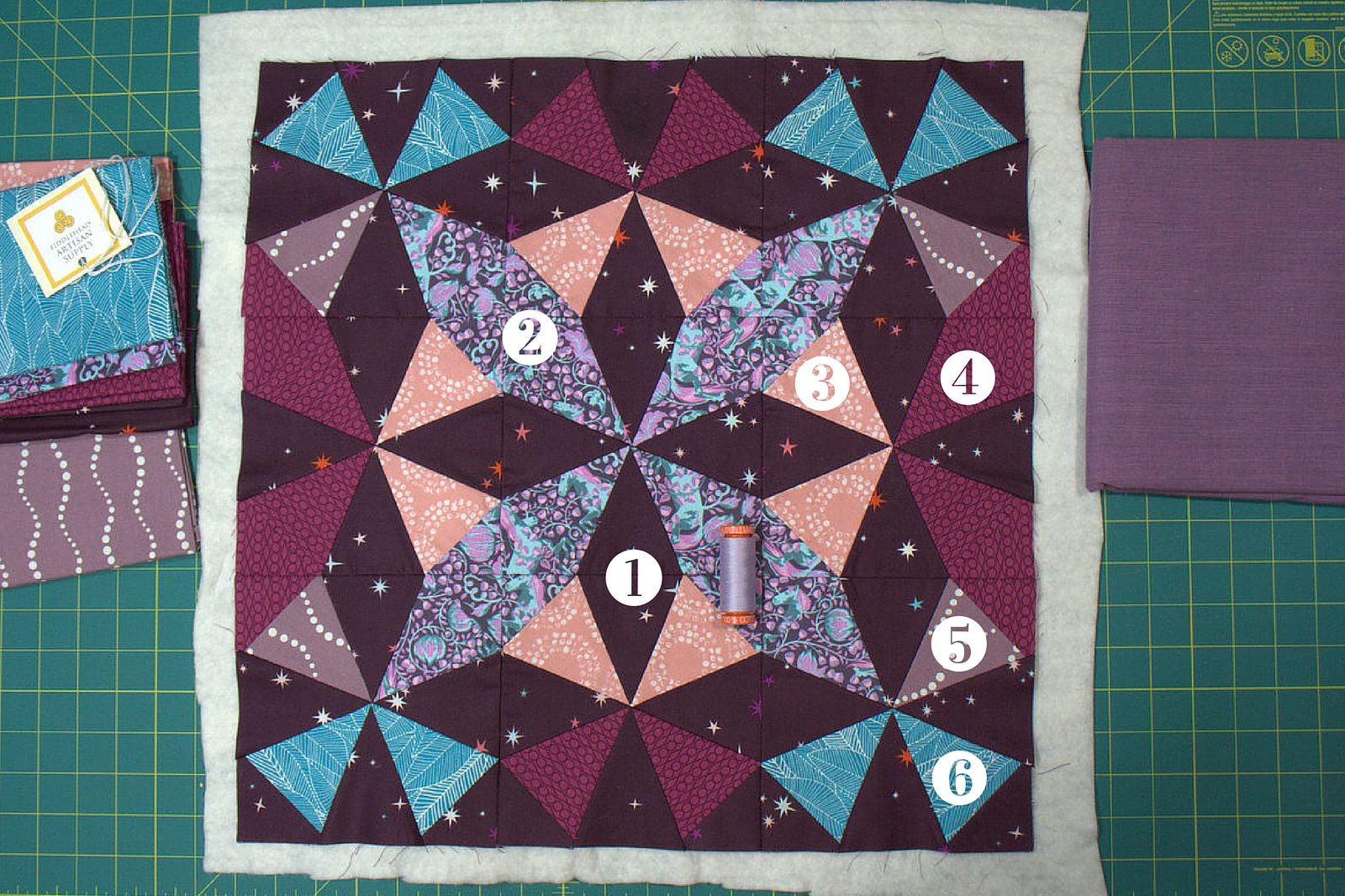
Kaleidoscope fabric numbersFor this pillow, cut the following (refer to the photo above for fabric numbers):

Fabric 1: 36 wedges and 12 corners
Fabric 2: 8 wedges and 16 corners
Fabric 3: 8 wedges
Fabric 4: 8 wedges and 8 corners
Fabric 5: 4 wedges
Fabric 6: 8 wedges
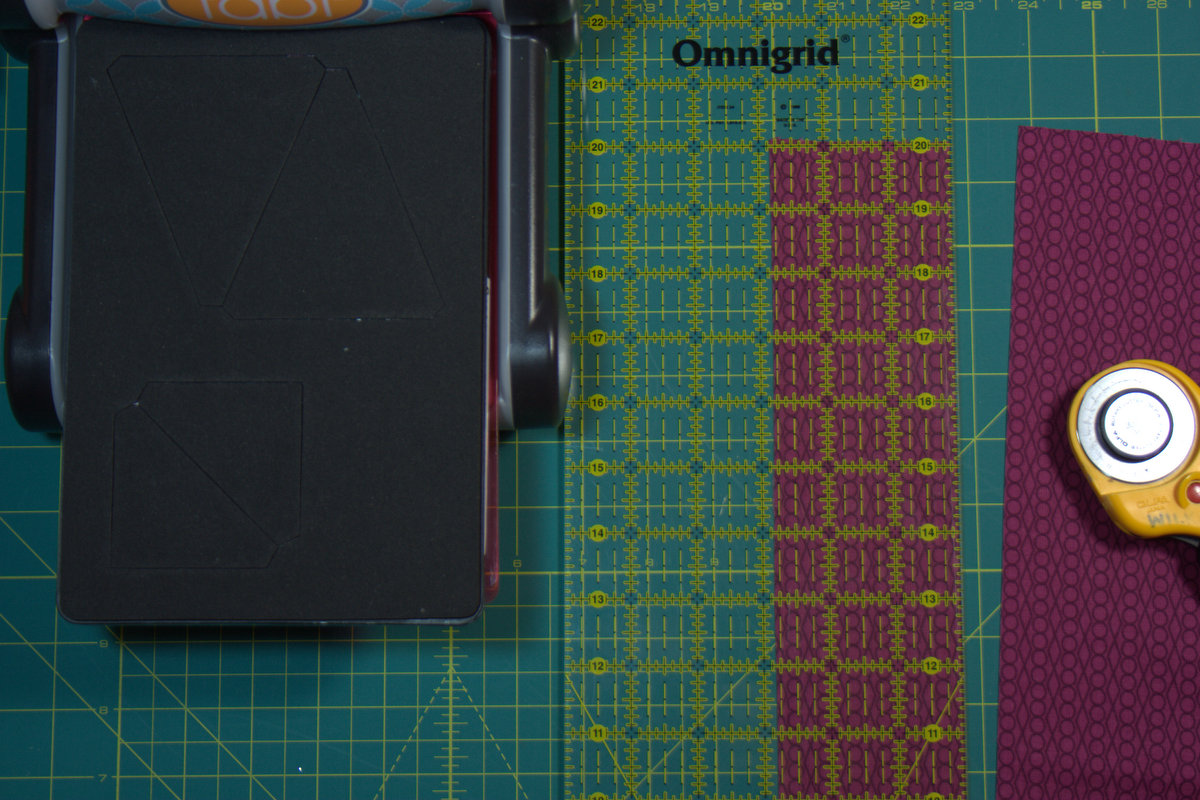
sizzix kaleidoscope pillow tutorialFor quick and easy cutting with your Sizzix fabi, cut fabric strips 4″ wide for the wedges and 2 5/8″ wide for the corners.
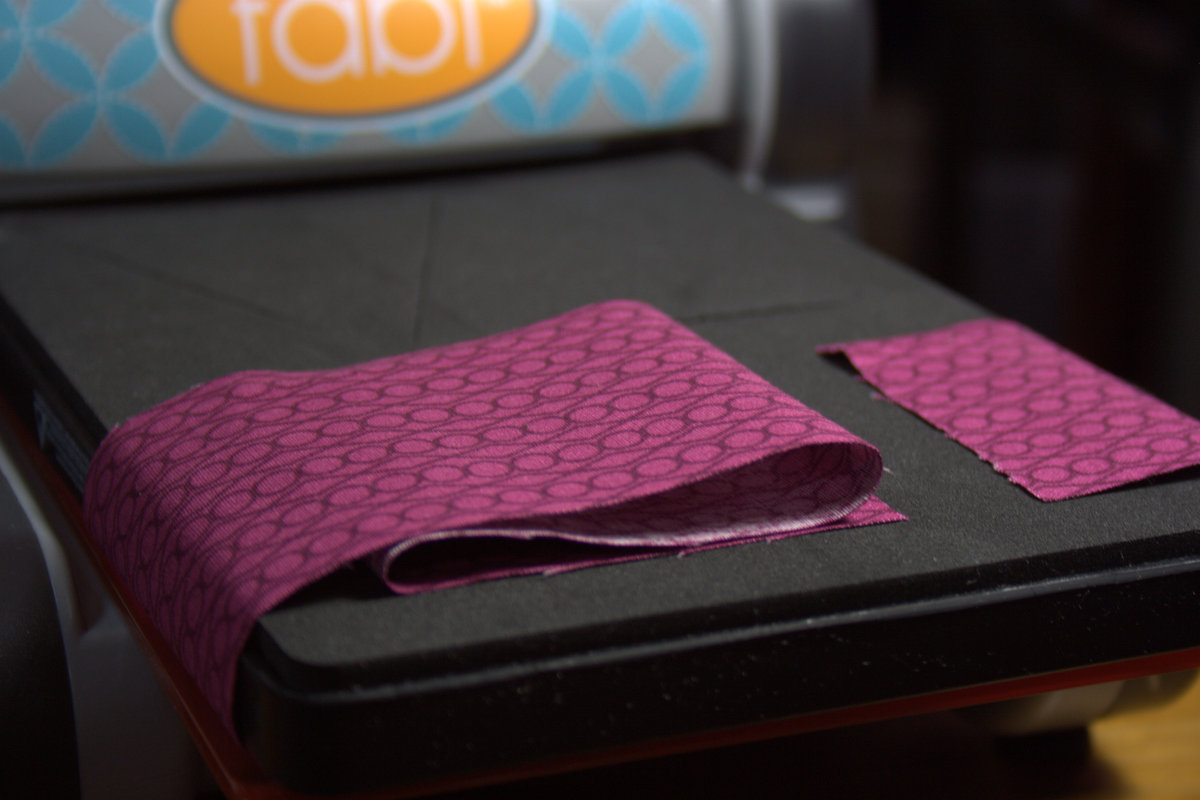
sizzix kaleidoscope tutorialThen you can accordion-fold the fabric over the die and cut 16 of each at a time, since the die has 2 corner and 2 wedge blades and you can layer fabric 8 layers thick. That’s 32 pieces cut per pass, if you plan your fabric cutting wisely! (Note that the image above is to demonstrate the accordion-fold, not the uber efficient cutting!)

autumn dusk kaleidoscope pillow tutorial sizzixOnce your pieces are all cut, lay them out in your desired pattern. Tip: Take a photo with your phone or camera once you’ve decided on a layout. Having this photo handy during piecing will make getting everything in the proper place the first time so much easier!
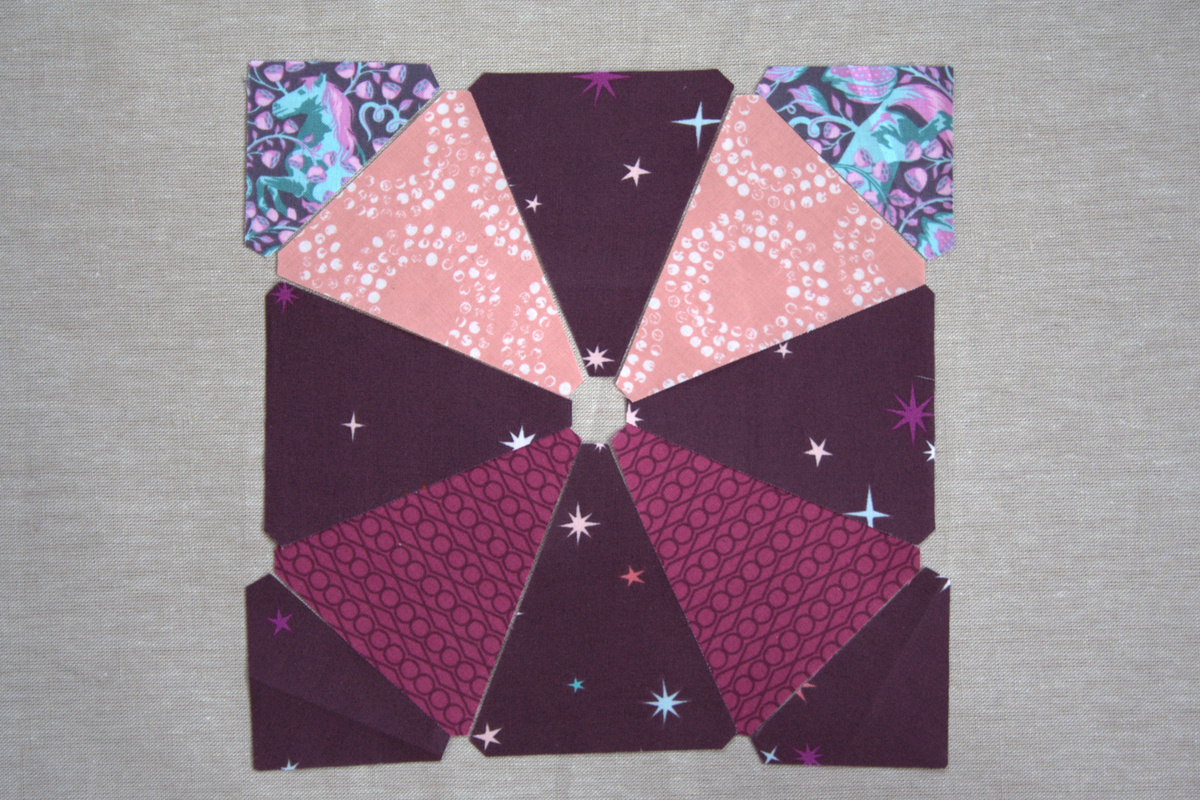
sizzix kaleidoscope tutorialNow let’s sew the blocks together!

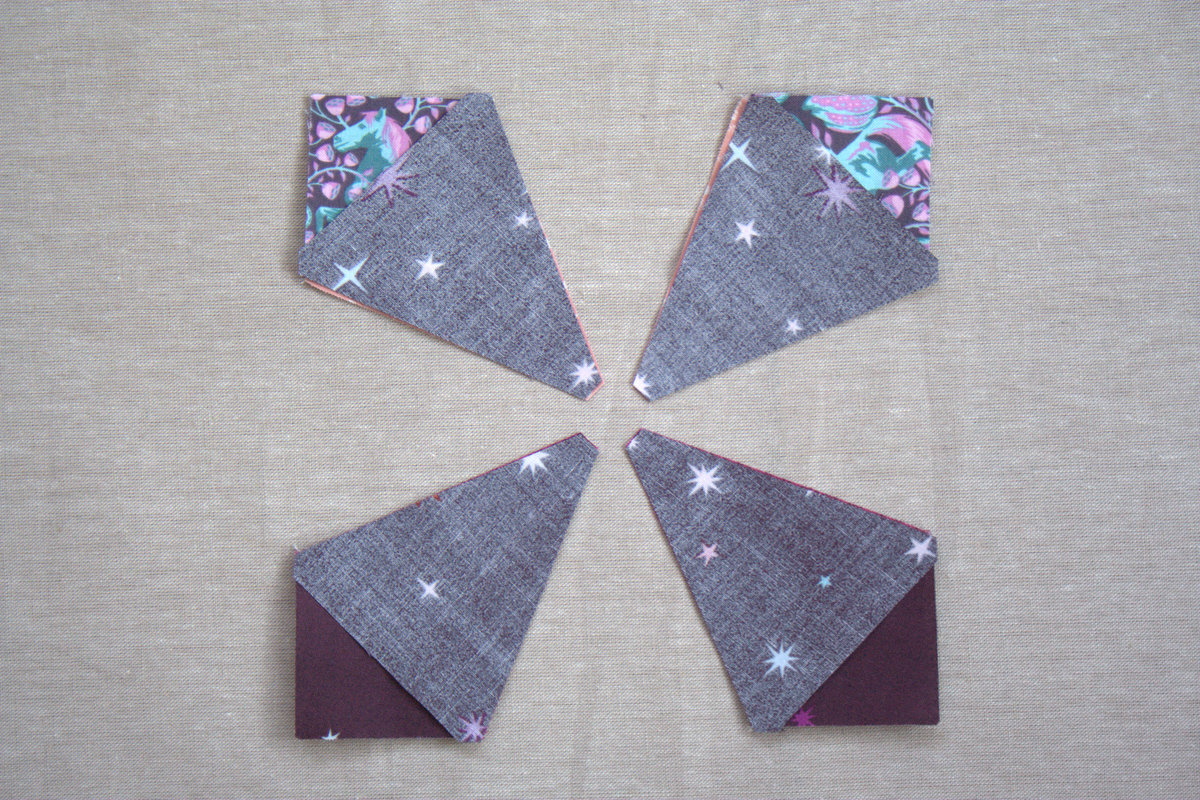
sizzix kaleidoscope tutorialFirst, sew the corners onto the appropriate wedge blocks.

Kaleidoscope Lining up notches from sizzixThe notches cut by the Sizzix make accurate piecing easy. Center the corner piece right sides together with the bottom edge of the wedge piece as shown in the inset photo above. Then use the little corners sticking out from the bottom edges of the wedge as a sewing guide. Set seams and press open.
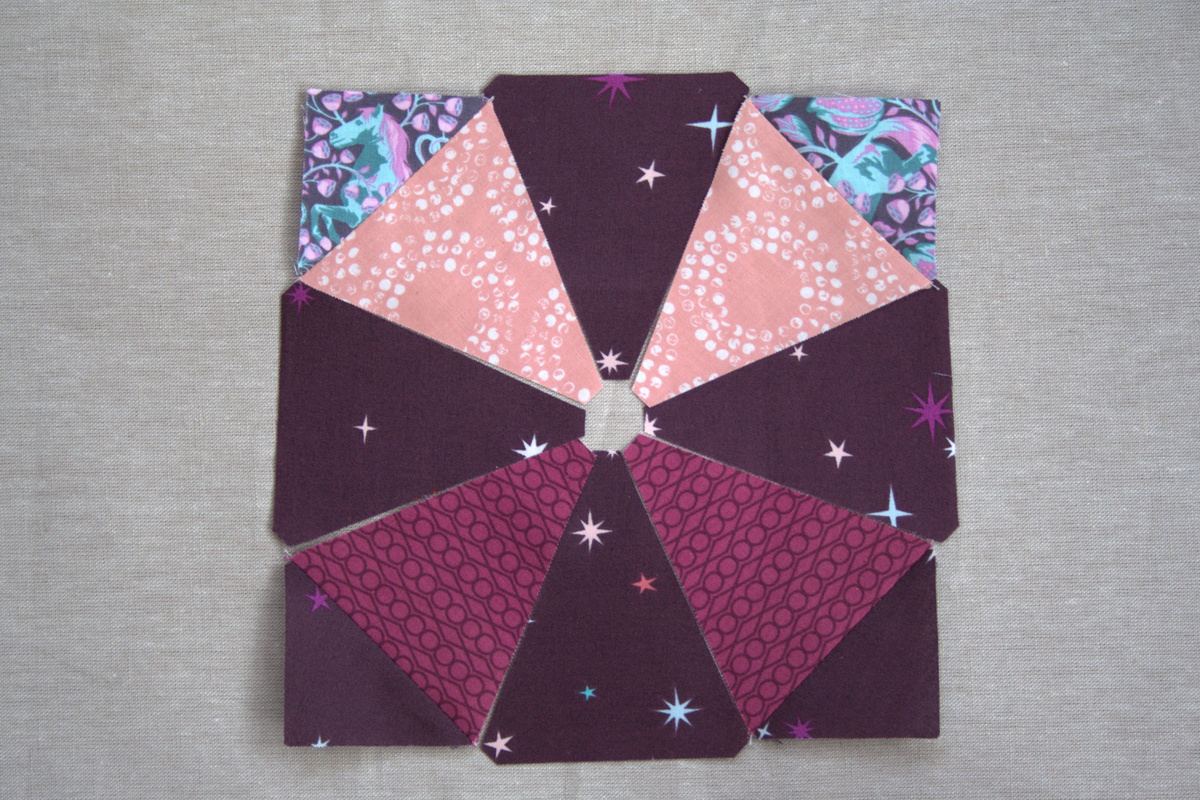
sizzix kaleidoscope tutorialYou will then have this.

sizzix kaleidoscope tutorialNext, pair each cornered wedge with a background wedge. Be sure to sew along the same side edge for each pair, and begin sewing from the corner edge and not the center point. Set seams, press open. **Note that assembling this block is a perfect time to practice pressing and NOT ironing. Even a little wiggle might stretch sections enough to result in a ripple when the final block is assembled. Press: up, down, up. NOT ironing. Got it!**
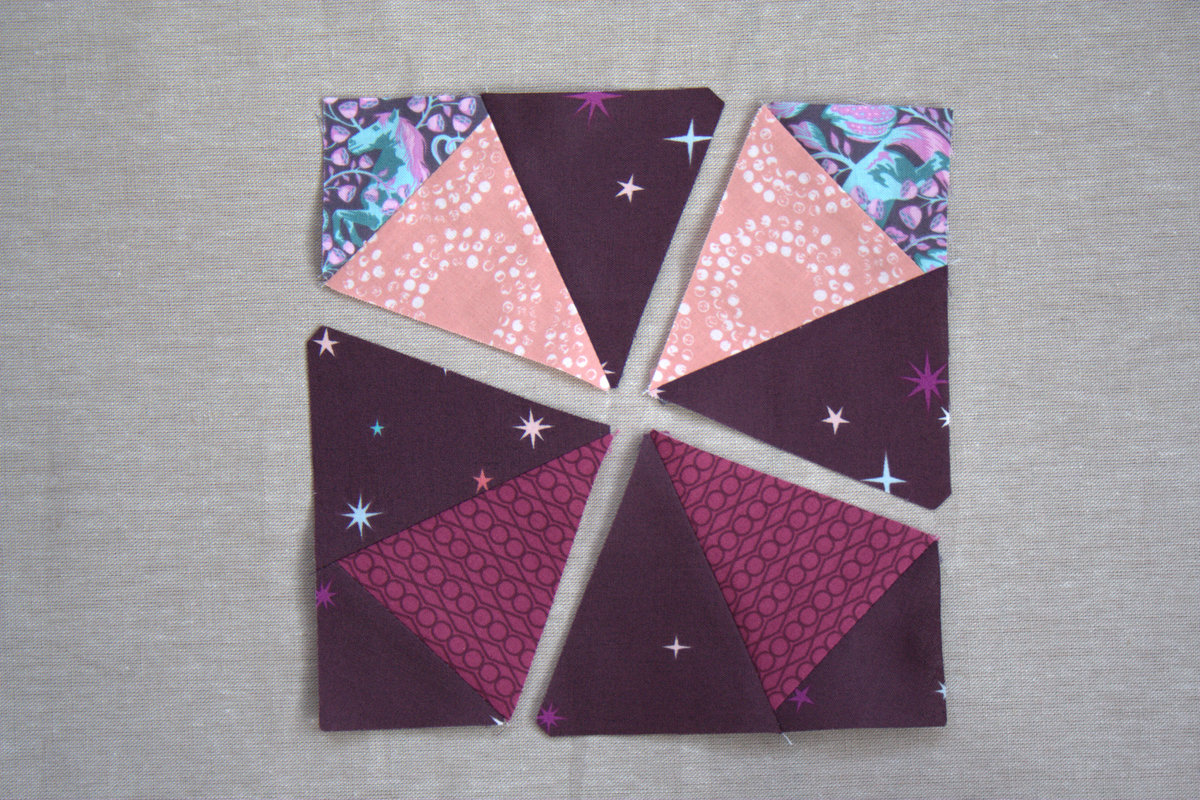
sizzix kaleidoscope tutorialDouble check your arrangement with the photo you took before sewing pairs together.
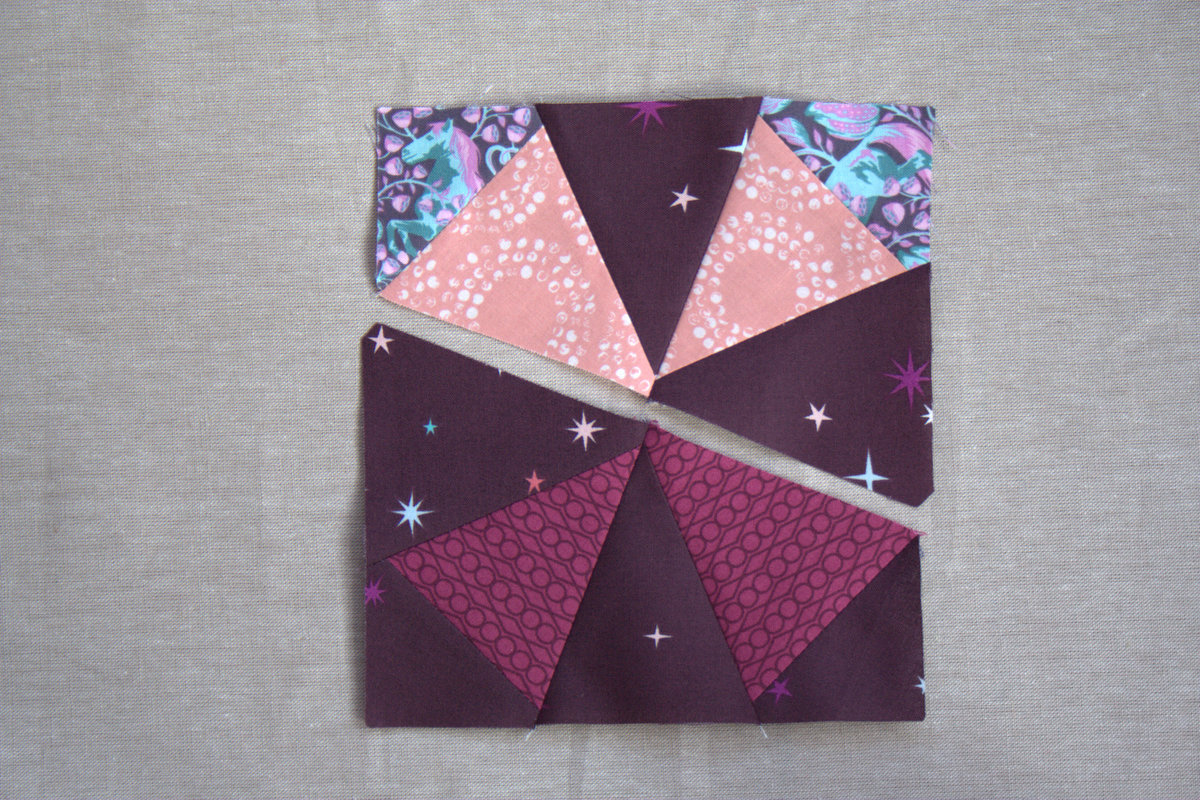
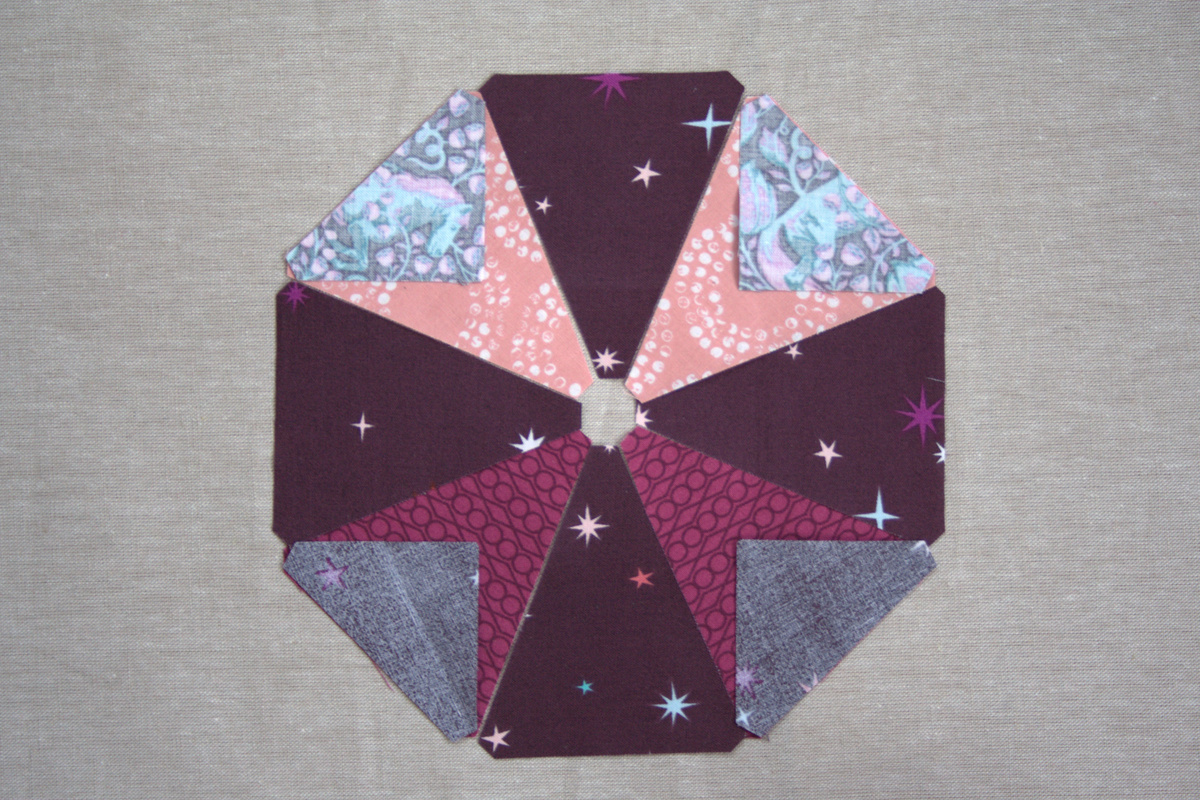
sizzix kaleidoscope tutorialYou will now have two halves. Aligning the notched corners and pinning just after the center seam match, sew the halves together. Set seams and press open.

sizzix kaleidoscope tutorialTa-da! You have a kaleidoscope block. Make 9 total.
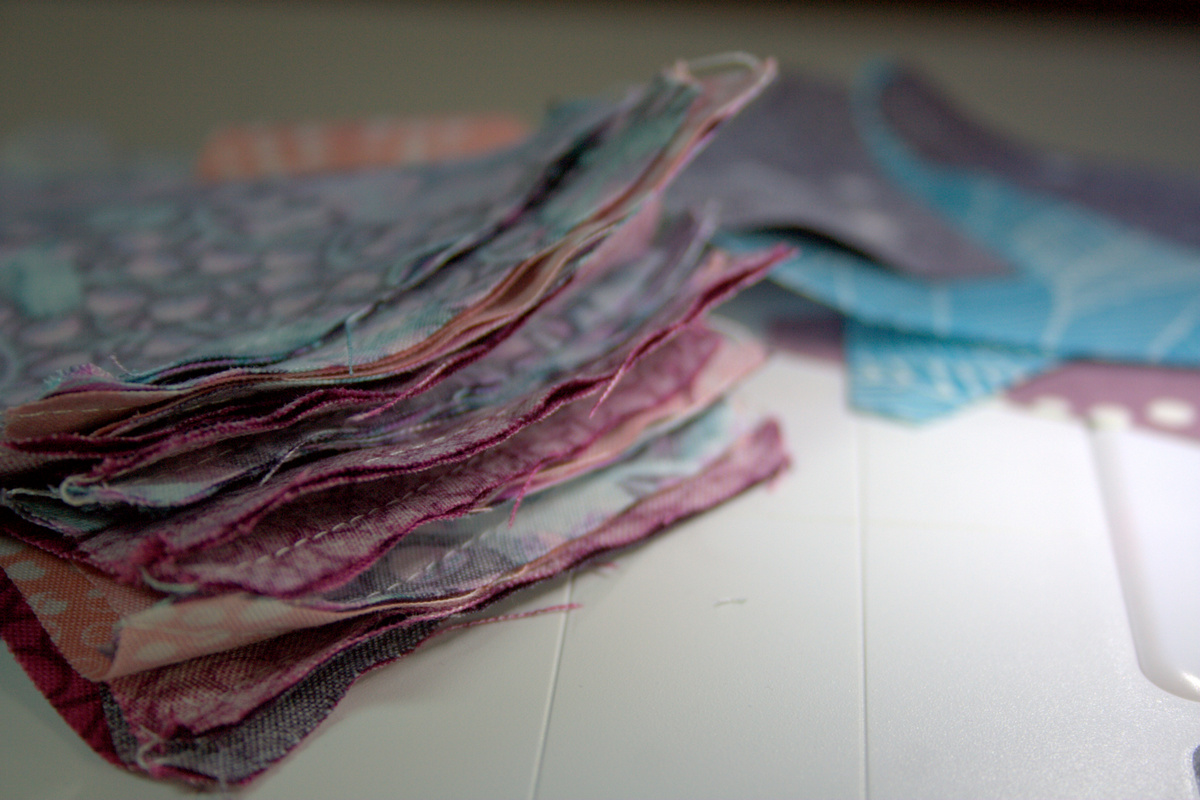
kaleidoscope block chain piecingFeel free to chain piece these blocks, but have your layout photo handy. Lay out your pieces and confirm arrangement before sewing each step.

joining rows of kaleidoscope blocks tutorialArrange your blocks as desired. Double check that all fabrics are in the proper place.

joining rows of kaleidoscope blocks tutorialThen sew the blocks in each row together. Finally, sew the three rows together to complete the pillow top.
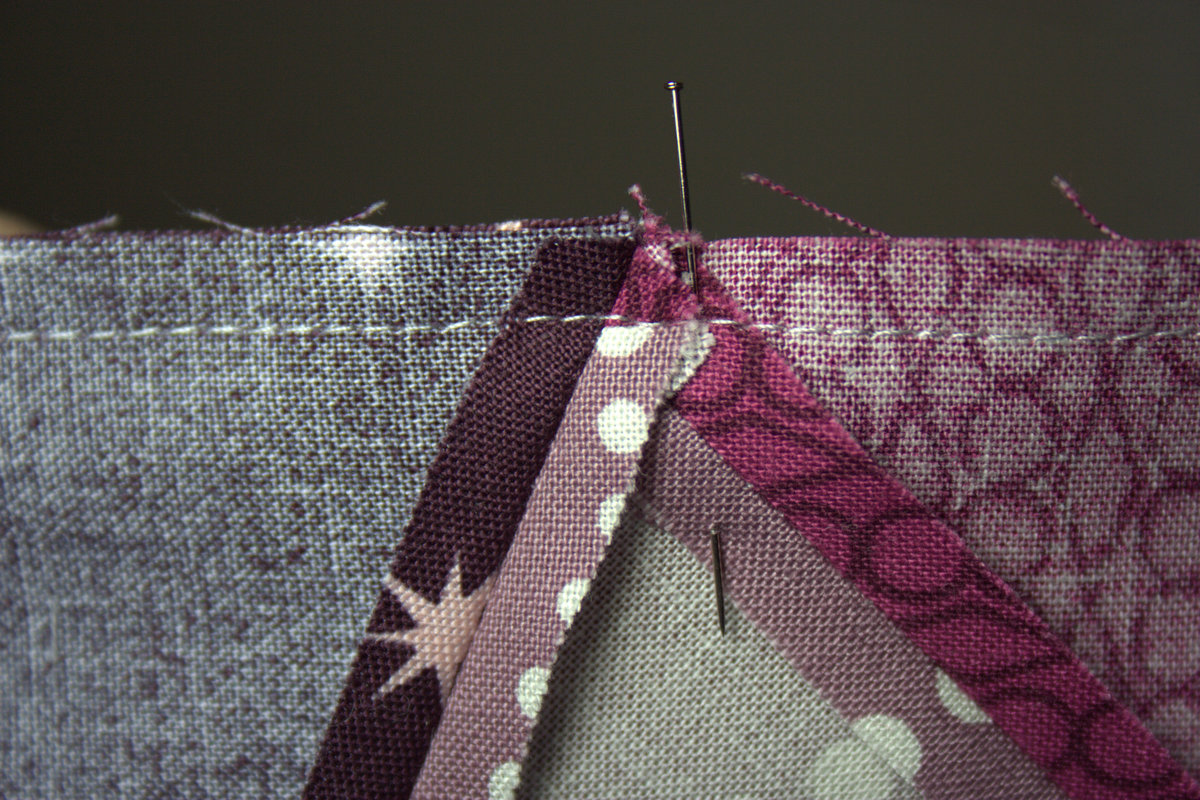
joining rows of kaleidoscope blocks tutorialI love how the notches cut by the Sizzix help with every step of the piecing process–from piecing to matching points in the final assembly. When joining your rows, you can use the seam line as a guide to make sure you don’t lose any points.
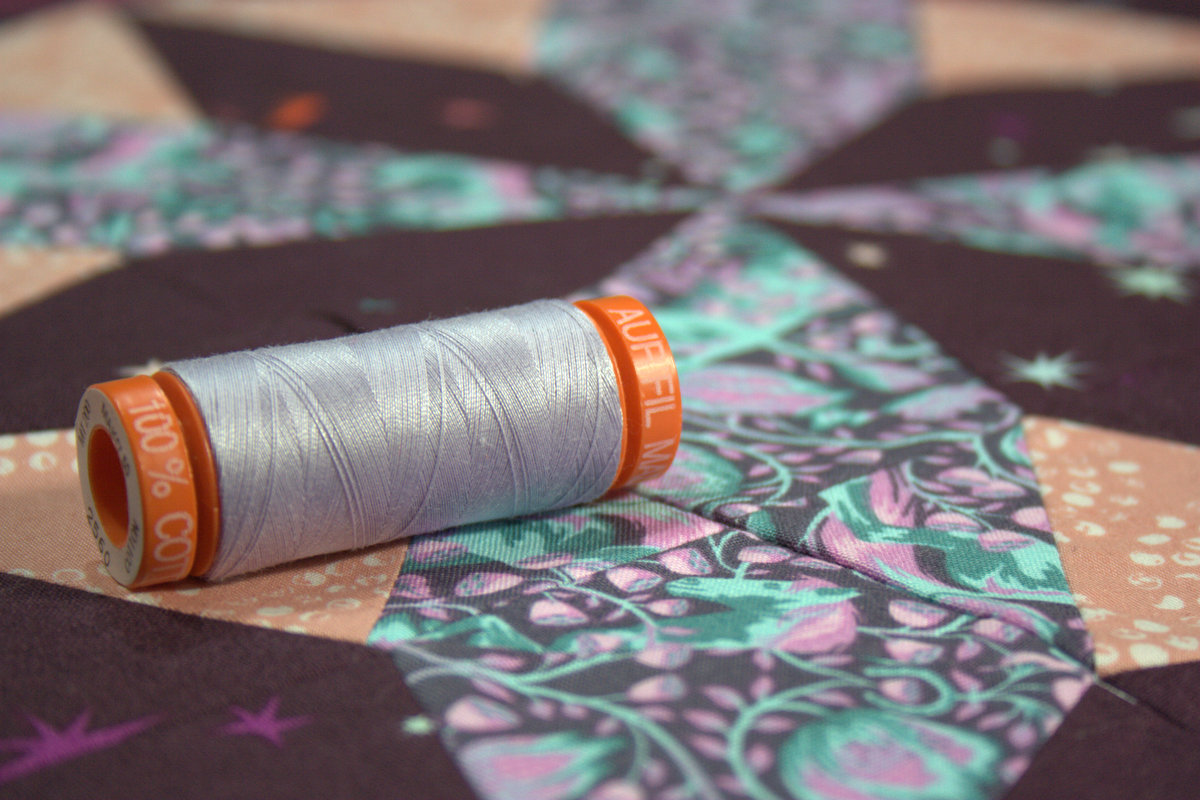
kaleidoscope tutorialOnce your kaleidoscope pillow top is complete, baste it to a 20″x20″ piece of batting (or fuse to fusible fleece), find some coordinating thread and quilt as desired. I used Aurifil 50wt 2560-Iris since it was a nice gentle purple and matched my light colors while providing great contrast with the dark background.

Once your pillow top is quilted, square it up with a rotary cutter, being sure to leave a 1/4″ seam allowance from the outermost points.
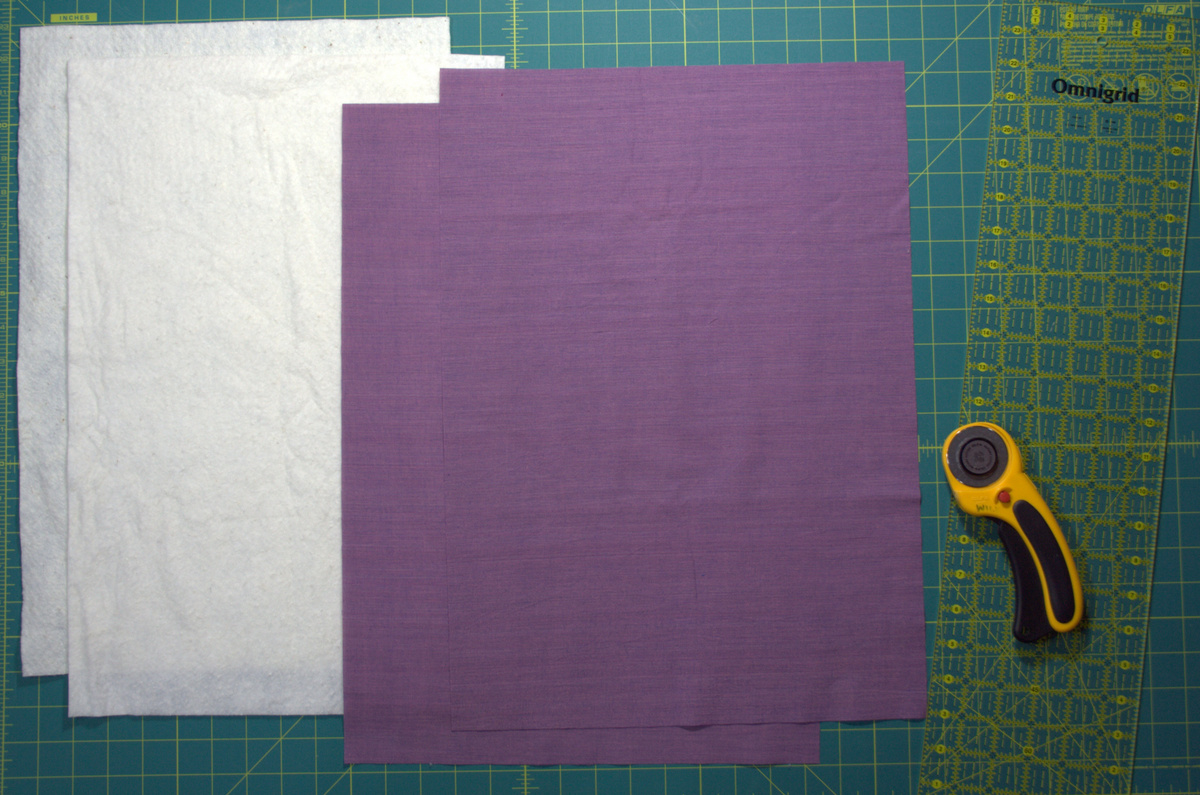
pillow envelope backing tutorialNext, we’ll make the pillow’s back panels. Cut two (2) pieces of 13 1/2″x19″ background fabric (my finished pillow top actually measured closer to 19″ than 18 1/2″ square. Adjust accordingly based on the measurement of your pillow) and two (2) pieces of 12 3/4″x19″ batting.

pillow envelope backing tutorialLayer the backing panels wrong sides facing the batting, and lining up three edges. The backing fabric should extend about 3/4″ on one side.
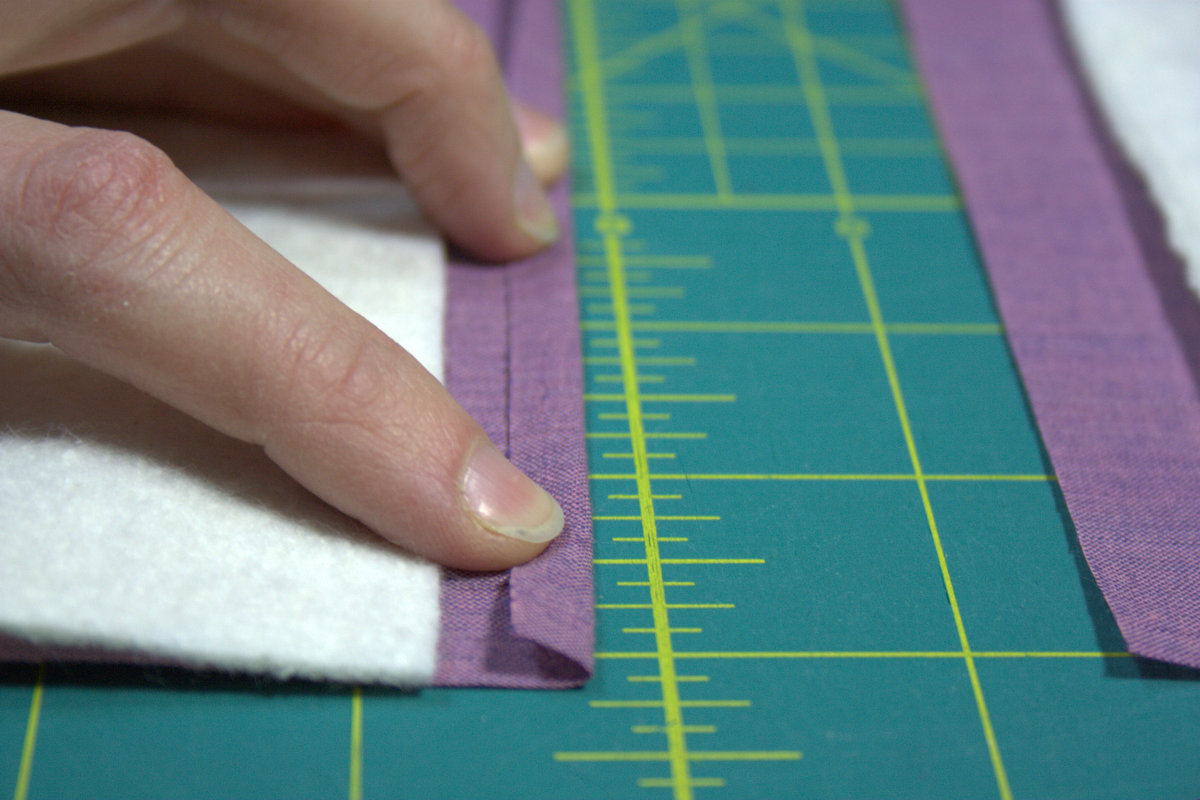
pillow envelope backing tutorialFold the extended edge in 1/4″. Press with a hot iron.
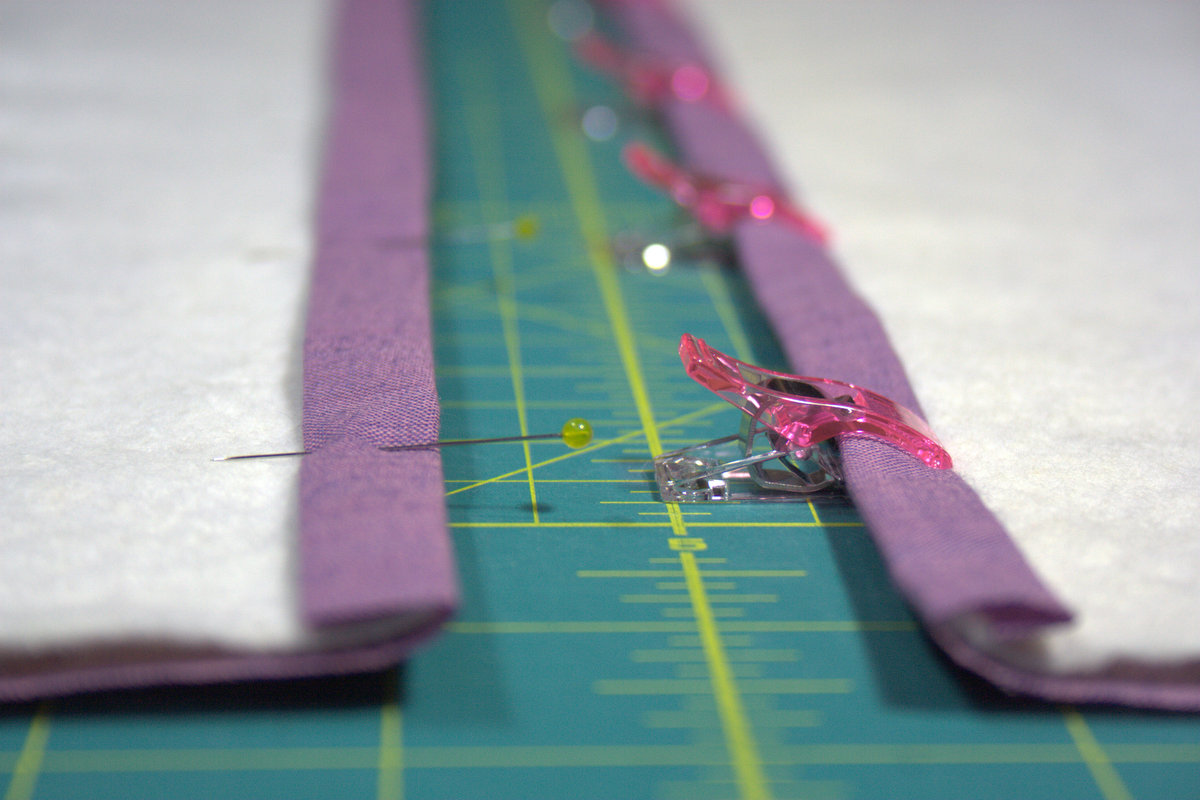
pillow envelope backing tutorialFold over again, flush with the edge of the batting (approx 1/2″) and press. Pin or clip in place.
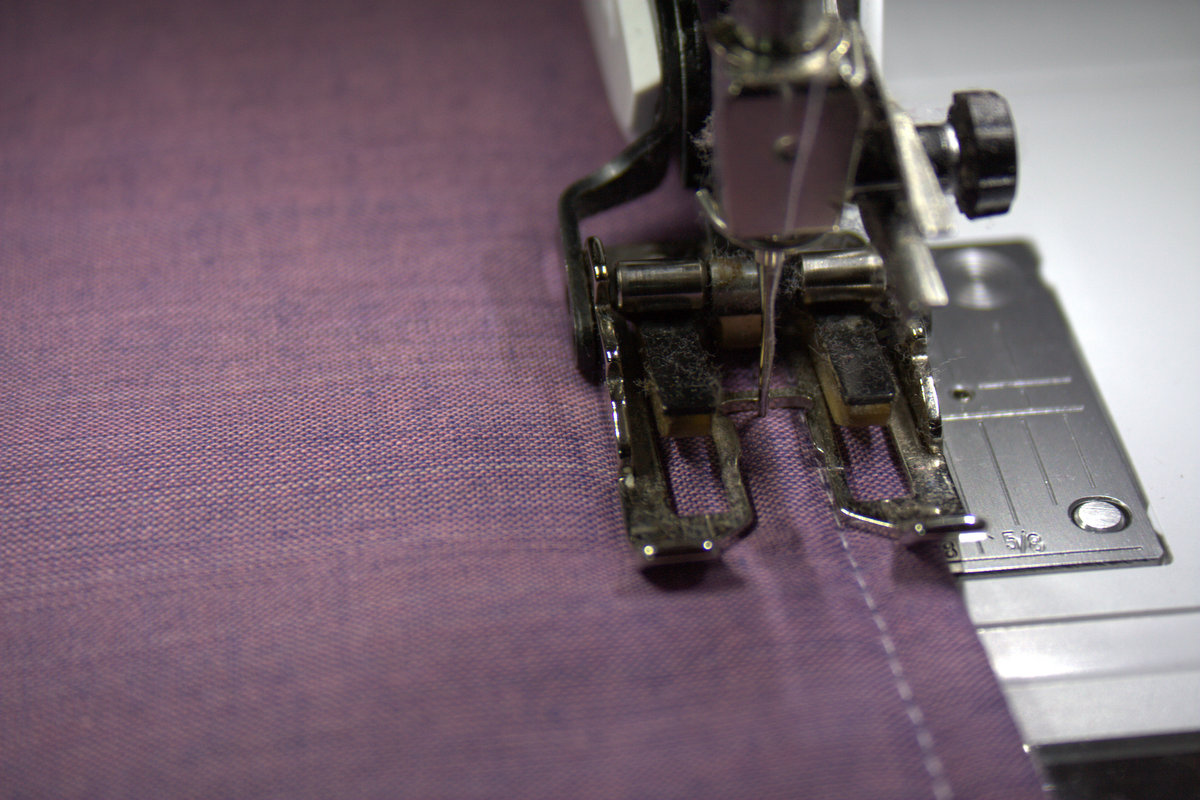
pillow envelope backing tutorialPin along the edges of the backing fabric and batting to help keep them together if you want to, although I found that they stuck together just fine without any pins. Alternately, you could fuse on fusible fleece instead of batting, although this is a great project for using up batting scraps. With the backing fabric right side facing up, top stitch 1/4″ from the folded edge. Sew again 1/8″ from the first stitches. Repeat for the other panel.
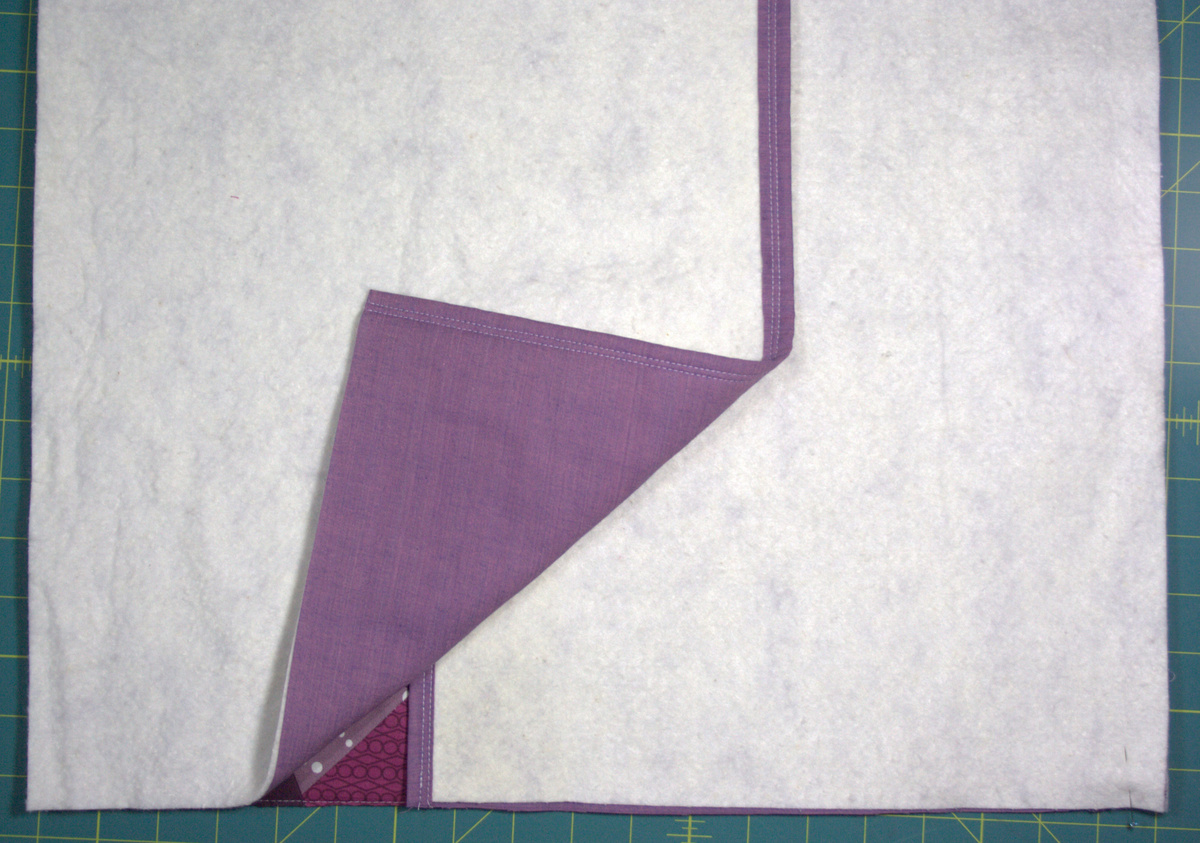
pillow envelope backing tutorialNow it’s time to sew the pillow front to the back panels.  Lay the quilted pillow top right side facing up, and place the back panels right sides facing down, with the raw edges aligning with the raw edges of the pillow top and the sewn hem edges toward the center of the pillow.
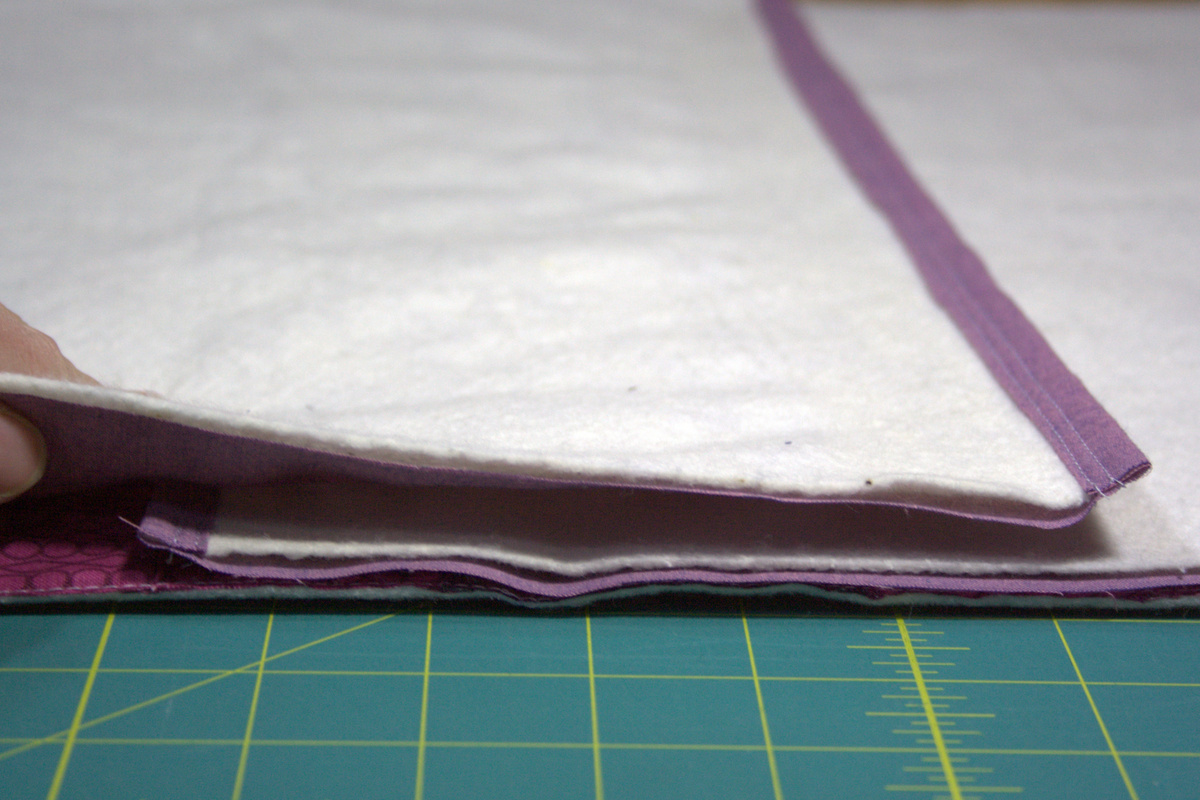
pillow envelope backing tutorialThere should be about 6″ of overlap.

Pin securely and sew around the entire edge of the pillow. Be sure to reinforce where the envelope edges meet, sewing back and forth multiple times, since they will receive the bulk of the wear and tear as the pillow form is put in and taken out.

Clip the corners, and turn right side out through the envelope opening, carefully pushing out corners with a blunt chopstick. Insert an 18″ pillow form, or one of your old couch cushions, and enjoy!

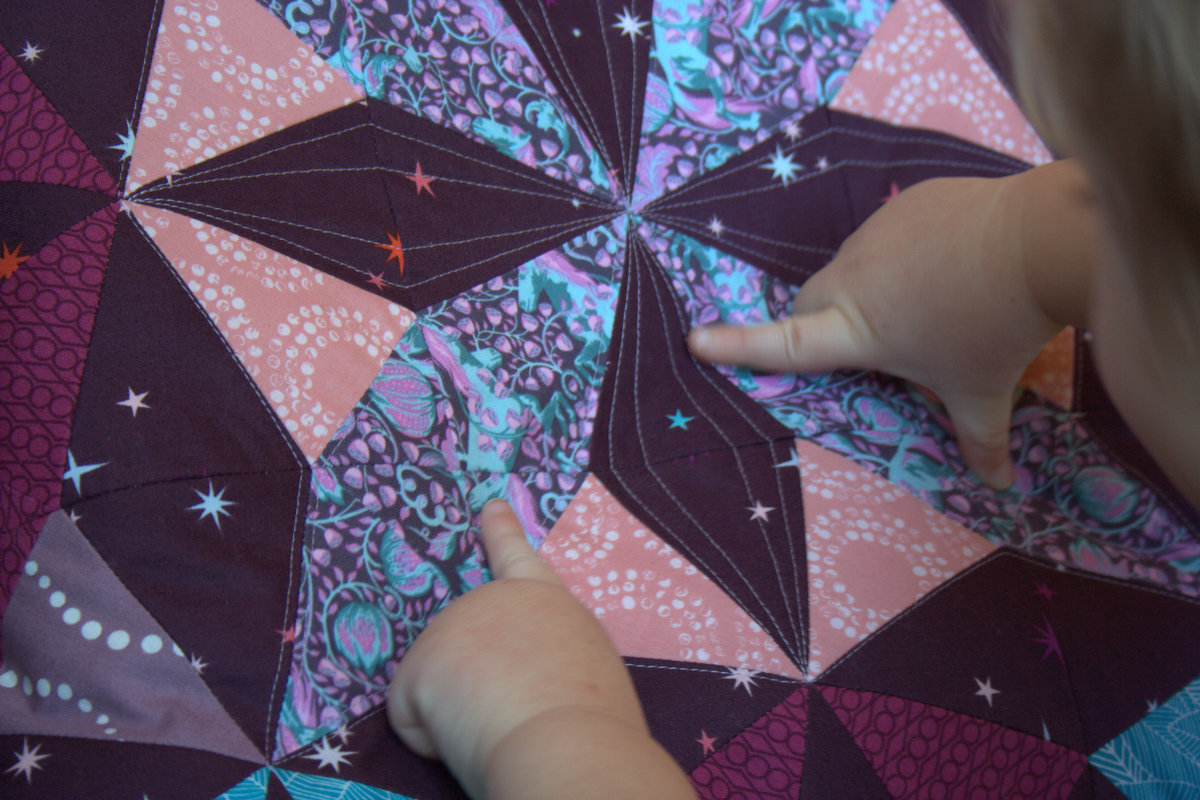
kaleidoscope pillow tutorialtula pink poniesMax quickly discovered that there were ponies on the pillow, so he had to run and get his best friend, aptly named Pony.
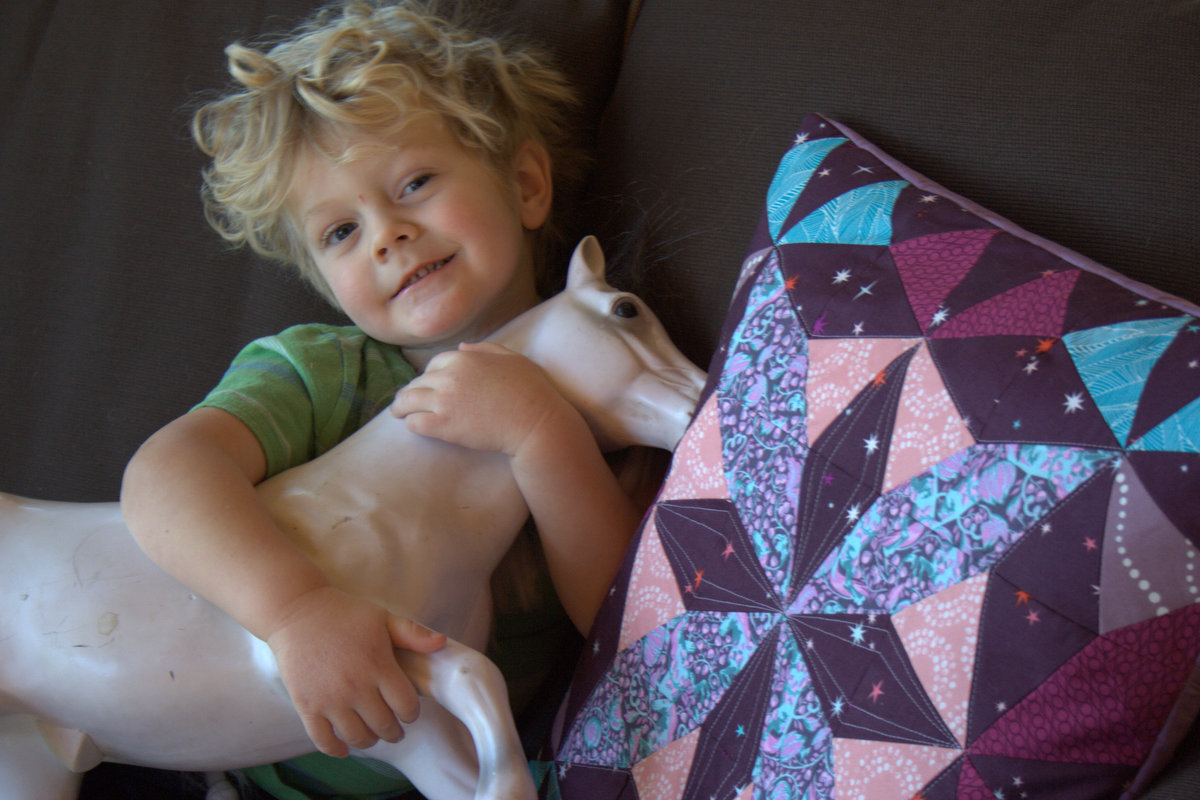
pony and kaleidoscope pillowpony and kaleidoscope pillowThis pillow apparently now belongs to Pony, since, well… ponies!
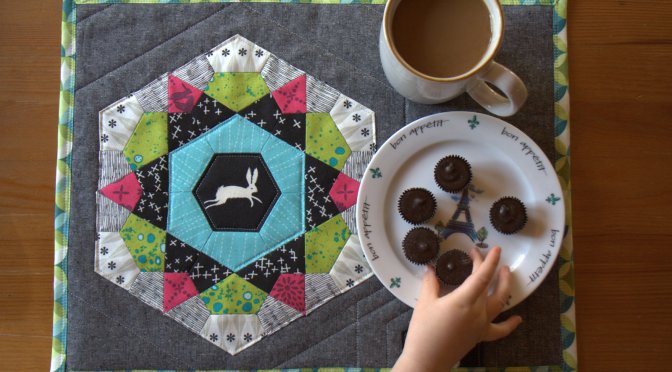


EPP Rose Star Mega Mug Rug: Finishing {Sizzix Tutorial}

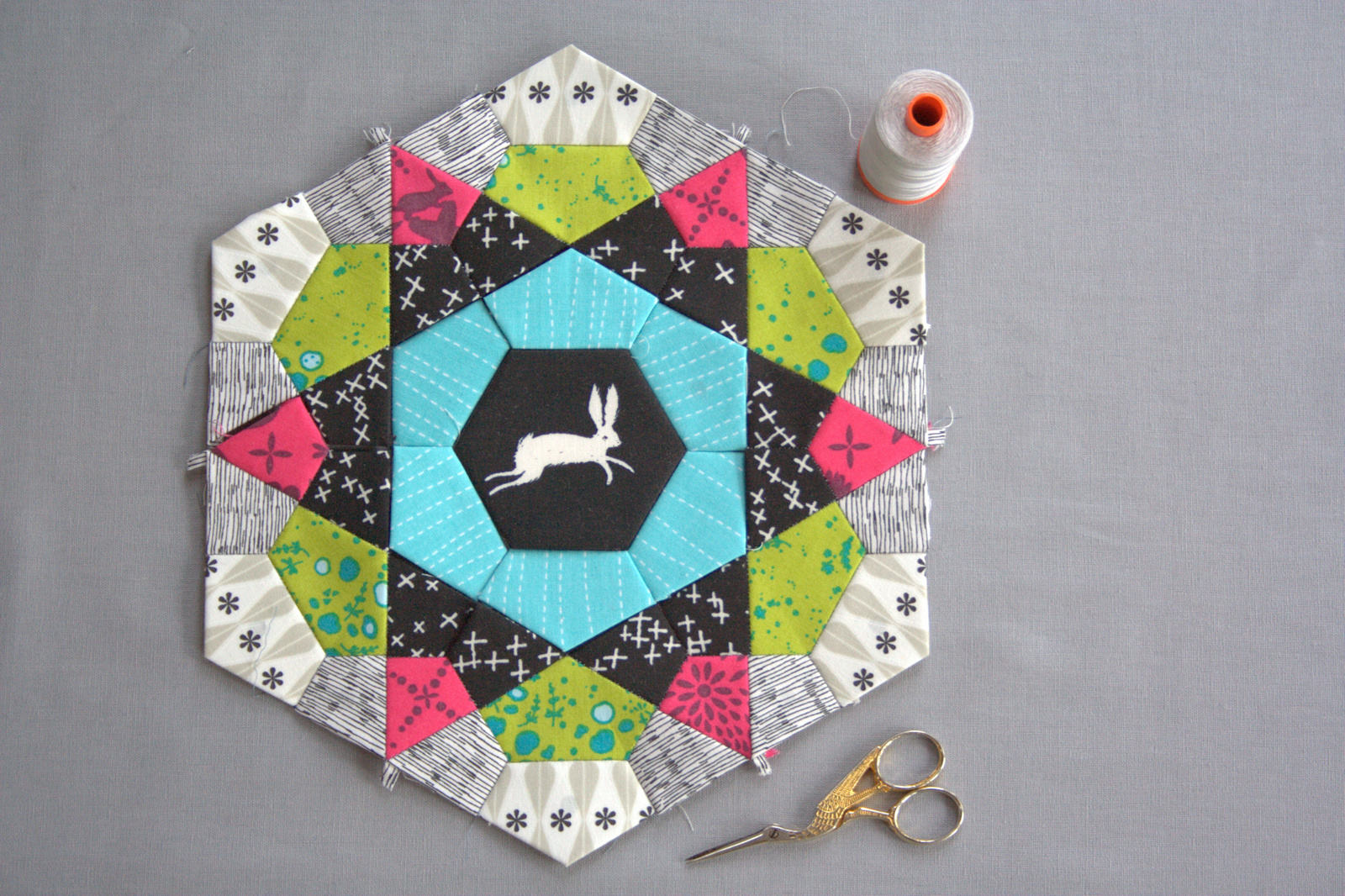
Do you remember my post about getting started on this bright bunny English Paper pieced (EPP) mug rug, my Sizzix Design Team debut? I’m sure you have your stack of basted pieces all ready to go, sitting at the edge of your seat patiently awaiting my finishing directions, right? Great! Either way, I’m excited to finally share the finishing directions today on the Sizzix blog.

basting epp mug rugThis is a great project for those of you who want to do more hand stitching in the uber portable form of EPP, but who are not quite ready to hand baste and piece an entire quilt.

binding epp mug rugIn this tutorial, I take you through:

  • stitching the basted pieces together;
  • savvily removing the template papers;
  • attaching the completed EPP to the background fabric;
  • removing excess fabric to help reduce bulk; and,
  • using the backing to bind the mug rug.

These are all great techniques for any EPP project.

One little forewarning: making a bright and bold mug rug like this one may draw extra attention to the plate of treats you rest on it. This most likely will result in extra sneaky small hands swiping your snacks.

sizzix rose star mug rugNow you see it.

sizzix rose star mug rugNow you don’t!

Hop on over and check out the full tutorial on the Sizzix blog! Here’s a quick link to Part 1: Getting Started and Part 2: Finishing. Enjoy!

I’m linking up with Crazy Mom Quilts Finish it up Friday.

Spooktacular Beanbags Tutorial

Halloween is a fun time of year around our house, since my kiddos love to dress up in costumes from years past all year ’round, and the end of October means NEW costumes and candy! While I’m not really big into decorating the house for holidays (with the exception of Christmas and Easter–how can you resist those?), I do like making holiday crafts with the kids to help build excitement.

Today I’m going to share a quick tutorial for some spooktacularly sturdy beanbags, a perfect addition to a Halloween party but also a great addition to any child’s toybox. I should note, too, that beanbags are my go-to gift for two year old birthday parties. When a child turns two, I’ve found it’s really fabulous to have something you’re SUPPOSED to throw. Beanbags are such a versatile gift since they can be personalized in any way; you can change the shape, change the fabric, or personalize with applique letters or pictures. I’ve included affiliate links in this post so that if you decide to buy any of the tools I’m using, I will receive a small commission, too. I only share tools and products I love, so you can be sure they are tried, tested, and loved!

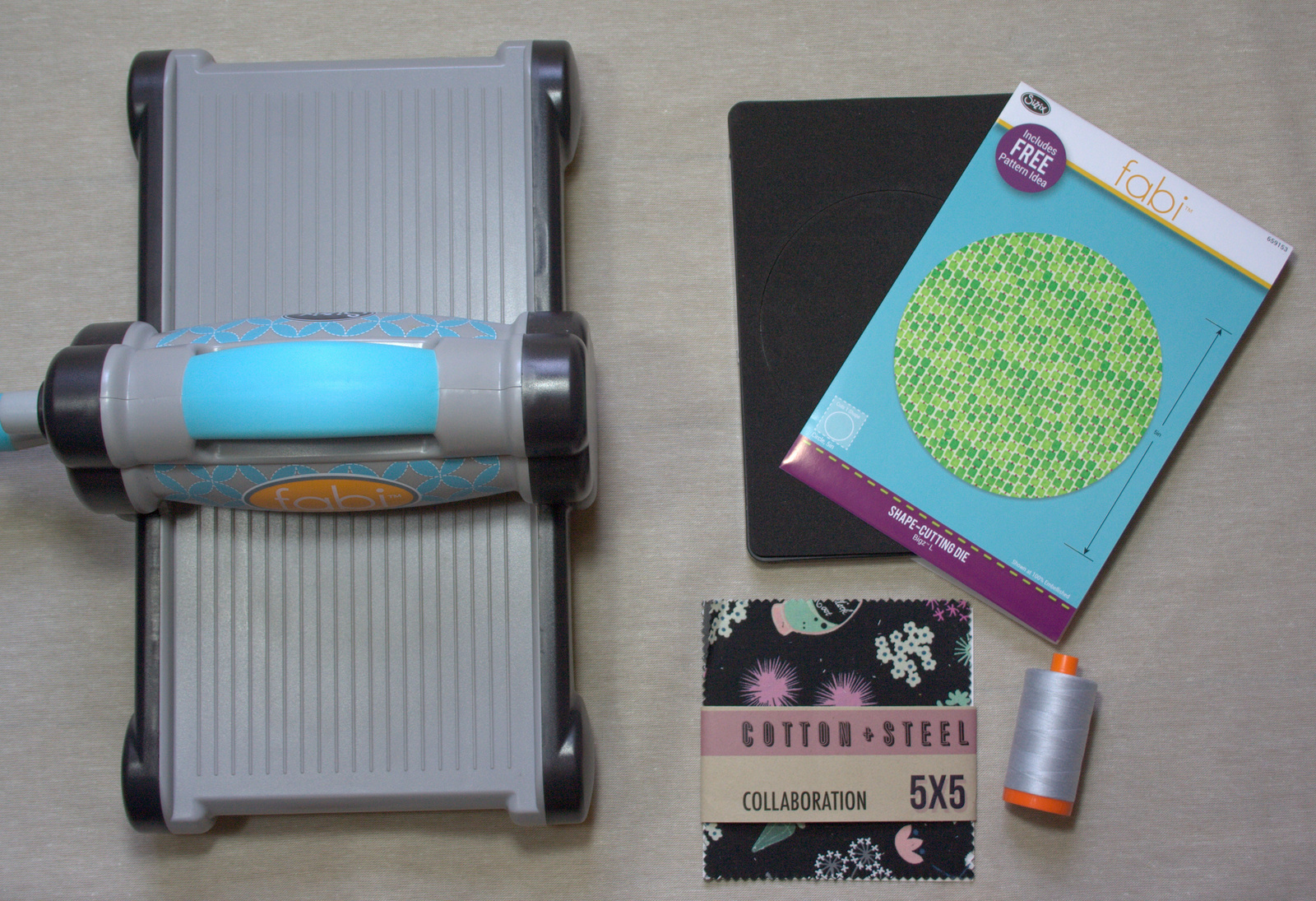
Spooktacular Beanbag Tutorial PinterestMaterials needed (to make 4 beanbags):
  • 8 charm squares of fabric
  • Die cutting machine & 5″ circle die (such as Sizzix cutting machines, AccuQuilt, Cricut, etc)
  • 8 x 5″ diameter circles of fabric
  • Sewing machine (zipper foot suggested but not required) – I use a Bernina 560
  • Iron and ironing surface
  • Thread (I used Aurifil 50wt 2600-Dove)
  • Dried beans or other filler (approx 3 cups)
  • Pins and/or Clover clips

I made my beanbags using my Sizzix fabi die cutting machine and the BigZ L Circle 5″ die. You can also use any palm-sized circle item in your kitchen to trace circles on fabric for the beanbags if you don’t have a die cutting machine.

bean bag sizzix prepI figured since it’s nearly Halloween, it was the perfect time to use my Cotton + Steel Spellbound Collaboration charm pack. The 5″ circle die worked perfectly with the charm squares, which made my job even easier! I used my go-to thread, 50wt Aurifil 2600-Dove for all sewing.

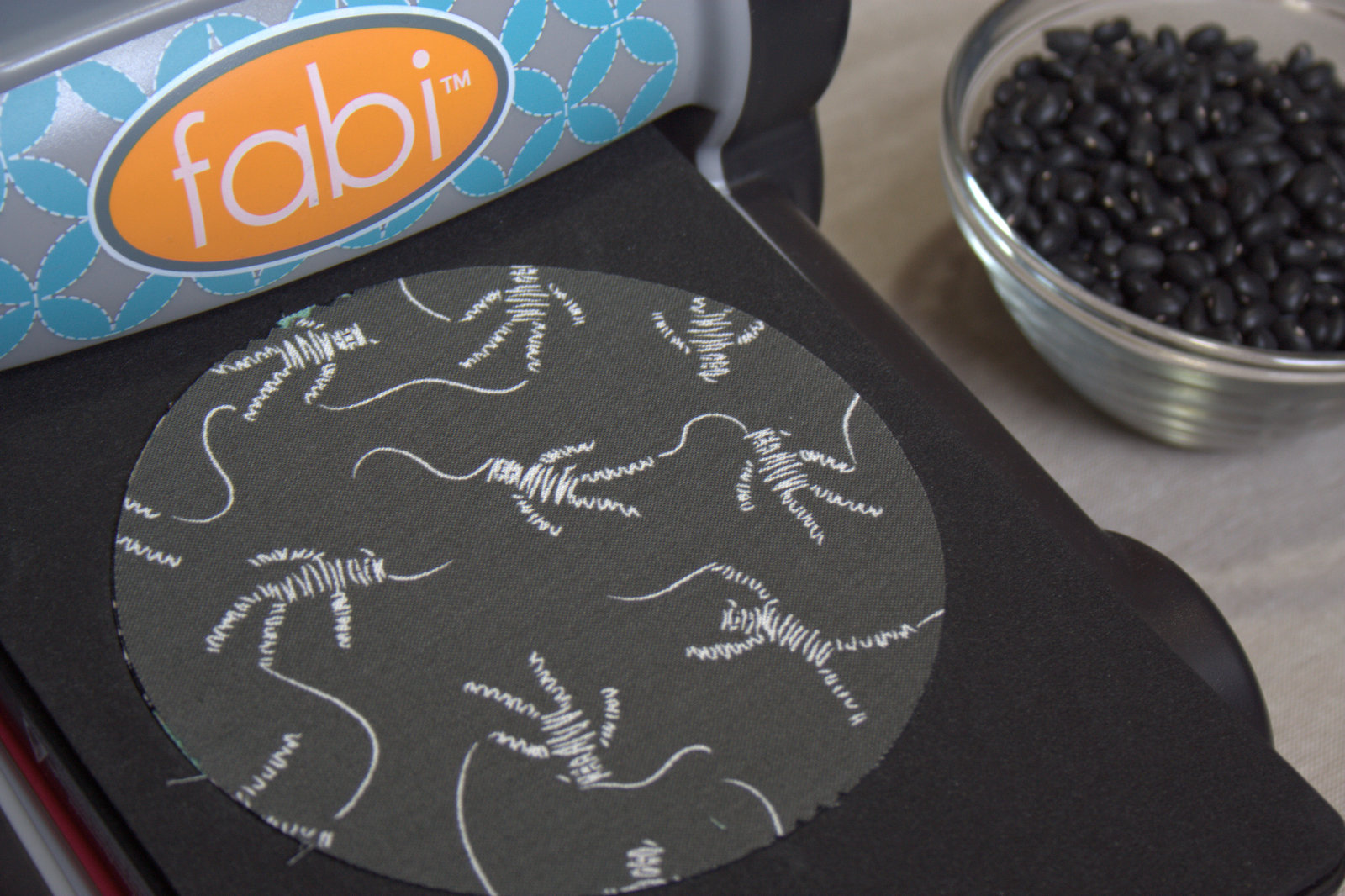
sizzix beanbag tutorialChoosing four pairs of coordinating charm squares, cut eight (8) 5″ circles, layering your Sizzix sandwich: bottom cutting pad, die with the blades facing up, fabric centered over the circle blade, and top cutting pad. All necessary circles for this project can be cut with one pass through the die cutting machine, which made this a really quick project to make with my kids.

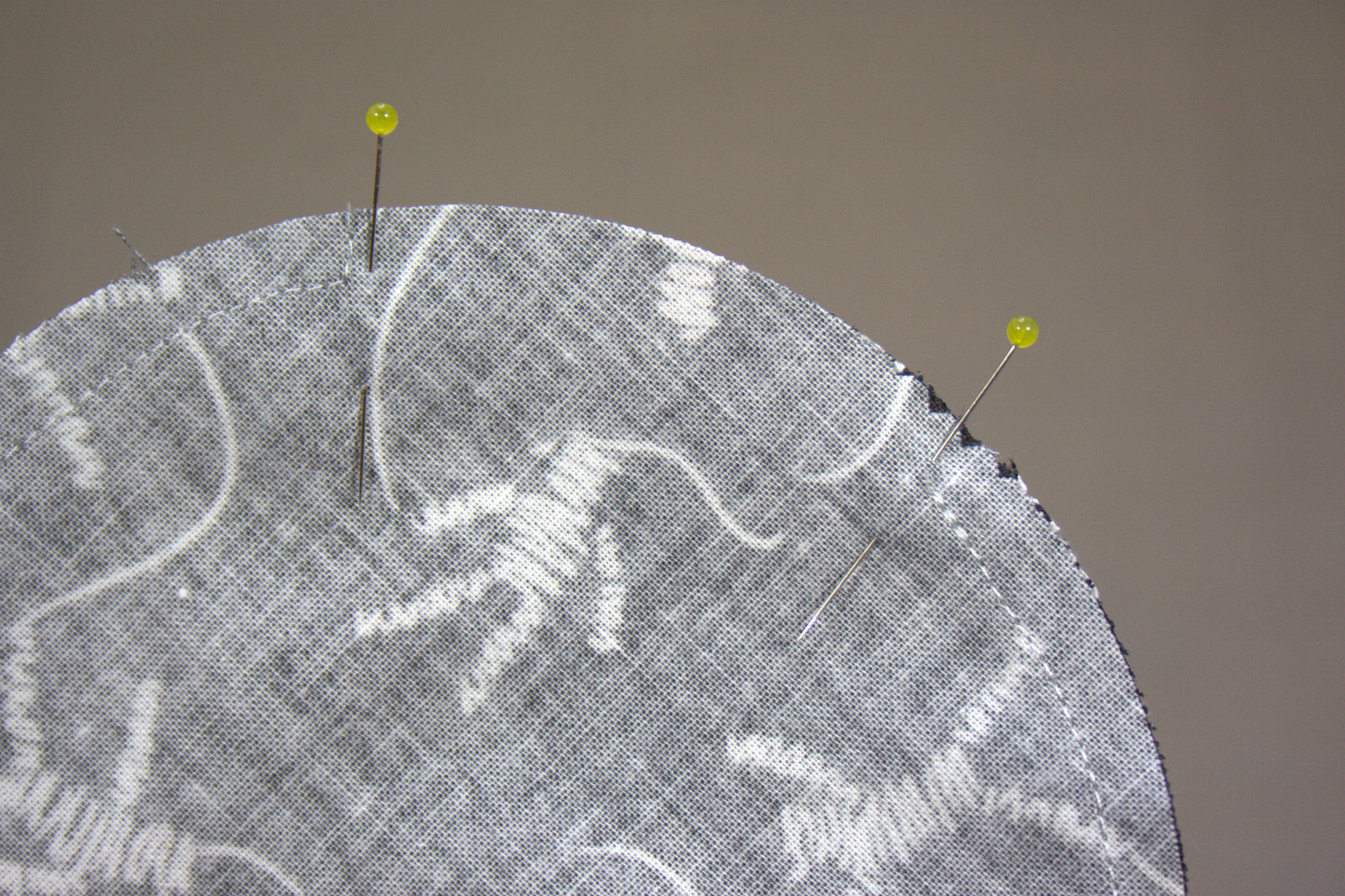
sizzix beanbag tutorial 2" openingNext, pin your pairs of fabric right sides facing. I used only four pins, two of which marked a 2″ opening. With a 1/4″ seam allowance, sew the circles together, leaving 2″ open for turning and filling. Remember to backstitch at the beginning and end of each seam.

sizzix beanbag tutorial
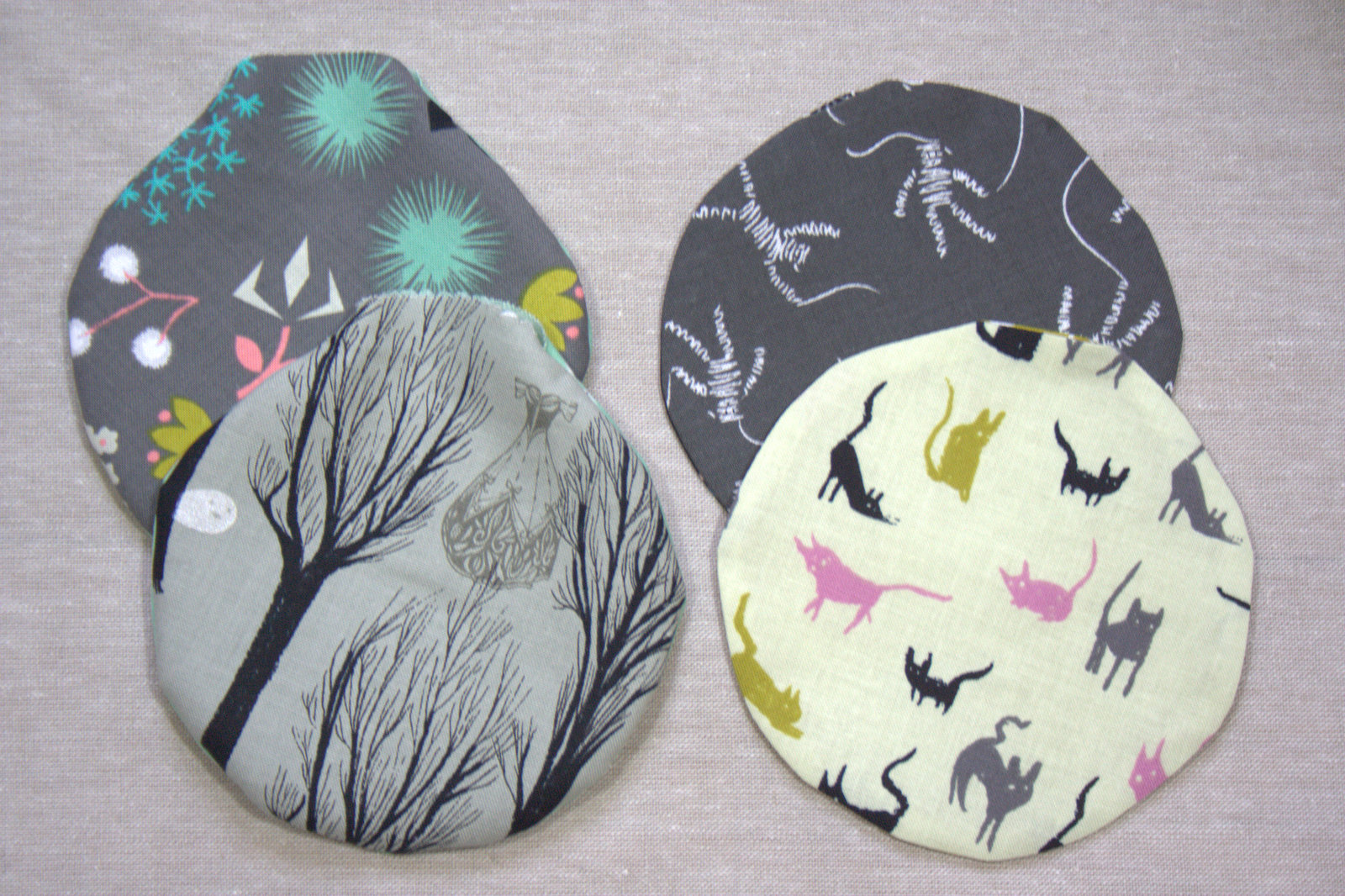
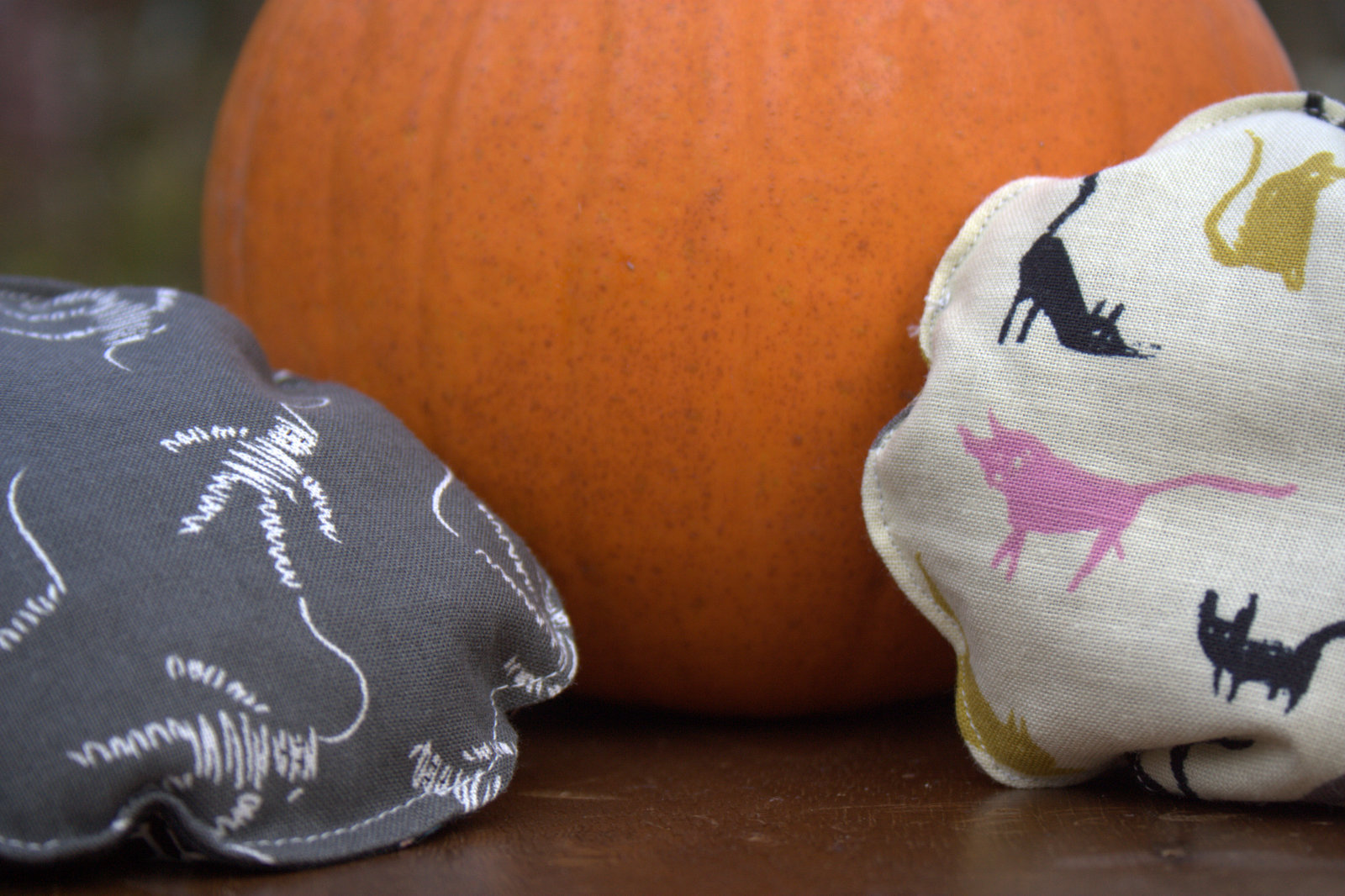
Beanbags once they have been turned. On the left are beanbags before pressing; on the right are beanbags after pressing and turning in the opening.

Turn beanbags right side out through the 2″ opening. Gently slide your finger along the seam from the inside to make sure the circle is fully turned. Press with a hot iron. Turn in the seam allowance around the opening and press, too, since that will make sewing the beanbags together much smoother once they are filled with dried beans. Since it’s a curve, this step is a little tricky (or at least it was a little tricky for me). Just remember what you’re making: these are going to be tossed and thrown and loved, and perfection is overrated!

Now comes the fun part! Grab some small dried beans (I used dried black beans), a funnel and/or spoon, and a couple of eager helpers.

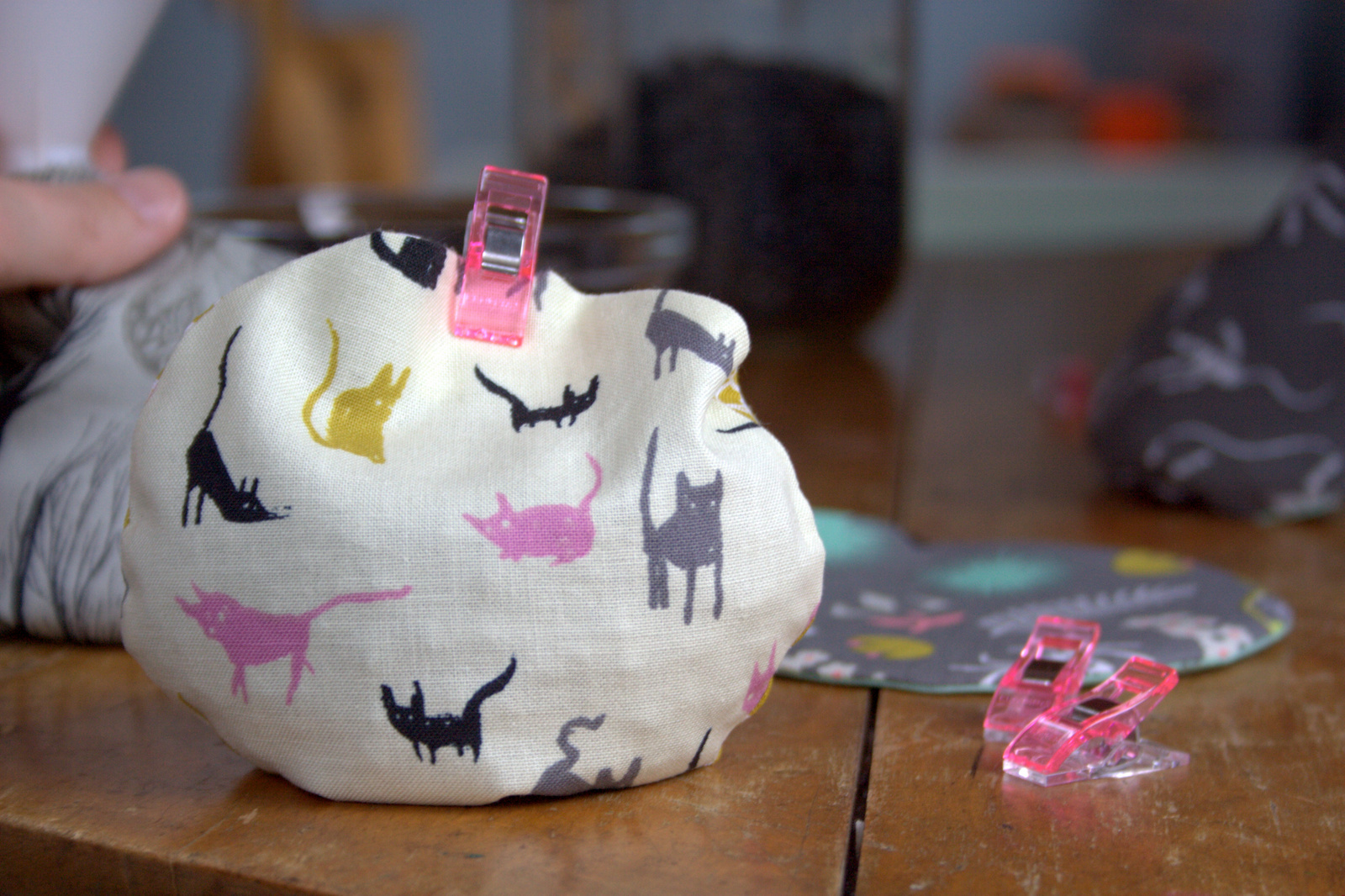
sizzix beanbag tutorial filling the beanbagsFill the beanbags with dried beans, leaving at least an inch of empty space at the top. Trust me here; the beanbags will seem too empty, but while you are sewing them shut and top-stitching, you will want that extra wiggle room.

sizzix beanbag tutorial fill the beanbagsWe found that a combination of funnel, spoon, and simple “use your hands to put the beans in” worked well for us.

sizzix beanbag tutorial fill the beanbagsEither pin or clip the tops once the beanbags are filled (remember to leave that good inch or inch and a half of empty space in the top). This will both remind you that the beanbag is “finished filling”, and remind your kiddos not to cram any more beans into it. (We definitely took as many beans out of the beanbags as we put it. All part of the fun, right!?)

sizzix beanbag tutorial fill the beanbagsDepending on the size of your helpers, this may be a messy activity. Plan accordingly, or embrace the chaos.

sizzix beanbag tutorial sew closed
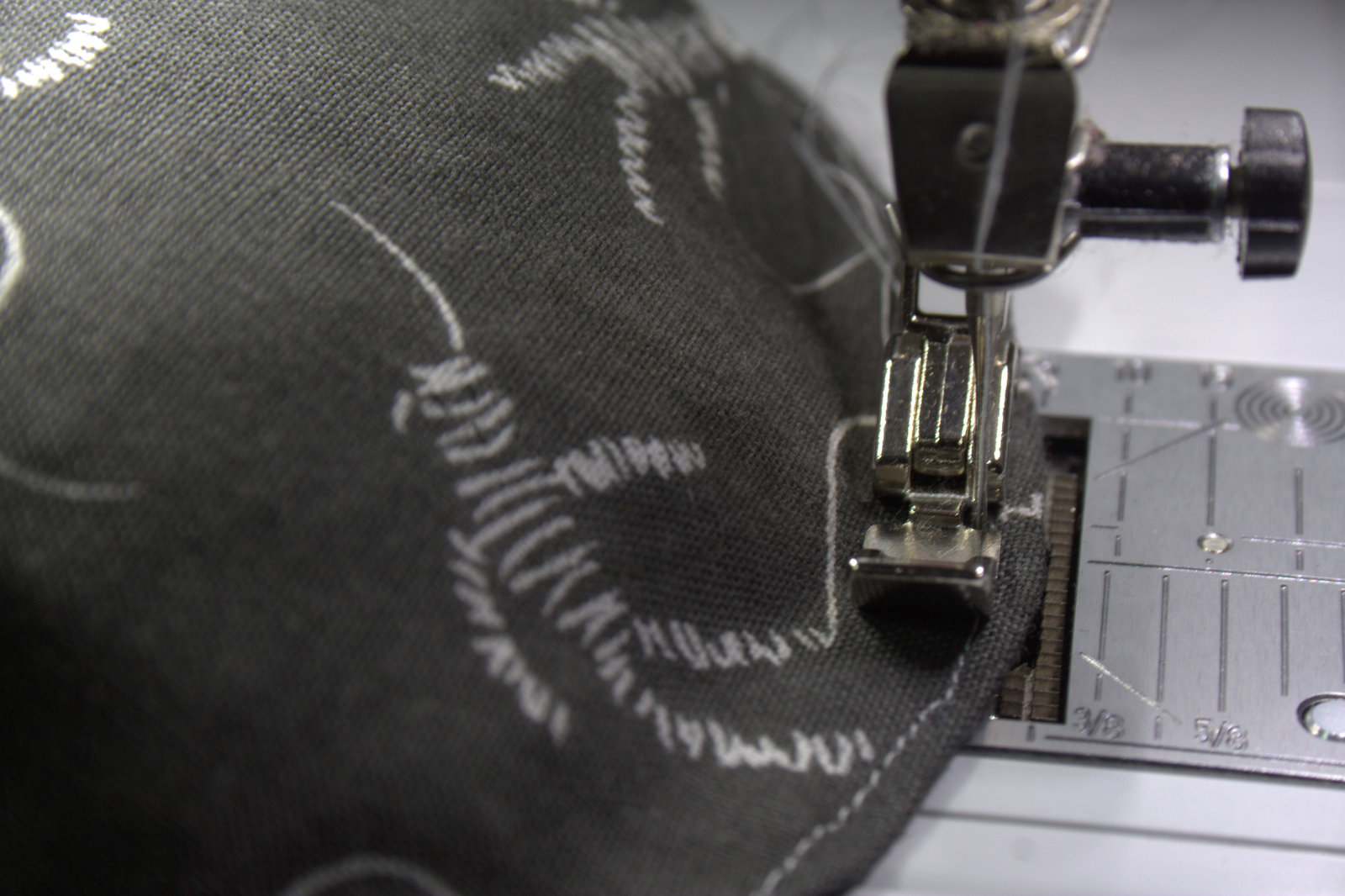
Needle between foot and beanbag.

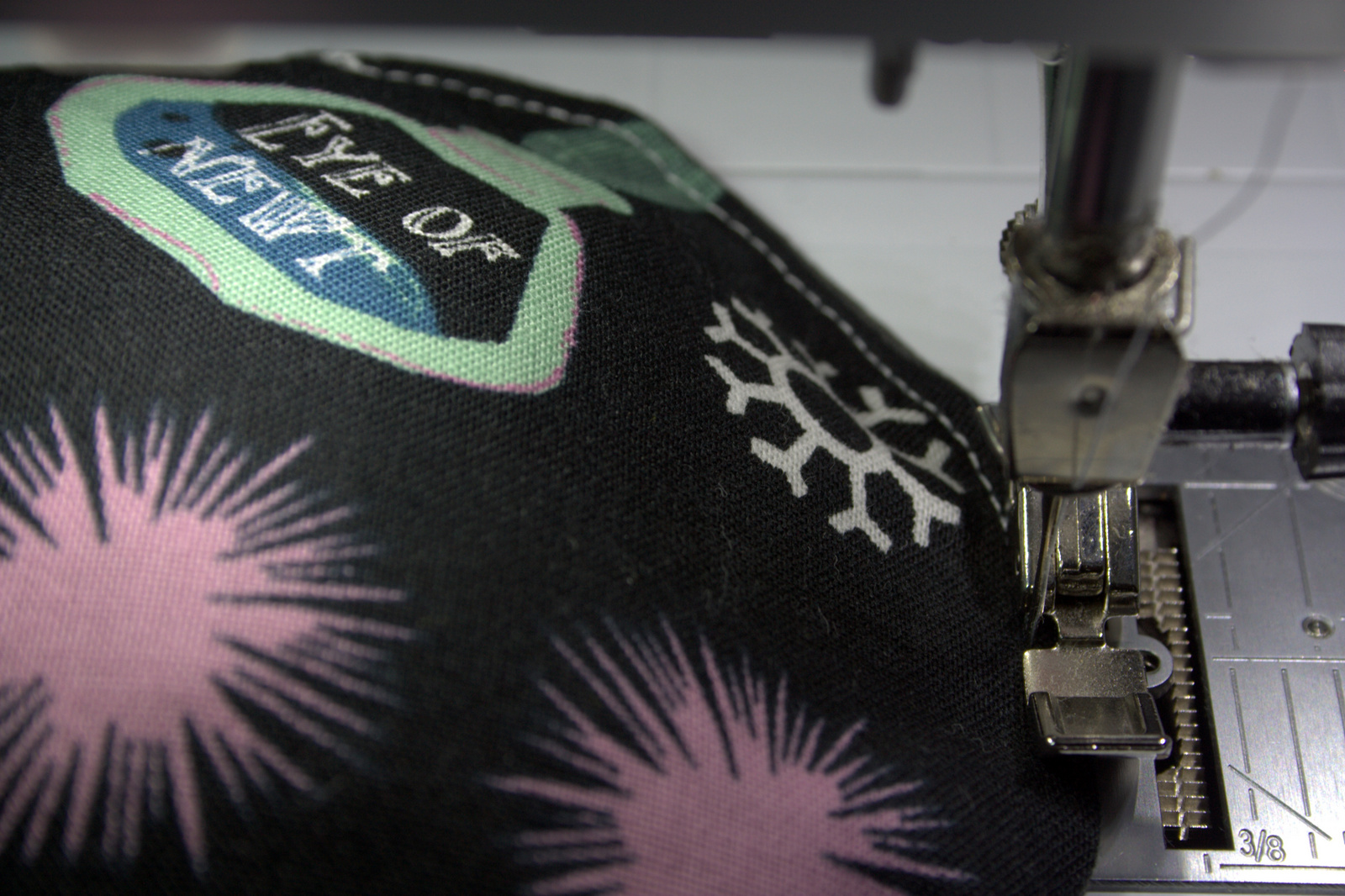
Once all of your beanbags are sufficiently filled, head back to the sewing machine and topstitch about 1/8″ inch from the edge of the beanbag, beginning by sewing the opening closed. This extra round of sewing will securely close the opening, and will also provide extra durability for the entire beanbag. I made some beanbags for my nearly-six year old when she turned two, and they are still going strong in our playroom.

sizzix beanbag tutorial sew closed
Foot between needle and beanbag = winning combination for me.

I used my zipper foot to sew these beanbags closed, and sewed most of them with the needle between the foot and the beanbag (shown in the top photo above). It proved more finicky than I remembered, so with the final beanbag, I moved the needle so that the foot was between the needle and the beanbag (shown in the photo above). This worked much more smoothly for me. As you sew around the edges of the beanbag, stop every couple inches with the needle down to reposition the beans, pushing them away from the part of the beanbag you are about to sew. Sew all the way around each beanbag.

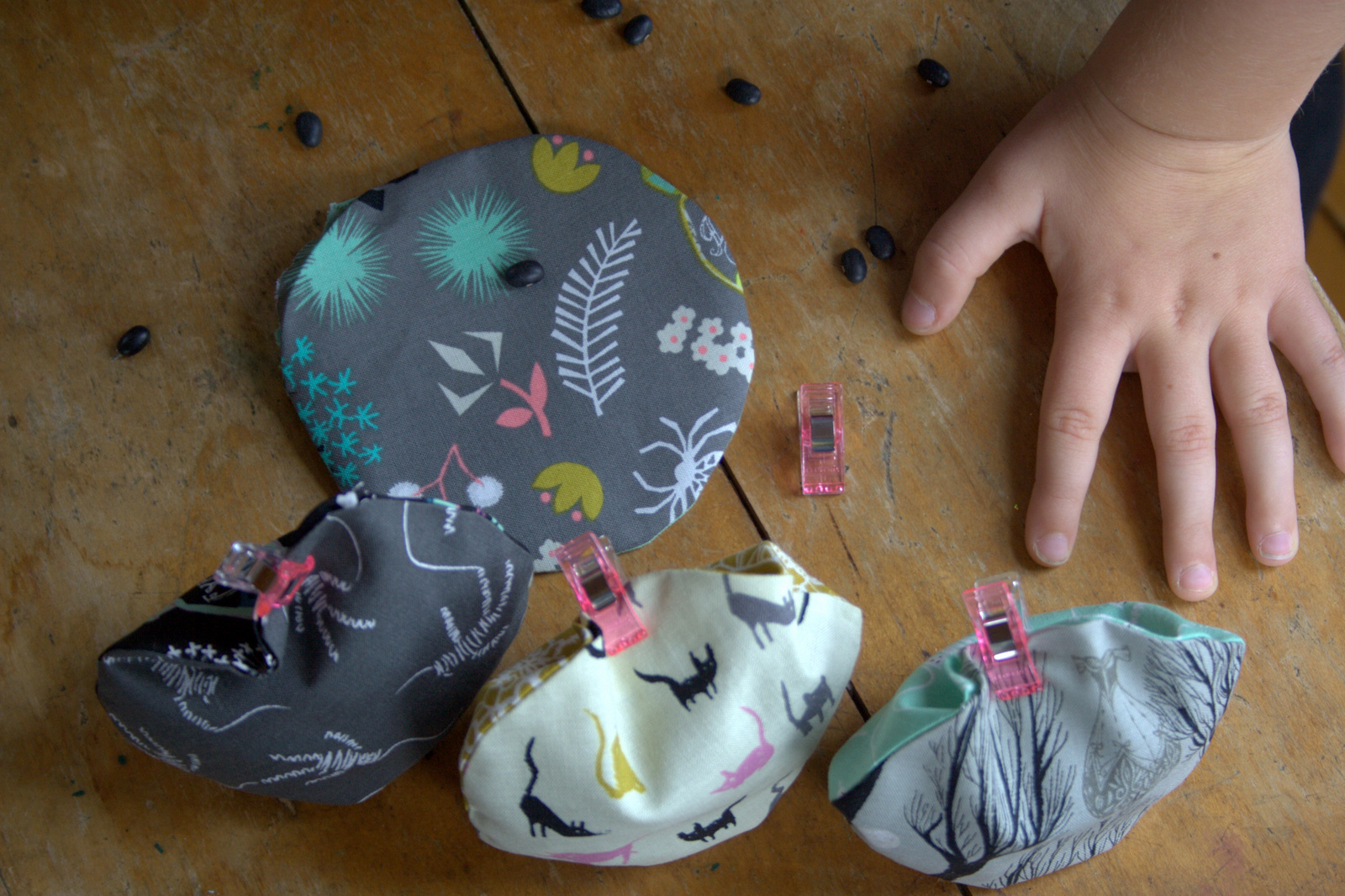
sizzix beanbag tutorialsizzix beanbag tutorialNow you have a handful of spooktacular sturdy beanbags and you’re ready for fun! Toss them at pumpkins, into trick-or-treat buckets, or at each other (avoid faces!). Have fun!

A Quick Gift: EPP Rose Star Coasters {Sizzix Tutorial}

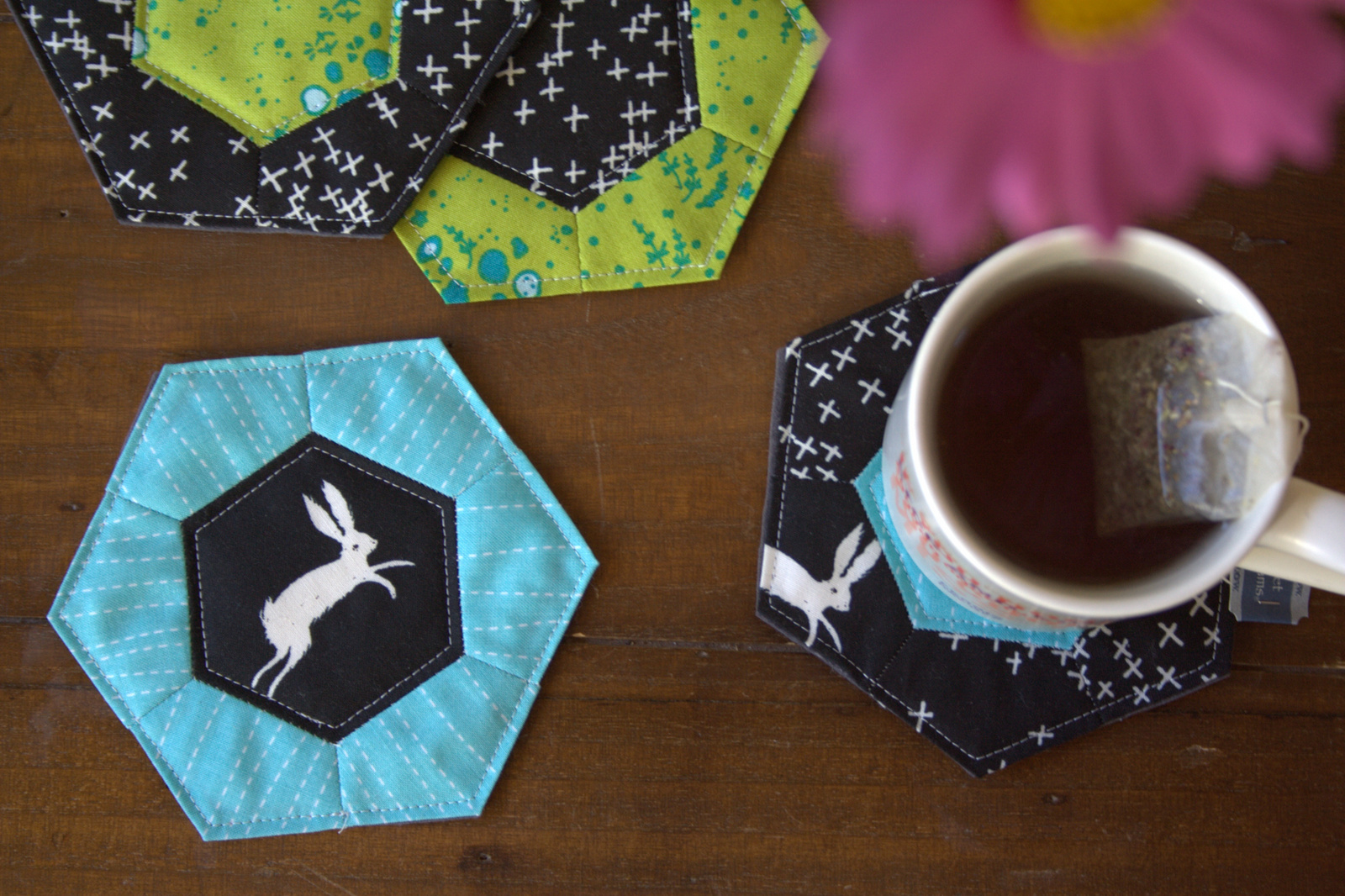
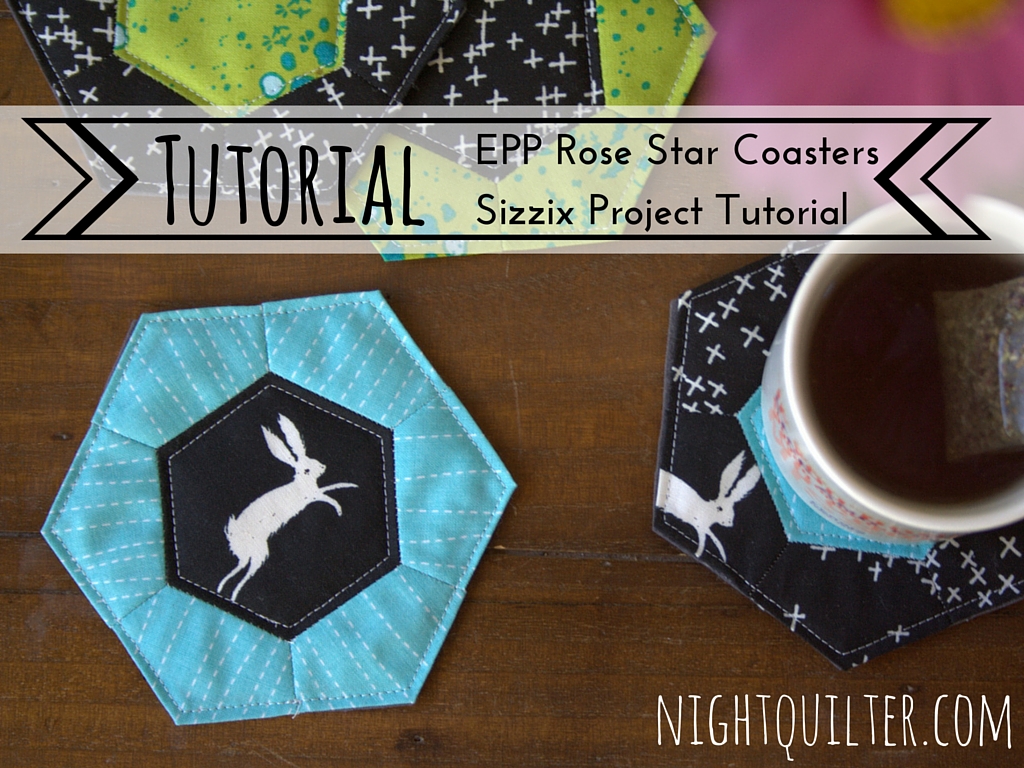
Today I’m sharing a tutorial for some quick and easy English Paper Pieced (EPP) coasters, made particularly quick and easy by use of a Sizzix fabi die cutting machine to cut all of the fabric and templates, glue basting the EPP pieces, and backing the coasters with felt (photos and instructions for all steps are included in this tutorial!). They are also a great way to showcase your hand-stitched EPP and meticulous (fussy) cutting if you so desire.

epp sizzix rose star hexi coastersWhile I was planning out and putting together the mug rug I’m making for my sister using the Sizzix Rose Star die (you can see my tutorial for getting started on the mug rug on the Sizzix blog HERE), I realized that the center of the Rose Star would make a perfect hexi coaster. Of course that idea stuck and I decided to play around with fabric arrangements and make a set of coordinating coasters to go along with my sister’s mug rug. Thus, this tutorial was born.

I’ve included affiliate links throughout this post so that if you decide that you want to give the Sizzix and Rose Star die a go and click through my link, I will receive a small compensation at no cost to you. Share the love, right?

Without further ado, here we go!

EPP Rose Star Coasters Tutorial

For this tutorial, I used the Sizzix fabi die cutting machine and the BigZ L Rose Star die, but many of the techniques can be applied to any EPP project.

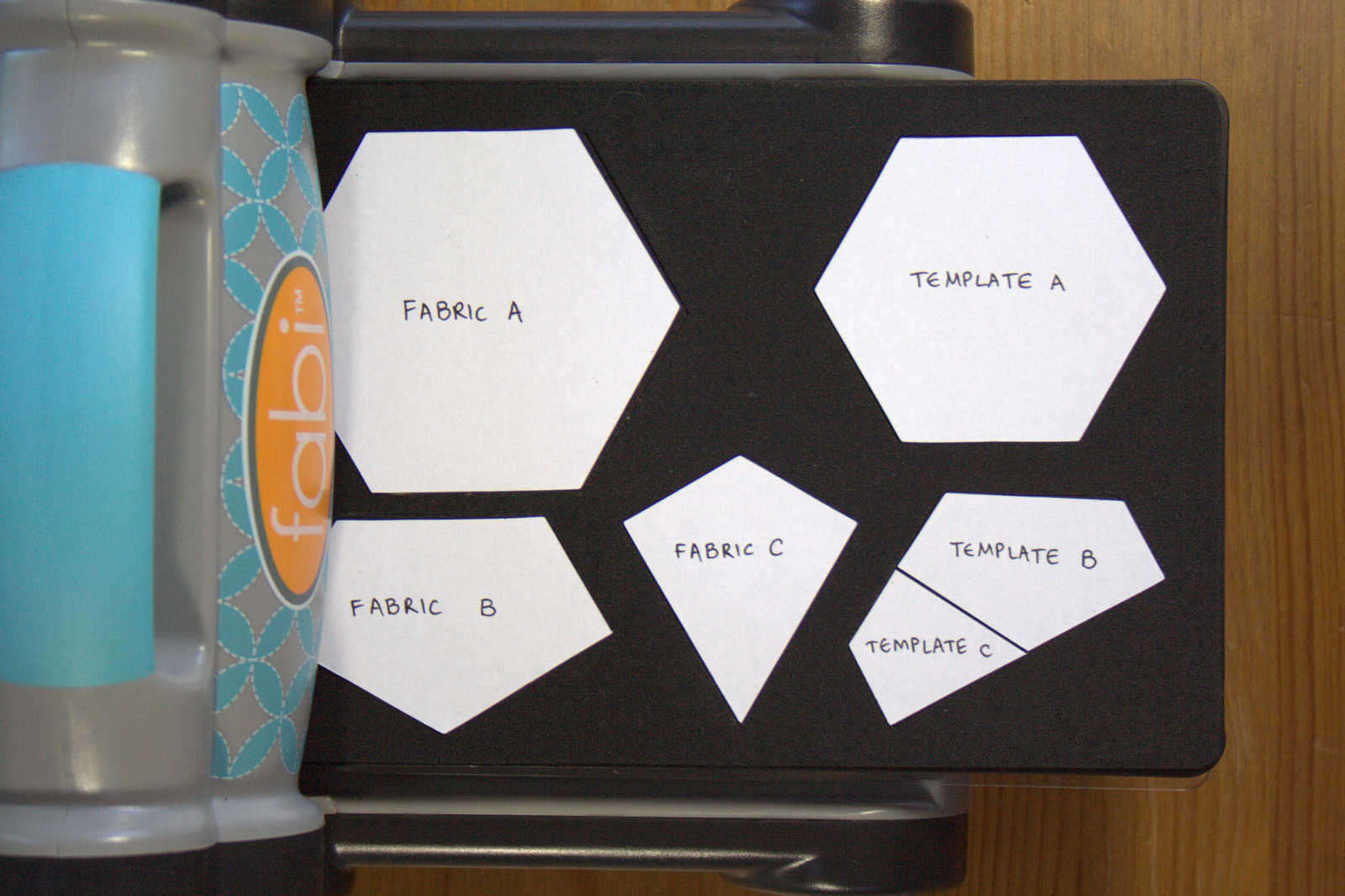
sizzix fabi die cutting machineFirst, gather your fabric and get your die cutting machine ready. As I shared in my Sizzix mug rug tutorial, I like to pass a piece of regular printer paper through the machine, and label the pieces to help with planning. The Rose Star die is designed for EPP, so the single die can cut all of the templates and fabric needed (pretty awesome, huh?).

For this project, we will be using the A and B pieces. Begin by cutting the templates needed: 1 A and 6 B for each coaster. Since I made four (4) coasters, I cut 4 As and 24 Bs. I use cardstock for my templates, and hole punch the centers to facilitate easy removal after the stitching is complete. Use what works for you.

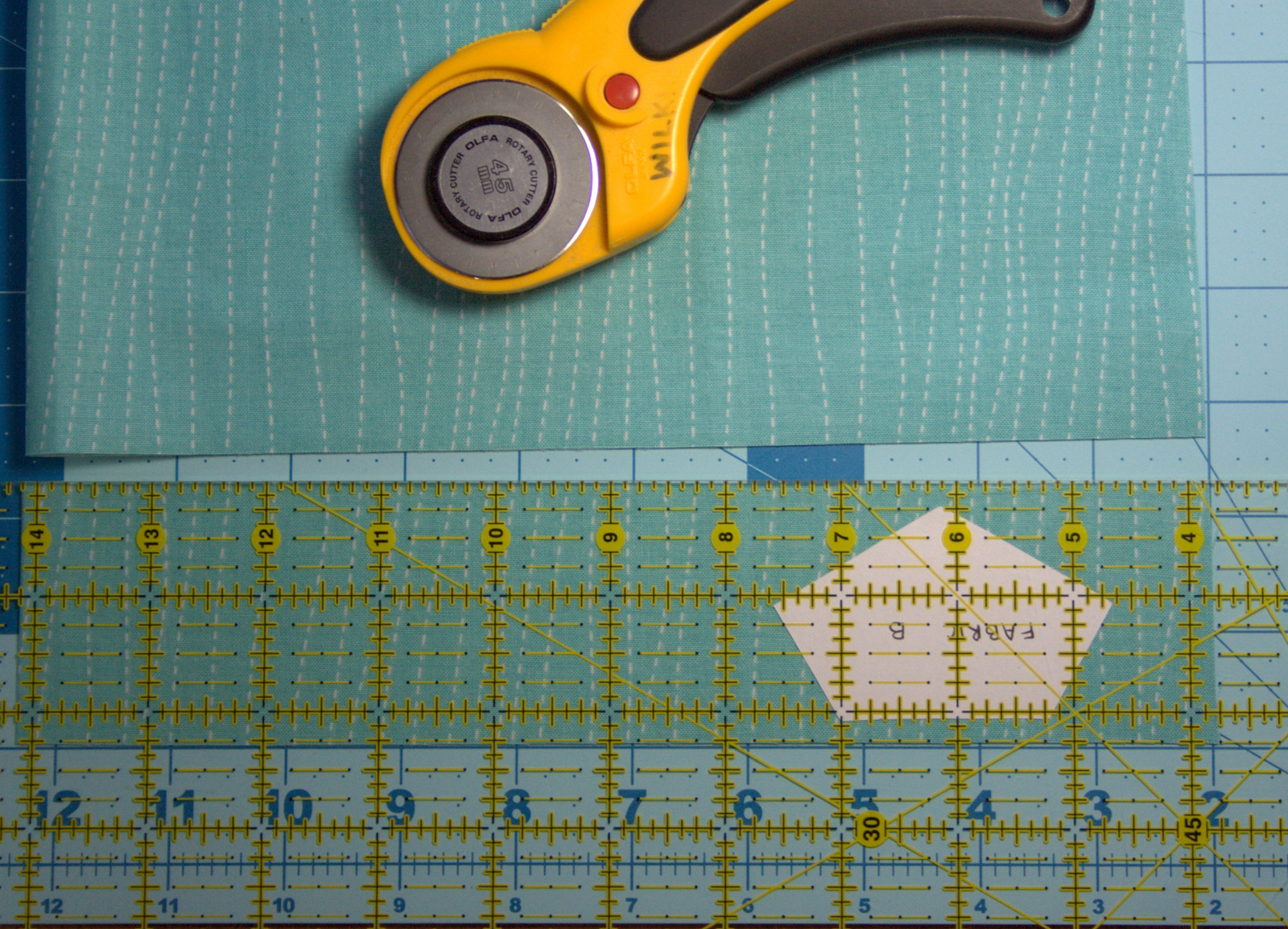
cuttingThe paper practice pieces can help you save time in cutting, too. For fabric shapes needed in duplicate, use the fabric piece to determine how wide of a fabric strip you will need, then use your rotary cutter and mat to cut a strip. As you can see, I gave myself some wiggle room, but if you’re a die cutting pro, you can really save fabric by lining up the shape flush with the edges of the cut strip.

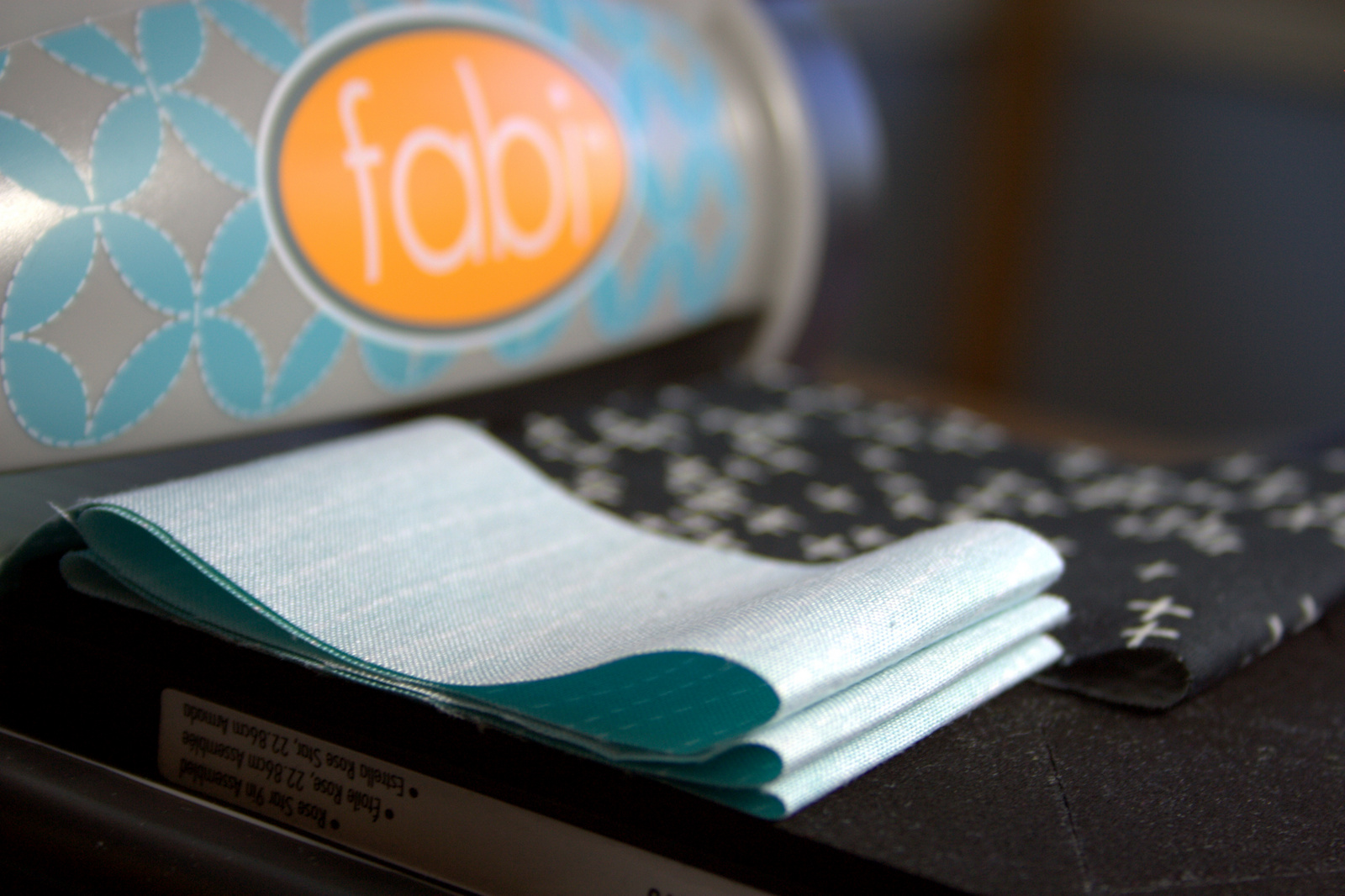
fabi die cutting machineOnce you have your fabric strip, fold it accordion style and position it in your Sizzix sandwich: bottom cutting pad, die with the blades facing up, fabric over the fabric blades, and top cutting pad (not shown in this photo). Pass it right through the die cutting machine (or have your three year old crank it through for you), and you’ll have all of the pieces needed for a coaster. You can cut all the fabric needed for a coaster in one pass.

Now it’s time to baste our pieces.

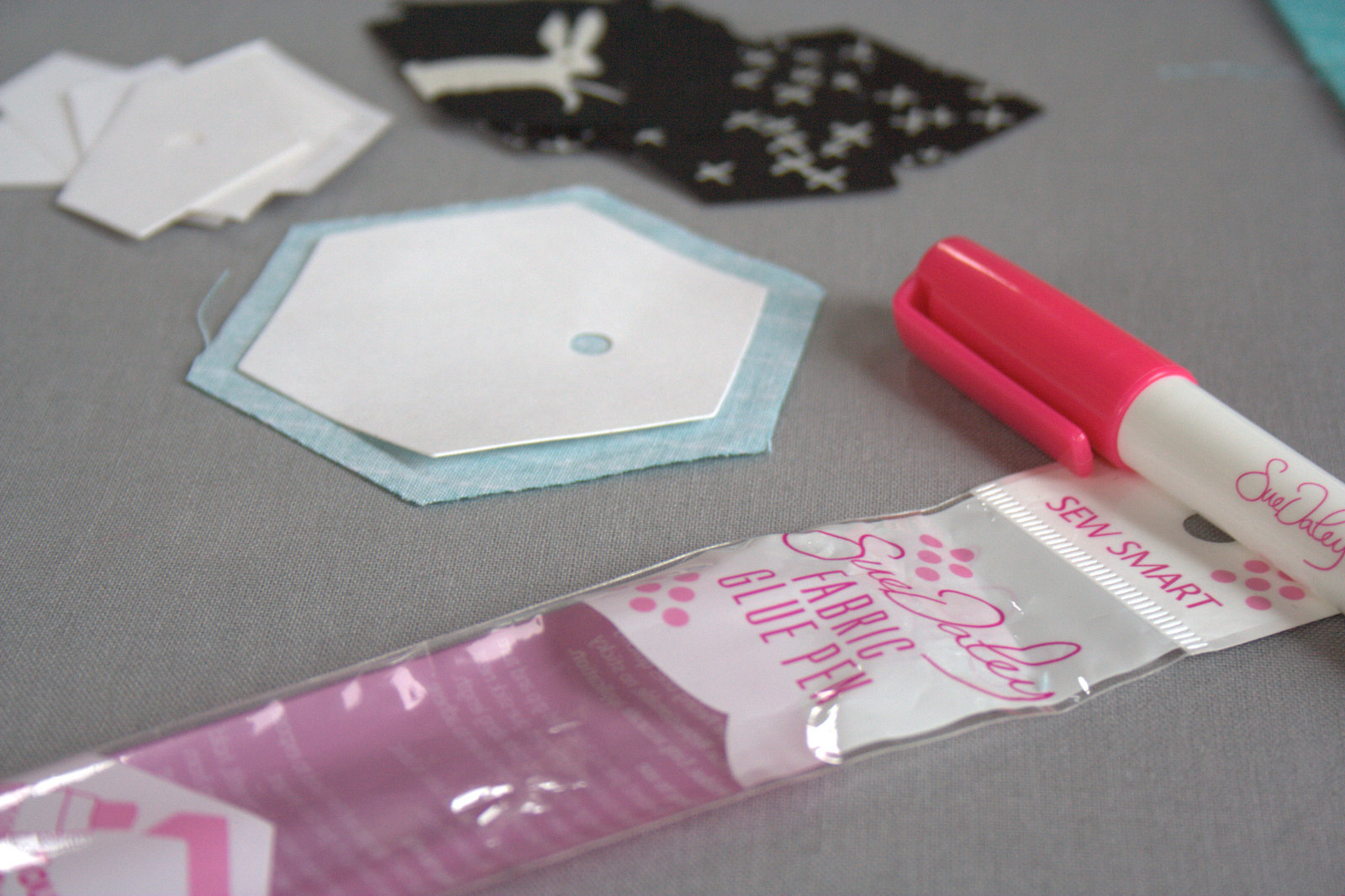
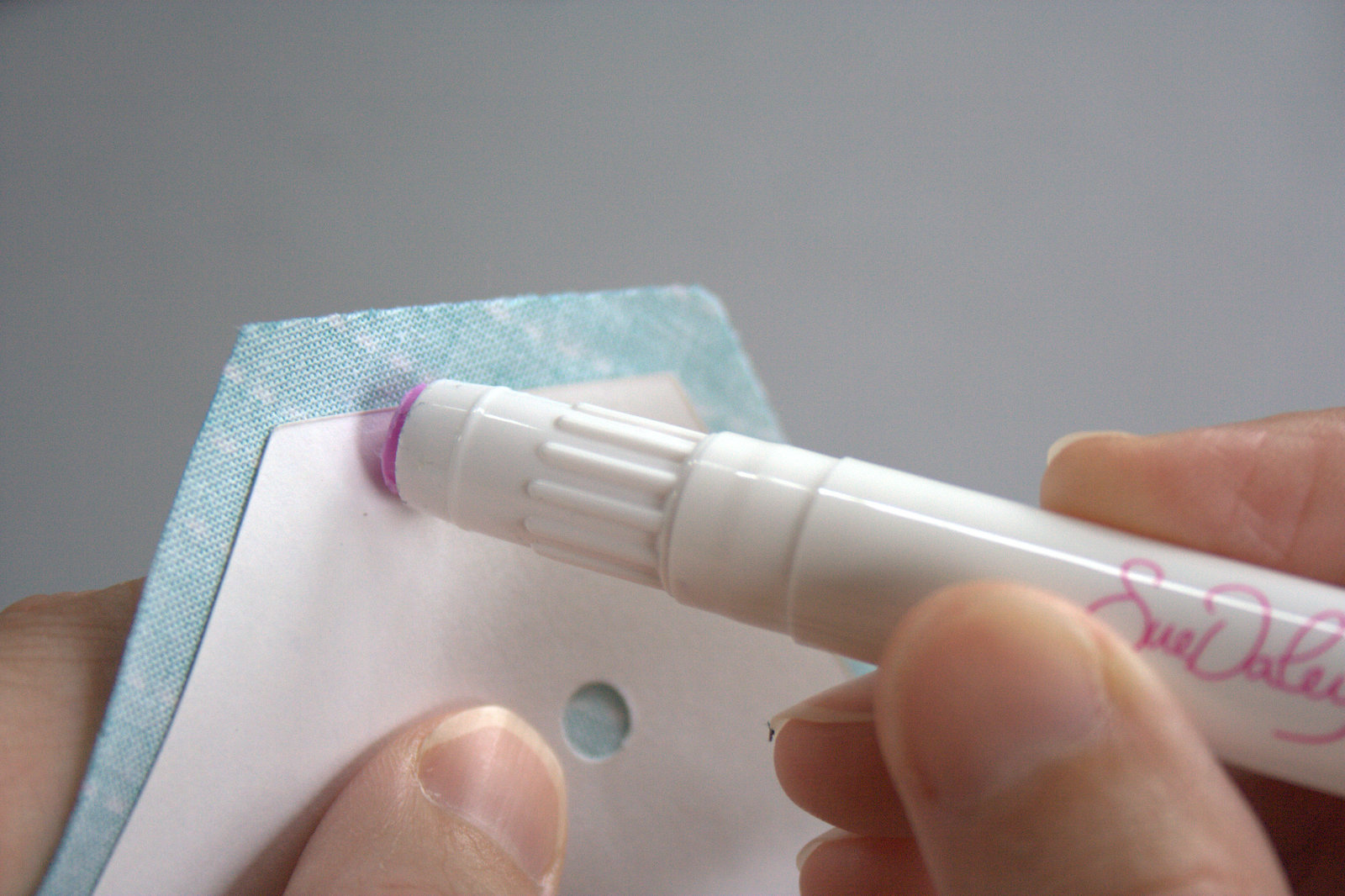
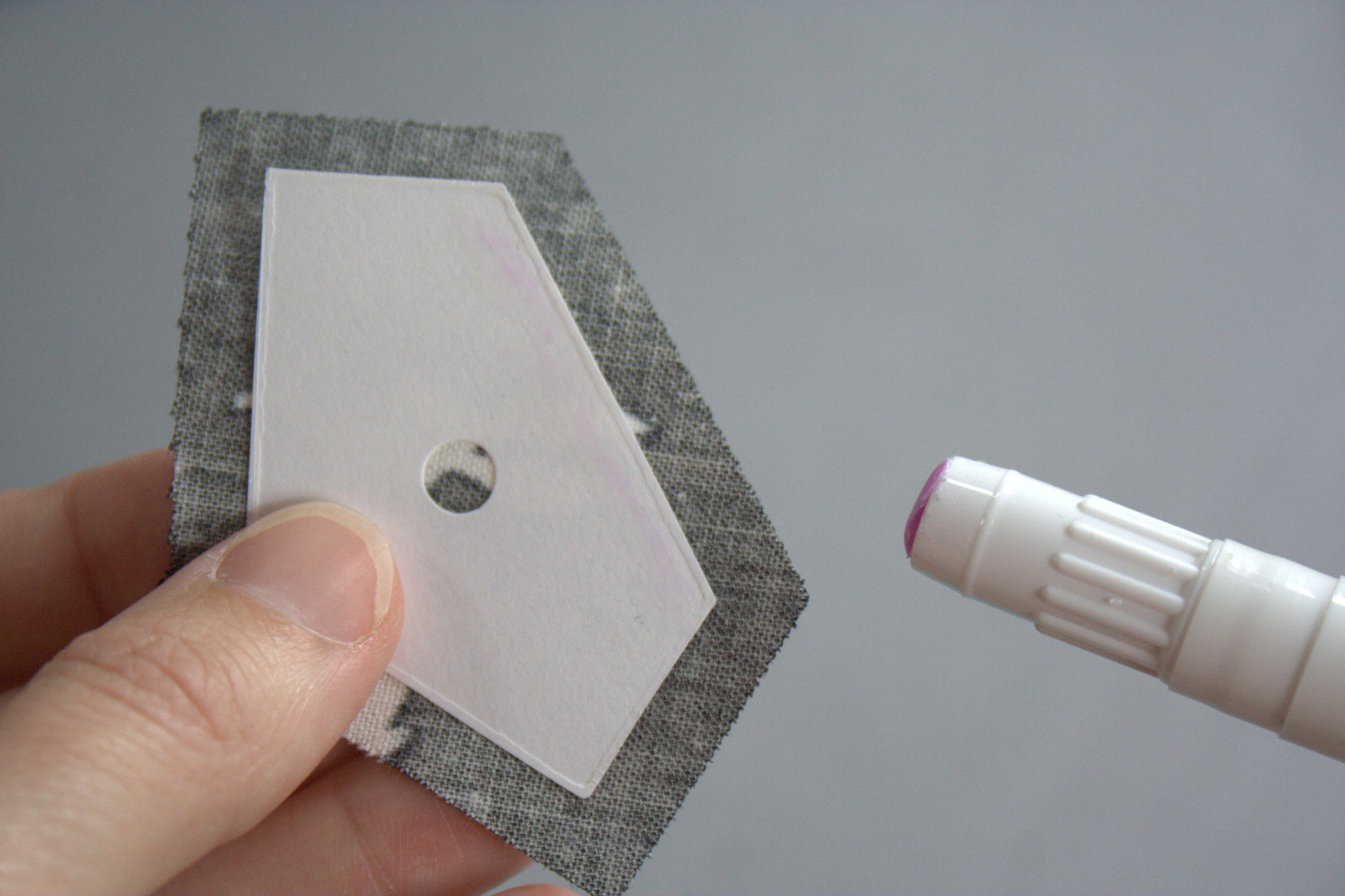
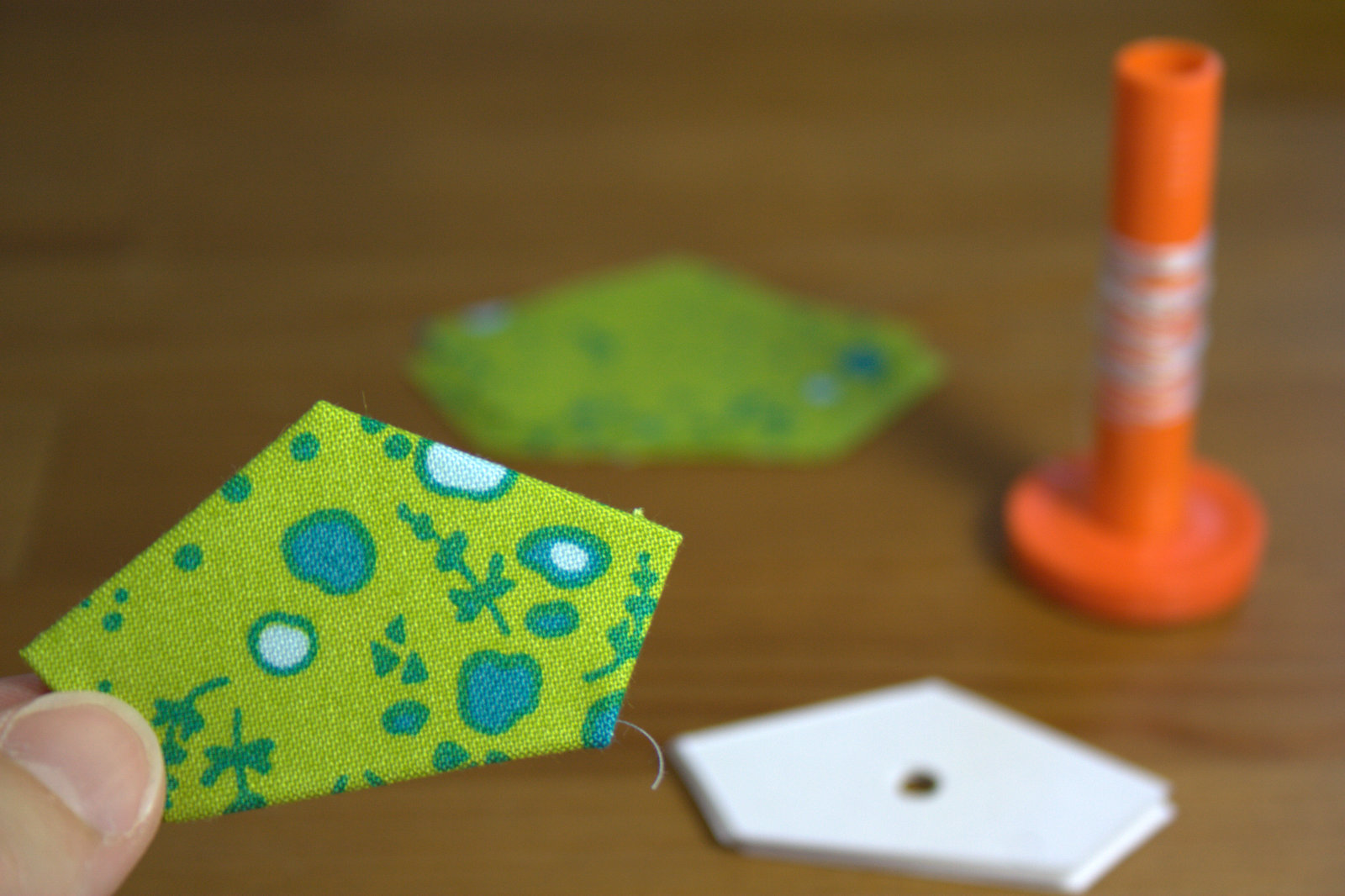
glue basting epp with sewline fabric penFor this project, I decided to finally try glue basting instead of thread basting. I got a Sue Daley fabric glue pen, but any washable glue stick or pen will also work (Elmer’s, Sewline, etc.). I’ve heard so much about how glue basting saves a ton of time with EPP, so I figured if I paired it with the time saving cutting from the Sizzix fabi, I’d be golden with a fun, fast, fabulous gift idea. (Pst… I was right!)
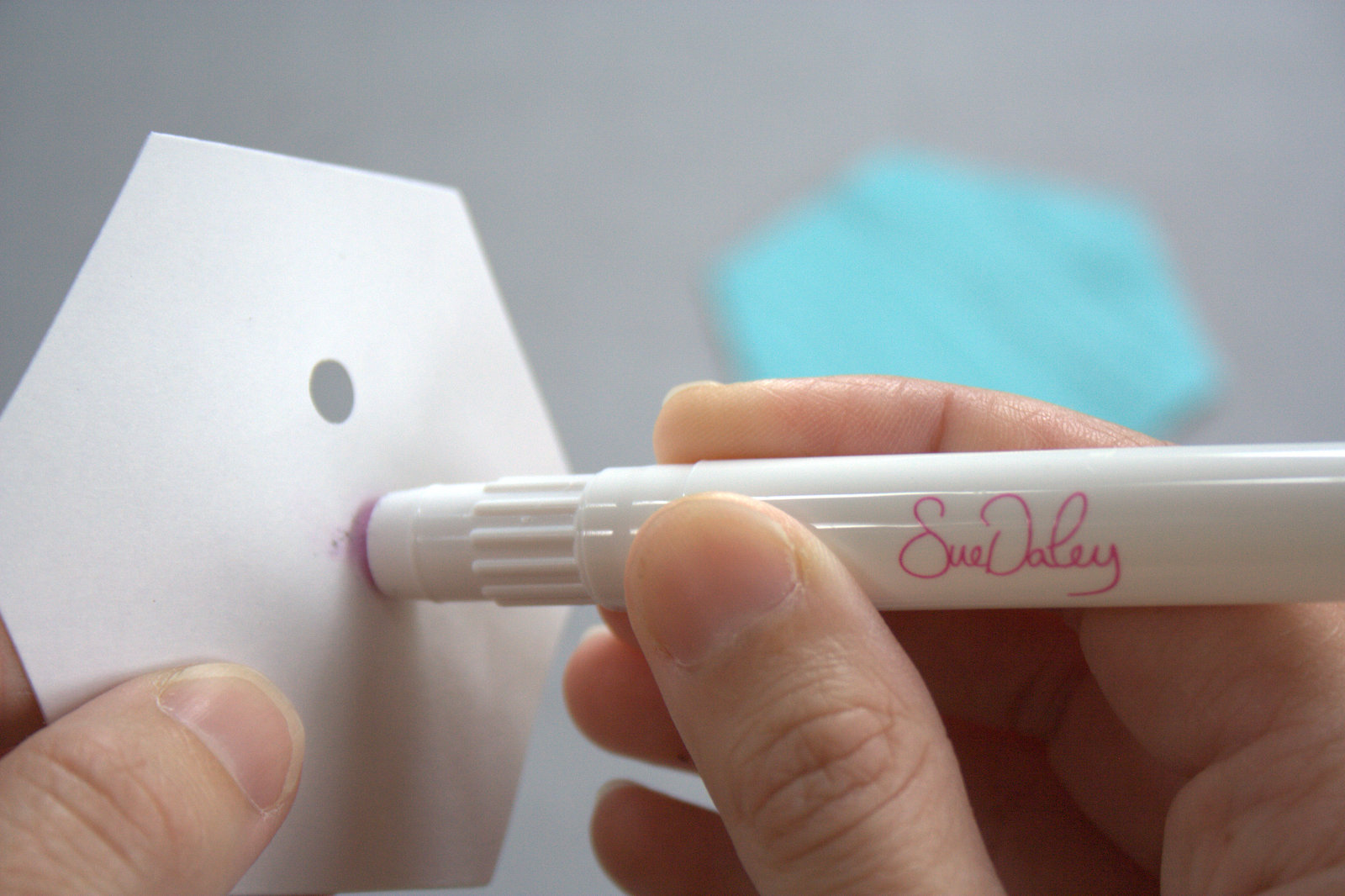
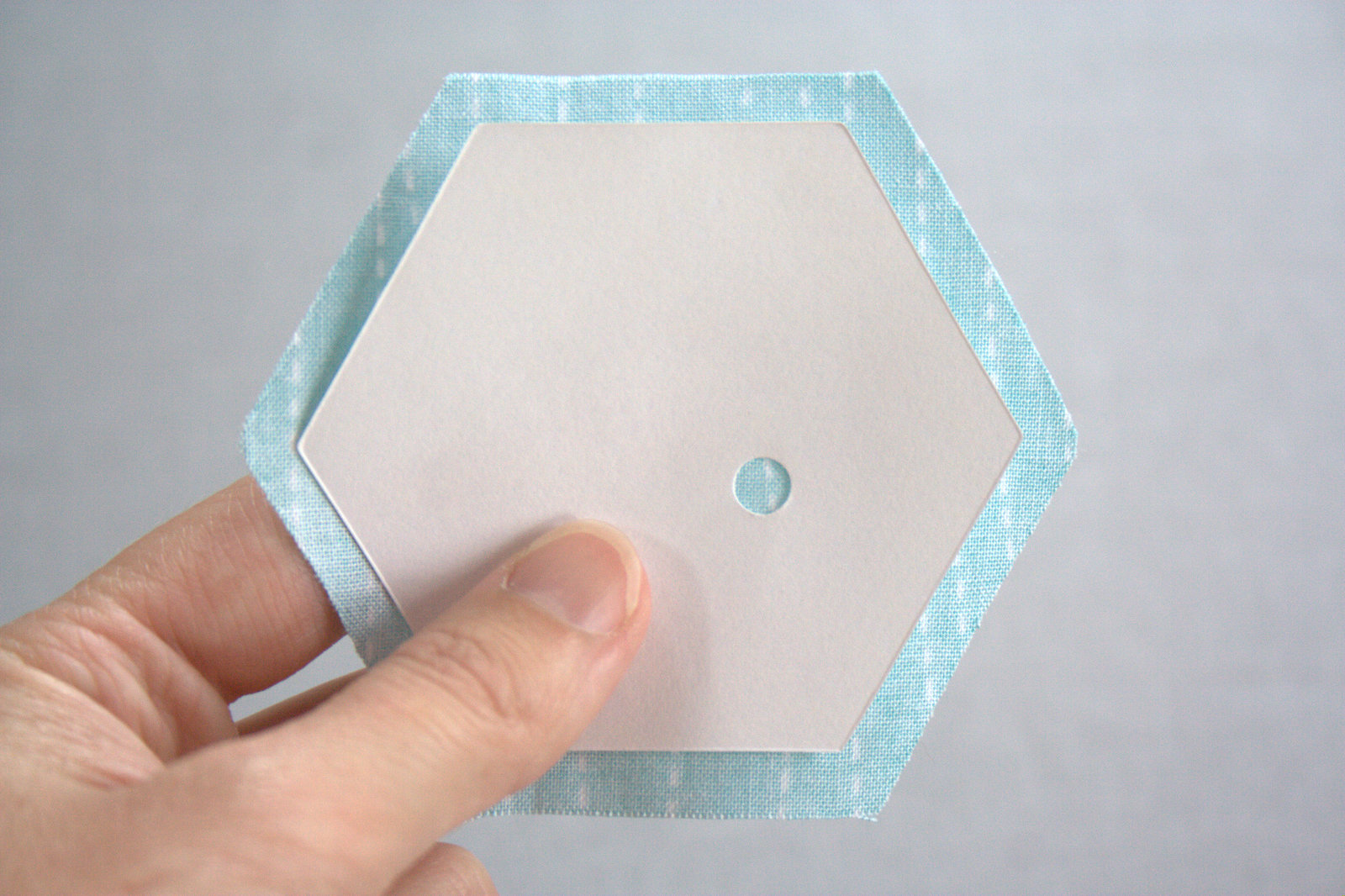
sue daley glue basting eppGlue basting is similar to thread basting in that you are securing the fabric around the cardstock template. With glue basting, first put a dab of glue on the center of your template and stick it to the center of the wrong side of your fabric.

sew daley glue basting eppNow is the time to double check any fussy cutting you did to make sure it all lines up how you want it.

sew daley glue basting eppNext, apply a thin line of glue along one edge of your template. Be careful to keep the glue from getting all the way to the edge of the cardstock, since it will make it much more difficult to remove the templates once you are finished (ask me how I know).

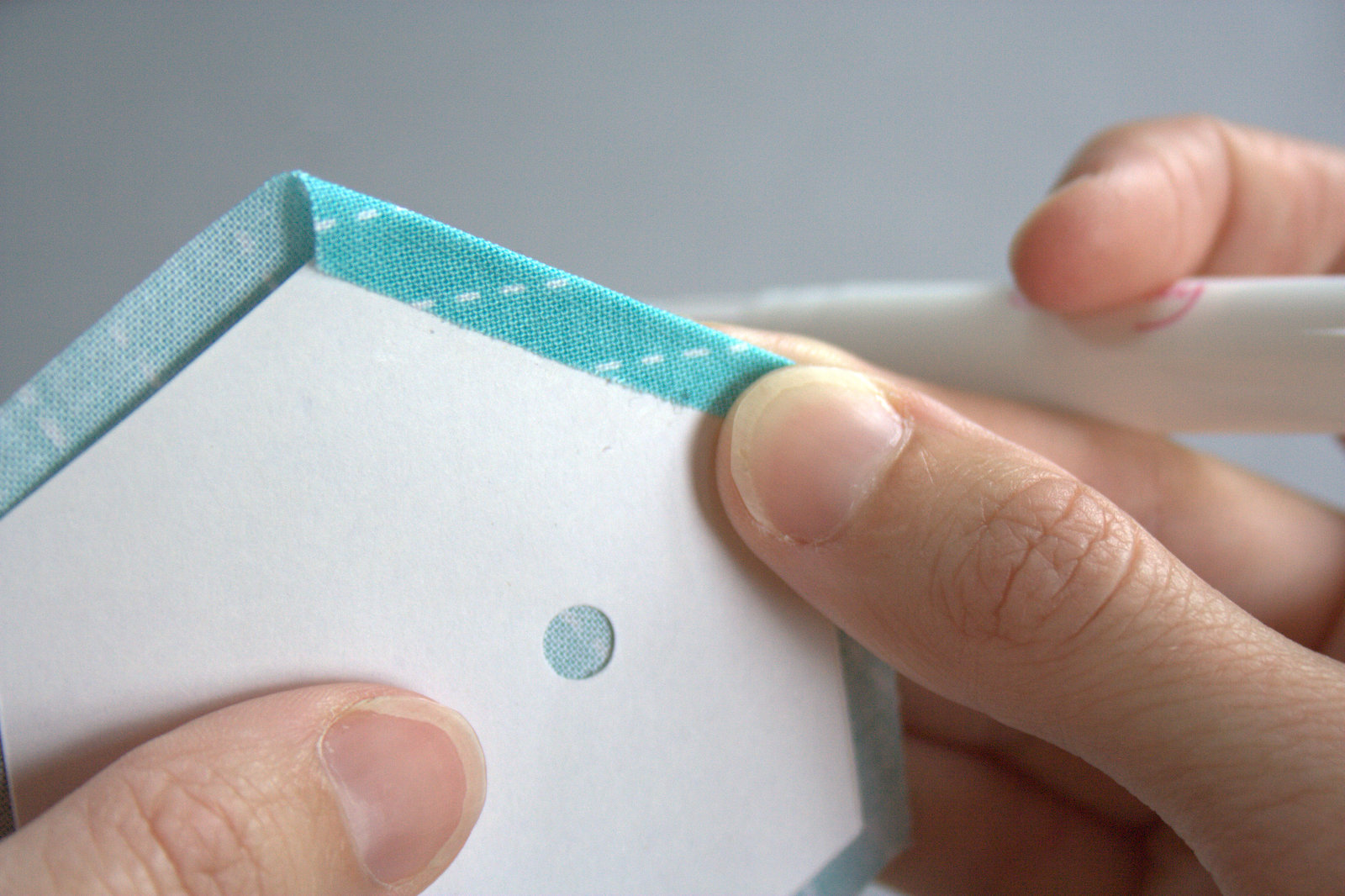
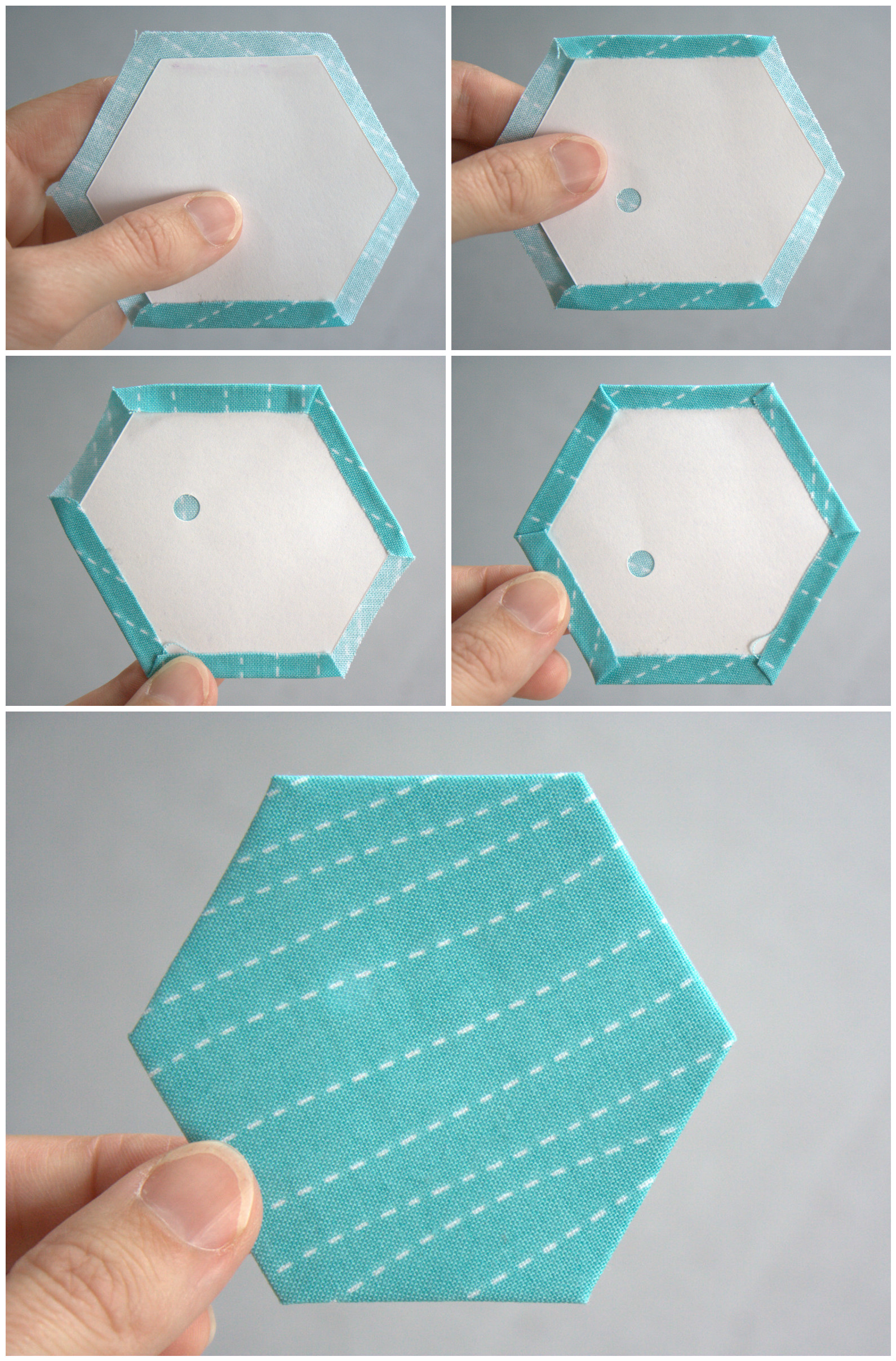
sew daley glue basting eppHere’s one way glue basting differs from thread basting. Instead of working your way around the template, apply glue to opposite sides of the shape to help even out the pull of the fabric.

glue basting stepsBefore you know it, you’ll have your first piece.

glue basting stepsContinue glue basting all of the pieces needed for your coaster. With irregular shapes, start by gluing the longest side to help make the process smoother.

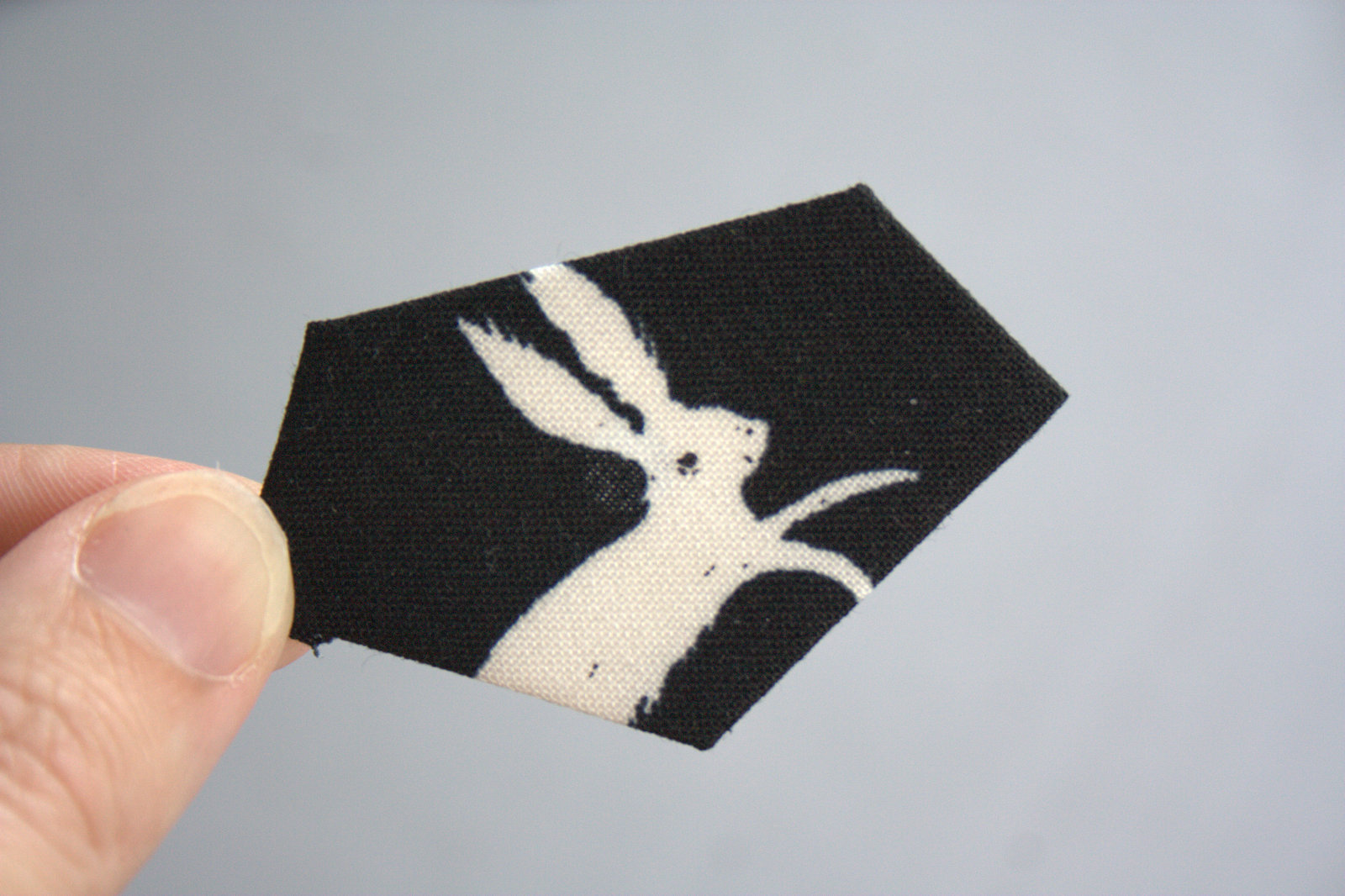
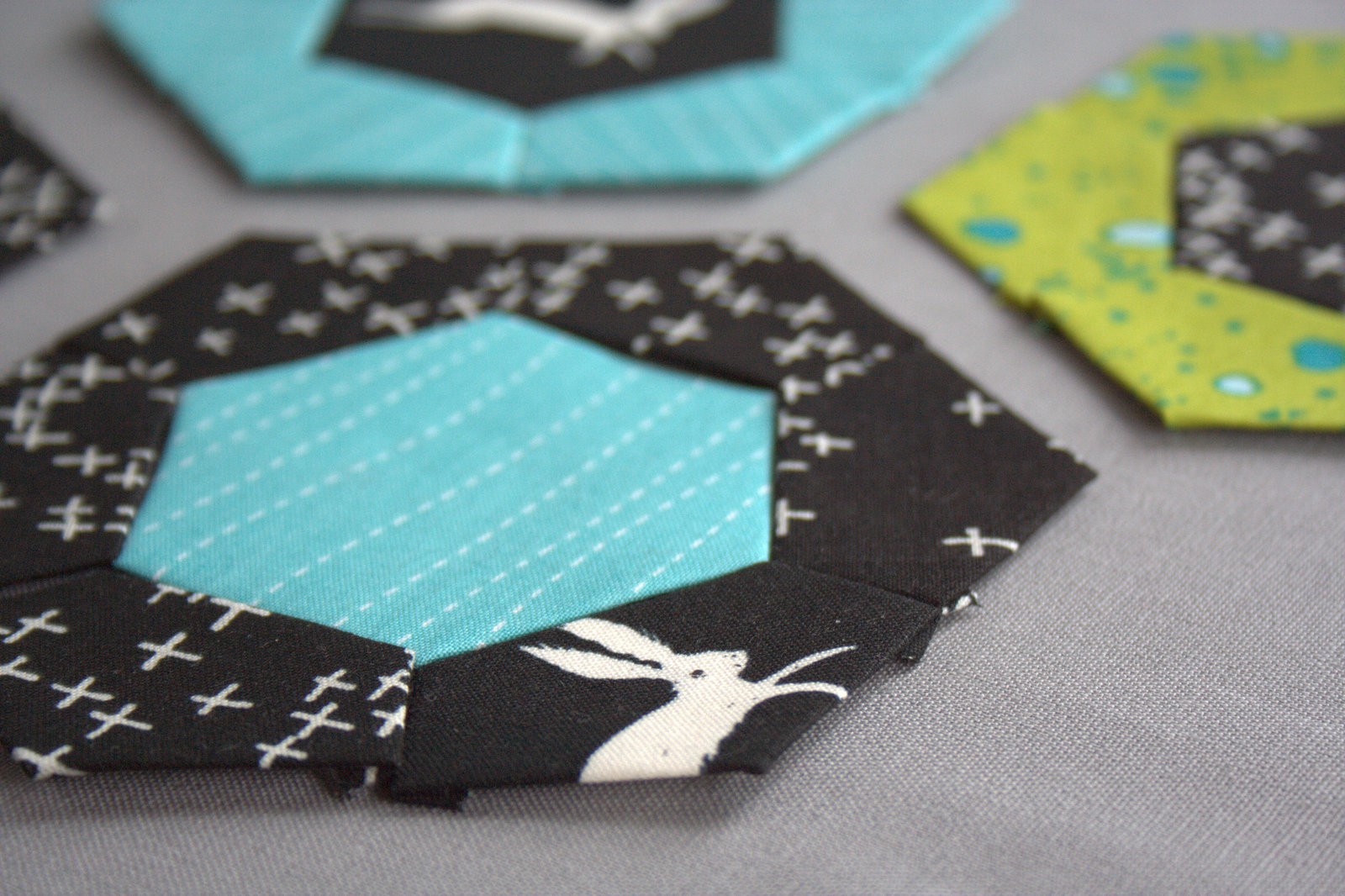
epp fussy cutting bunny rabbitHave fun with your meticulous cutting. This is a great project for using those adorable little bits of fabric you’ve been saving.

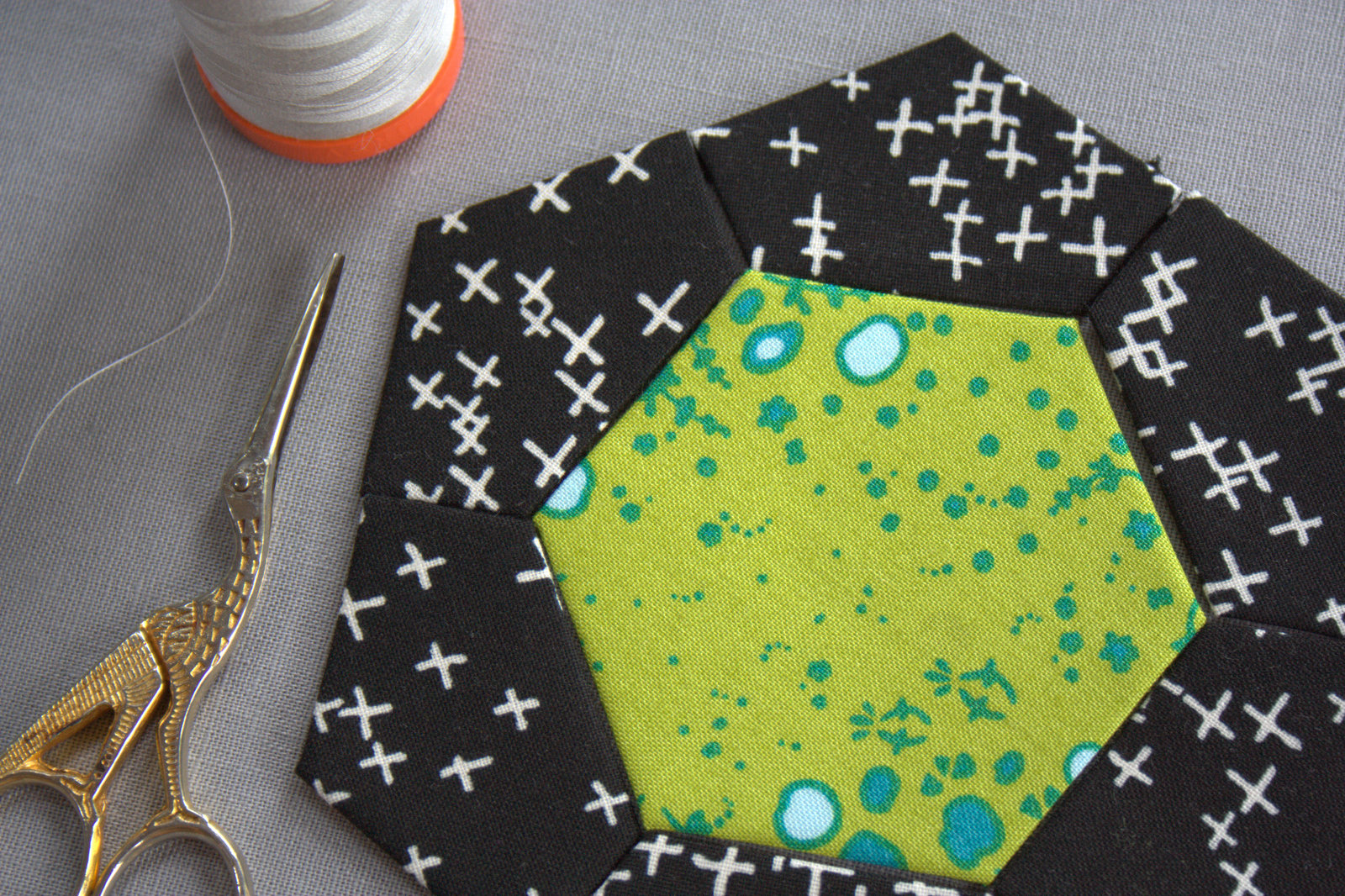
epp coasters tutorialOnce all of your pieces are basted, it’s time to start stitching them together! I made a set of four (4) coasters, but you can make as few or as many as you want.assembling epp coastersAll you need for this step is your basted pieces, sharp scissors, a sewing needle, and some thread in a coordinating color (I love using 50wt Aurifil thread). Sometimes, when the two pieces you’re sewing together are very different colors, there is no color that coordinates with both (like in my case). You can choose one of the colors to match, or just use a neutral color thread. I didn’t have black thread (Aurifil #2692, how have you evaded me!?), so I went with a contrasting light grey (Dove #2600) since I had already decided to quilt these with the contrasting colored thread. Once you have your supplies, this is a great project to take on the go, to stitch here and there.

assembling epp coastersTo get started sewing the pieces together, arrange your basted pieces the way you want the finished coaster to look. Flip the first piece over one edge of the center hexagon, right sides together.

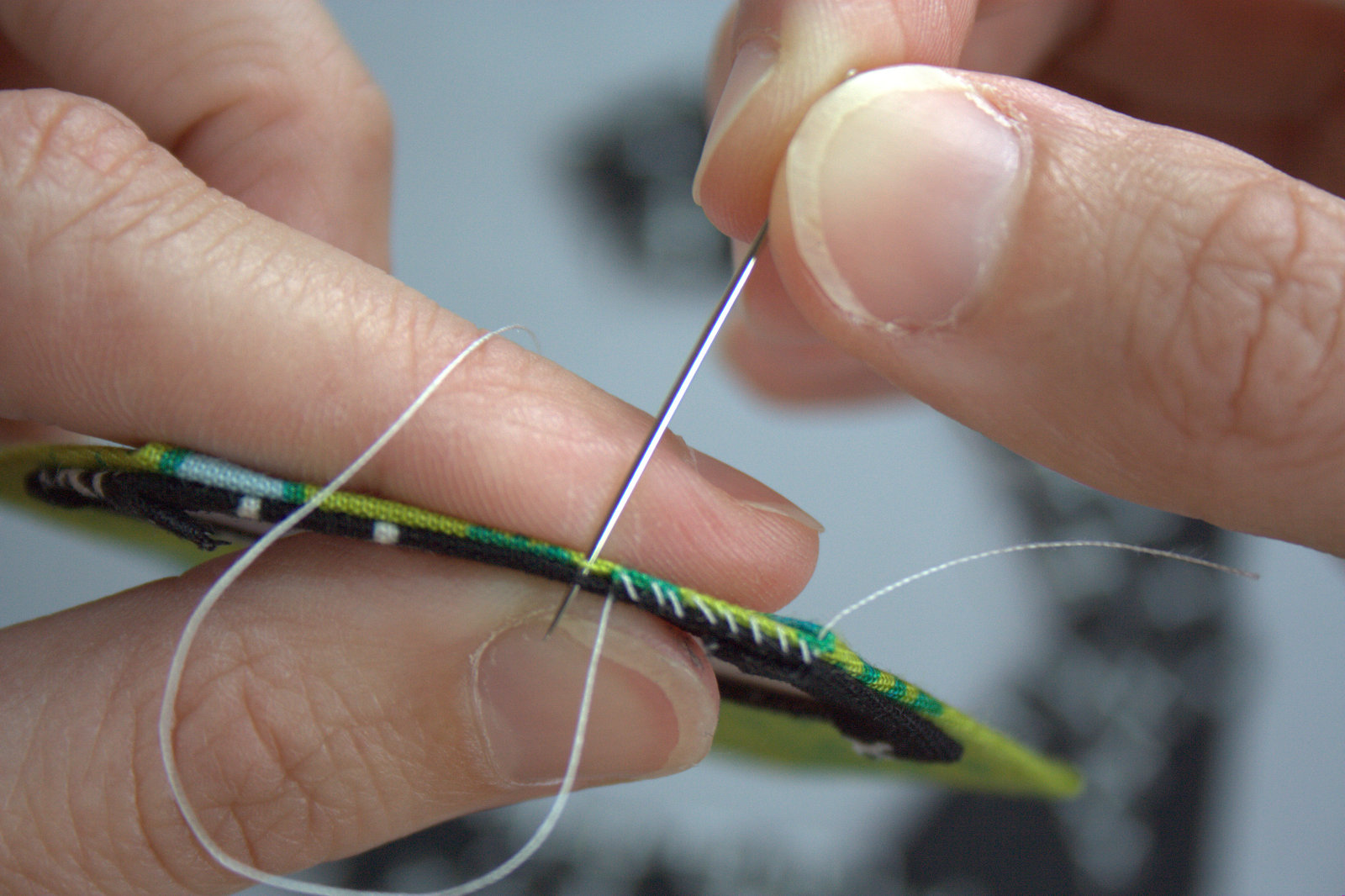
assembling epp coastersWith a knotted thread, beginning at one corner, carefully stitch the two pieces together. The needle should only pass through the edges of the fabric, not the cardstock template, and only needs to catch a few threads of each fabric to hold. Many people use whip stitch to hold the pieces together (shown above). Sew the edge completely, then pick up the next basted piece, hold it right sides facing the next edge of the center hexagon, and continue sewing along that joining edge. There’s no need to knot your thread after each side; continue stitching the pieces together until you either run out of thread or you get to a point where no other piece can be directly joined.

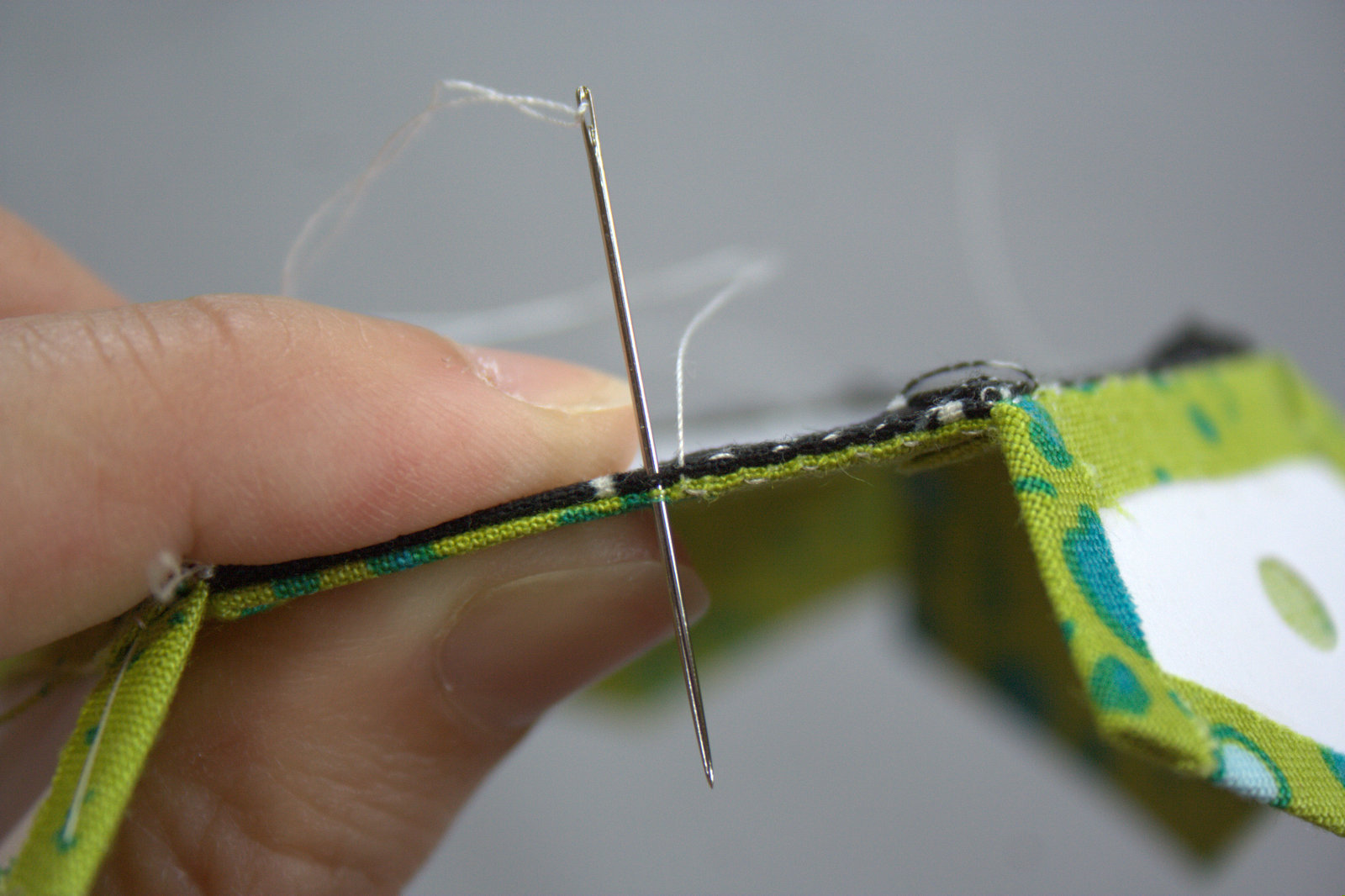
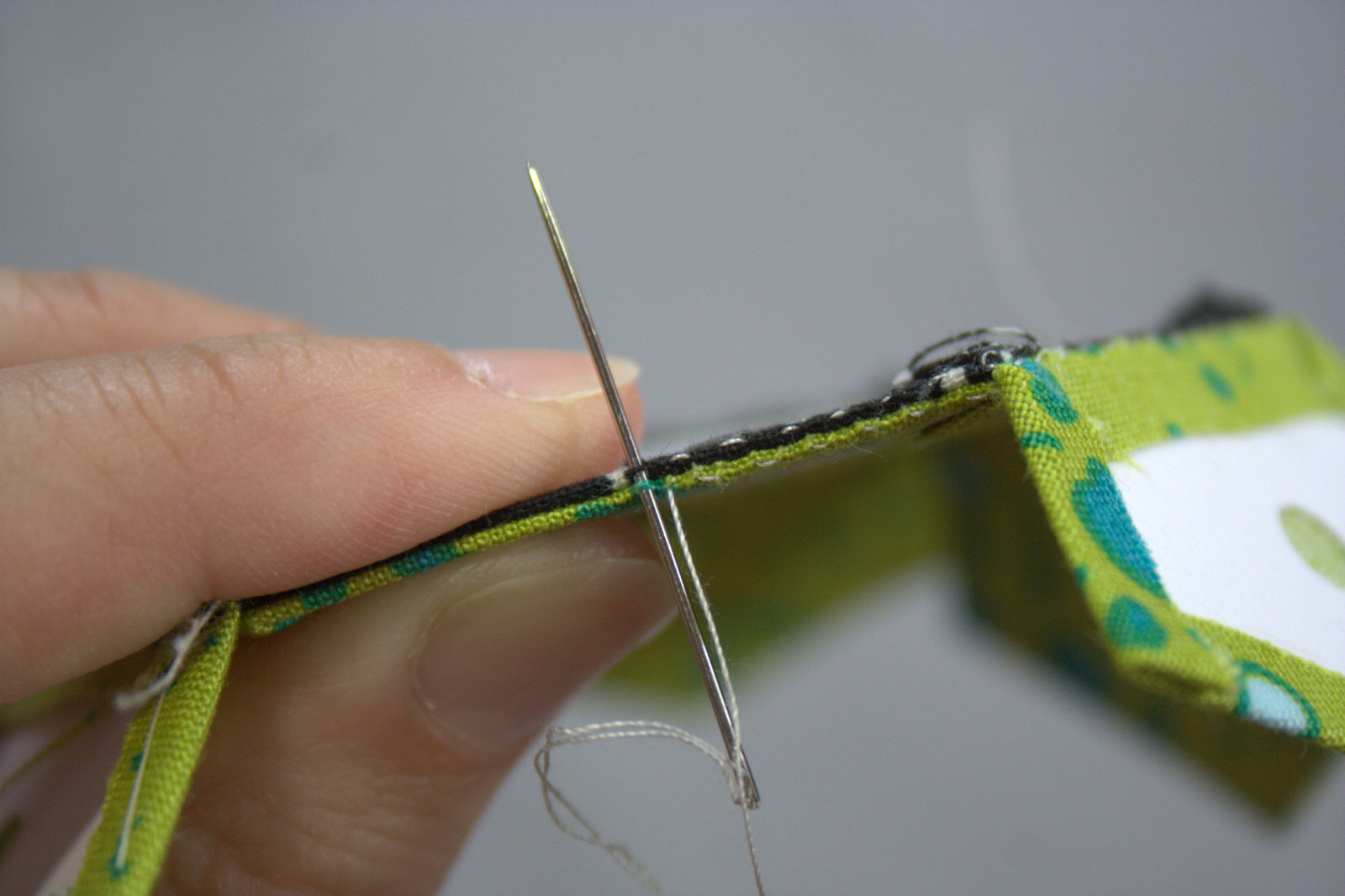
ladder stitch to join eppladder stitch to join eppI recently saw the idea of using ladder stitch to join EPP pieces, so had to try it. I LOVED it! With ladder stitch, instead of entering the edge of the fabric from the same side every time as with whip stitch, you pass the needle from the side you’re on to the opposite side with each stitch. It may take a bit more time because of the back and forth of the needle, but I prefer it since it results in a nearly invisible join and I’m a slow and steady stitcher to begin with. Use whichever stitch works best for you and sew all seams. Don’t be afraid to fold your center template in order to get the outer seams lined up and sewn together.

Once your coaster EPP tops are all stitched together, it’s time to assemble the coasters.

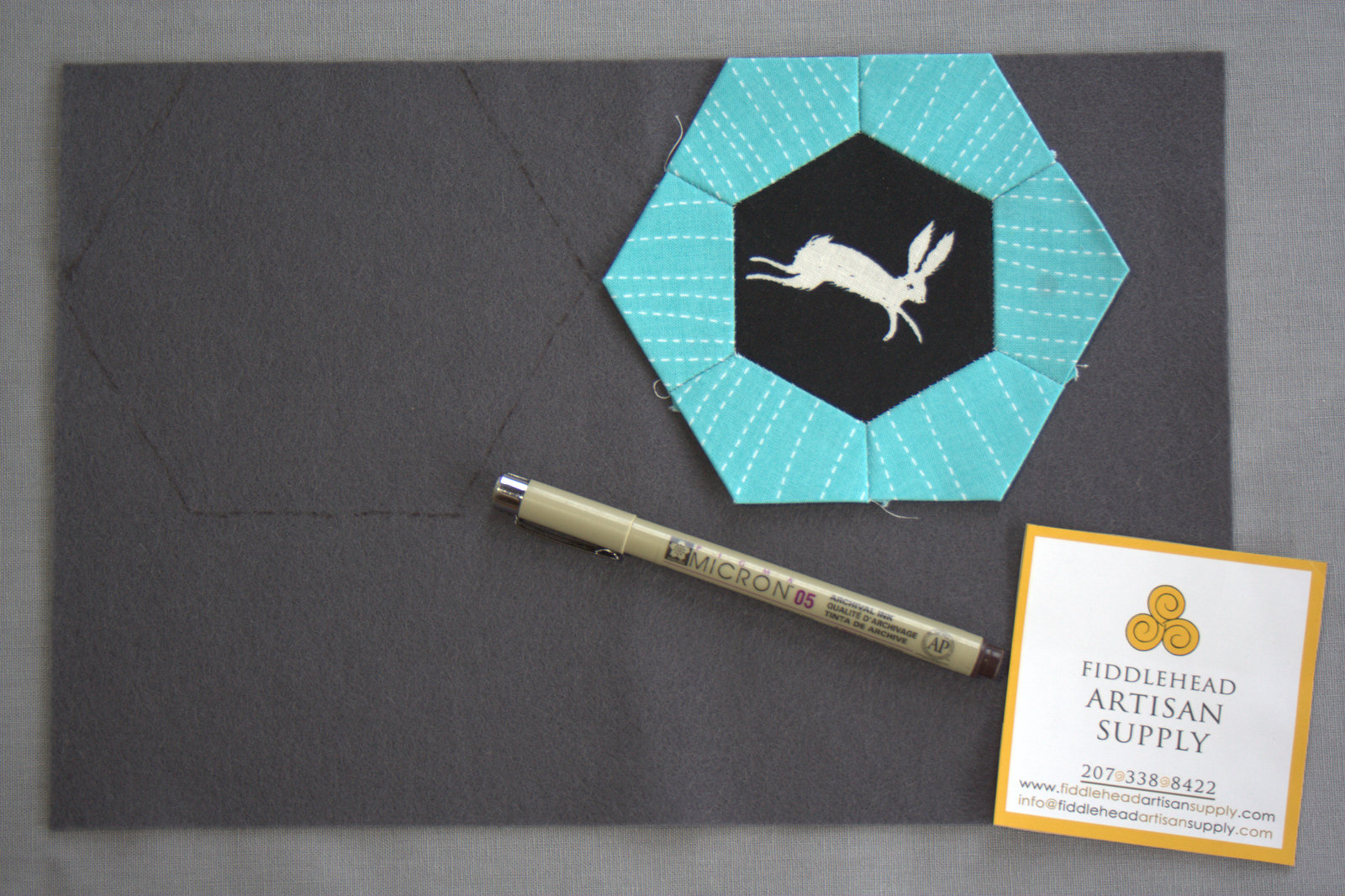
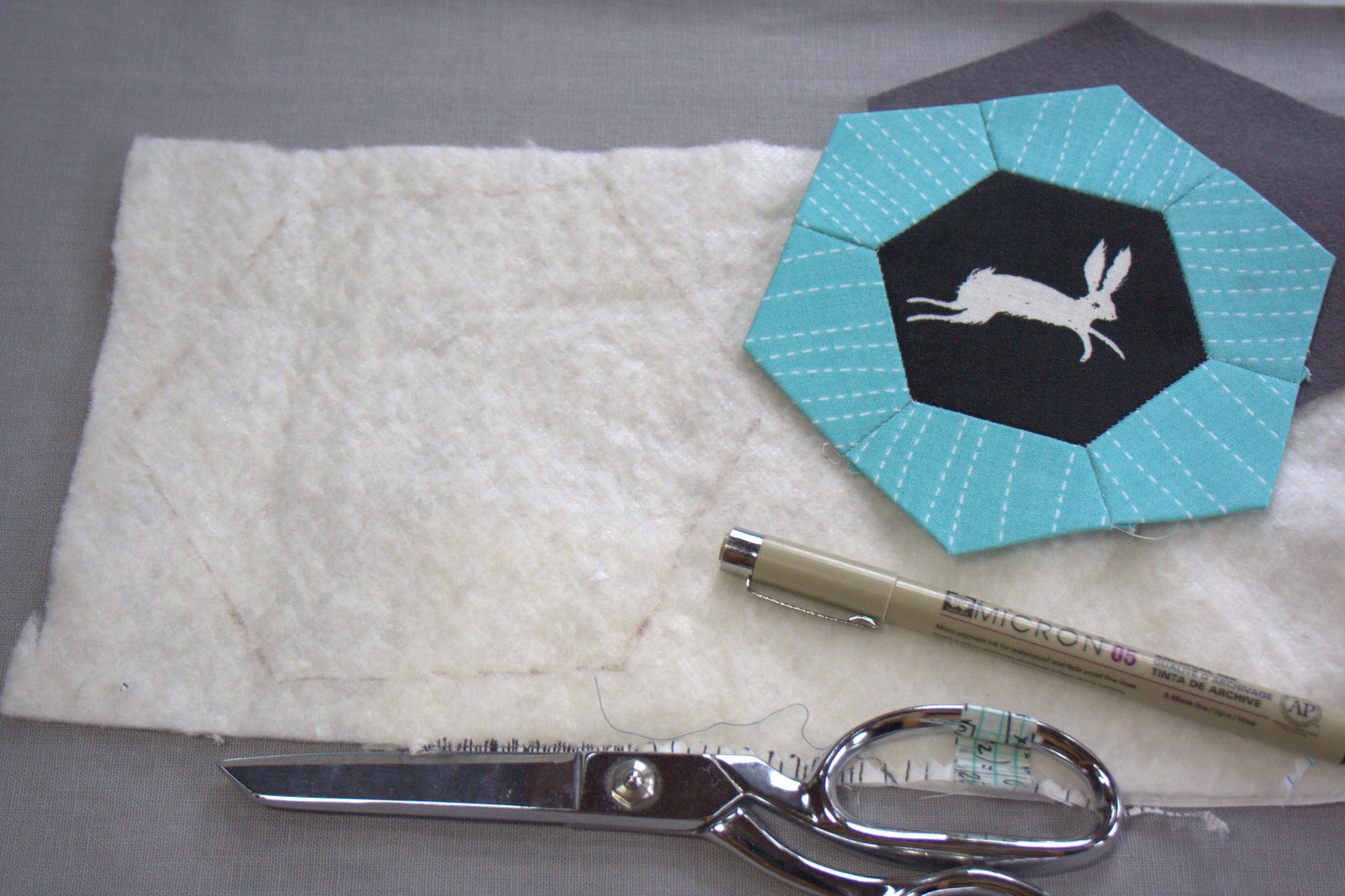
tracing and cutting EPP coaster backingFirst, trace your EPP top onto a piece of 100% wool felt. I bought mine at my local quilt shop, Fiddlehead Artisan Supply, where there’s a huge wall of gorgeous wool felt from which to choose. Trace one hexagon backing for each of the coaster tops. I used a Sakura Micron pen since we are going to cut just inside the line and therefore it won’t be visible. Plus, Micron pens are the best.
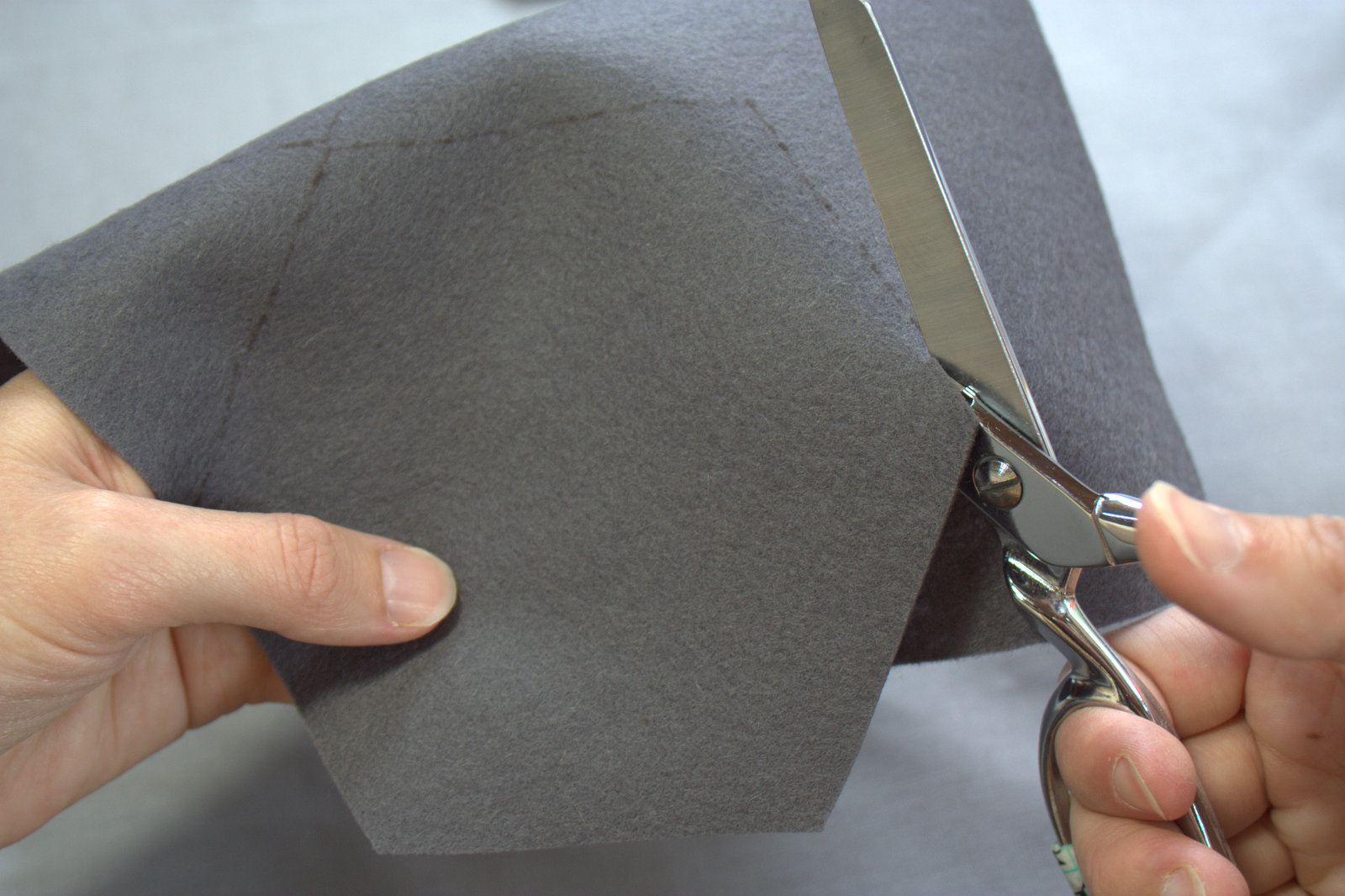
EPP coaster assemblyCarefully cut *just* inside the line you traced.

EPP coaster assemblyThis next step is optional, but if you plan to use the coasters for hot beverages I would recommend it. Gather some batting scraps. This is a great way to use those batting trimmings you’ve cut off the edge of finished quilts. Again, trace your hexagon coaster top and cut out along the line.

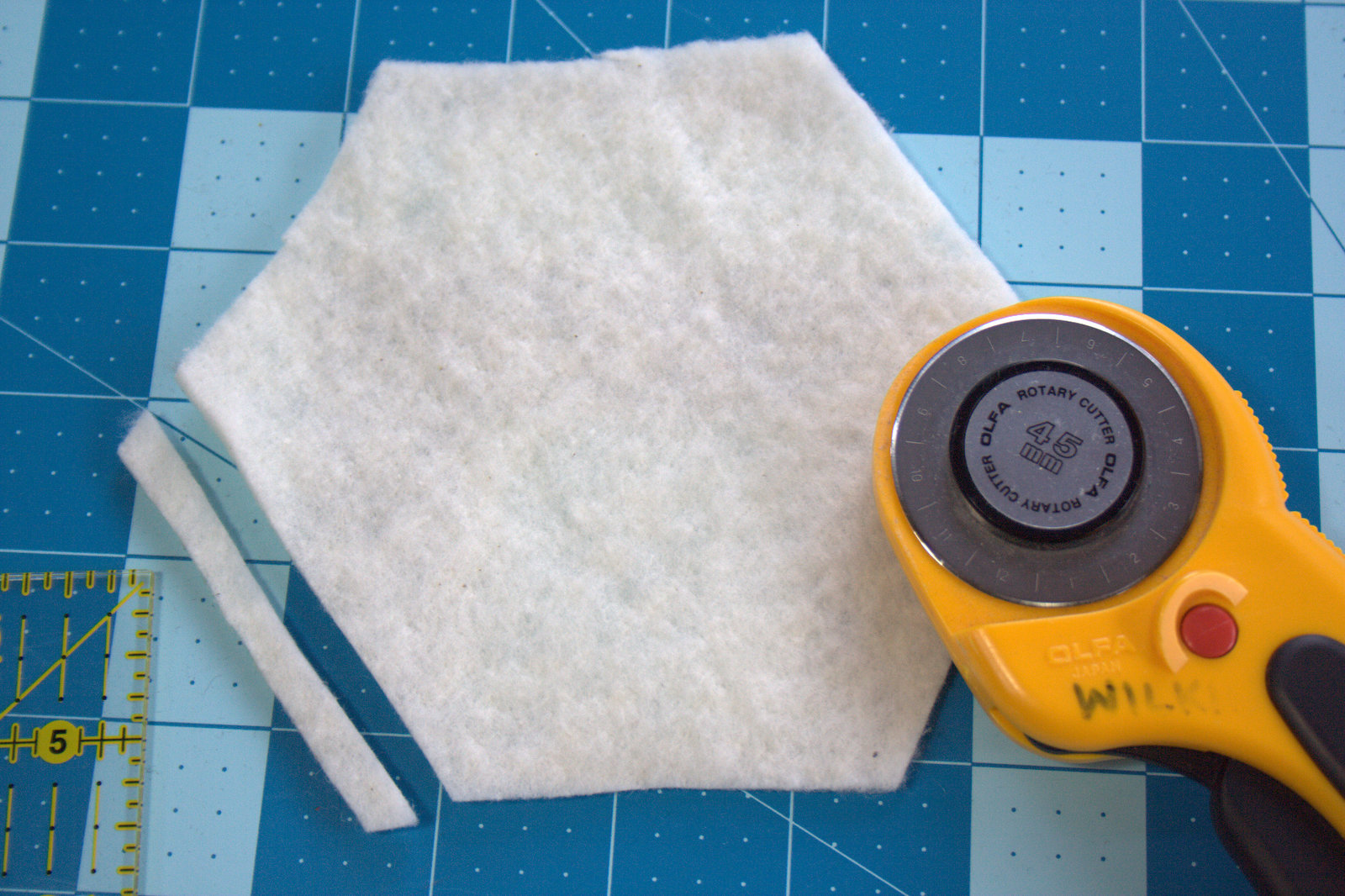
EPP coaster assemblyTrim 1/4″ off each edge of the batting hexagon. This way, the batting won’t stick out from the edges of the assembled coaster. I used my rotary cutter and ruler, but be sure to count how many edges you trim since it’s easy to lose track. You should have six (6) trimmings after trimming each hexagon. Set your felt and batting hexagons aside.

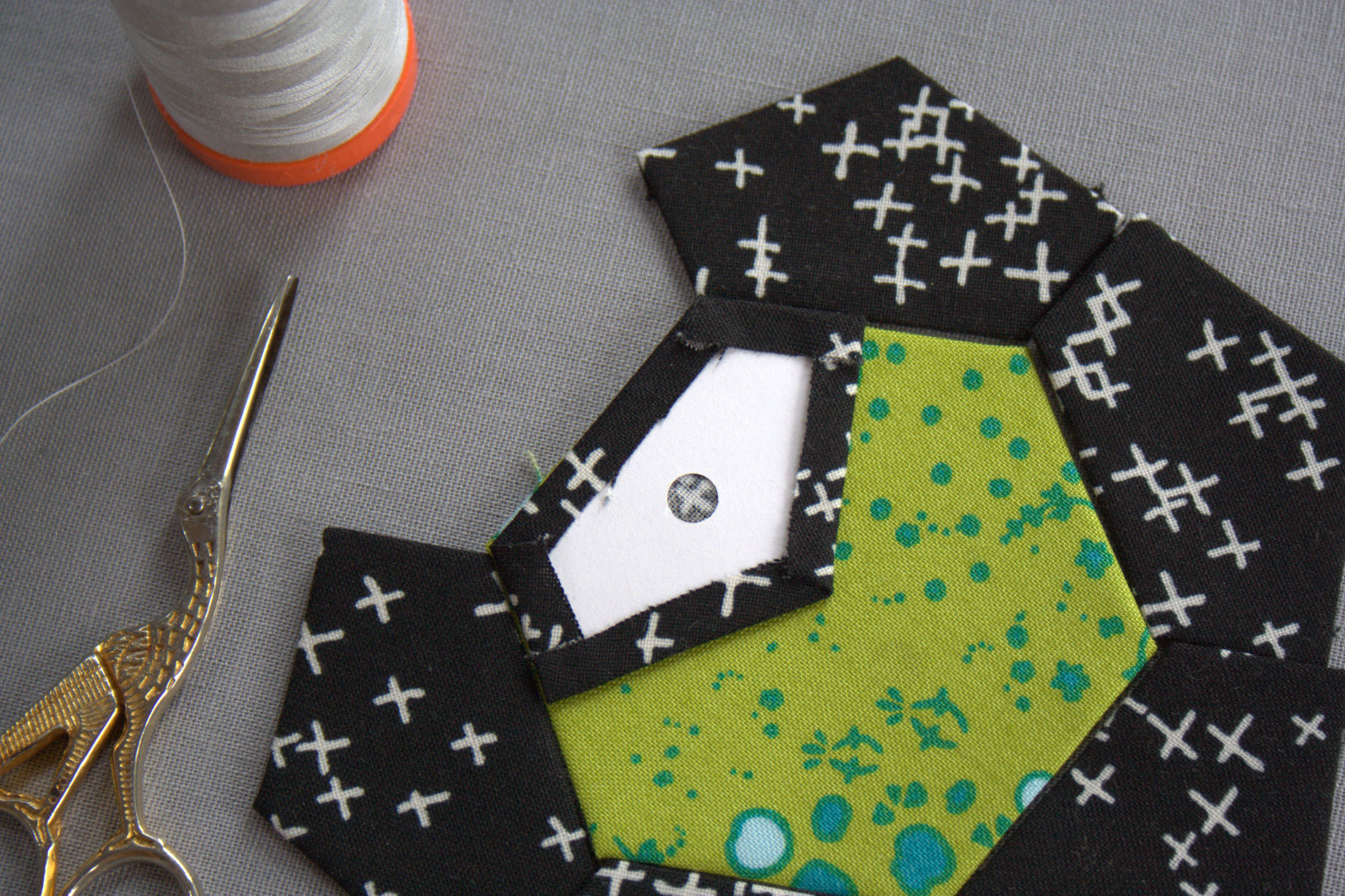
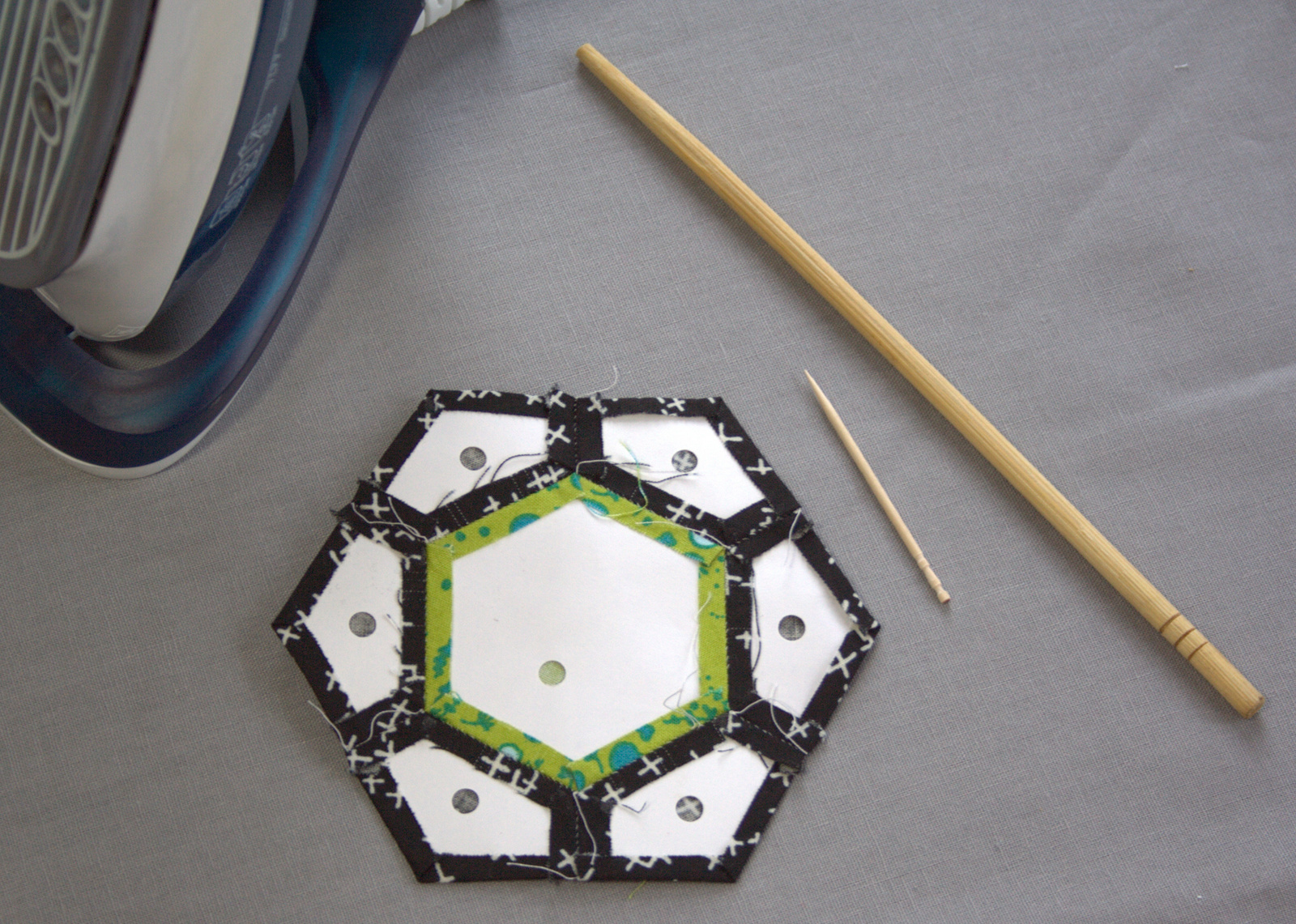
EPP coaster assemblyNow, back to your coaster tops. It’s time to take out those template papers! You will need your EPP coaster tops, a toothpick, a chop stick (or crochet hook), and an iron. Trust me, and no, we’re not making dinner!

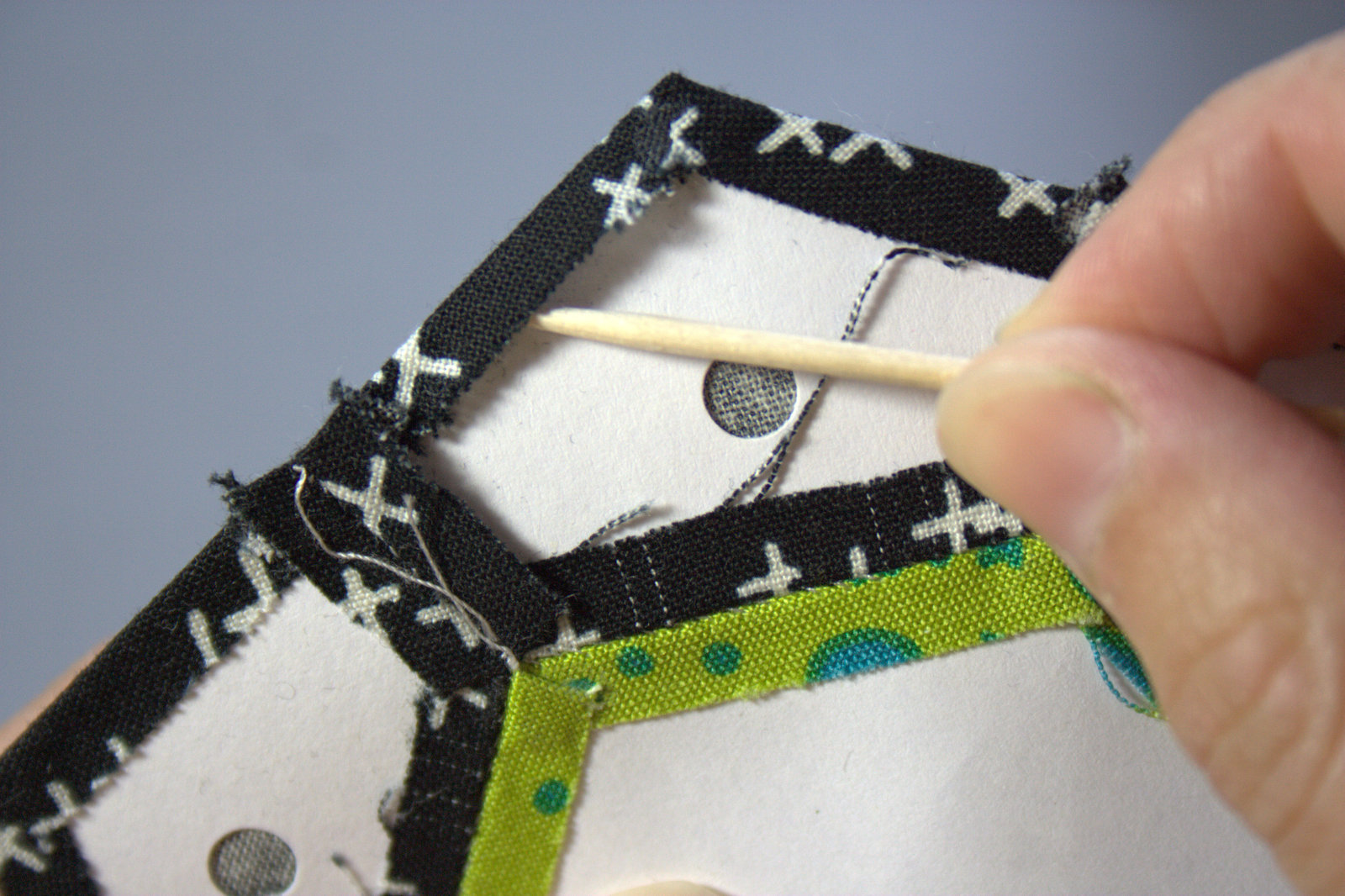
use toothpick to release glue bastingGently slide the toothpick under the glued edges of the fabric, separating the fabric from the cardstock template. Be particularly careful around the outer edges to separate the fabric from the cardstock without pulling it out of shape too much.

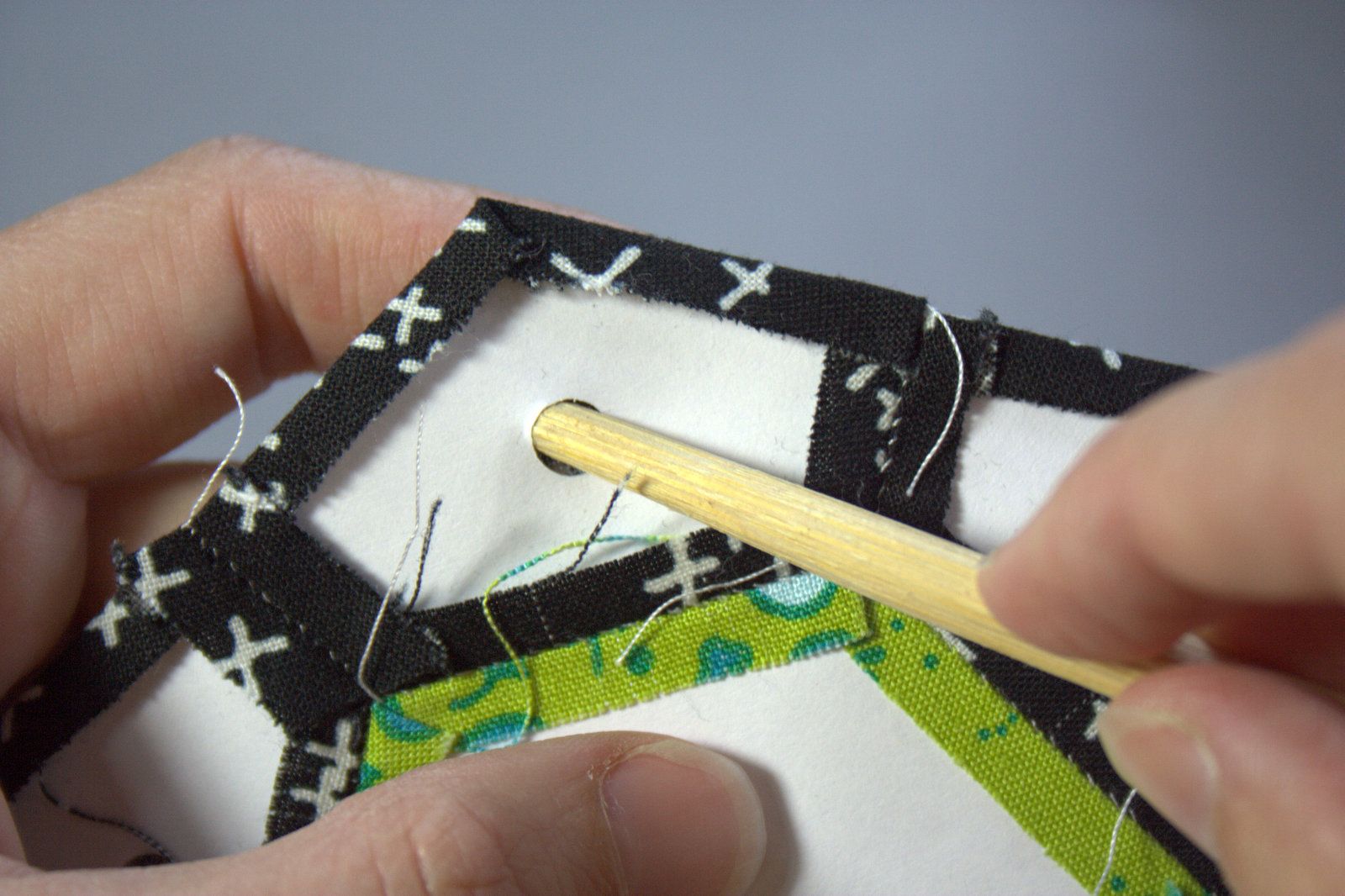
chopstick removal of epp templatesOnce the fabric edges are separated from the cardstock template, grab your chopstick and stick the end of it in the hole punched hole of the template.

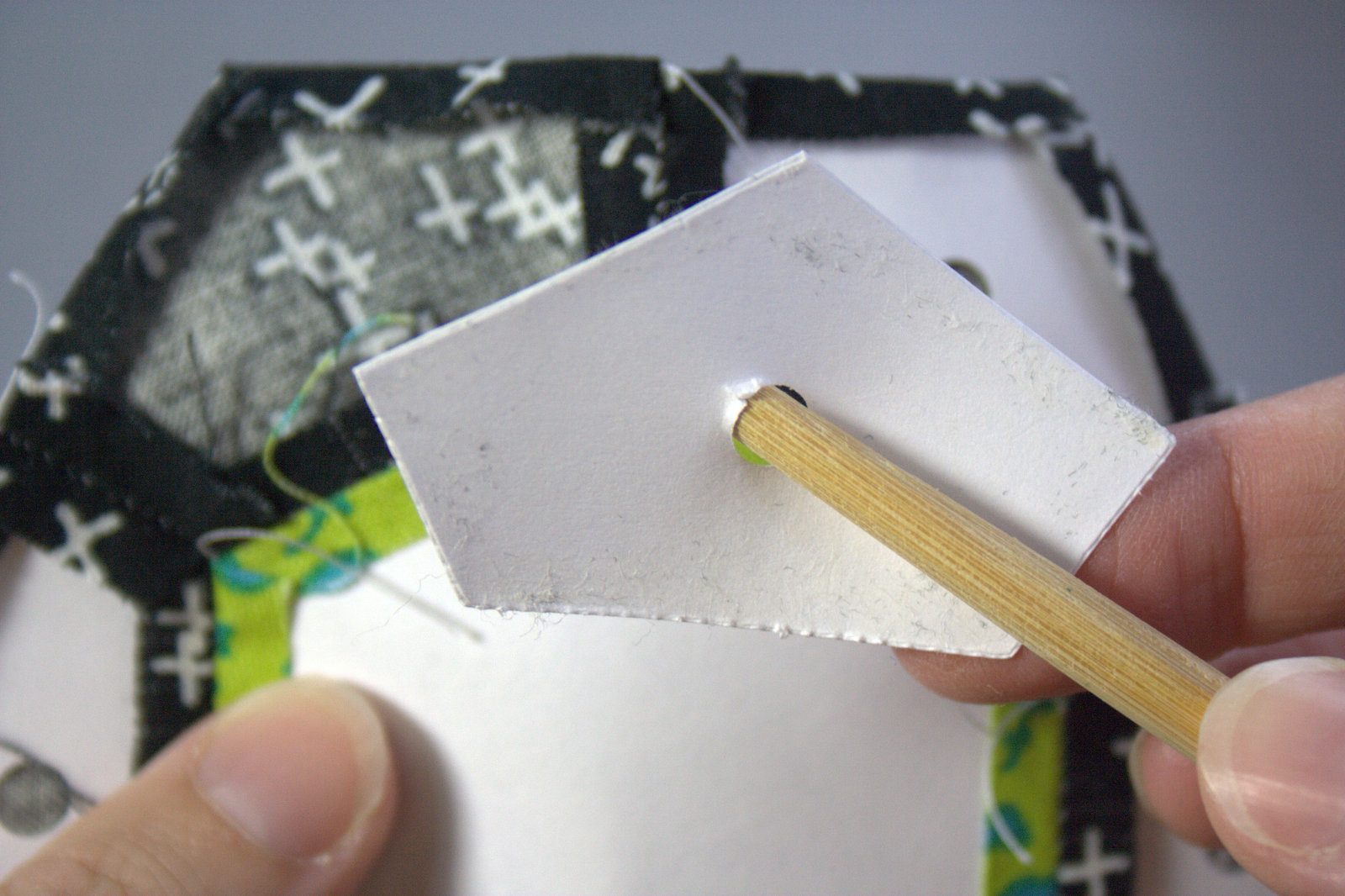
chopstick removal of epp templatesGently pull the edge of the chopstick up and the cardstock template will pop right out. This chopstick removal method works much more smoothly with thread-basted EPP pieces, but as long as all of the glue spots have been unstuck, it should still smoothly remove the template. You can save the template and use it again!

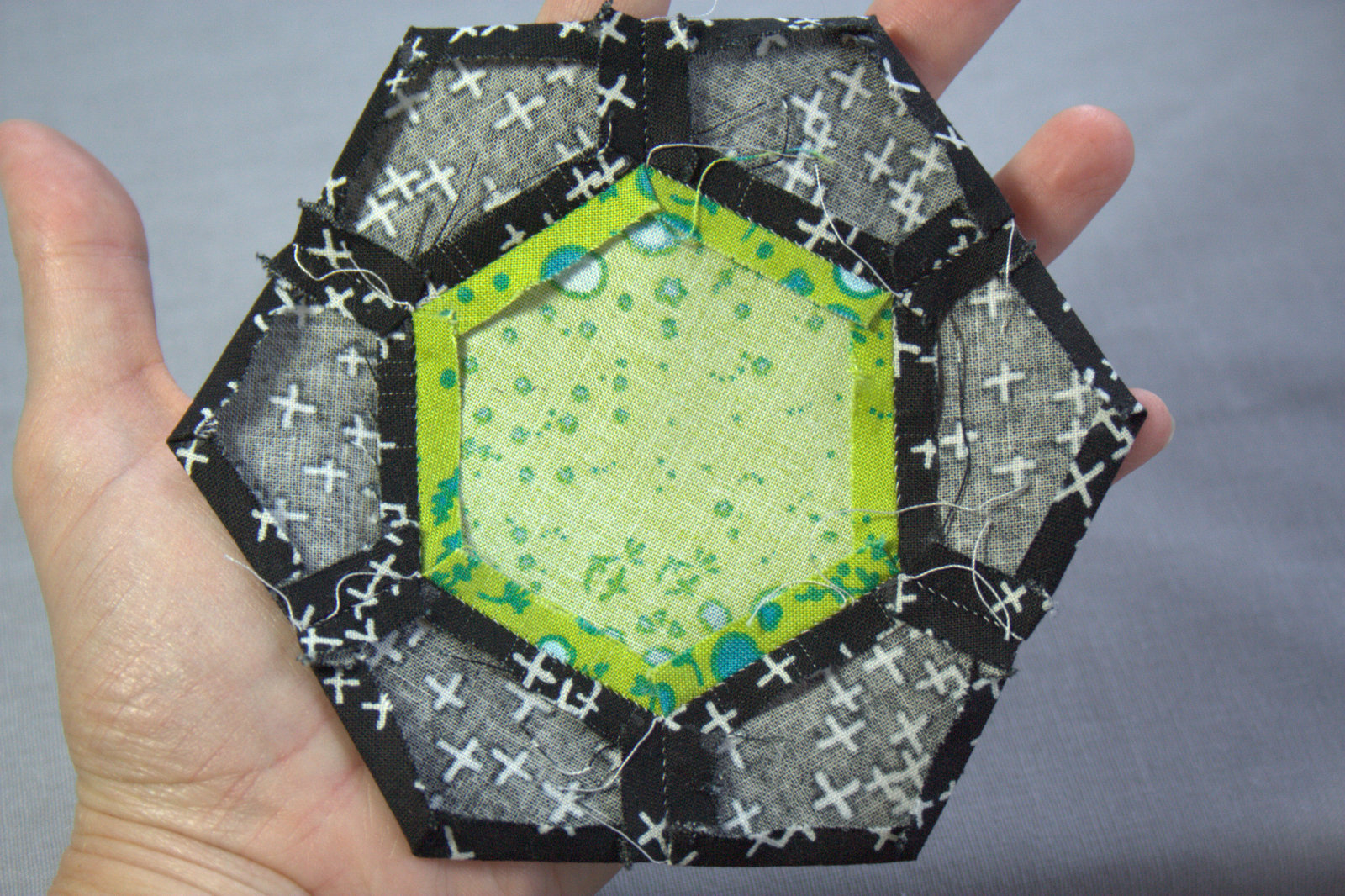
EPP coaster tutorialOnce all of your templates have been removed, give your coaster top a good press with a hot, dry iron, ensuring that all of the outer corners are still folded in the way they should be.

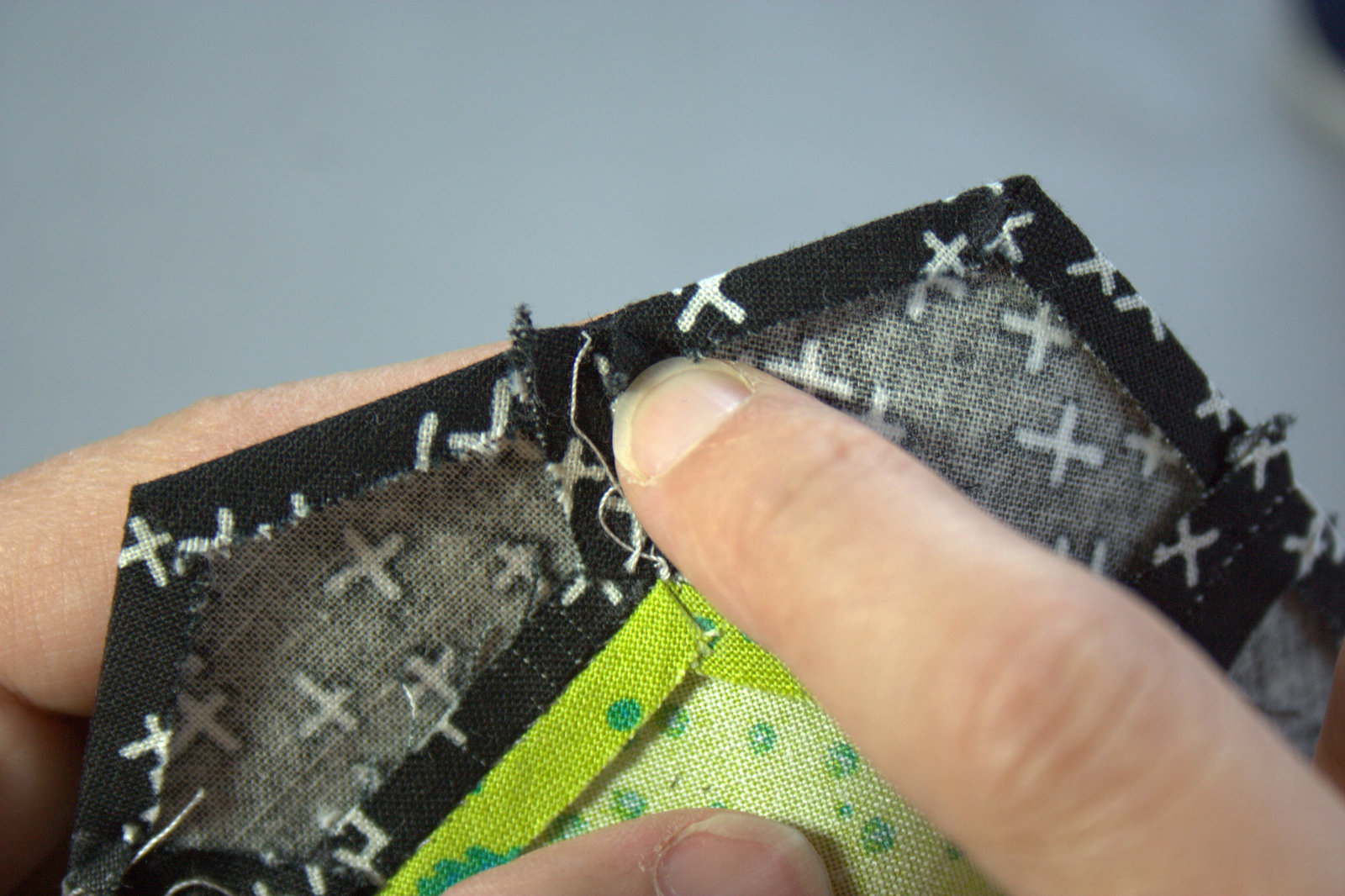
EPP coaster tutorialWhile you’re pressing your coaster top, fold in the edges of your outer seams like you’re making a paper airplane and press well. This will keep them away from the edges when you sew your layers together, keeping the edges of your coaster neat and clean and free from peeking-out seams.

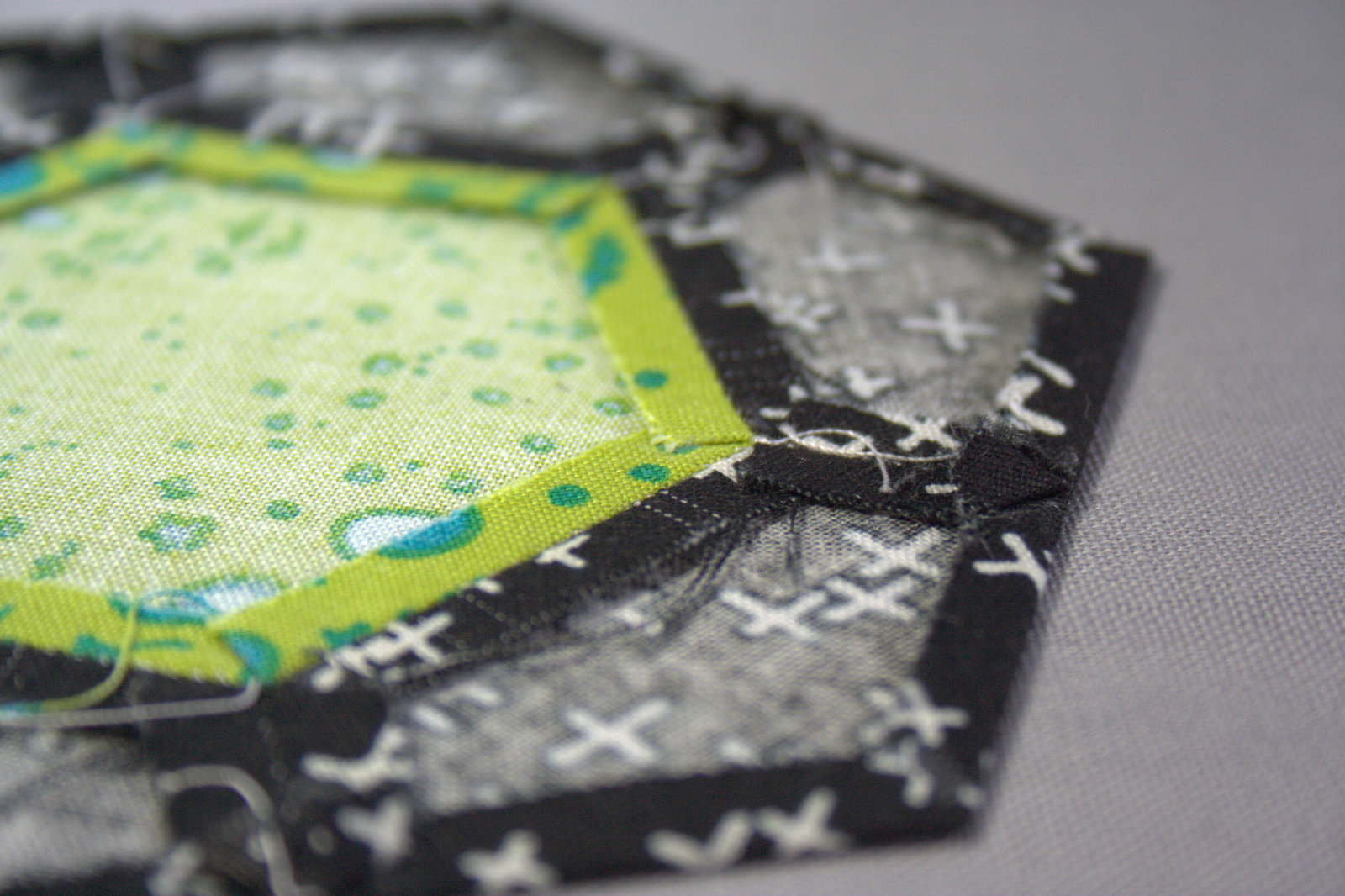
EPP coaster tutorialIt should leave a nice neat edge.

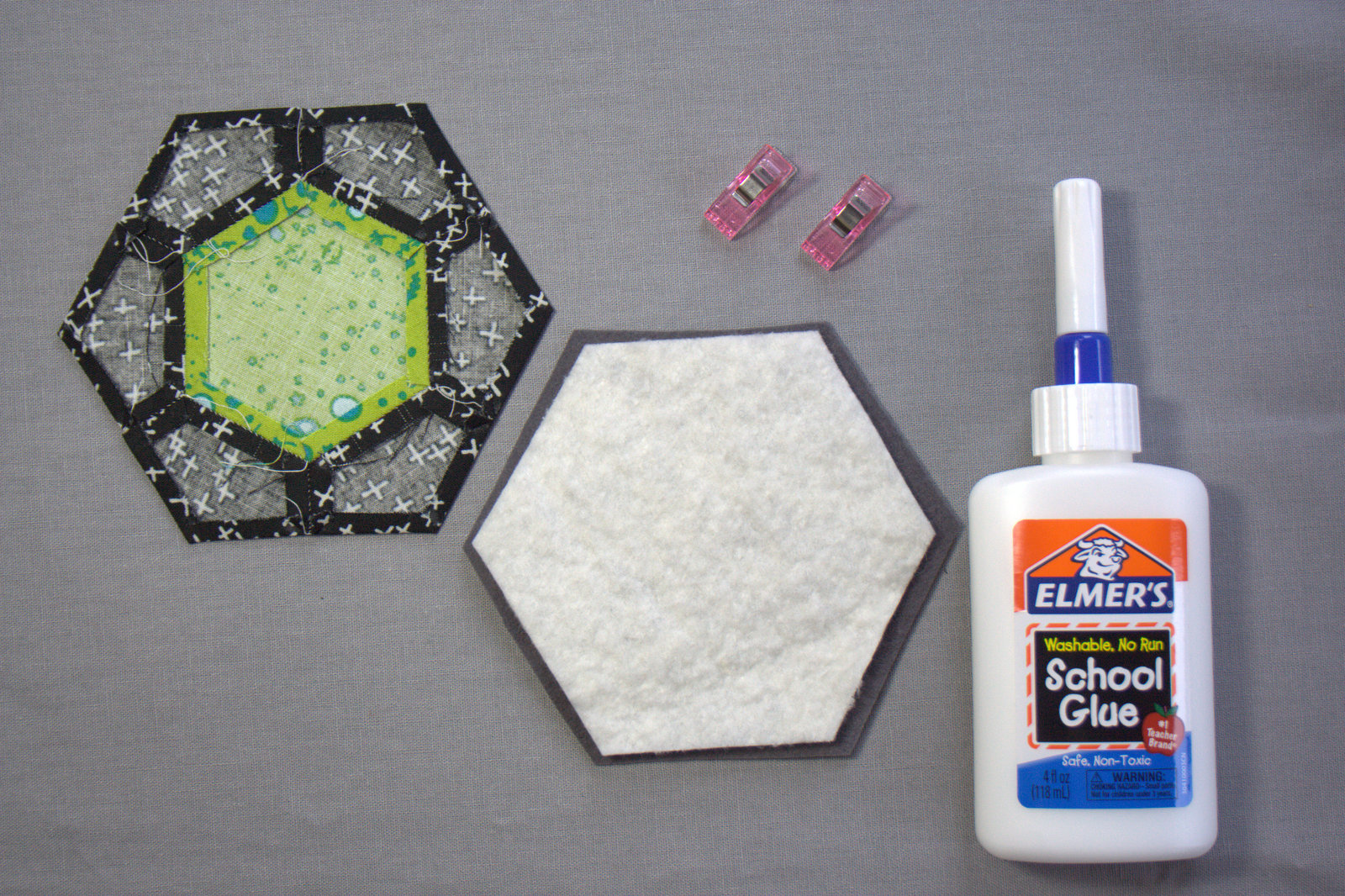
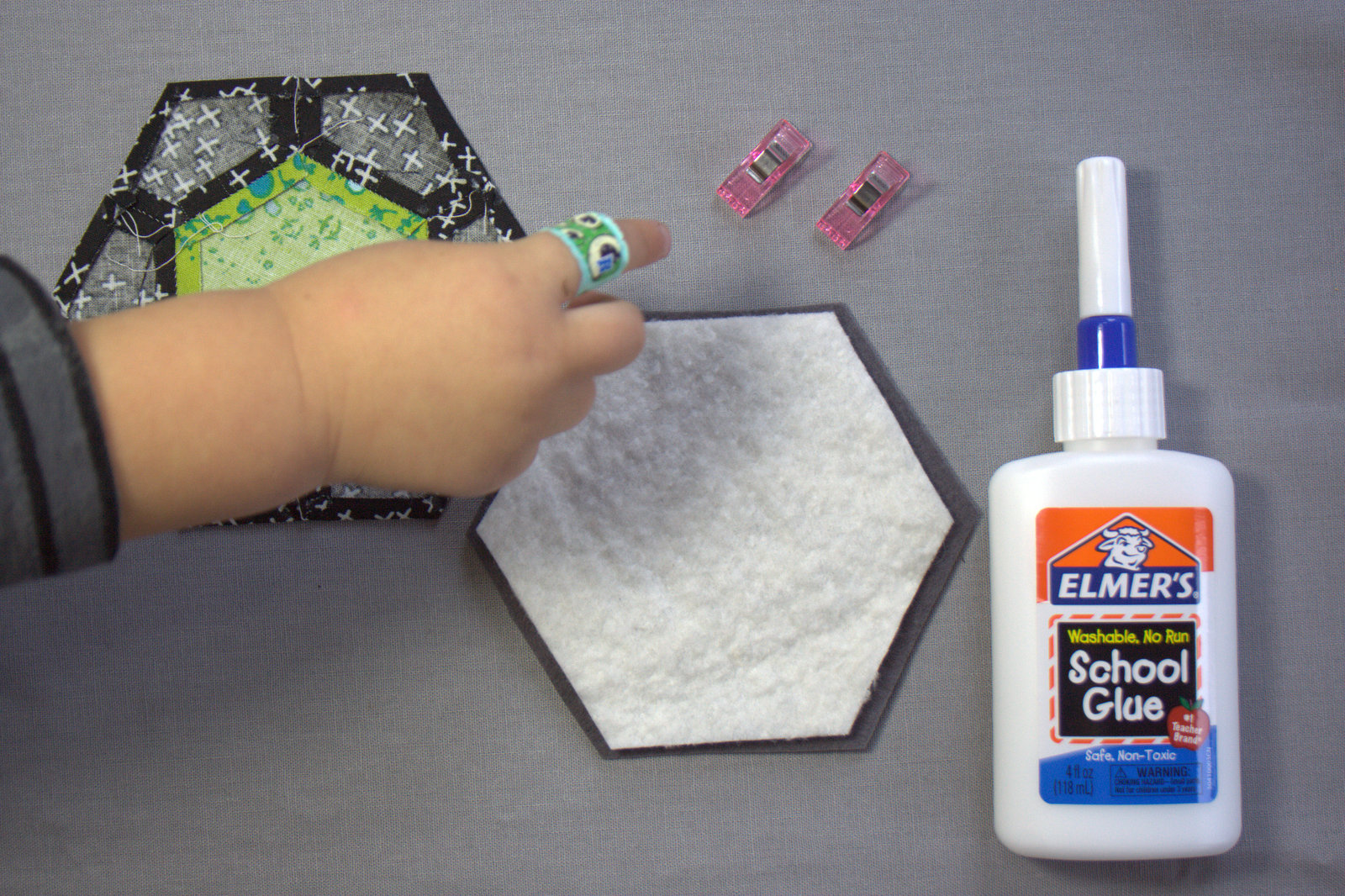
epp coaster assembly tutorialNow it’s time to assemble our coasters! You can probably just pin the layers together: felt on the bottom, then batting, then EPP coaster top, but I like to glue baste and use Clover Clips* to hold the layers together before sewing since it results in a nearly perfect alignment.
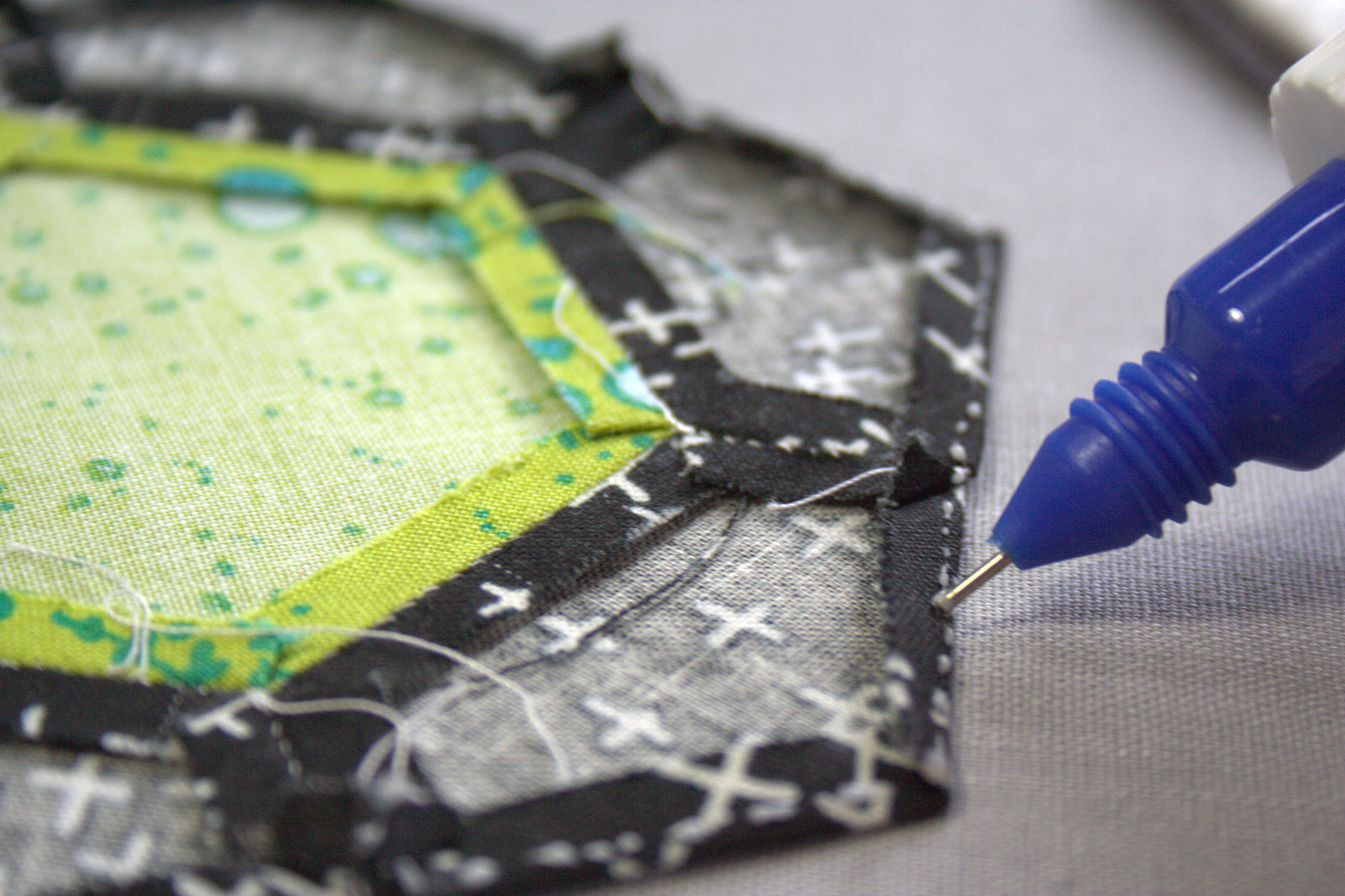
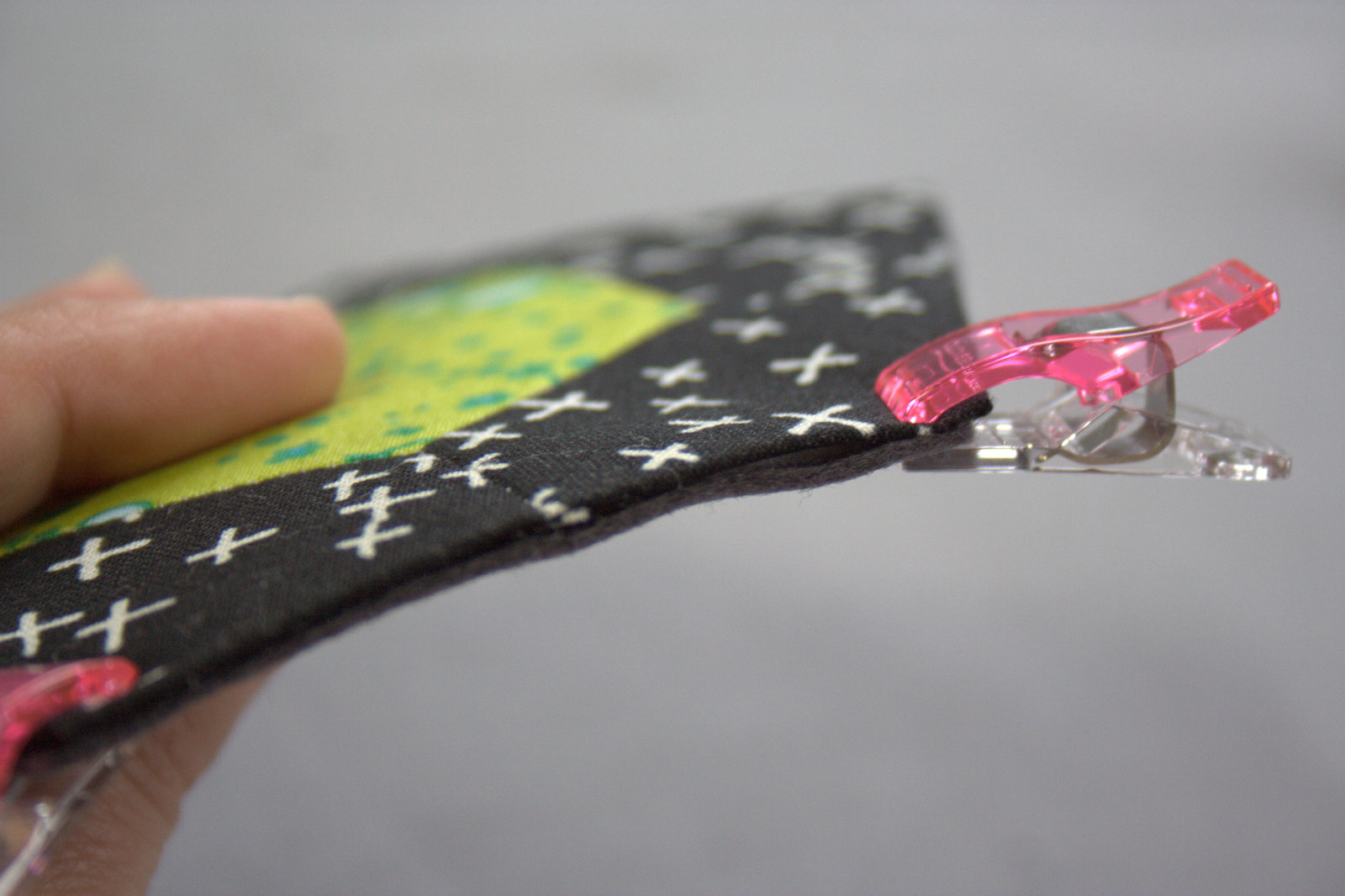
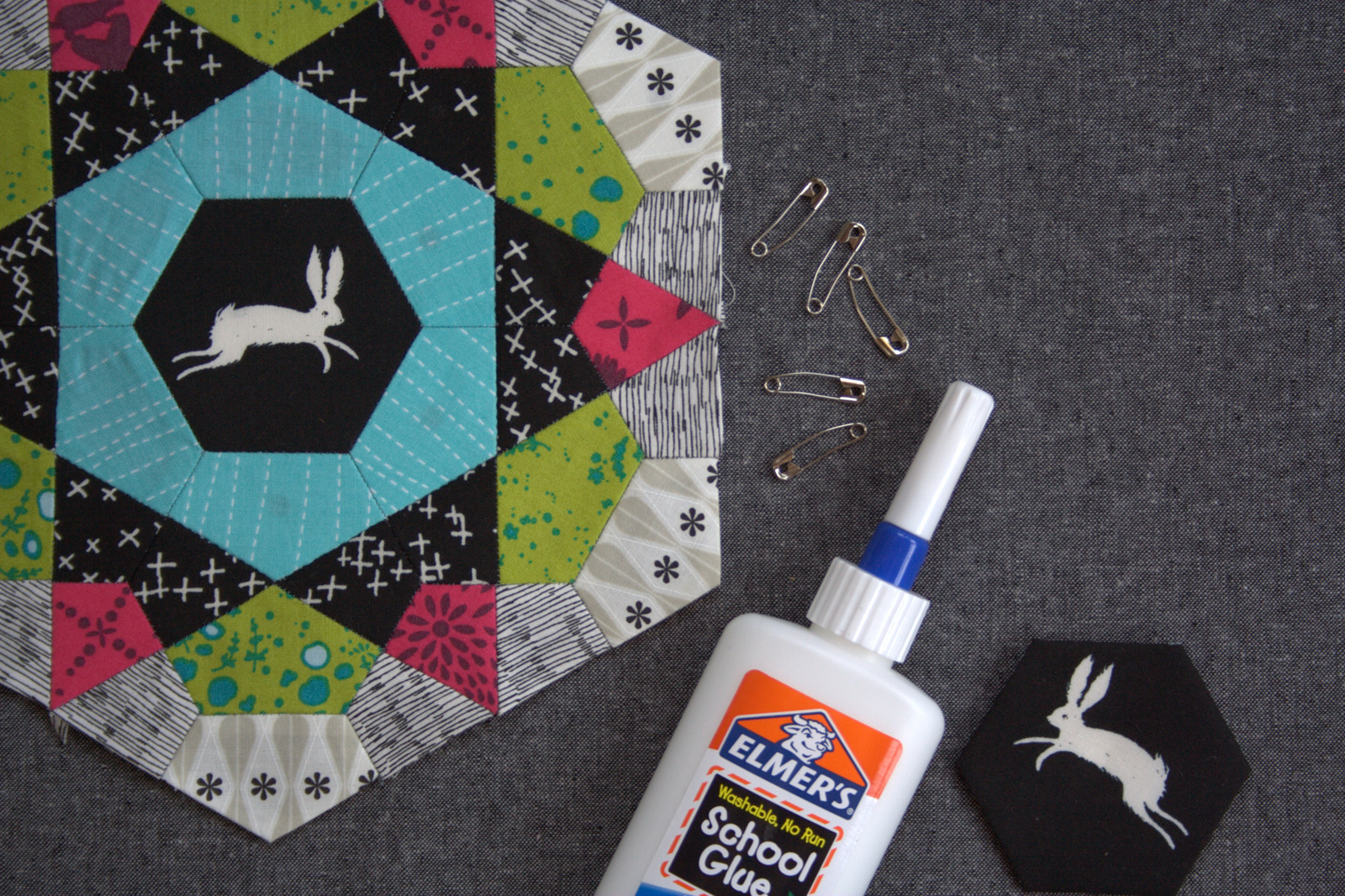
glue basting epp coaster tutorialUsing Elmer’s washable glue, make a tiny path of glue around the outside edge of the entire coaster. I use Fine Line Glue applicator tips provided by Pile O’ Fabric and they are fantastic. They are superfine applicators that screw onto a regular bottle of school glue, but they control the flow so that you don’t end up with gloppy globs of glue all over your project.

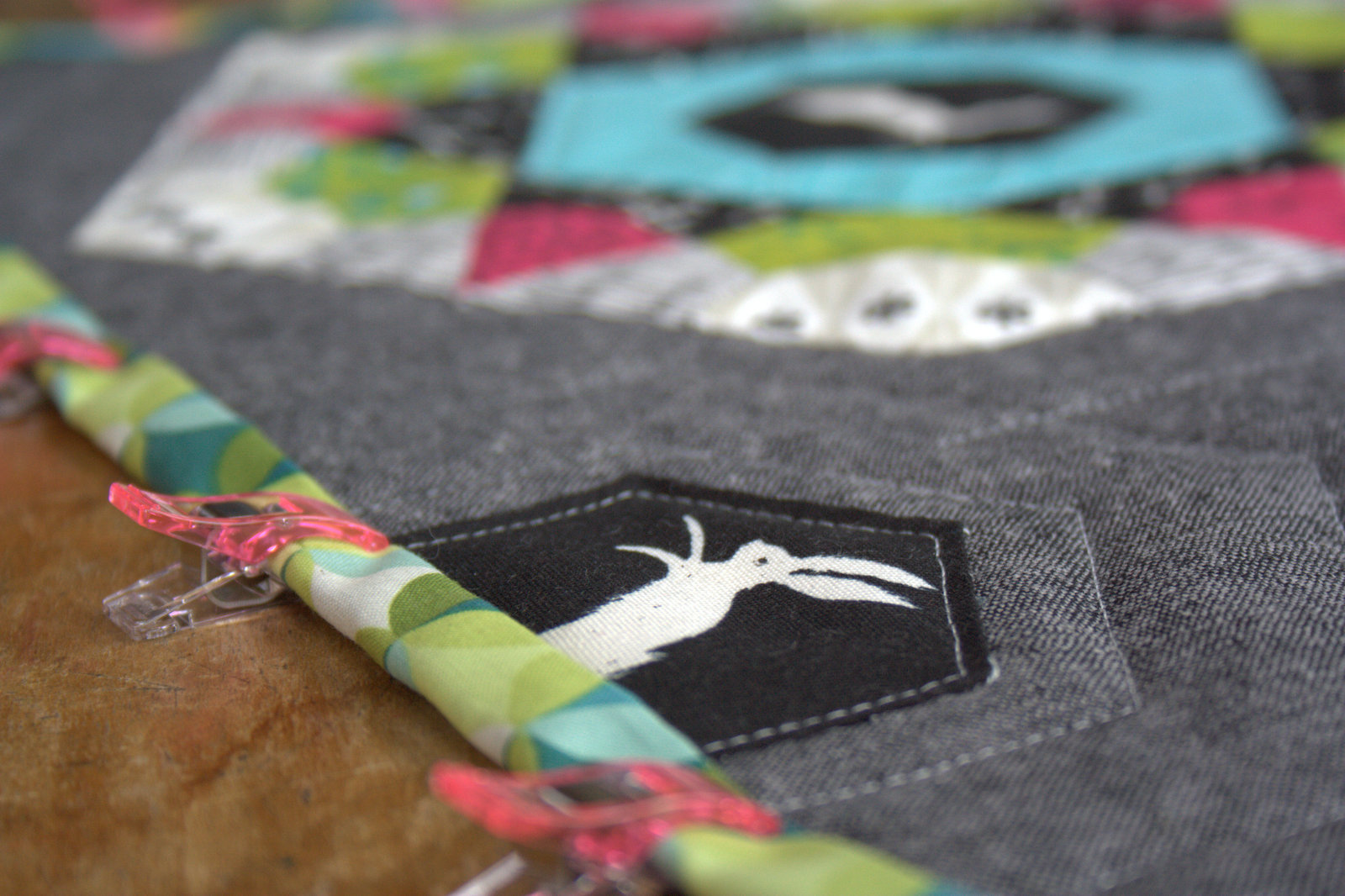
glue basting epp coaster tutorialAssemble your layers: wool felt on the bottom, then batting centered within that, then EPP coaster top carefully positioned on top. Give it a gentle press with a warm iron (note that wool is now involved) to set the glue. Clover clip the edges for extra stability and head over to your sewing machine!

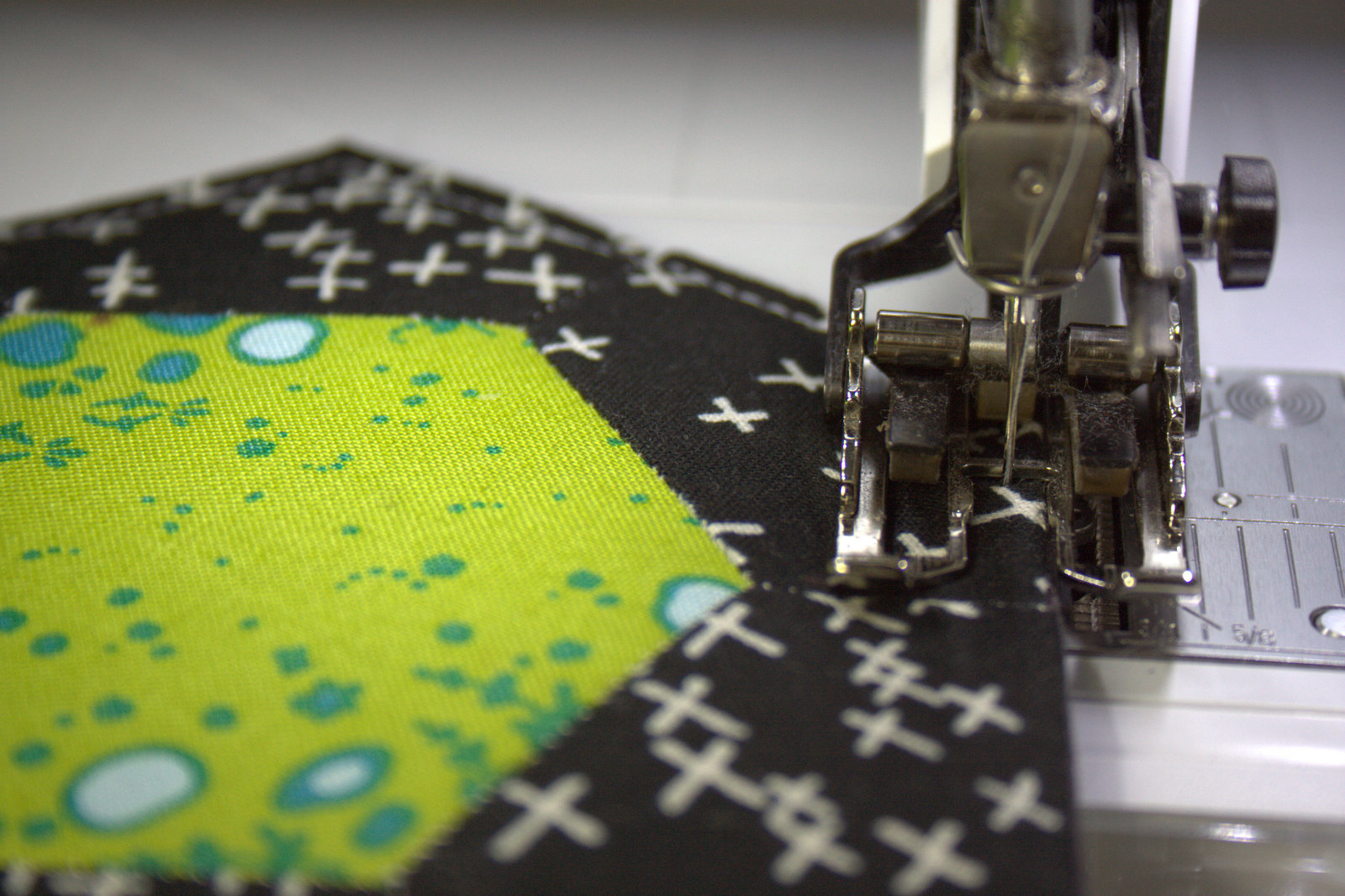
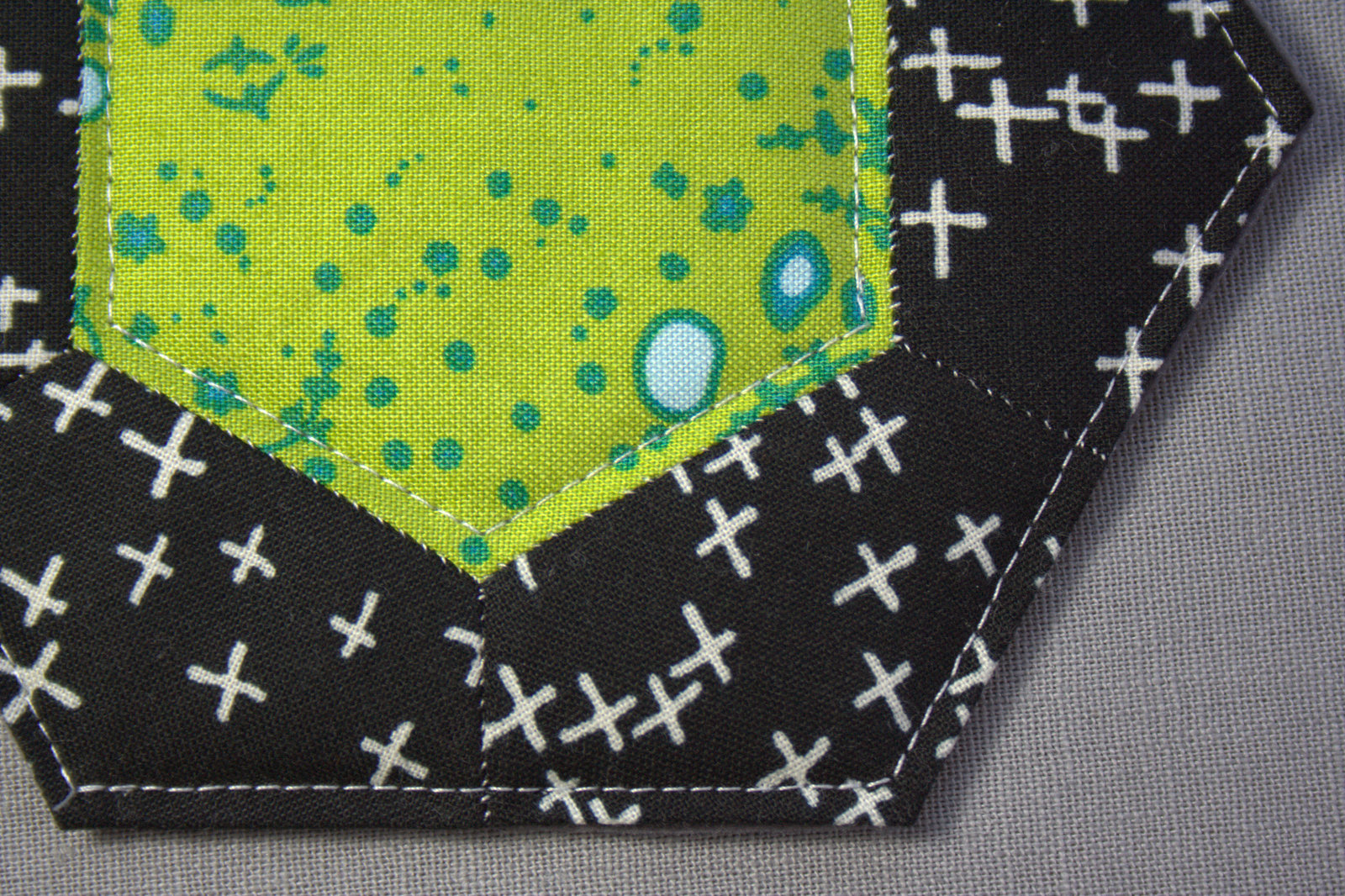
glue basting epp coaster tutorialTop stitch about 1/8th inch from the edge of the entire periphery of the coaster.

glue basting epp coaster tutorialYou can also add additional quilting if desired and for added durability. I added a top stitched hexagon about 1/8th inch from the edge of the inner hexagon mirroring the outer edge stitches.

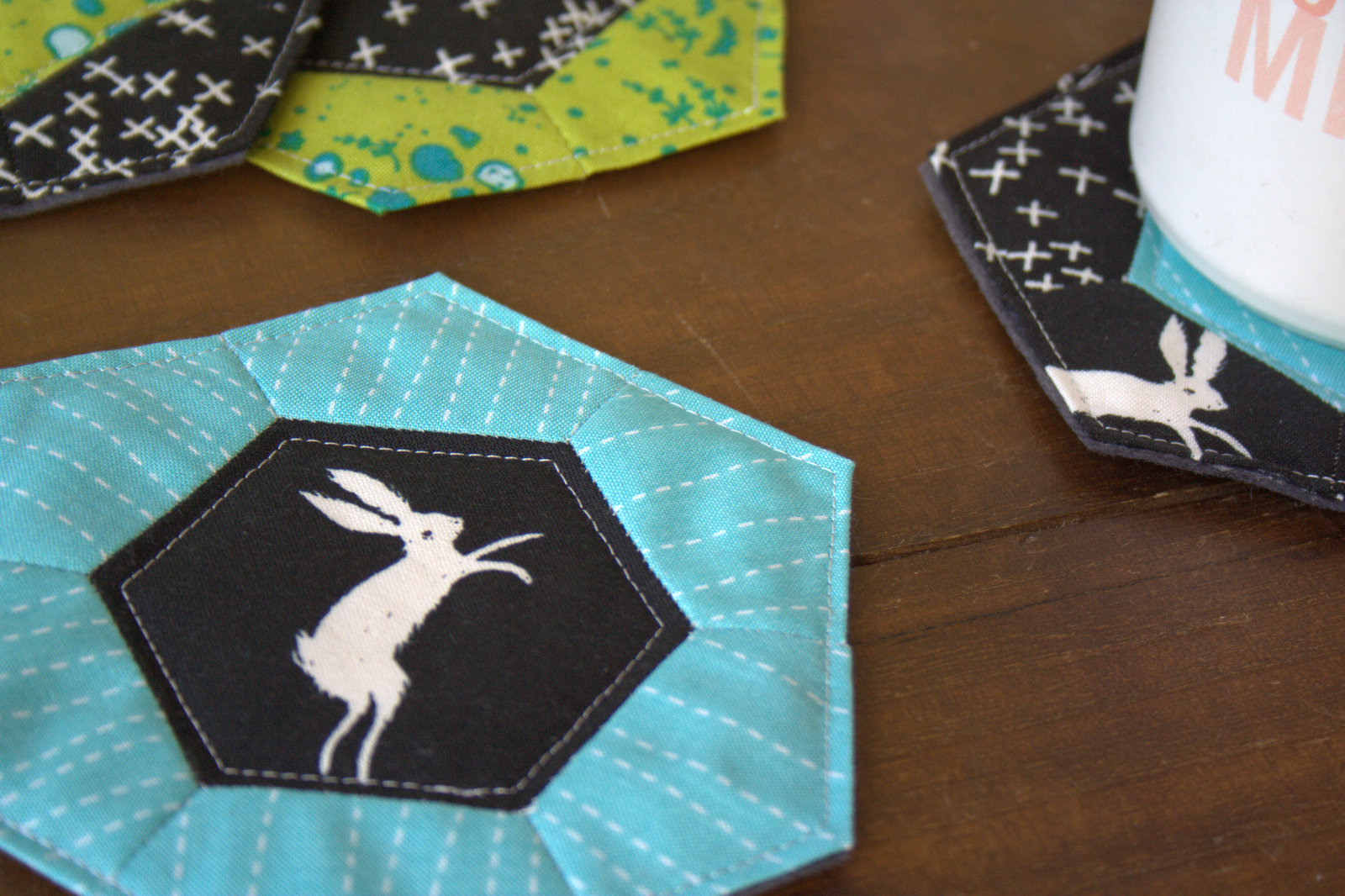
EPP coasters in useCarefully trim any wool felt that extends beyond the coaster top, and admire your EPP Rose Star coasters. Weren’t those quick and easy gifts? (You can give yourself gifts, too, you know!)

Sizzix Tutorial- EPP Rose Star CoastersBetween cutting the fabric and templates with the Sizzix die cutting machine, glue basting the EPP shapes, and backing the coasters with felt, these whip up as quickly as you can stitch the top together. It’s a great introductory project to EPP since it’s a quick finish, yet is still a handmade, hand stitched gift. I’m definitely planning on making more of these, and playing around with my fussy cutting, too.

*Disclaimer: Clover Clips are a favorite treasure for most toddlers. Use with discretion and awareness that there may be a pudgy hand lurking around any corner waiting to snatch your Clover Clips away.

clover clip toddler treasure

I’m linking up with Late Night Quilter’s Tips and Tutorials Tuesday. Enjoy your coaster-making foray! (You know you want to make some!)

EPP Rose Star Mug Rug: Getting Started {Sizzix Tutorial}

I’m excited to share that today is my Sizzix Design Team debut! Over on the Sizzix blog, I share a tutorial on how to get started on making an awesome English Paper Pieced (EPP) mug rug using the Rose Star die.

sizzix EPP mug rug start tutorialDid you know that there are Sizzix dies created specifically for paper piecing!? I cut all of the templates and fabric needed to piece this EPP star all from a single die! Pretty awesome.

english paper piecing tutorialIn the tutorial, I take you step by step through the process of making and basting EPP pieces, including some helpful tips, so if you’ve been wanting to learn or brush up on your piecing, go check it out!

Fabri-Quilt New Block Blog Hop: Transparent Play {Tutorial}

fabri-quilt-new-block-blog-hopWhen I was invited to join the Fabri-Quilt New Block Blog Hop with the challenge of creating a new 12″ finished quilt block and sharing a tutorial, I immediately thought of transparency. I’ve been seeing fellow quilters play with transparency a lot lately (Yvonne’s Triangle Transparency quilt and the Transparency Bee Blocks by Hilary of Entropy Always Wins Blog and Leanne at She Can Quilt stand out in my mind most), and have yet to give it a go.

Watermelon Summer Color Palette
Colors chosen: Chartreuse, Turquoise, Coral, Aqua, Lapis Blue, White

As soon as I saw the color palette chosen, I knew that transparency it was (I’ll save the chartreuse and coral for an actual watermelon project)! I had fun creating a block that both looks cool on its own, but also can result in many fun layouts when replicated for a quilt. I call it Transparent Play (original, huh?!)

Today I’m going to share a tutorial for how to make the new block Transparent Play that I created using fat eighths provided by Fabri-Quilt. While I’m not typically a prewasher, I would definitely recommend prewashing the Fabri-Quilt solids with a color catcher or two.

TUTORIAL- Transparent Play BlockNote that part of the challenge for creating this block was to make it out of only fat eighths of fabric, so cutting instructions assume a fat eighth is being used. Fat eighths typically measure 9″x21″.

General Notes

All seams are sewn with 1/4″ seam allowance unless otherwise noted. I like to press seams open since it helps the block lay flat and helps me better match seams. Do what works best for you.

Fabric Requirements & Selection

For this block, you will need a fat eighth of each of the following fabrics:

  • a neutral background (I used white)
  • a dark (I used lapis blue)
  • a light (I used aqua)
  • a blend or medium (I used turquoise)

Since the block is designed for playing with transparency, try to choose fabrics that give the impression of transparency. The blend fabric should be a color that could result from the dark and the light fabrics being overlapped. Note that while I made my block mostly monochromatic (one color), this block could be made with color blends, too. For example red as your dark, yellow as your light, and orange as your blend.

Cutting Instructions

Again, this tutorial is assuming a fat eighth of fabric is being used for each color. Strips should be cut along the long edge of the fat eighth (usually 20-21″ long and called length of fabric (LOF) in this tutorial). Note that many sections of the block will be strip pieced, so the initial cutting keeps this in mind.

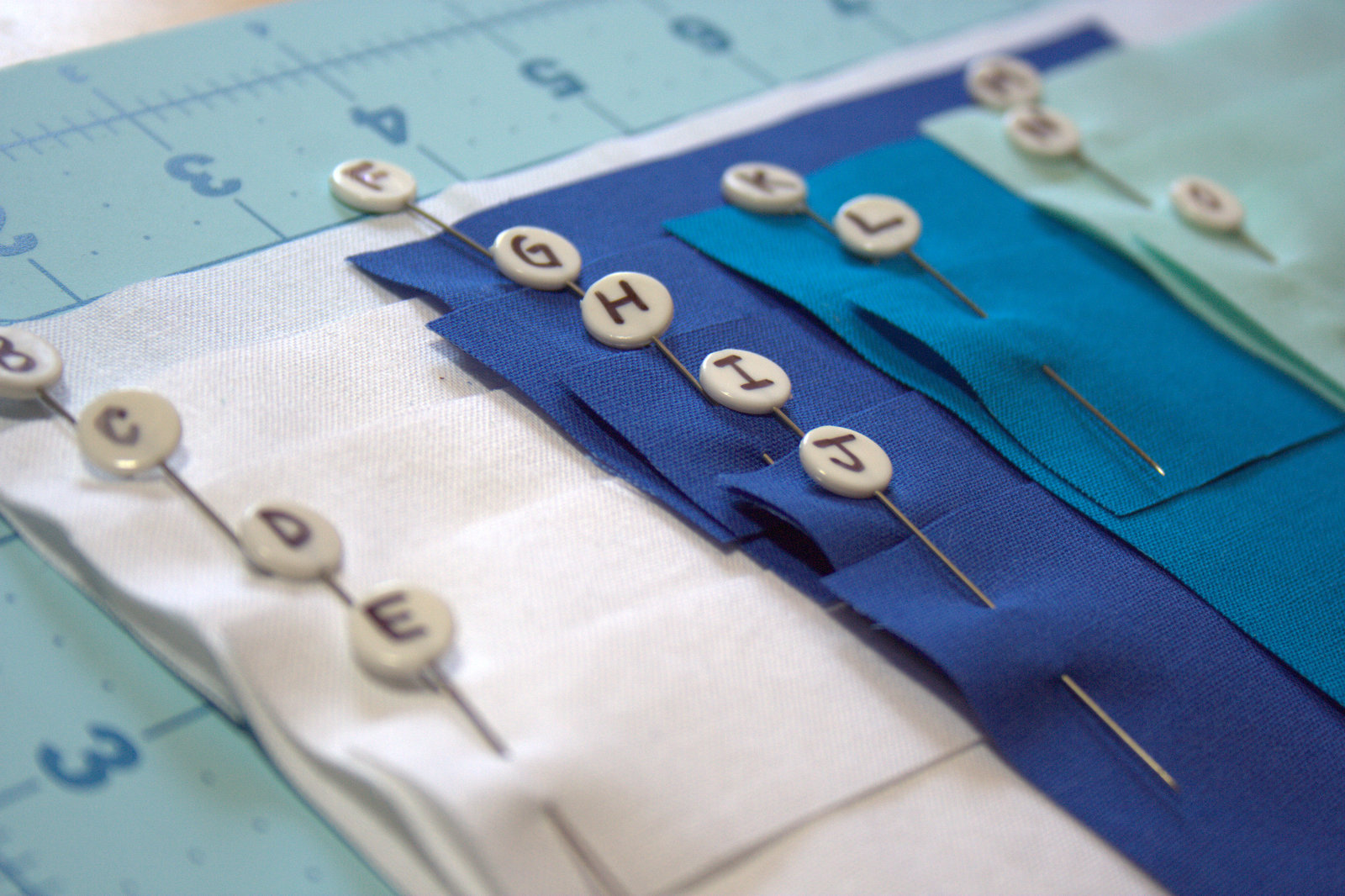
label cut piecesBe sure to label your pieces with the coordinating letters so that piecing is a breeze!

From white:

Cut 1 strip 1 1/2″ x LOF and subcut (1) 1 1/2″x10″ strip (A); and (2) 1 1/2″x5″ rectangles (B).

Cut 1 strip 3″ x LOF and subcut (2) 3″x3 1/2″ rectangles (C); (2) 3″x4 1/2″ rectangles (D); and (1) 1″x5″ strip (E).

From lapis blue (dark):

Cut 1 strip 2 1/2″ x LOF and subcut (1) 2 1/2″x5″ rectangle (F); (1) 1 1/2″x5″ rectangle (G); (1) 1″x5″ rectangle (H–note, this fits next to G in the strip); and (2) 1 1/2″x3 1/2″ rectangles (I).

Cut (1) 2 1/2″x7 1/2″ rectangle (J).

From aqua (light):

Cut (1) 1 1/2″x11″ strip (M).

Cut (1) 2 1/2″xLOF and subcut (1) 2 1/2″x5″ (N); and (1) 2 1/2″x10″ (O).

From turquoise (medium):

Cut (1) 3 1/2″xLOF and subcut (1) 3″x5″ rectangle (K); and (1) 1 1/2″x11″ strip (L).

Piecing Instructions

Making the Top and Bottom Panels

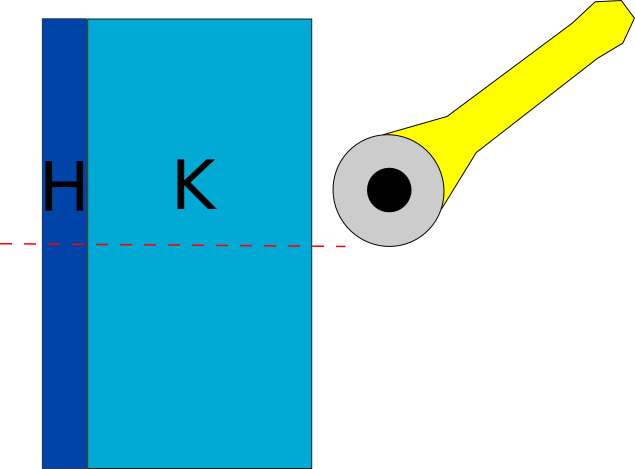
KHSew H to K along the 5″ side. Cut into two equal 3 1/2″x2 1/2″ rectangles as shown above. These are the HK units.

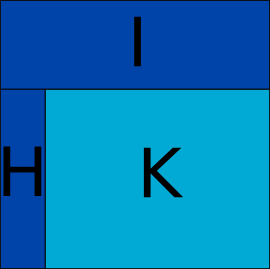
IKHSew I to the top of each HK unit, ensuring that the dark lapis blue  H strip is on the left. You will have (2) 3 1/2″ squares (above). These are the IHK units. Set aside.

AOSew A to O along the 10″ side. Cut into two equal 5″x3 1/2″ rectangles as shown above. Set aside.

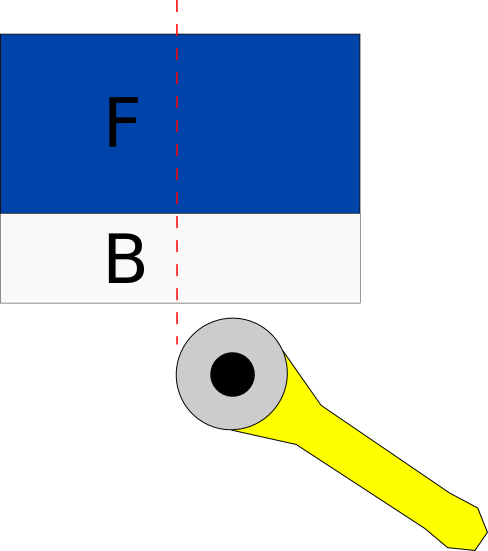
FBSew F to one of the B pieces along the 5″ side. Cut into two equal 2 1/2″x3 1/2″ rectangles as shown above. These are the FB units.

CFBWith F on top, sew C pieces to the left side of the FB units along the 3 1/2″ edge. These are the 3 1/2″x5″  CFB units.

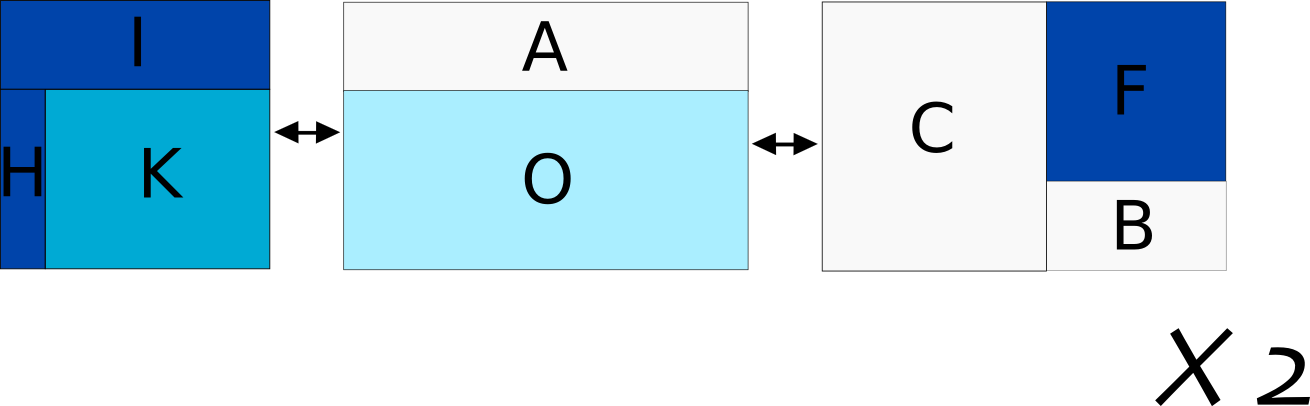
top bottom panelAssemble the top and bottom panels as shown above. Note that they can be assembled identically, but we will rotate one of them 180 degrees as the bottom panel before final assembly of the block.

*Accuracy Tip*

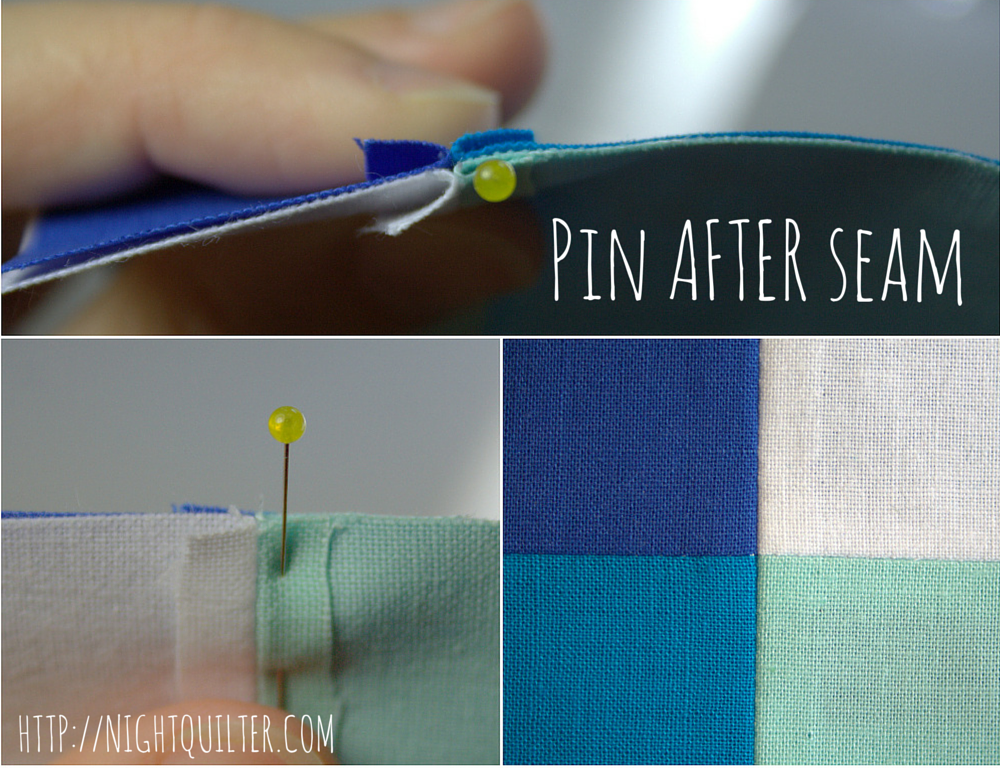
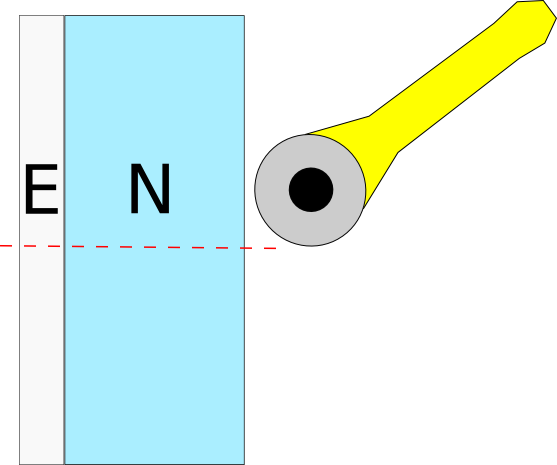
Pin AFTER seamWhen matching seams, line up the full length of the seams to be matched (not just at the raw edge) and then pin directly after the seam (about 1/16th “). This will ensure your seams stay in position without the pin skewing the fabric alignment when sewing. It will often result in perfectly matched seams.

Making the Center Panel

MLSew M to L along 11″ side. Cut into two equal 2 1/2″x5 1/2″ rectangles as shown above. These are the ML units. Set aside.

BGSew B to G along 5″ side. Cut into two equal 2 1/2″x2 1/2″ rectangles as shown above. These are the BG units. Set aside.

MLBGSew ML units to BG units as shown above. These are the MLBG units.

MLBGJSew MLBG units to long sides of J as shown. Note that the bottom MLBG unit has been rotated 180 degrees. Pay close attention to the position of the colors to ensure the MLBG units are mirroring each other. Set aside.

ENSew E to N along 5″ side. Cut into two equal 3″x 2 1/2″ rectangles as shown above. These are your EN units.

ENDSew D to the bottom of each EN unit, ensuring that the background white E strip is on the left. You will have (2) 3″x6 1/2″ rectangles (above). These are the END units.

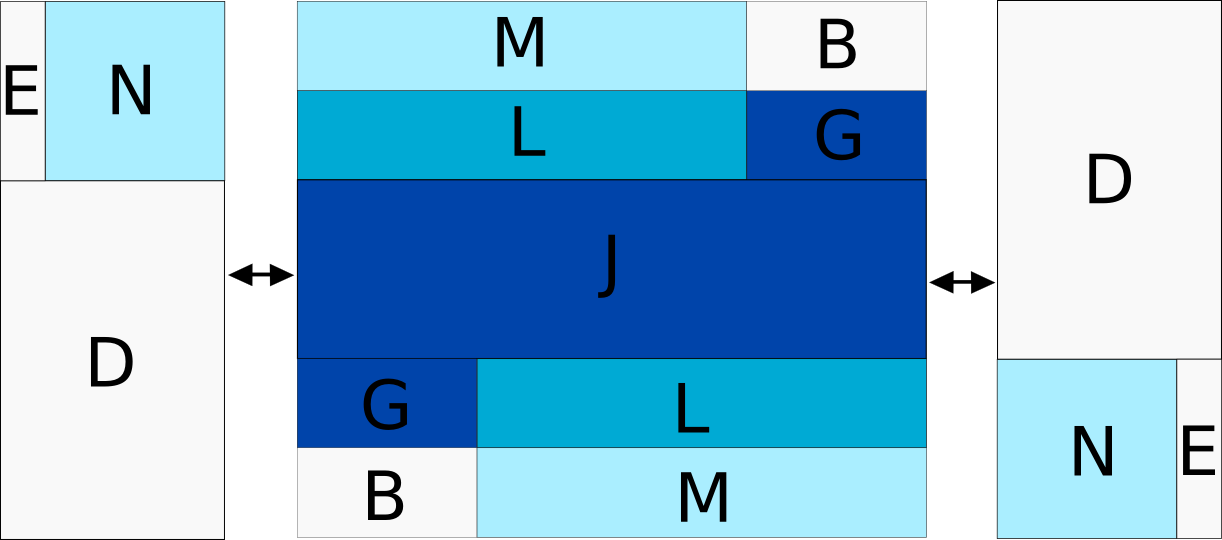
center panelAssemble the center panel as shown above. Note that the right END unit has been rotated 180 degrees. Pay close attention to the position of the colors before sewing. The center panel should measure 12 1/2″ x 6 1/2″ at this point.

transparency play block assemblySew top and bottom panels to center panel to complete the quilt block as shown above. Note that the bottom panel has been rotated 180 degrees.

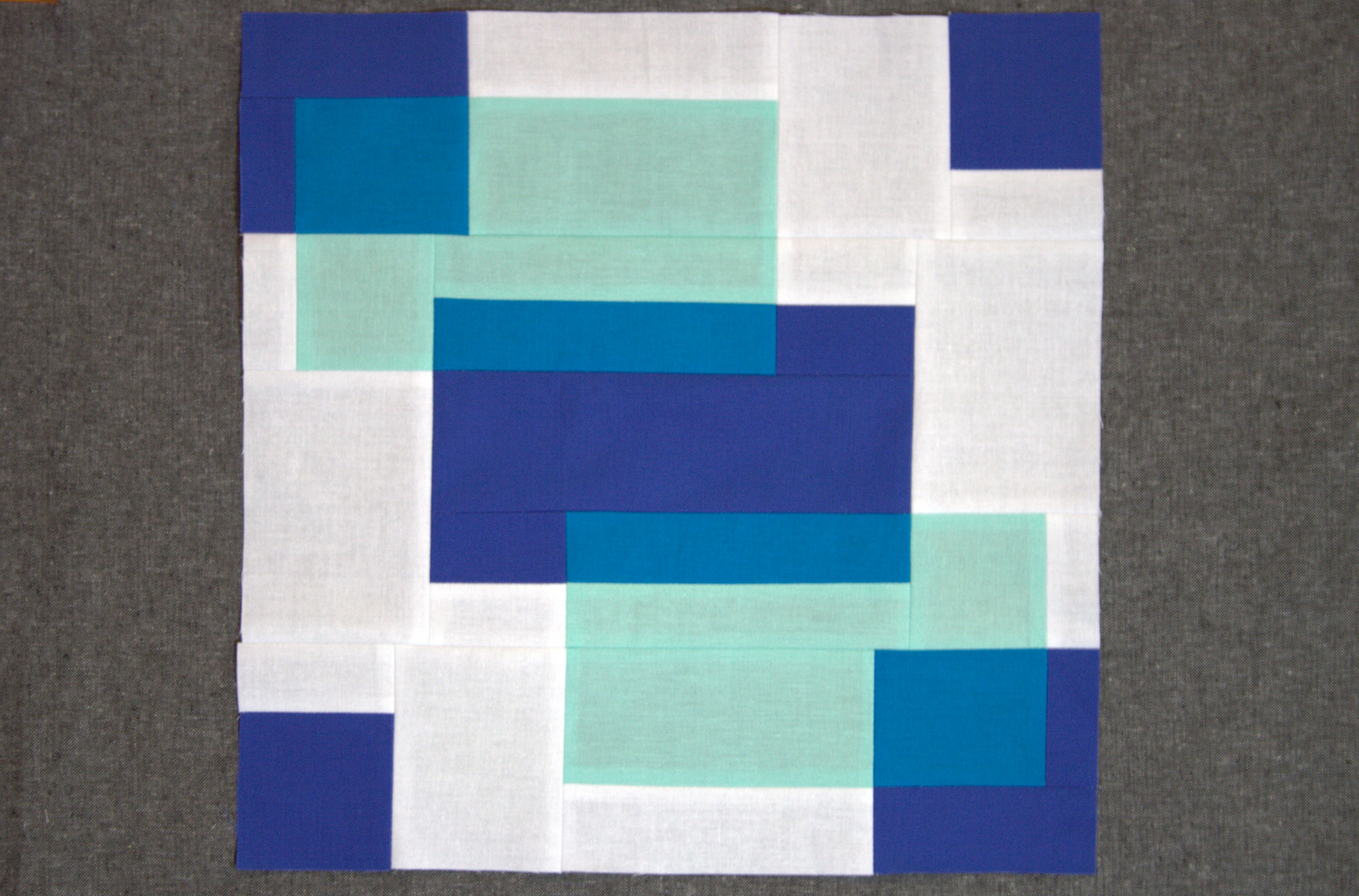
transparent play block tutorial

Congratulations! You just made your first Transparent Play block. It wasn’t nearly as tricky as it first looked, was it? Strip piecing is awesome.

This block is fun to play with when it comes to layout, since by simply rotating the blocks, you can create a number of different visual layout effects. Here are just a few:

Layout 1: All blocks in line

Transparency Block 4x4 Quilt Layout 1

Layout 2: Bull’s Eye

Transparency Block 4x4 Layout2

Layout 3: Braid

Transparency Block 4x4 Layout3
I also couldn’t let a post go without including a peek at a rainbow, so here’s a sample block using color gradient transparency instead of monochromatic transparency.
Transparency Play Block rainbow colorand a resulting layout:
Transparency Play with color rainbow layout3

I hope you’ve had fun making your Transparent Play block, and please tag me @nightquilter on social media if you make it–I would love to see!

There are many other wonderful free block tutorials (60+!) posted in this Fabri-Quilt New Block Blog Hop. Here are the others posted today:

Host – Stephanie @Late Night Quilter
Hannah @Modern Magnolia Studio
Cindy @Stitchin At Home
Abby @Hashtag Quilt
Lisa @Sunlight in Winter Quilts
Carrie @Chopping Block Quilts
Brianna @The Iron and Needle
Tish @Tish’s Adventures in Wonderland
Jan @The Colorful Fabriholic
Sarah @Smiles Too Loudly
Beth @Cooking Up Quilts
Leanne @Devoted Quilter
Liz @LizzyClips Design
Kim @Leland Ave Studios

Also be sure to visit the others hosts’ pages (Yvonne @Quilting Jetgirl, Cheryl @Meadow Mist Designs, and Terri Ann @Childlike Fascination) for links to all of the blocks posted Monday through Thursday of this week. All of these blocks are being mailed to a host, who is assembling them into charity quilts.

inchworm friend

I made an inchworm friend while photographing this block. He was testing out my seams for good measure! (get it!? LOL) Have fun inching your way through the rest of the blog hop!

I’m linking up with Tips & Tutorials Tuesday at Late Night Quilter.

Anatomy of a Strand of Thread: Tips and Tutorials Tuesday

Welcome to Tips and Tutorials Tuesday! I’m hosting today while my dear friend Stephanie over at Late Night Quilter is traveling with her family.

One of the perks of quilting retreats and other social sewing is that little tips are tossed around. Today I’m going to share a very simple yet important tip about using the thread you cut from a spool during hand stitching. As a self-taught sewist, these are the bits of knowledge that I miss, since rarely are there blog posts about the bare basics of sewing. While basting our needle-turn applique projects around the table at the Slow Stitching Retreat, I caught this important tip:

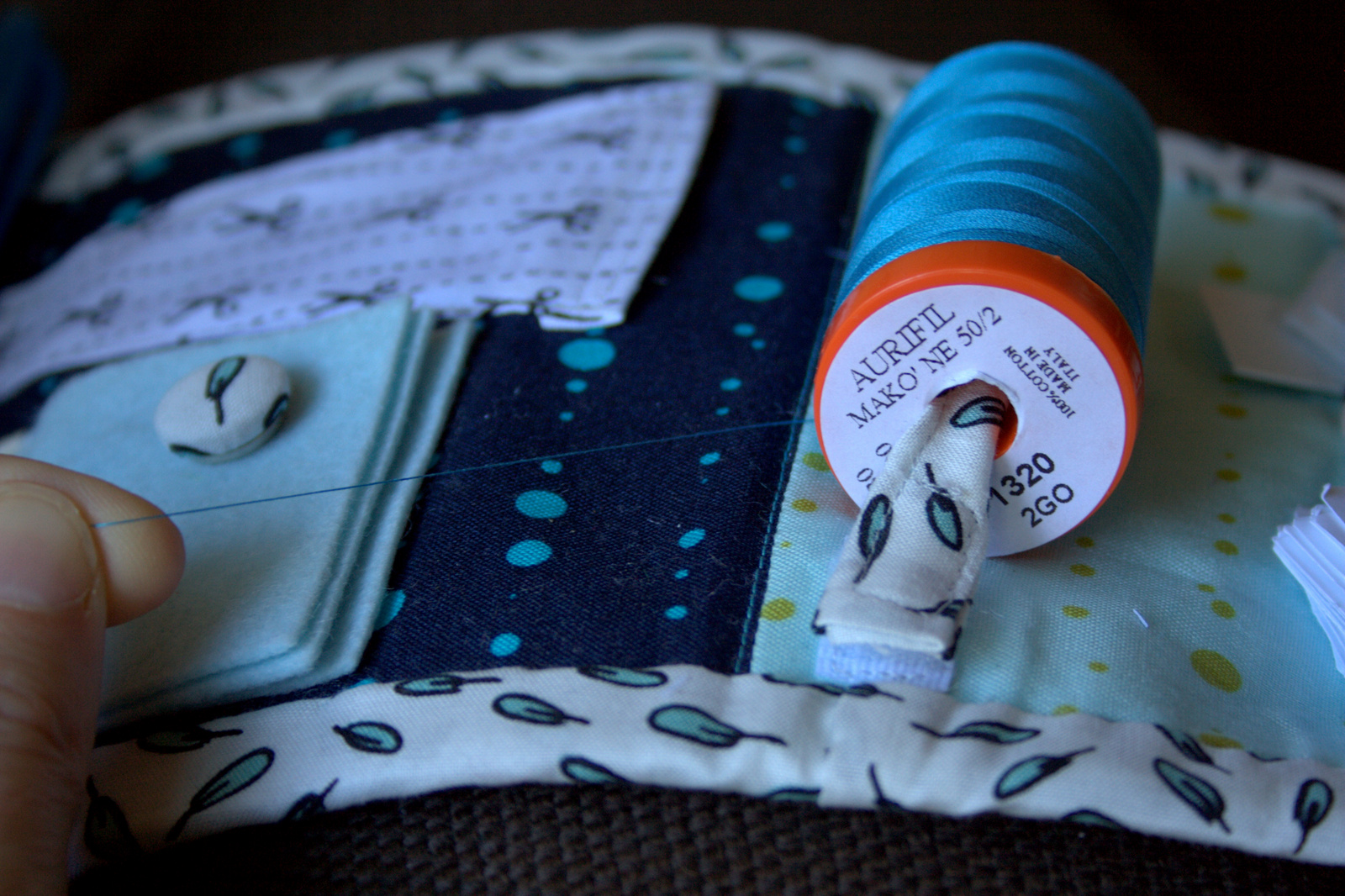
anatomy of a spool of threadUse the thread in the same direction it comes off the spool. The tail end that you pull to unravel your length of thread should be the side you thread through your needle. The end that you cut should be the knot end. This way, you are pulling the thread through the fabric in the intended direction, which works with the ply of the thread instead of against. Using the thread in the proper direction significantly decreases tangles and twists while stitching. Simple, right?!
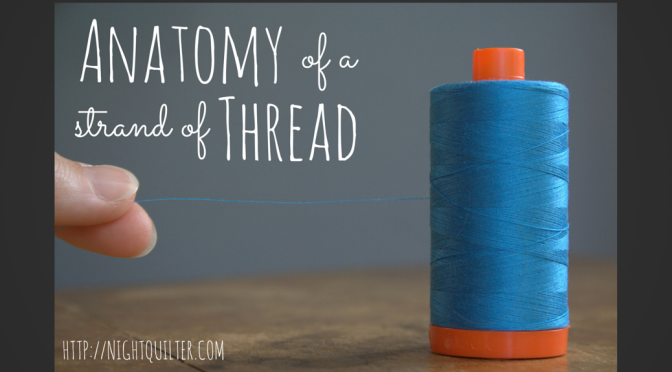
I never knew that it mattered which end was which, so I didn’t pay attention while cutting my thread lengths. Now, when I’m pre-threading a bunch of needles for a good binding or hand stitching session, I thread each needle as the thread is cut instead of accumulating a nice pile of threads and then grabbing any which end to thread through the needle.

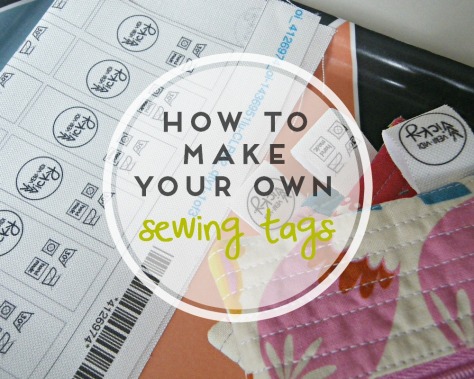
Stephanie’s Tips and Tutorials link ups from previous weeks are filled to the brim with great time savers, tricks, and how-to’s. I’d definitely recommend browsing them with your Pinning finger ready. how to make your own sewing tags vini vidi vickyOne of my favorites from last week was this tutorial by Veni Vidi Vicky on how to make your own sewing tags (which could easily be adapted to making your own quilt labels!). She gives great step by step instructions on how to use Spoonflower, which is something I’ve been tempted to do but have yet to try.

Now it’s your turn! Do you have any little tips or great tutorials to share this week?  If you do, please link up below!

Powered by Linky Tools

Click here to enter your link and view this Linky Tools list…

Hand Stitching Preparedness {Tip}

Recently I’ve been doing a lot of hand stitching, between finishing the piecing of my English Paper Pieced table runner, and stitching the pieced Lucy Boston blocks down to the border fabric to complete my table runner quilt top. During the past weeks, I learned two tricks that have helped streamline the process, and I’d like to share them with you today. I’ll call it “hand stitching preparedness” since it seems pretty logical, even if both tips were revelations to me.

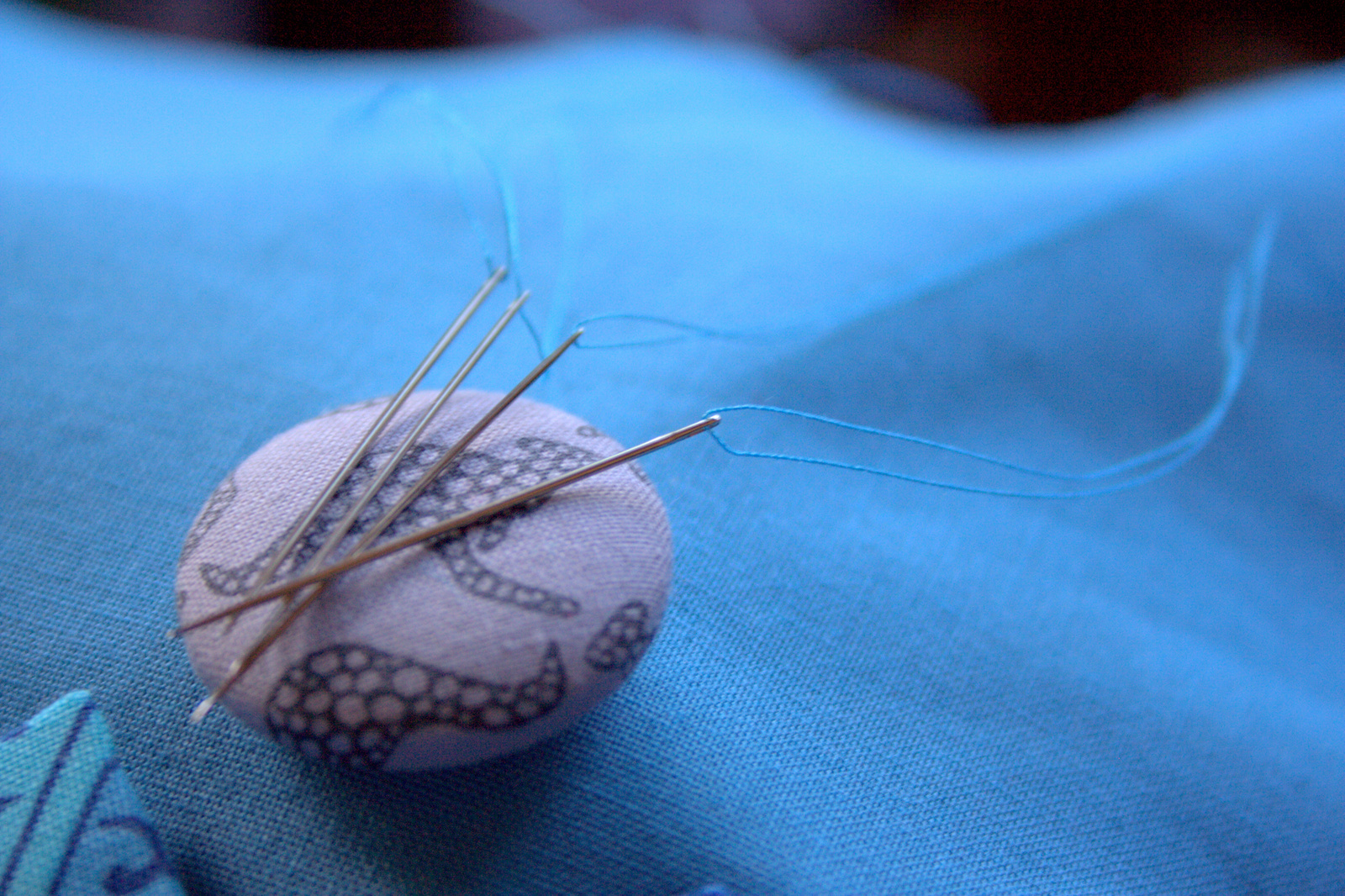
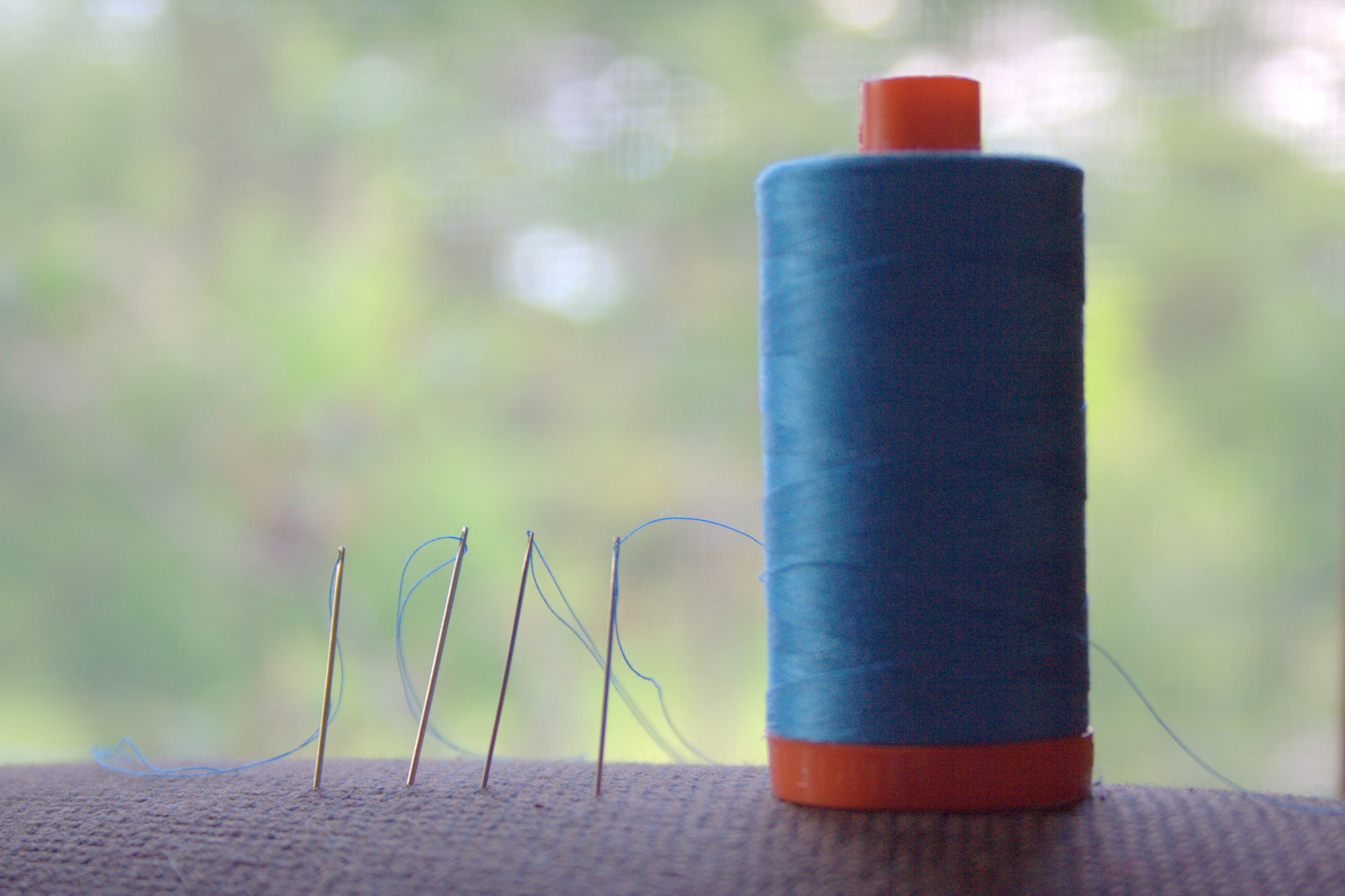
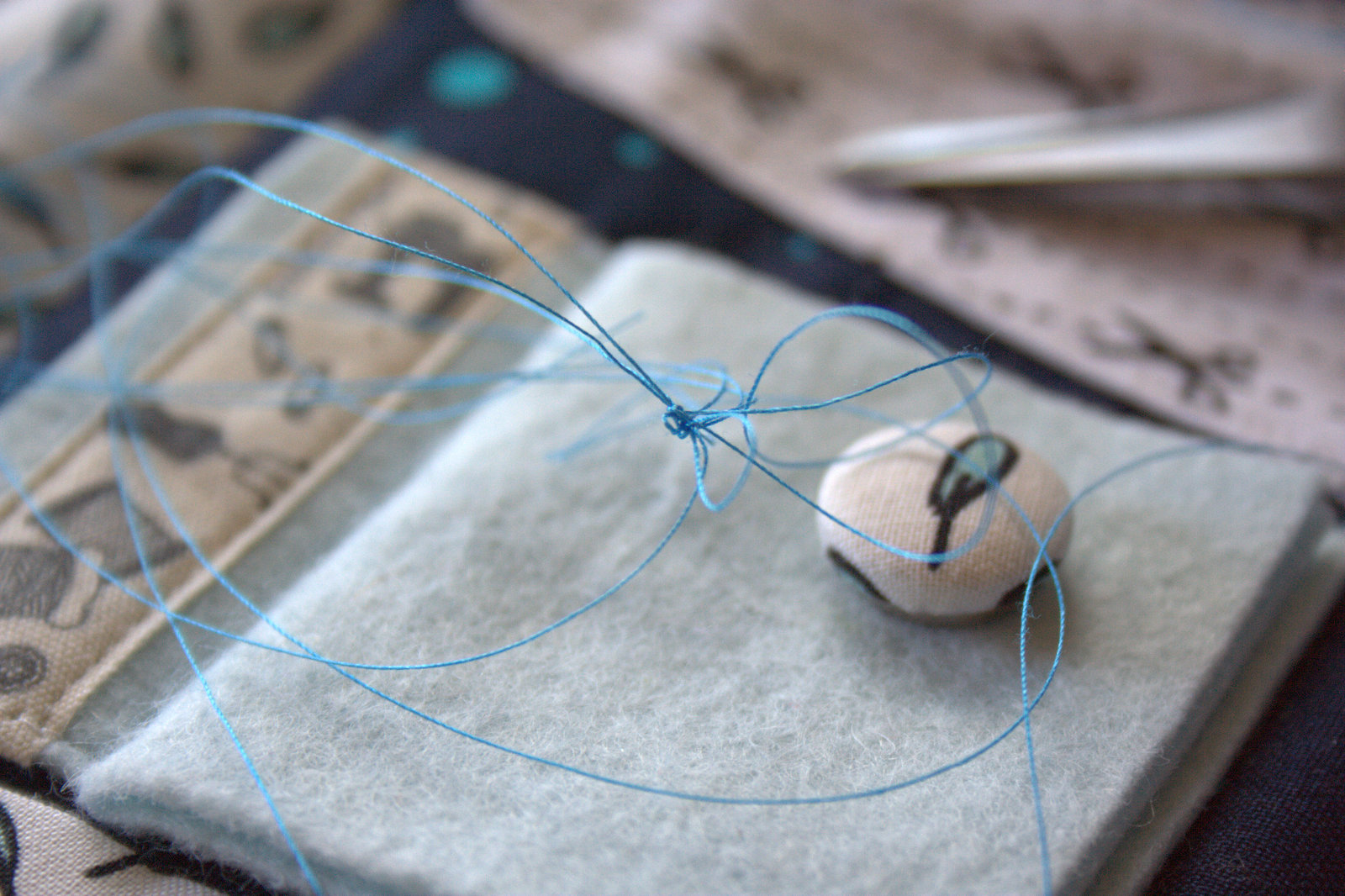
hand stitching preparednessThe first tip came in the form of an Instagram post by Carole Lyles Shaw (@carole_lylesshaw), a simple photo of a few pre-threaded and knotted needles stuck into the arm of the couch to help streamline her binding while watching a game on TV.  I saw this and a lightbulb went off in my brain: duh!!

Before sitting down with your hand stitching, whether it be EPP, hand applique, or quilt binding, pre-thread and knot a few needles and have them ready and waiting within reach.

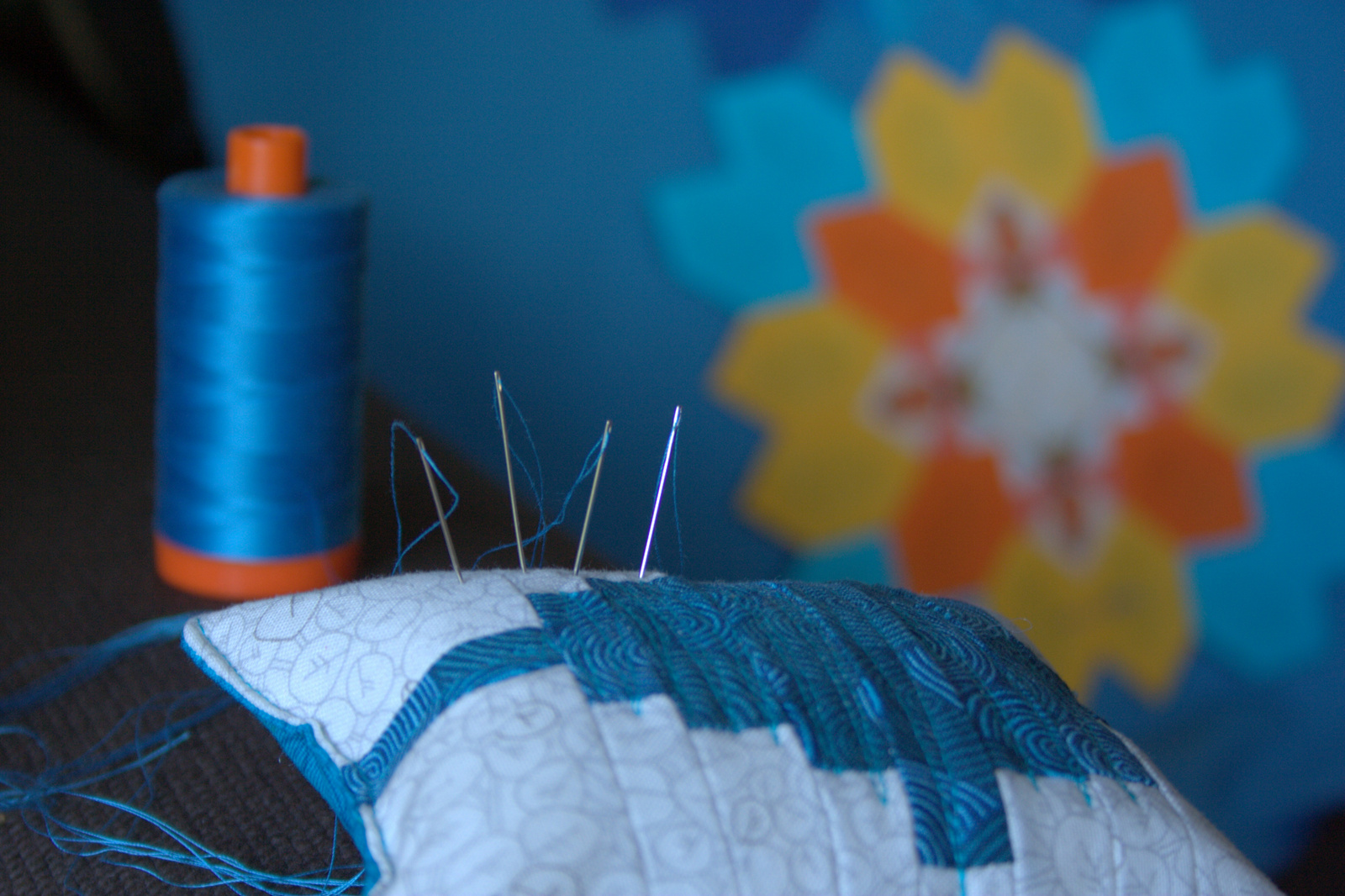
You can keep them in a pincushion nearby (photo above)…

pre threaded and knotted needles on a needle minder
The adorable needle minder was made by @whatthebobbin on Instagram.

or you can keep them on a needle minder on your actual work…

pre threaded and knotted needles in the couch armor you can just stick them into the arm of the couch right next to you.

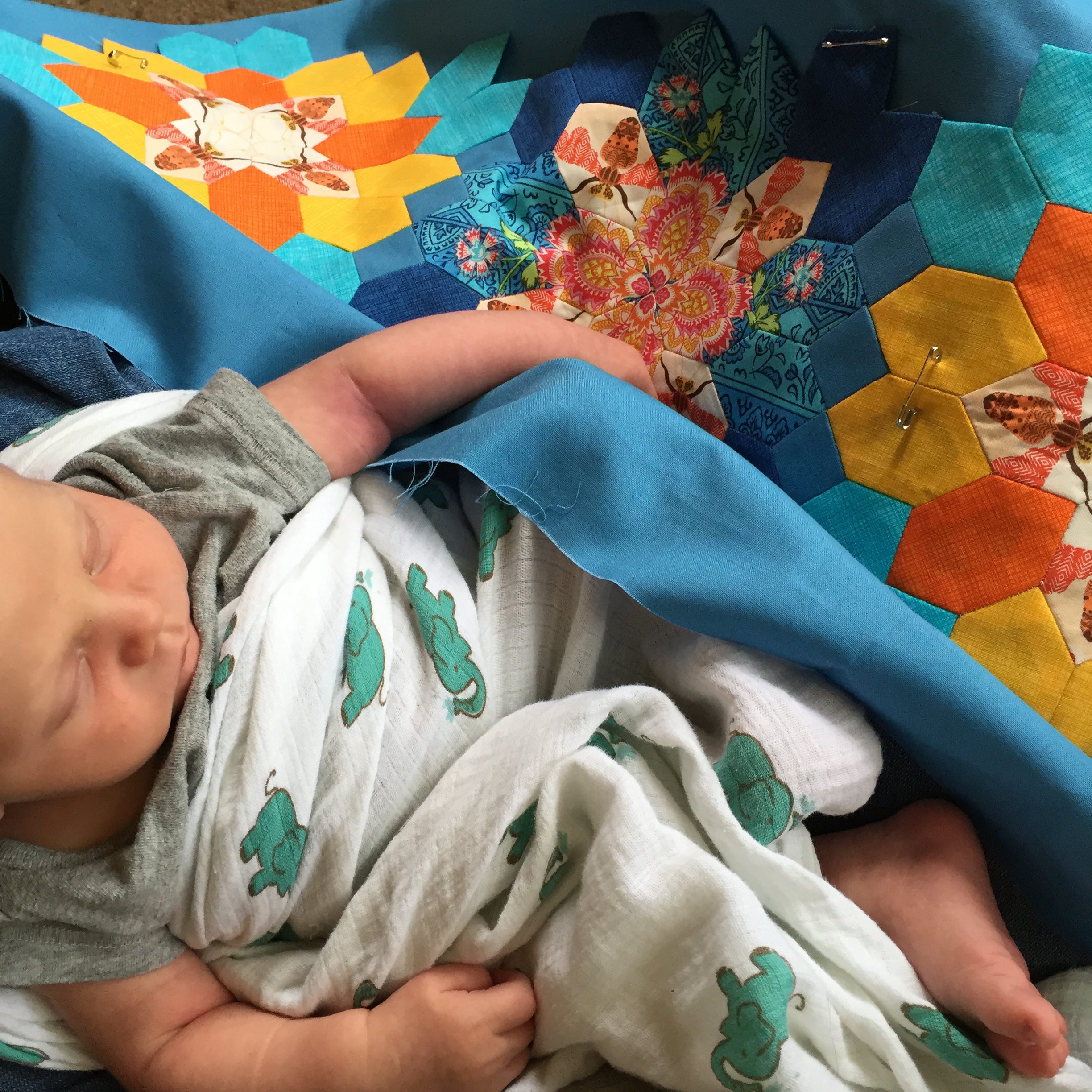
hand stitching with napping baby in lapThis tip came in particularly handy since I was doing my hand stitching with my sleeping baby in my lap and my scissors, thread, and other sewing tools way up high on top of the bookcase, out of reach of my curious and busy 3 year old. Talk about a game changer! I was able to finish stitching down the blocks without waking my babe or having to juggle a sleeping baby, scissors, and sewing needles to cut new threads as I progressed.

cutting threads in advance
Stunning needlebook made by @mara_makes… isn’t that thread holder awesome!?

One additional bit of advice I’ll add to this tip is to lay your threads out neatly and separately when cutting them to pre-thread your needles. If you cut them and lay them on top of each other, they *may* make a tangled mess before you can thread the needles successfully.

tangled mess of threadsAsk me how I know this 😉

And finally, learning how to tie a quilter’s knot has saved me a lot of time with my recent hand stitching. That’s one of the downfalls of being a primarily self-taught sewist: you miss the simple basic tricks that well versed quilters take for granted. My friend Stephanie at Late Night Quilter posted this video tutorial a couple weeks ago, and I’ve made dozens of quilter’s knots since.

Happy stitching!

I’m linking up with Tips & Tutorials Tuesday over at Late Night Quilter.

Relief Quilting Words in Negative Space {Tutorial}

I don’t write on my quilts. I have yet to find a pen or pencil that I trust enough, so I just avoid it as much as possible. I use a Clover Hera Marker* for marking straight lines, which is fabulous since it creases the fabric without actually leaving a mark. (*Affiliate link) But when it comes to complex designs or words, I either have to eye it or just wing it.

When I thought of the idea to write baby Reagan’s name in the heart speech bubble of her Pinkalicious Hazel Hedgehog quilt, I knew there must be a way to get her name to show up accurately but subtly among the matchstick quilting I had planned within the heart. Enter: Freezer Paper. I’ve had freezer paper in my sewing space for over a year, since Grammy June told me it was a must have for paper piecing back when I was first learning. Since I really enjoy foundation paper piecing using plain old copy paper, I have yet to touch the freezer paper. Until today.
TUTORIAL- Relief Quilting Words

Here’s a quick little tutorial on how I used freezer paper to help quilt words in negative space.

Relief Quilting Words in Negative Space

Step 1

relief quilting of words in matchstick quilting with freezer paperGather your materials. You will need:

  • Freezer Paper (I’ve read high quality brands like Reynolds work better than Costo-type brands)
  • Pencil
  • Scissors
  • Iron
  • Thread for quilting (I used 50wt Aurifil variegated thread)
  • Your quilt!
  • Optional: printer paper and printer
Step 2

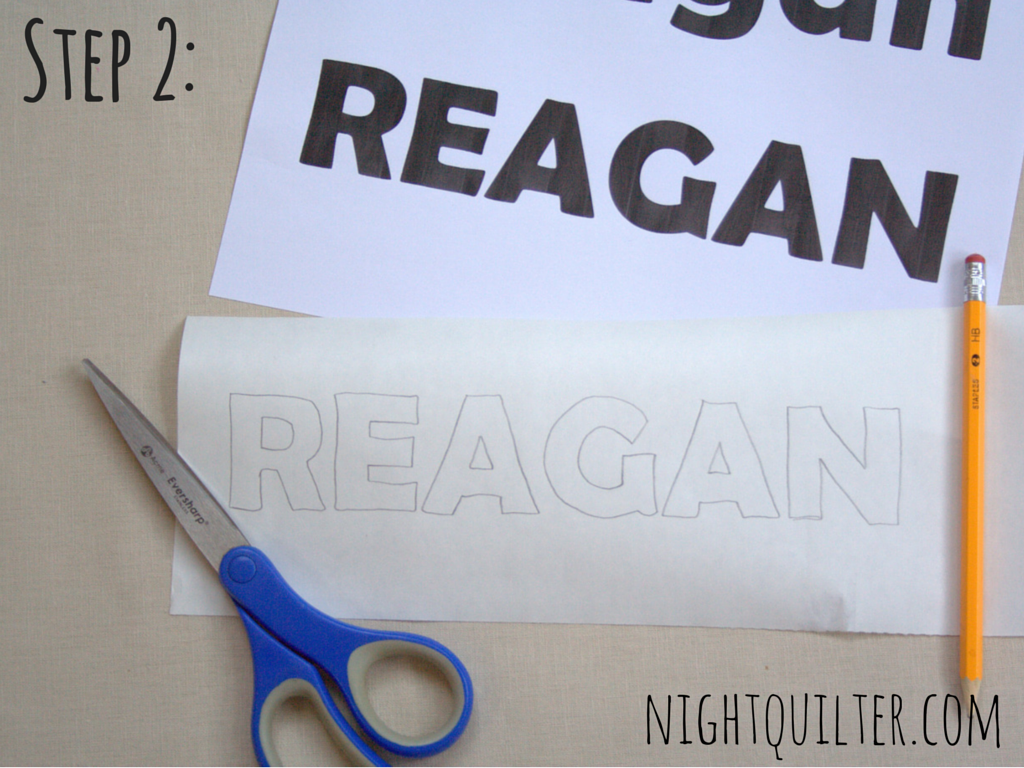
relief quilting tutorialPrint a sample of the word you want to quilt, scaled to fit in the proper space. Trace onto the dull side of the freezer paper (shiny side away from you). Alternately, you could just draw the letters onto the dull side of the freezer paper–entirely up to your desired look.

Step 3:

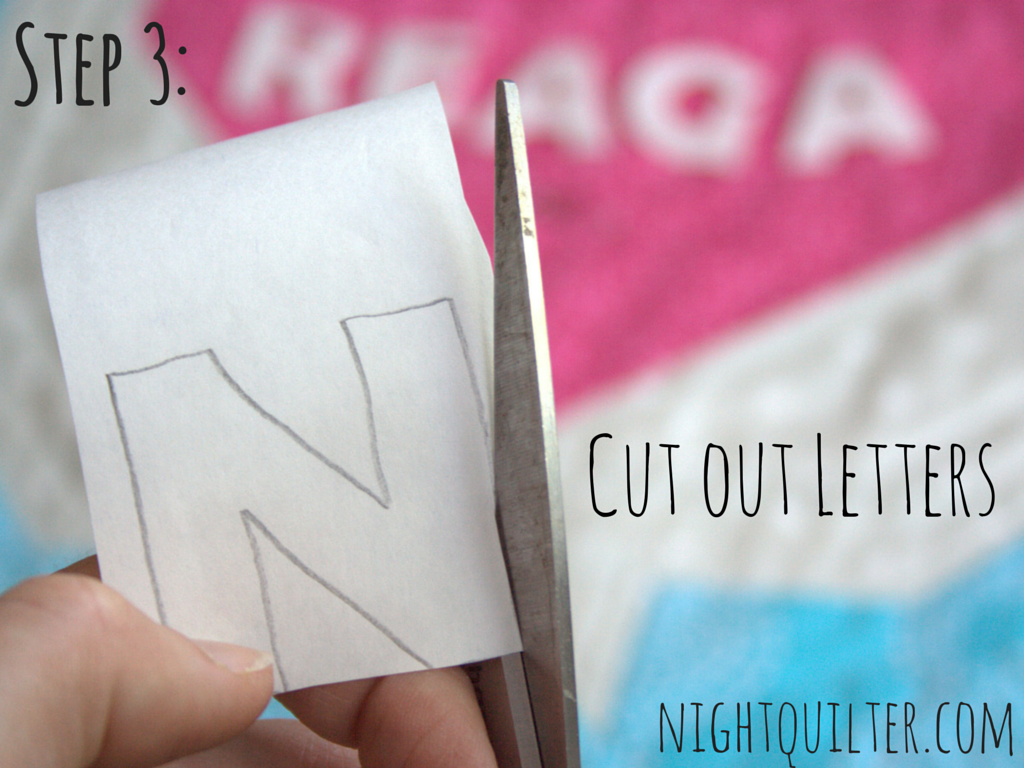
relief quilting tutorialCut out the letters carefully, using paper-cutting scissors (not your special fabric ones!)

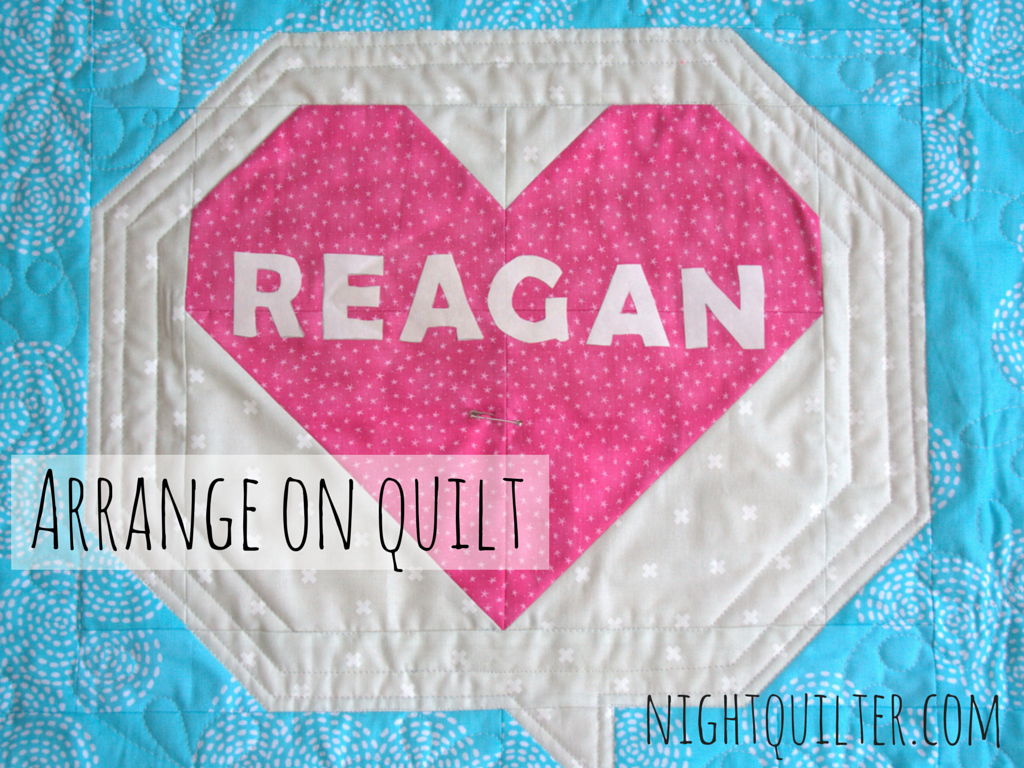
relief quilting tutorialArrange on your quilt as desired.

Step 4

relief quilting tutorial(Note: before ironing your letters to your actual quilt, always test the freezer paper on a scrap of the same fabric. The freezer paper should stick to the fabric, and after cooling should be easily peeled off without leaving any mark or residue.) Iron your letters to your quilt. The shiny side of the freezer paper will stick to the fabric.

Step 5

relief quilting tutorialMatchstick quilt around the letters. I used Aurifil 50wt variegated Bubblegum-3660 to match the background fabric, since I wanted the name to be subtle. Use contrasting thread to make the name stand out more.

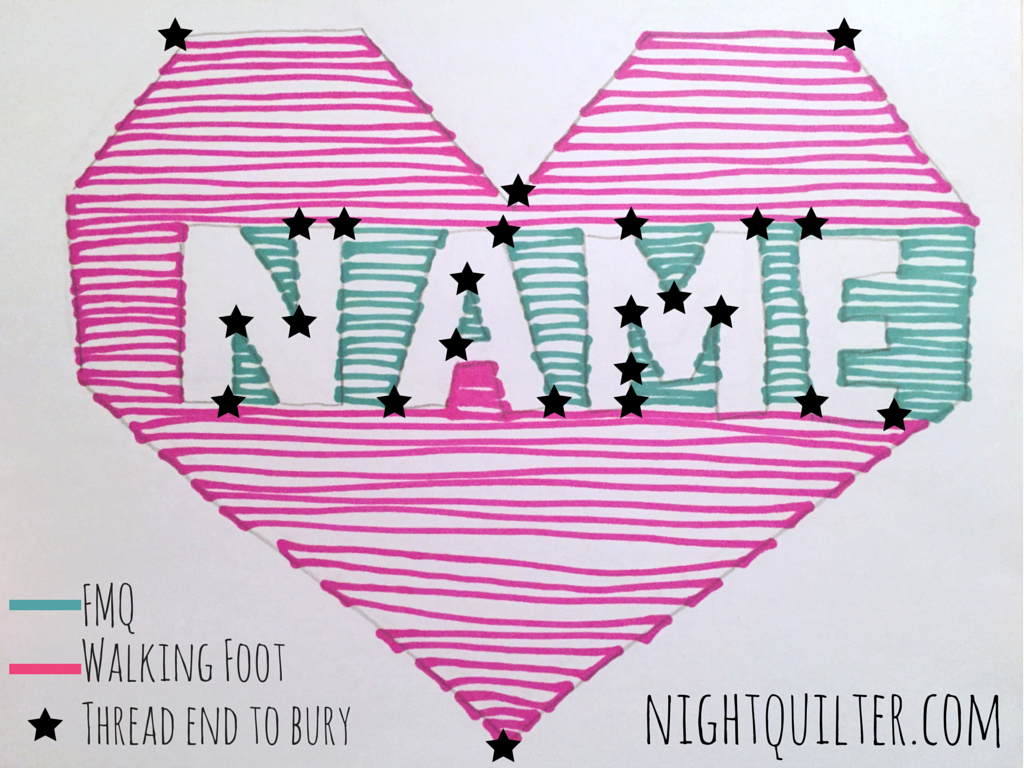
Relief Quilting DiagramHere is a *rough* sketch of the path I took while quilting. I used my walking foot to matchstick quilt the entire background, stitching two stitches in the ditch along the outsides of the heart to travel from line to line, rather than having a *million* thread ends to bury. I actually stitched every other line backwards, holding down the “sew in reverse” button for the entire line of quilting. This was easier to me than maneuvering my entire quilt back and forth, and worked just as effectively.

relief quilting tutorialNote: After using your walking foot to matchstick quilt the background (around the periphery of the letters), some of the freezer paper letters may have come unstuck. 

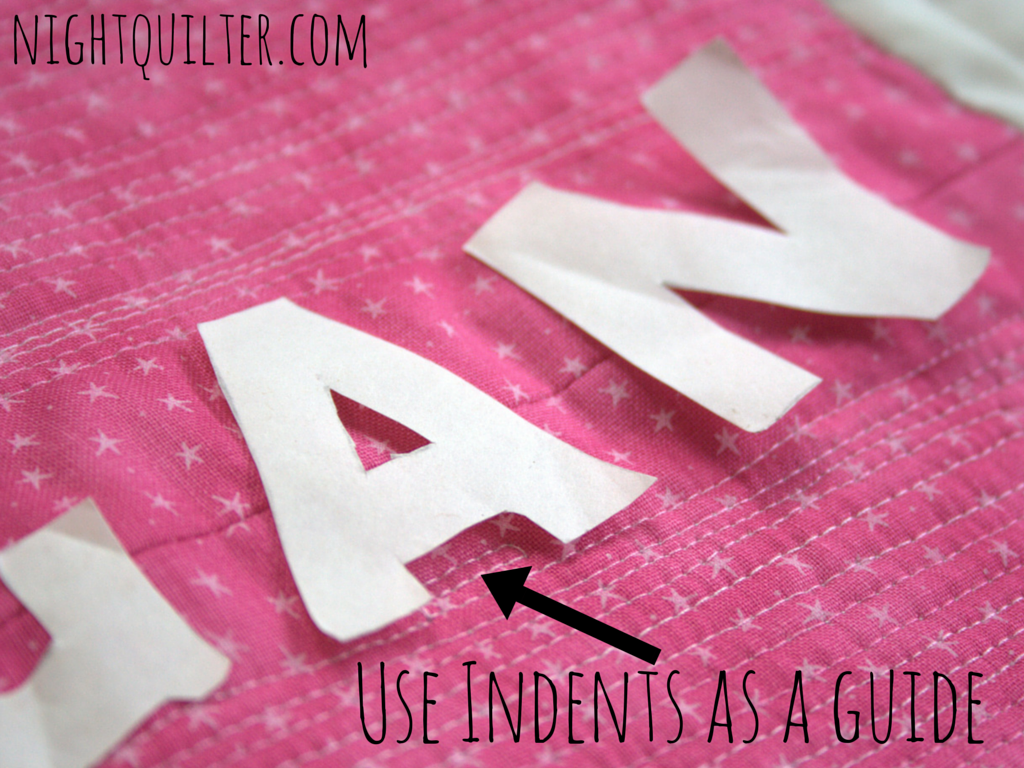
relief quilting words tutorialIron them on again, using the little indents (if your letters had any) as a guide.

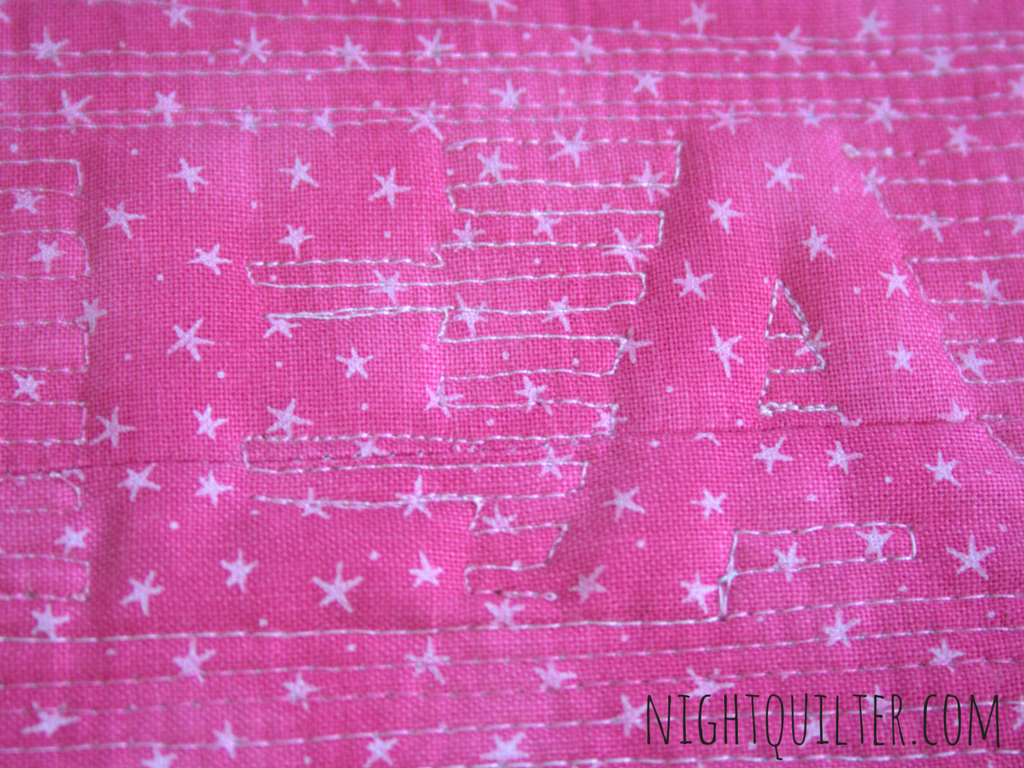
Relief Quilting FMQNext, free motion quilt the matchstick quilting within and between the letters, since the space is so small and back and forth quilting is much easier free motion style (you don’t have to twist and turn your entire quilt like you would using a walking foot!). Be sure not to quilt onto the freezer paper.

Step 6

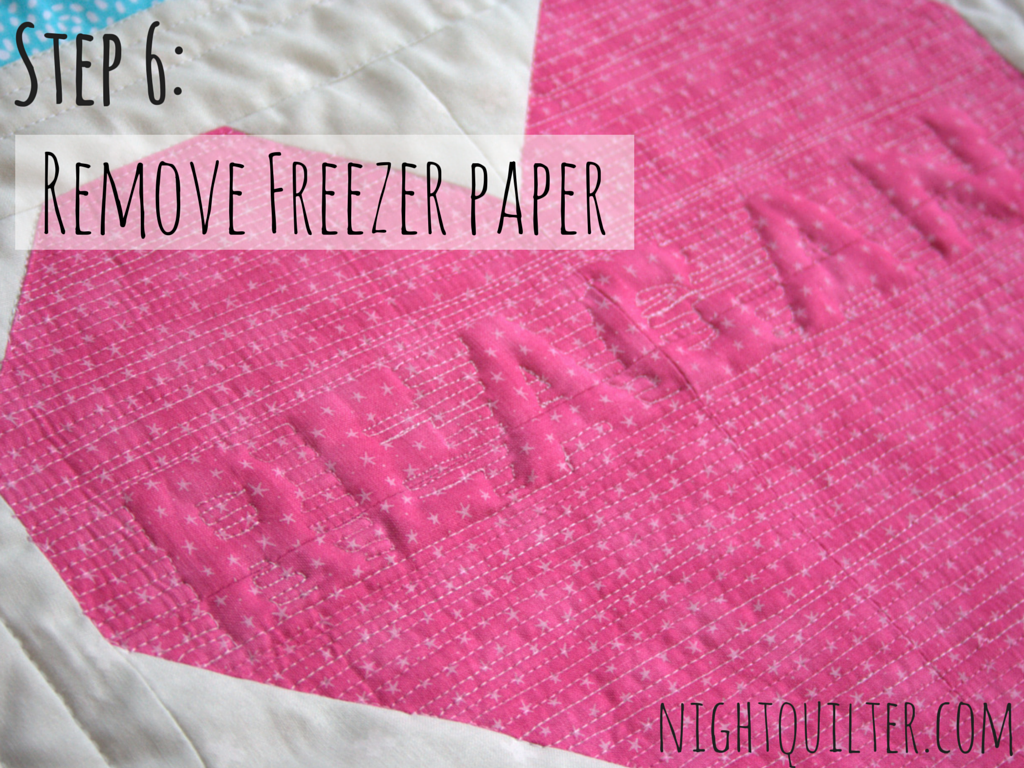
relief quilting words tutorialPeel off the freezer paper letters. Bury any threads.

Step 7

relief quilting words tutorialAdmire your relief quilted name!

I’m linking up with Late Night Quilter’s Tips & Tutorials Tuesday. I hope you found this helpful, and let me know if you try it!


Bonnie Christine Ribbon Thread Catch & Pin Cushion {Tutorial}

Welcome to my stop on the Bonnie Christine Ribbon Blog Tour. We’re entering the final days of the tour, so be sure to check out the fabulous projects that have already been posted, including Caitlin Topham’s post at Salty Oat from yesterday, and visit the final stop on the tour, Corri Sheff at The Lions Dandy tomorrow to see what gorgeousness she creates.

promo2Bonnie Christine is a surface pattern designer, mother hen of the Roost Tribe and author of Going Home to Roost – a blog dedicated to living an extraordinarily creative life. She is inspired by the great outdoors and is passionate about sharing what she knows and creating community around creativity. Sing it, sister! These ribbons may seem familiar, since the coordinating fabrics in her Sweet as Honey fabric line inspired my very first wine and fabric pairing!

This line of ribbons was inspired by a love for nature and sunshine. They represent working in the garden, growing flowers and watching the bees, birds and butterflies take flight. This description embodies so much of what I hold dear, and when I saw that Bonnie Christine was looking for bloggers to help spread the word about her new line of ribbons, I knew I had to be a part of this blog tour.

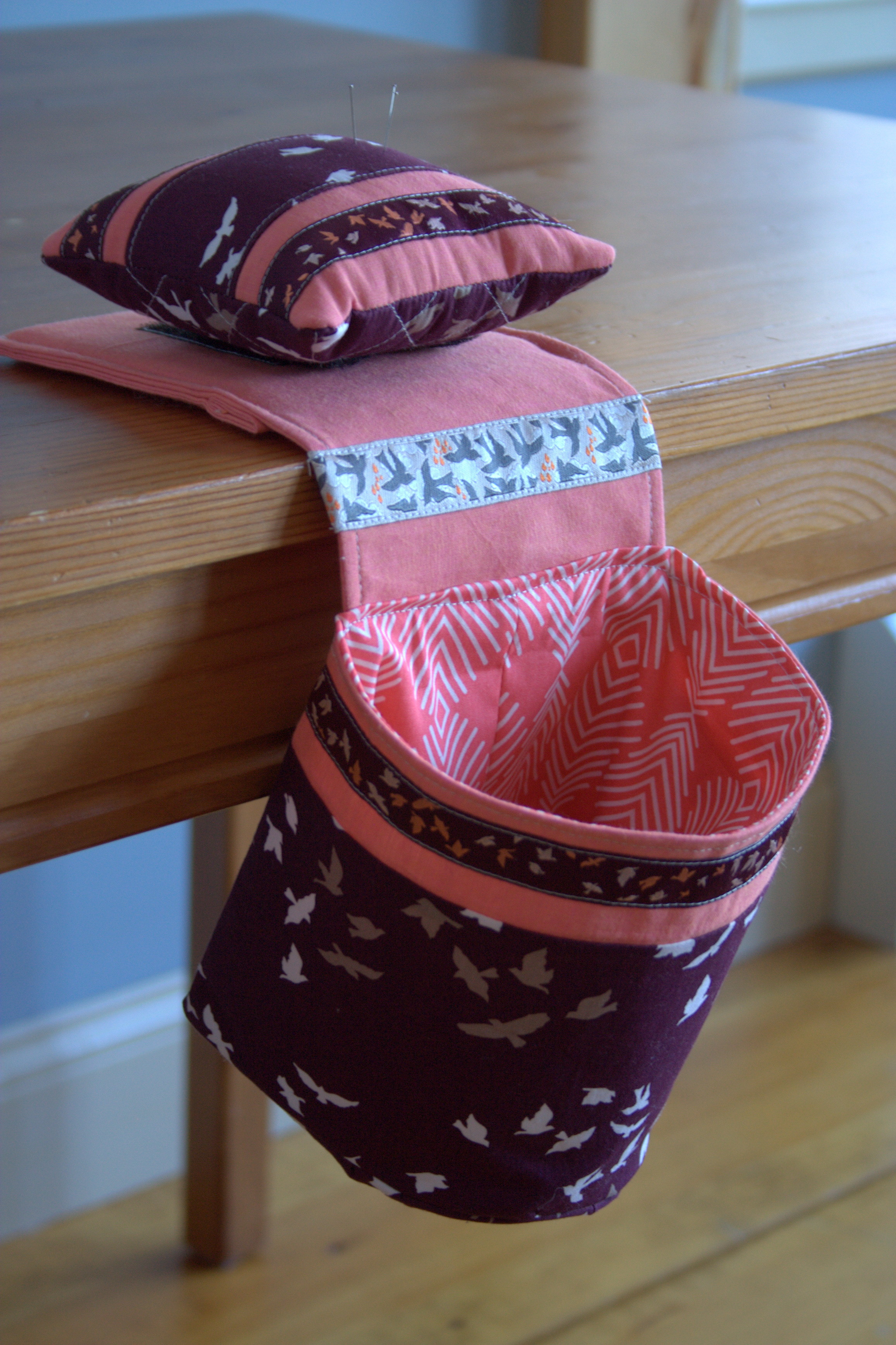
I decided to create a weighted thread catch and matching detachable pin cushion so that these ribbons and fabrics can brighten up my sewing space forever. The ribbons are silky smooth and coordinate with Bonnie’s fabric lines Winged and Sweet as Honey, but truly they coordinate with many of her fabric lines and look AWESOME paired with coordinating solids.

ribbon thread catch and removable pin cushion

TUTORIAL- Ribbon Thread Catch and Pin Cushion

I’m super happy with how this thread catch turned out, and thought I’d share a tutorial with you so that you can make one, too! Special features of this Ribbon Thread Catch & Pin Cushion are:

  • Pin cushion is removable so that you can tote it from workspace to workspace;
  • Tile weight is removable, meaning you can be creative with what you use to weigh down the thread catch, and/or replace the tile if broken (I have a busy nearly-3 year old, so I’m anticipating at least one broken tile in my future);
  • Since both the pin cushion and tile can be removed, you can position the thread catch base underneath your machine for convenience if you want; and,
  • Double thick interfacing and the half-moon thread catch base create a wide open, but still reasonably sized space in which to toss your threads.

If you want to use Bonnie’s ribbons, too, you can buy them at Renaissance Ribbons or at Bonnie’s mom’s quilt shop A Stitch in Time. Here we go!

TUTORIAL- Ribbon Thread Catch and Pin Cushion

Ribbon Thread Catch and Pin Cushion Tutorial

First, gather your materials. General requirements are listed first; specific materials I used are in parenthesis. You will need:

Cutting Instructions

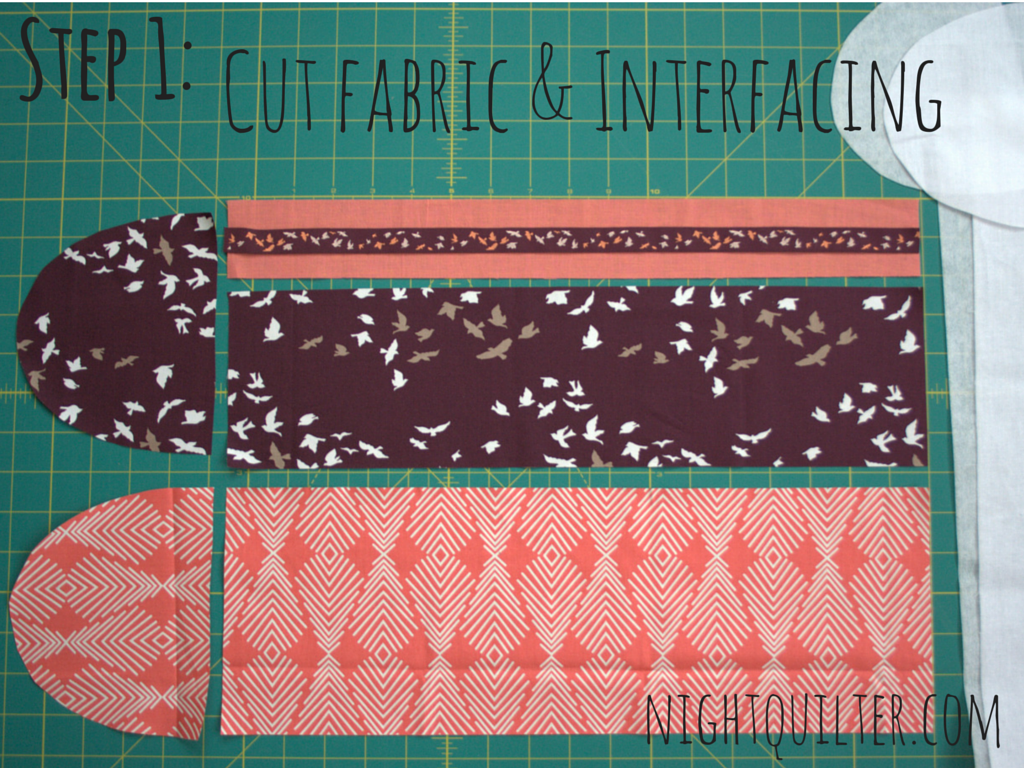
Please read all of the instructions before cutting. There are some time saving tips for working with interfacing in the “making the base and hanging tab” section.

For pincushion:
(Cut 1) 5.5″ x 5.5″ print
(Cut 1) 2.5″x5.5″ print
(Cut 2) 1.75″x5.5″ coordinating solid
(Cut 2) 5.5″ x 5.5″ batting

For base and hanging tab:
(Cut 2) 14.5″x5.5″ coordinating solid
(Cut 1) 14.5″x5.5″ stiff fusible interfacing (Pellon 808)
(Cut 1) 5.75″ accent ribbon (approximately)

For thread catch:
(Cut 1) 2″x17.5″ coordinating solid
(Cut 1) 4.5″x17.5″ print
(Cut 1) 6″x17.5″ lining fabric
(Cut 4) Ribbon Thread Catch bottom template:
– print fabric
– interfacing Pellon 101
– stiff interfacing Pellon 808
– lining fabric
(Cut 1) 6″x17.5″ stiff fusible interfacing (Pellon 808)
(Cut 1) 6″x17.5″ fusible interfacing (Pellon 101)

Assembly Instructions

Use 1/4″ seam allowances throughout.

Make the pincushion:

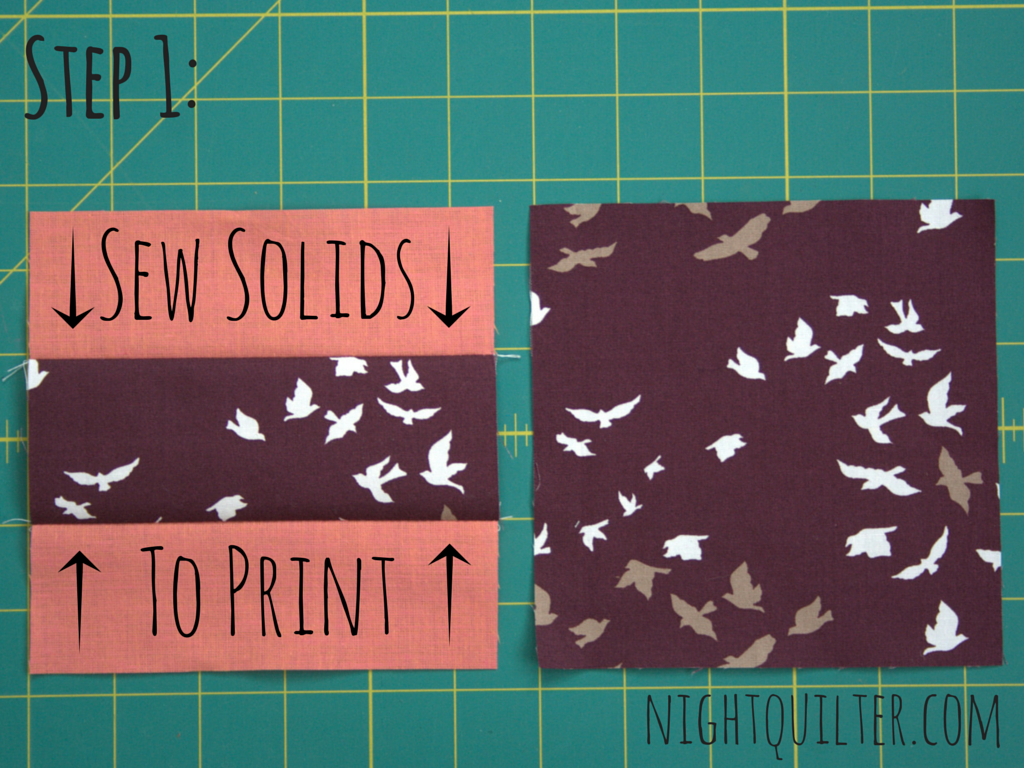
Step 1

pin cushion tutorial Sew 1.75″x5.5″ coordinating solid pieces to 2.5″x5.5″ print fabric as shown, pressing seams toward darker fabric. You should now have two 5.5″ squares.

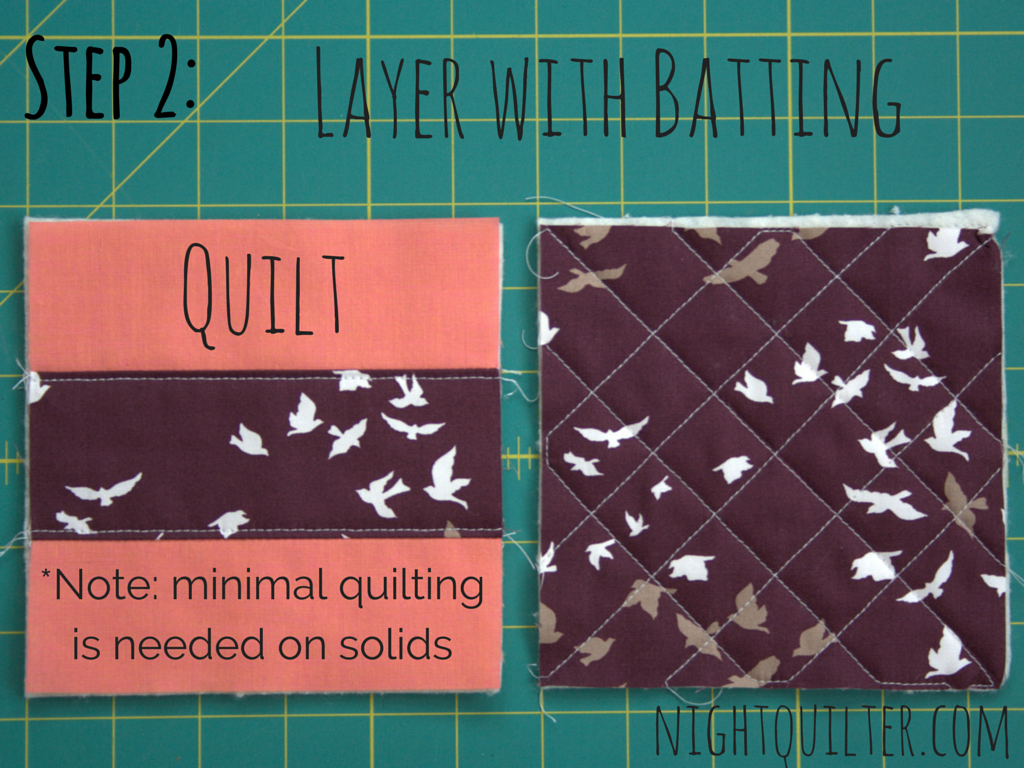
Step 2

pin cushion tutorialLayer each 5.5″ square with a 5.5″ square of batting and quilt as desired (Note: Do not quilt in solid fabric, or keep in mind that the ribbon will be sewn on in the next step). Quilt the bottom (5.5″ print fabric) square fairly densely to help withstand the pull of velcro once in use. The top square needs minimal quilting.

Step 3

pin cushion tutorialTop stitch ribbon to both coordinating solids approximately 3/8″ away from the print fabric. Note: If you use a different width ribbon, you may want to adjust this distance. Keep in mind the 1/4″ seam allowances on the outermost edge.

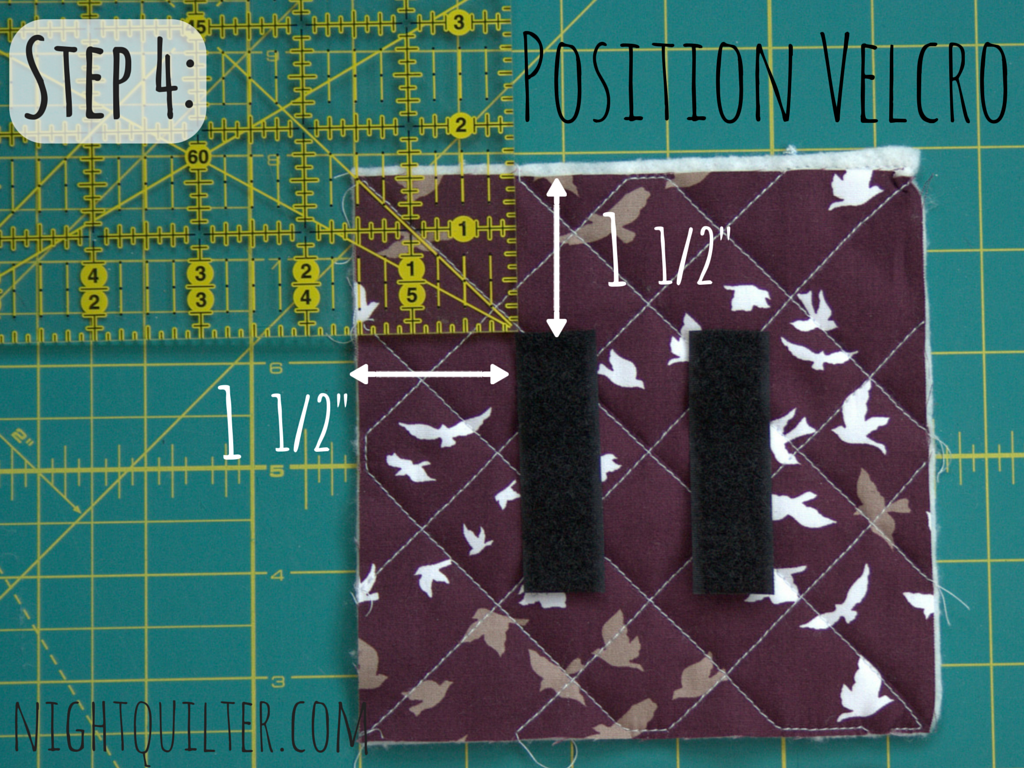
Step 4

pin cushion tutorialAlign velcro approximately 1.5″ from each corner and top stitch securely. I stitched around each strip twice to ensure that it will withstand a lifetime of use. Note: Use the soft side of the velcro on the pincushion so that it doesn’t pick up thread and fuzz and everything when you move it around your workspace. The hooked side of the velcro will be sewn onto the base.

Step 5
Right sides facing, sew around all edges leaving a 3″ opening in one side. (Leaving the opening in the side will make for much less visible closing stitches after stuffing)

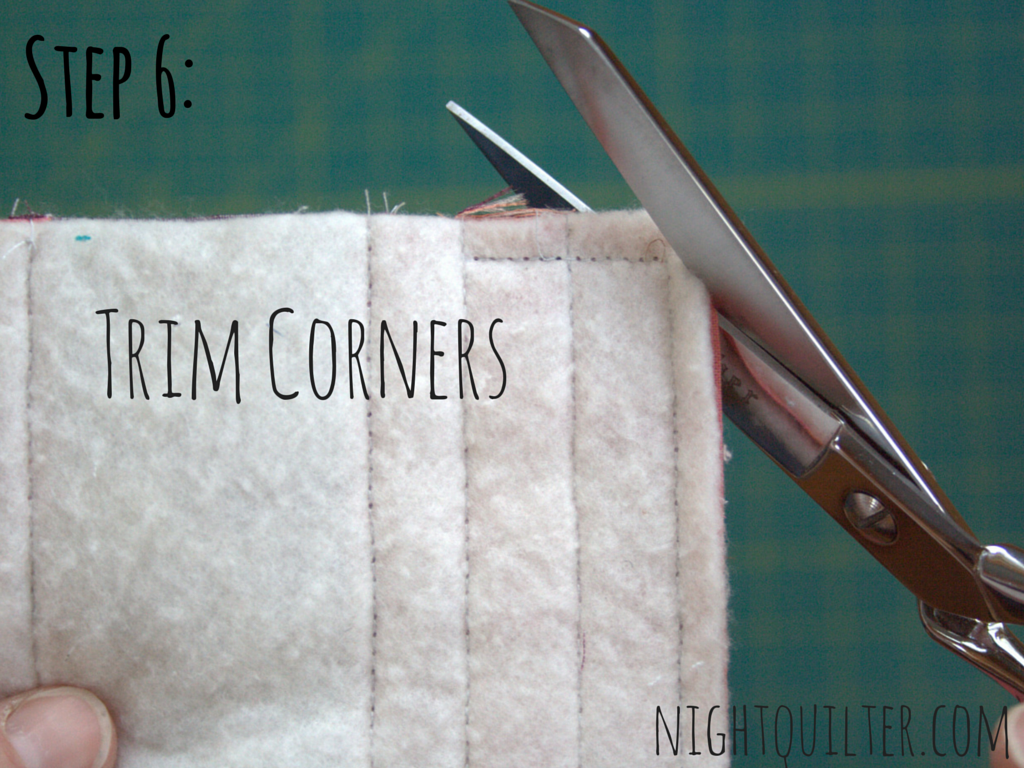
Step 6

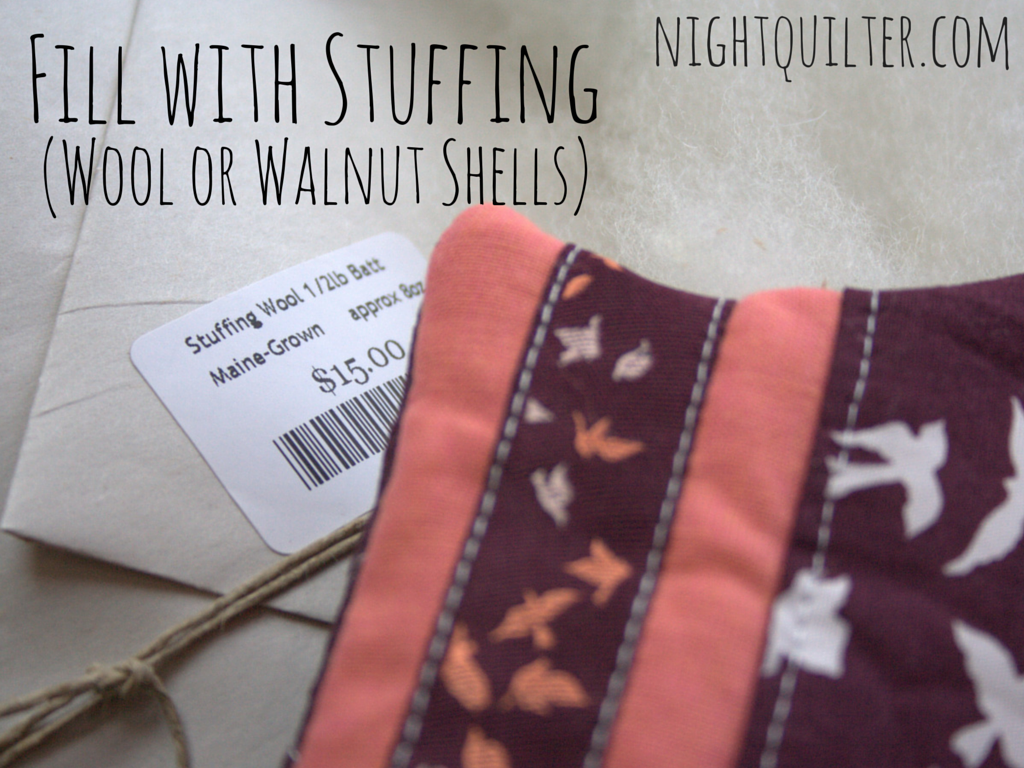
pin cushion tutorialpin cushion tutorialTrim corners and turn right-side out.  Stuff to the gills with stuffing of choice (I recommend 100% wool batting–the stuffing kind, not batting like we use between layers of a quilt–or crushed walnut shells to help keep your pins and needles clean and rust-free).

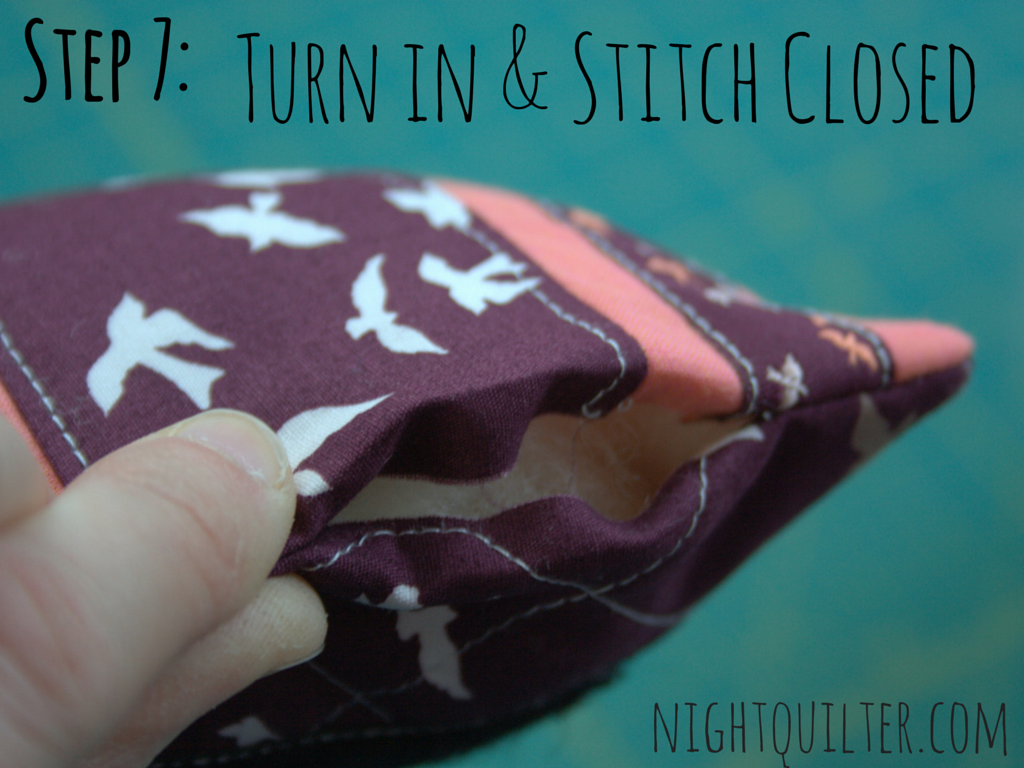
Step 7

pin cushion tutorialFold in edges around opening and pin or finger press closed. Using a blind stitch (or visible whip stitch), hand stitch closed using coordinating thread.

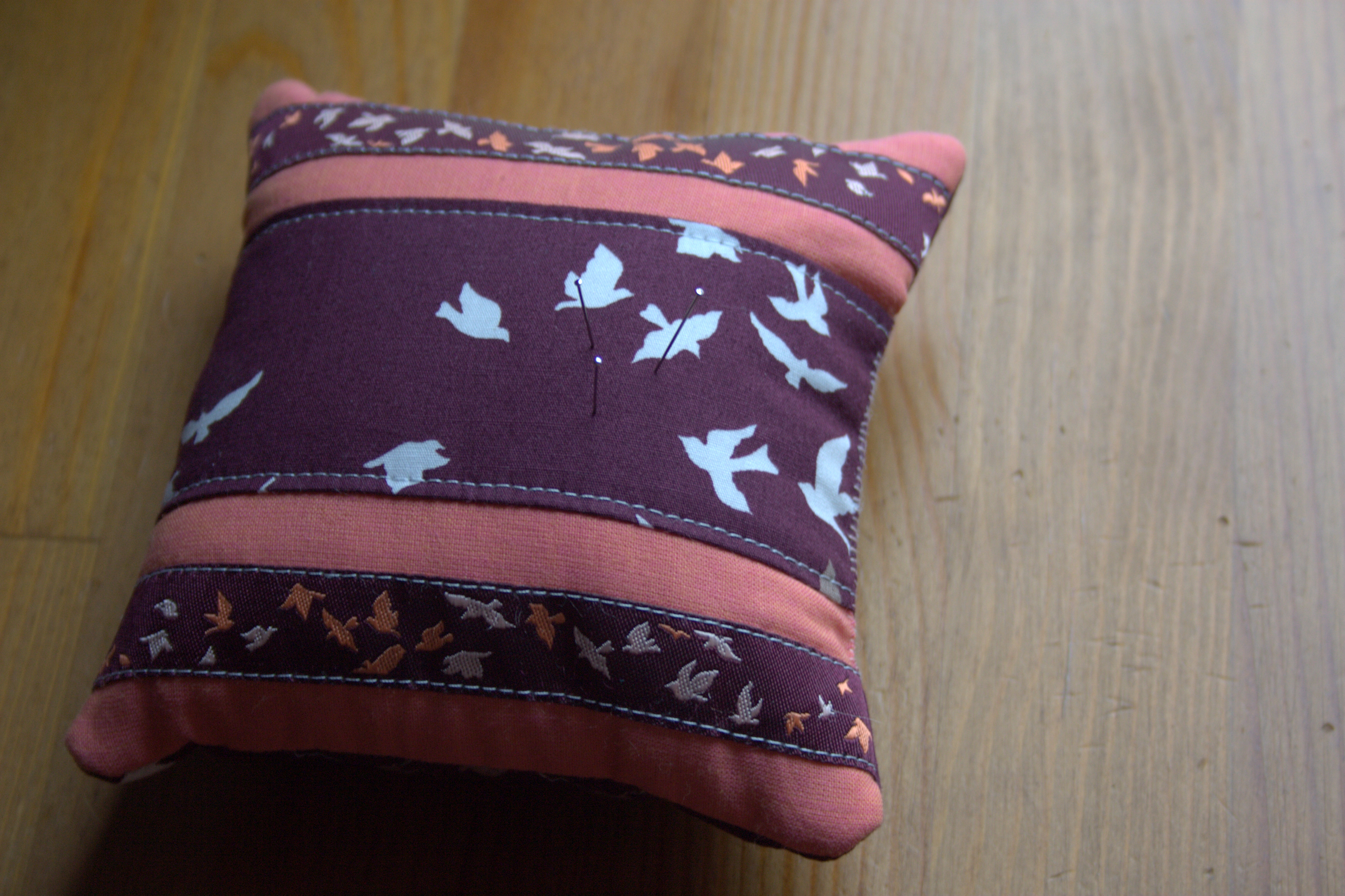
pin cushionAdmire your pincushion! Set aside while you make the rest of the thread catch.

Make the base and hanging tab:

Step 1 *time saving tip*

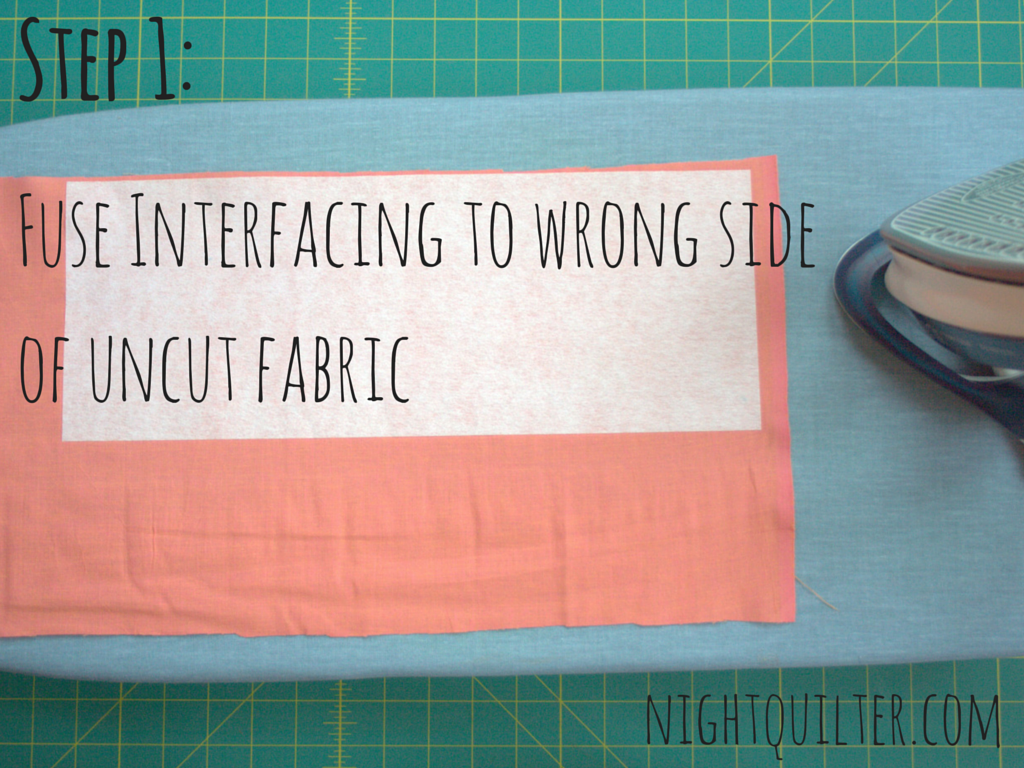
Thread Catch Base & Hanging Tab Step 1Cut the 14.5″x5.5″ piece of stiff fusible interfacing (Pellon 808). Following the instructions on the interfacing, fuse to wrong side of coordinating fabric (fabric is uncut at this point).

Step 2

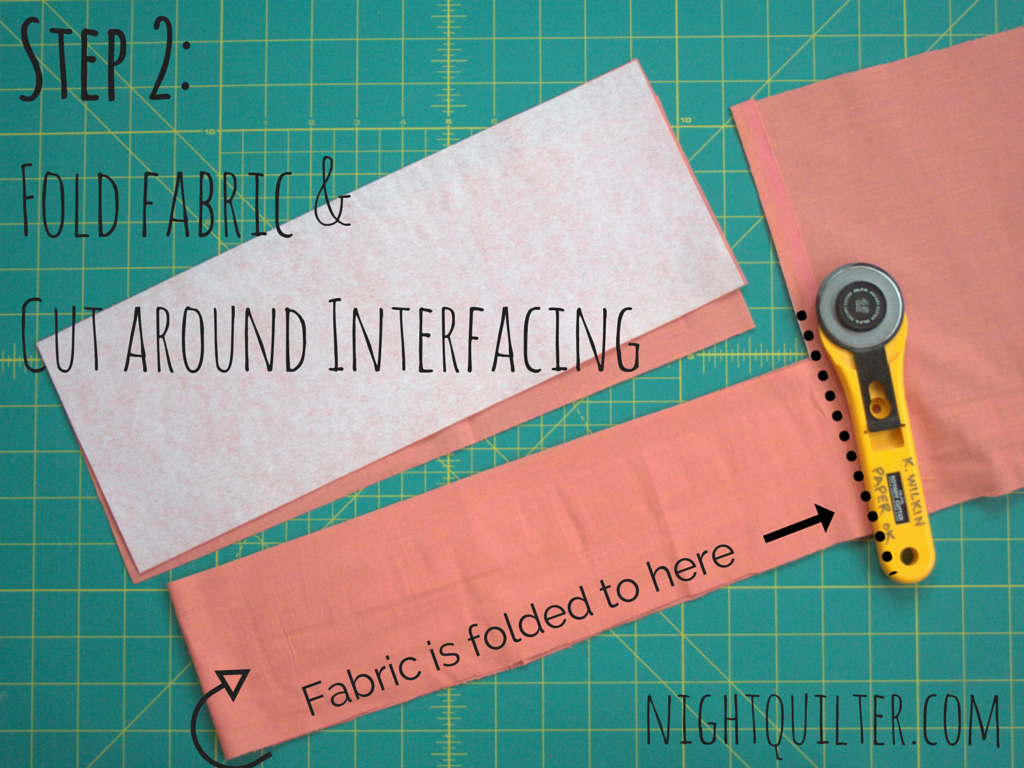
2Once interfacing cools, fold fabric in half and use rotary cutter and ruler to cut around the 14.5″x5.5″ interfacing. You will end up with two perfectly sized fabric pieces with the interfacing fused to one of them.

Step 3

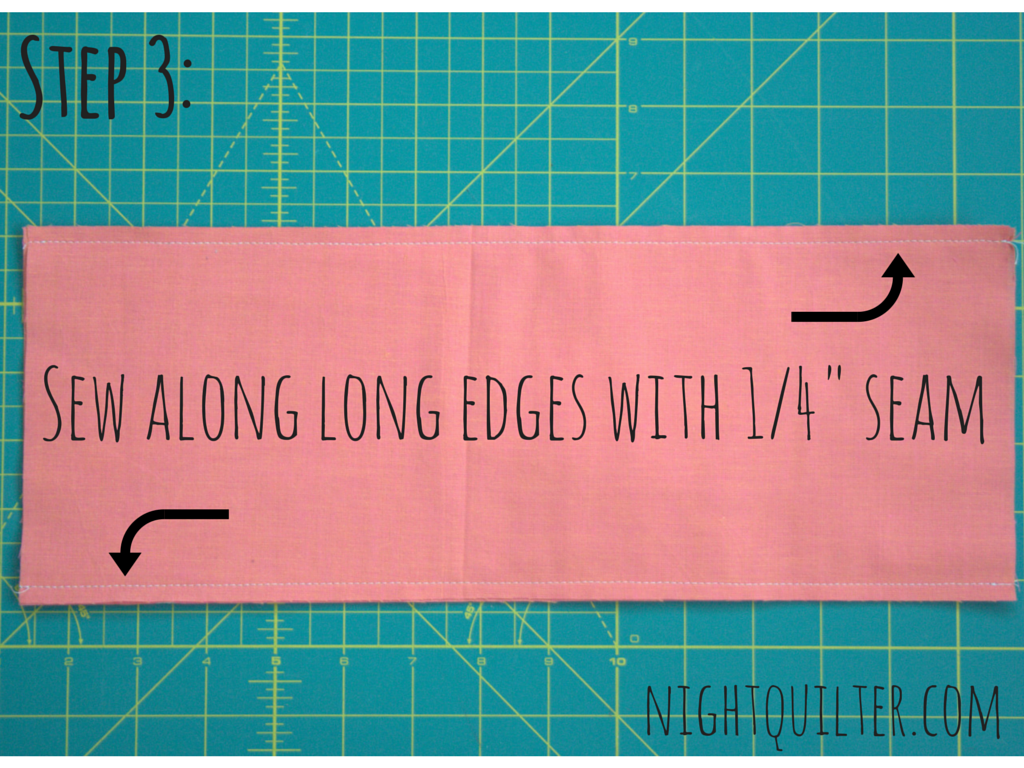
step three thread catch tutorial base and hanging tabWith right sides facing (interfacing out), sew along long sides with a 1/4″ seam. Set seams, turn right side out, press.

Step 4

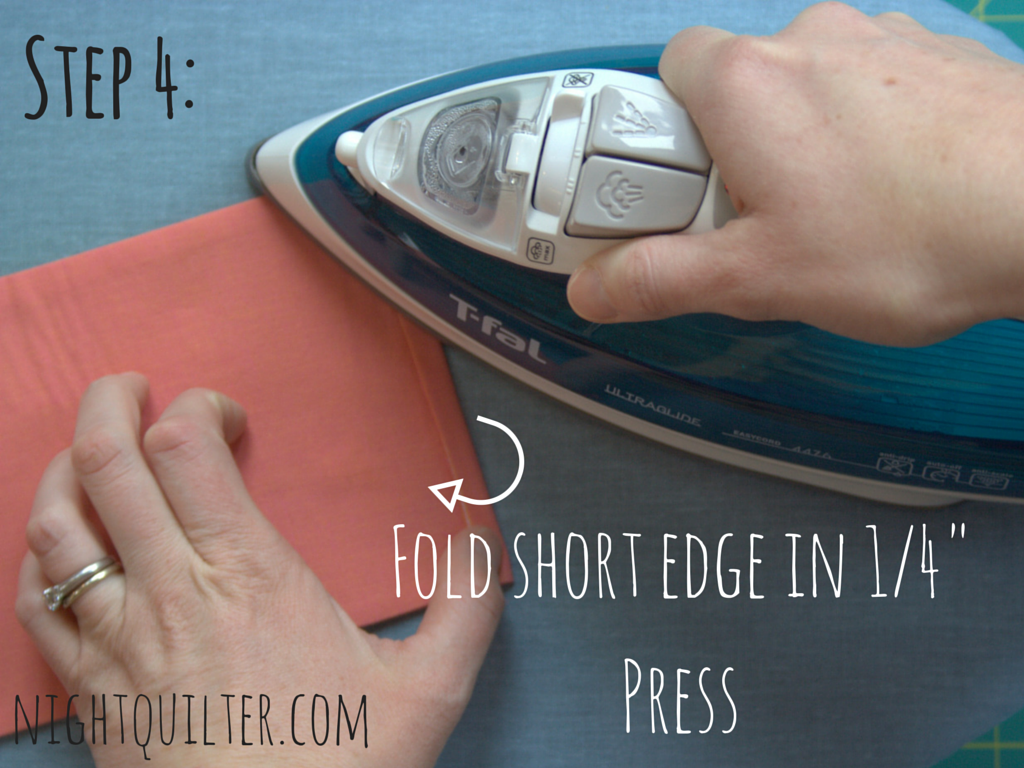
thread catch tutorial base and hanging tab stepFold in 1/4″ from one short edge. Press.

Step 5

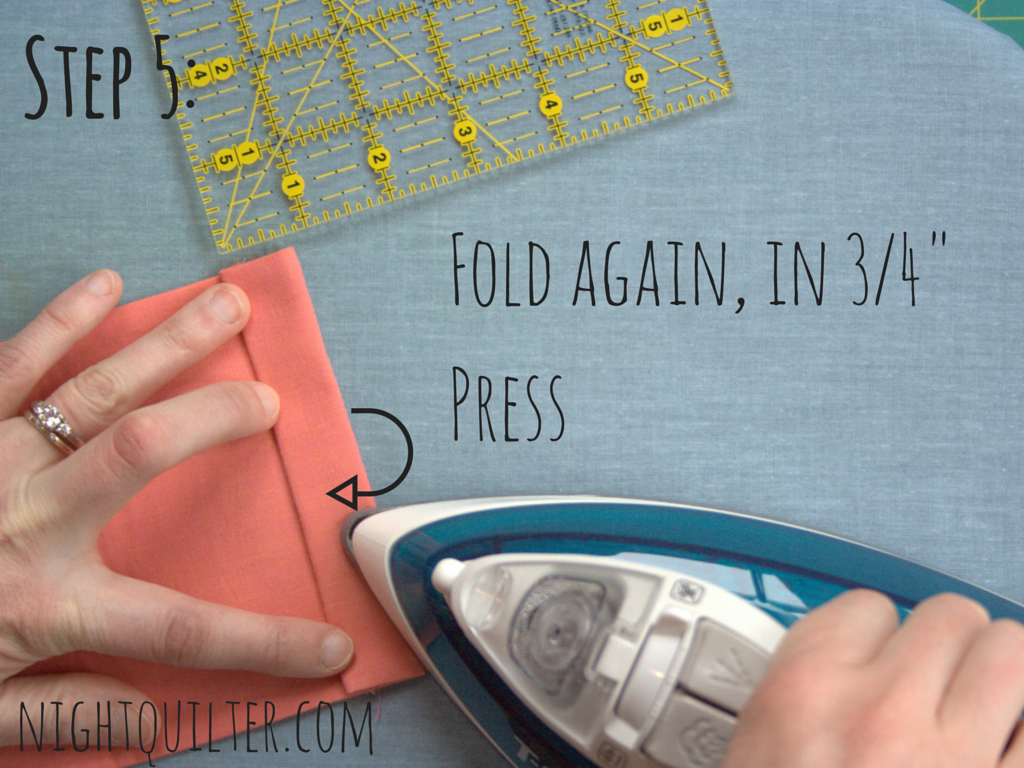
thread catch tutorial base and hanging tab stepFold in again, 3/4″. Press.

Step 6

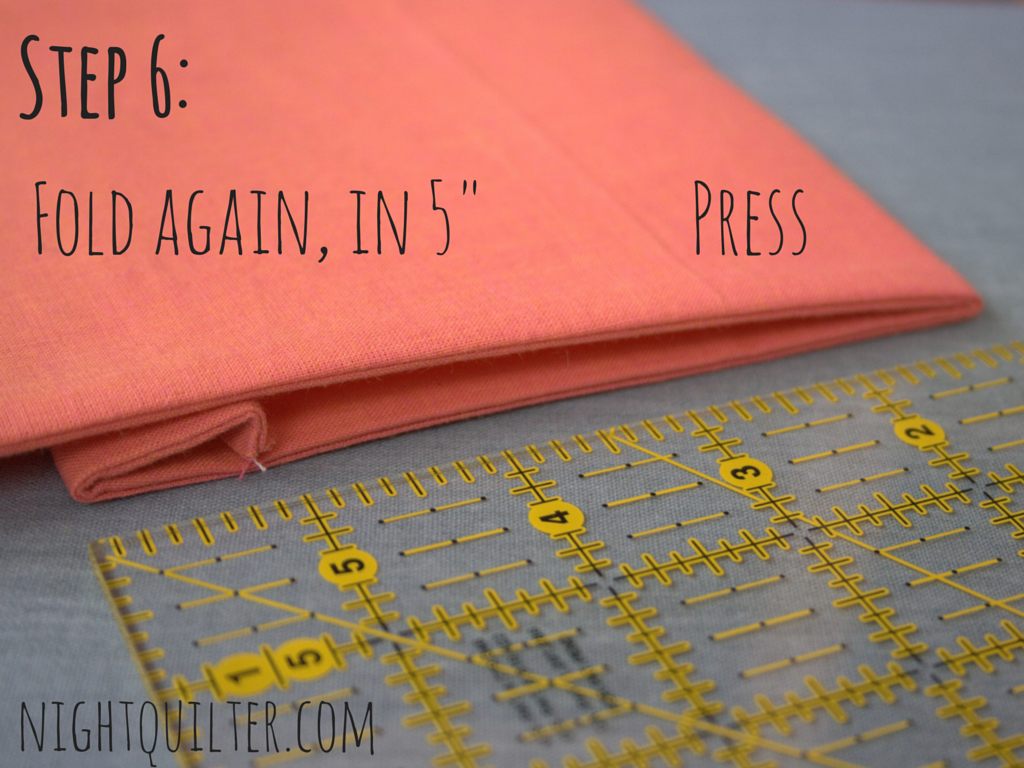
thread catch tutorial base and hanging tab stepFold long end 5″ from pressed edge, over on top of itself. Press.

Step 7

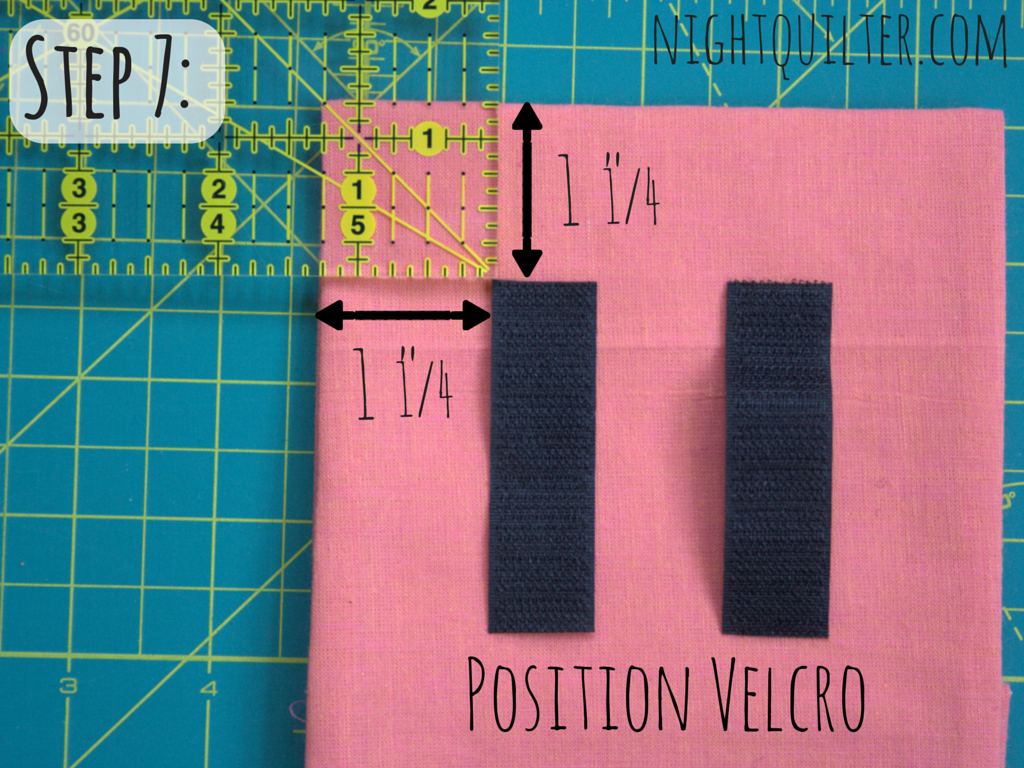
thread catch base and hanging tab directionsWith the folded portion facing away from you, and the unfinished long end facing down, position the velcro strips 1 1/4″ from each top corner. Pin in place.

Step 8

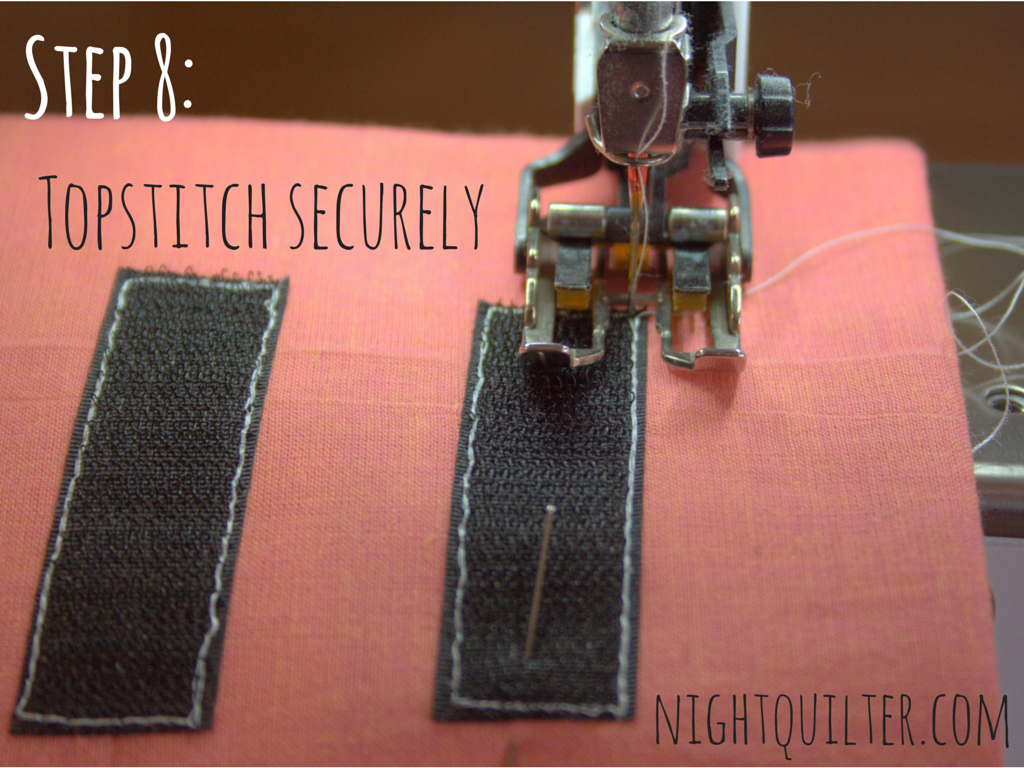
thread catch base and hanging tab directionsTopstitch the velcro in place, being careful to only sew through one layer of fabric (the portion that was pressed under will be folded up out of the way.) I stitched around each velcro strip twice to ensure the velcro stays in place even with frequent use.

Step 9

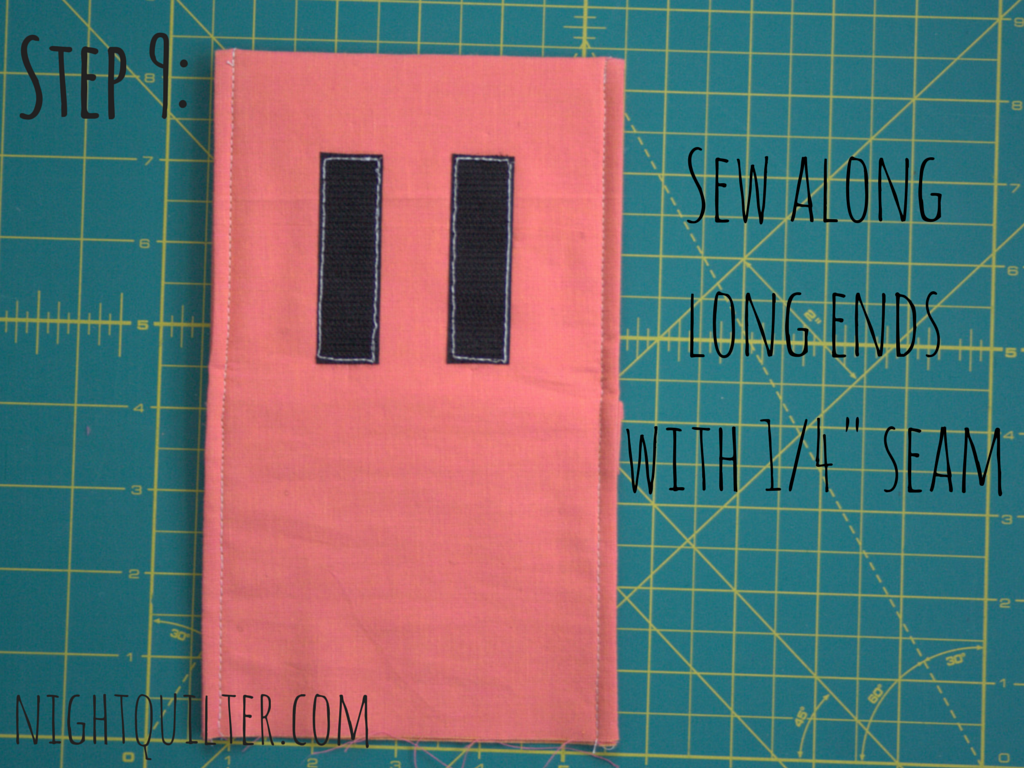
thread catch base and hanging tab directionsRefold according to directions above. Sew along long edges only, using a 1/4″ seam allowance.

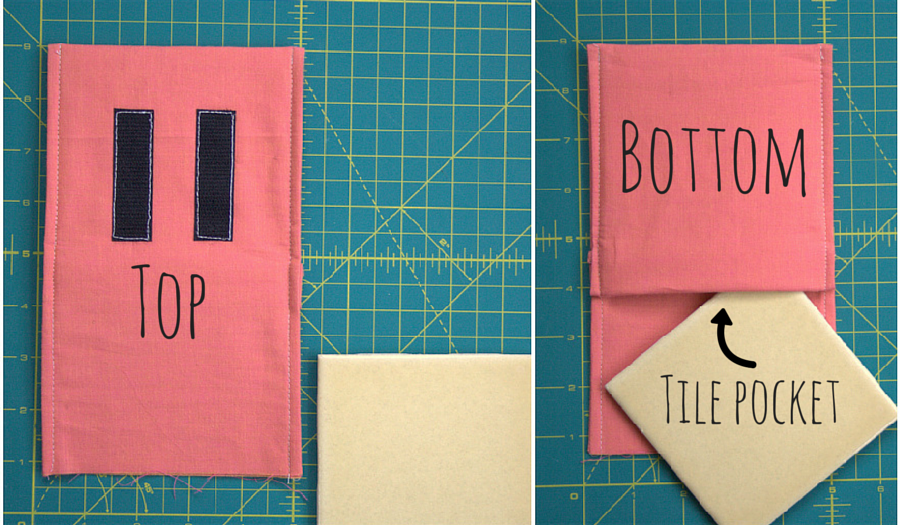
tile pocket imageYou have just created a tile pocket. I have seen some thread catches weighted with completely sewn-in tiles, but decided to design this with an opening where the tile can be inserted or removed as needed. This means that you can use anything you want to weigh down your thread catch, and if you have a little “helper” who happens to smash it to the ground, you can take out the tile shards and replace with a new tile. Once your tile is inserted, you can pull the little lip of fabric over the end of it to hold it in place more securely (like those fancy pillow cases). Don’t insert your tile yet–we’re still sewing! Now you know how the tile pocket will work, and hopefully can visualize where we are going with this a little better.

Step 10

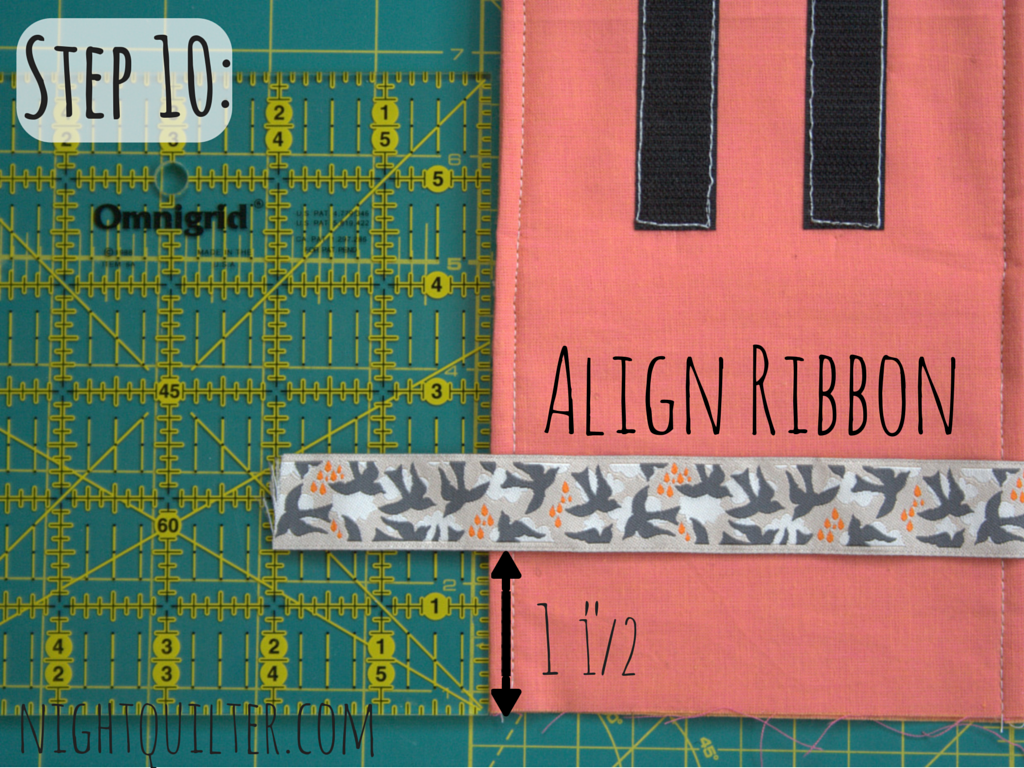
thread catch pin cushion tutorialAlign accent ribbon 1 1/2″ from the unfinished short edge of the top of the base. Note: The ribbon shown is longer than 5.75″ and I trimmed the edges before the next step. Yours should fit well, with a bit over 1/2″ overhang on each side.

Step 11

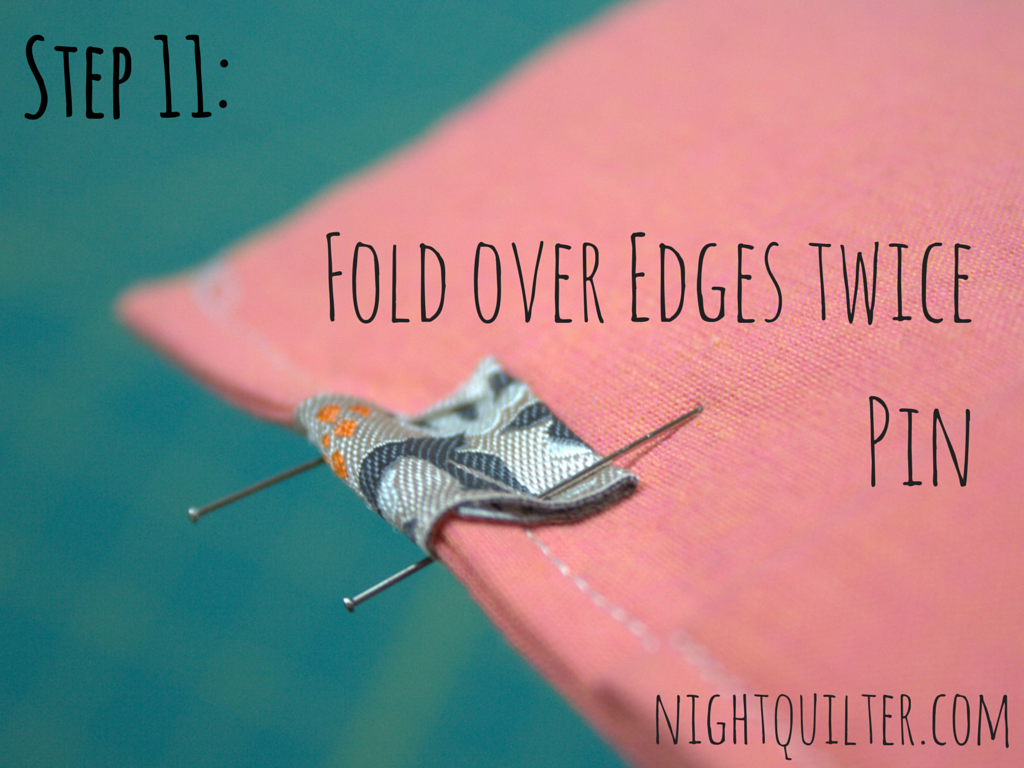
thread catch pin cushion tutorialFold excess ribbon over the edges twice (Fold so that the cut end meets the edge of the base, and then fold over again). Pin in place.

Step 12

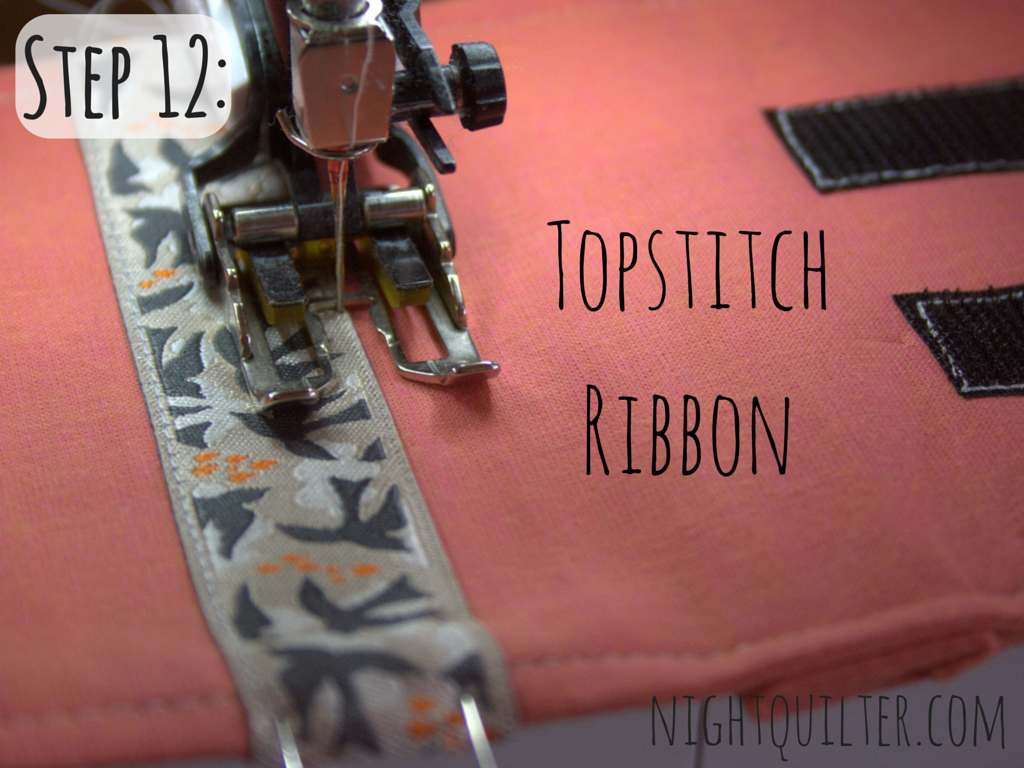
thread catch pin cushion tutorialTopstitch ribbon in place using coordinating thread. Your base is now finished, ready to attach to the thread catch basket. Set it aside while you make the thread catch.

Make the thread catch & Final Assembly:

Step 1

thread catch tutorialGather your cut pieces and interfacing. Normally, I would suggest cutting the interfacing, pressing to fabric, and THEN cutting out the outer fabric pieces around the interfacing, but since we will be sewing the print fabric to the coordinating solid before fusing to the interfacing, I would suggest cutting it all in advance. If you want to take a little shortcut, you can use the Ribbon Thread Catch bottom template to cut out the interfacing bottom, fuse to the print fabric and then cut the fabric once the interfacing is fused.

Step 2

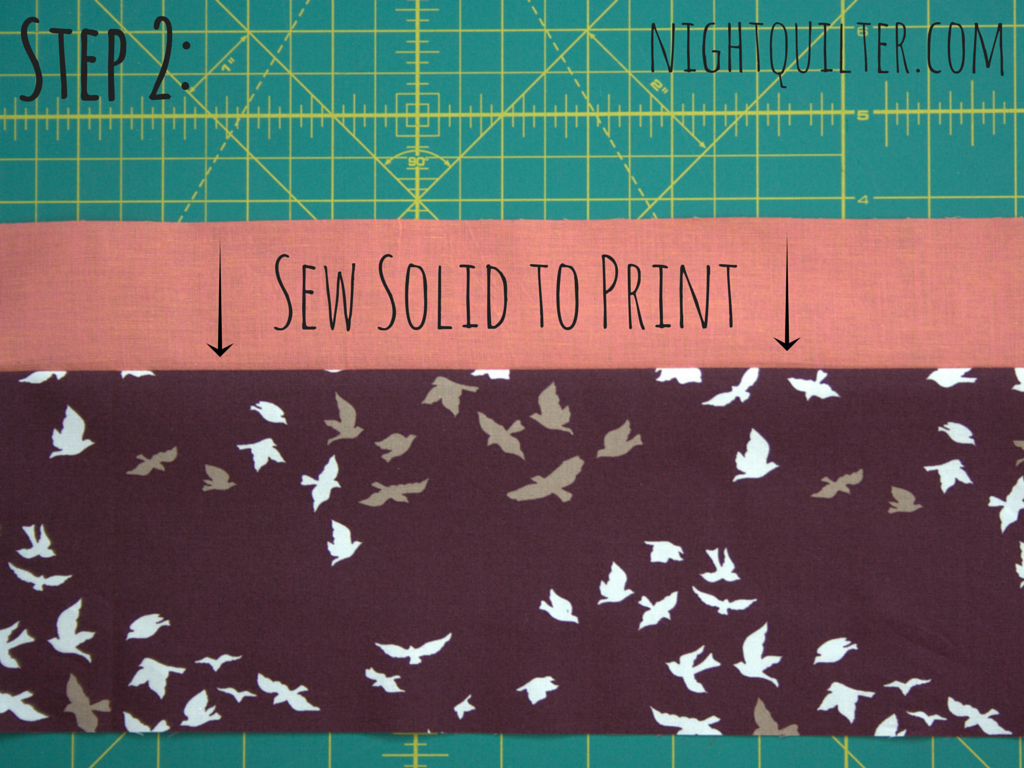
thread catch tutorialSew the 2″x17.5″ coordinating solid to the 4″x17.5″ print fabric, pressing the seam toward the darker fabric. This is the outer panel of the thread catch.

Step 3

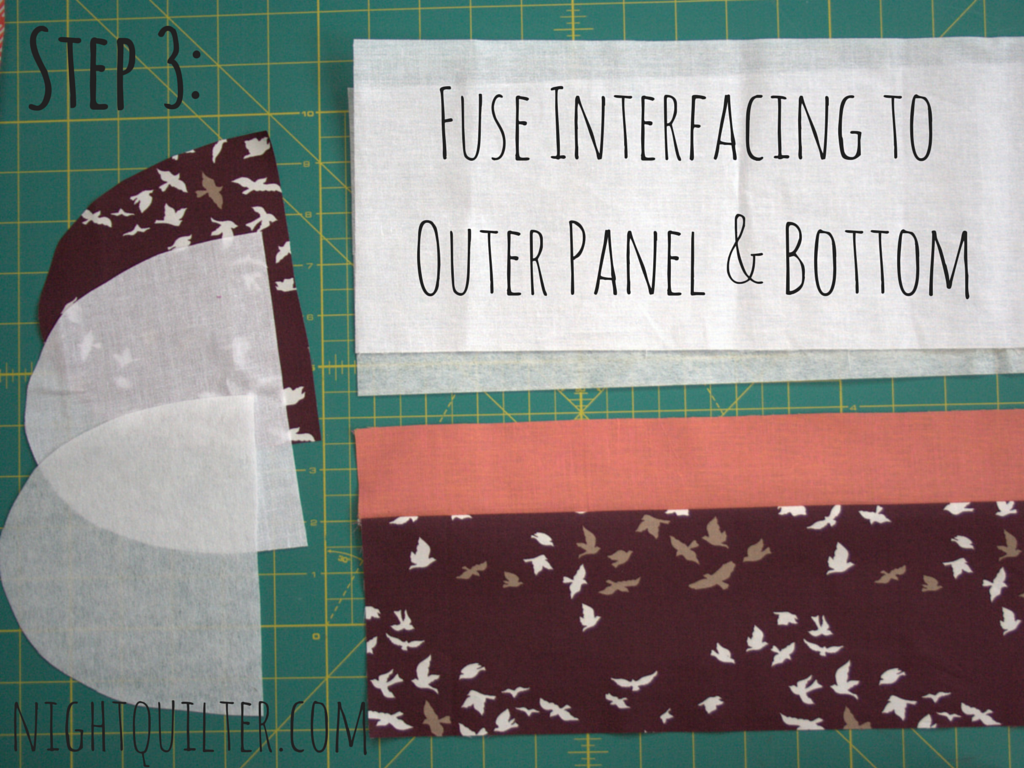
thread catch tutorialFollowing the instructions on the fusible interfacing, fuse both layers of interfacing to the wrong side of the outer panel, and to the thread catch bottom. Note that if using Pellon 101 and 808, you should fuse the 101 first since it calls for a damp press cloth and steam. Once fused and cool, then fuse the 808 for added structure. Note: Be sure to use a press cloth or other scrap fabric beneath and above your fabric and interfacing to protect your iron. Interfacing melted onto the iron is no fun!

Step 4

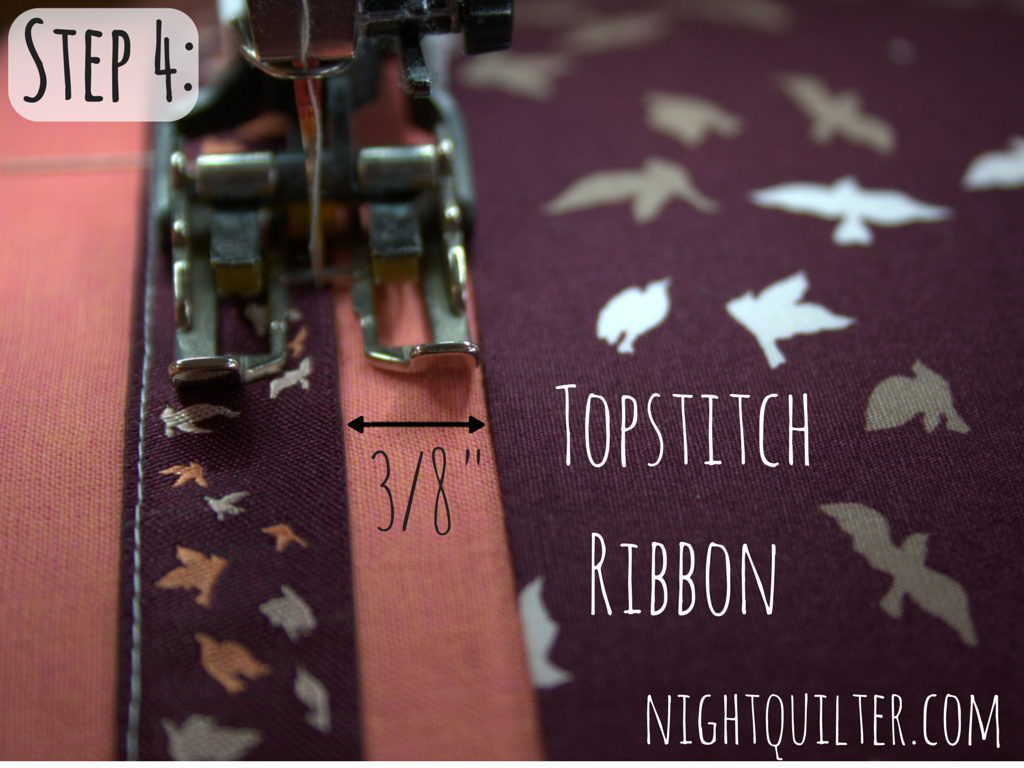
thread catch tutorialAlign the ribbon 3/8″ from the print fabric and topstitch in place. Note: If you are using a different width of ribbon, you may want to adjust this distance. Keep in mind the 1/4″ seam allowance at the top of the thread catch! You can use either coordinating or contrasting thread depending on the look you’d like to achieve. I opted to use Aurifil 50wt 2015 – Aluminum for the entire project. It seems to go with everything, in my opinion!

Step 5

thread catch tutorialFind the center of the outer panel (8.75″ from an edge) and pin. Note that in the photo, I pinned the top of the panel. You should pin the bottom of the panel instead. (Oops)

Step 6

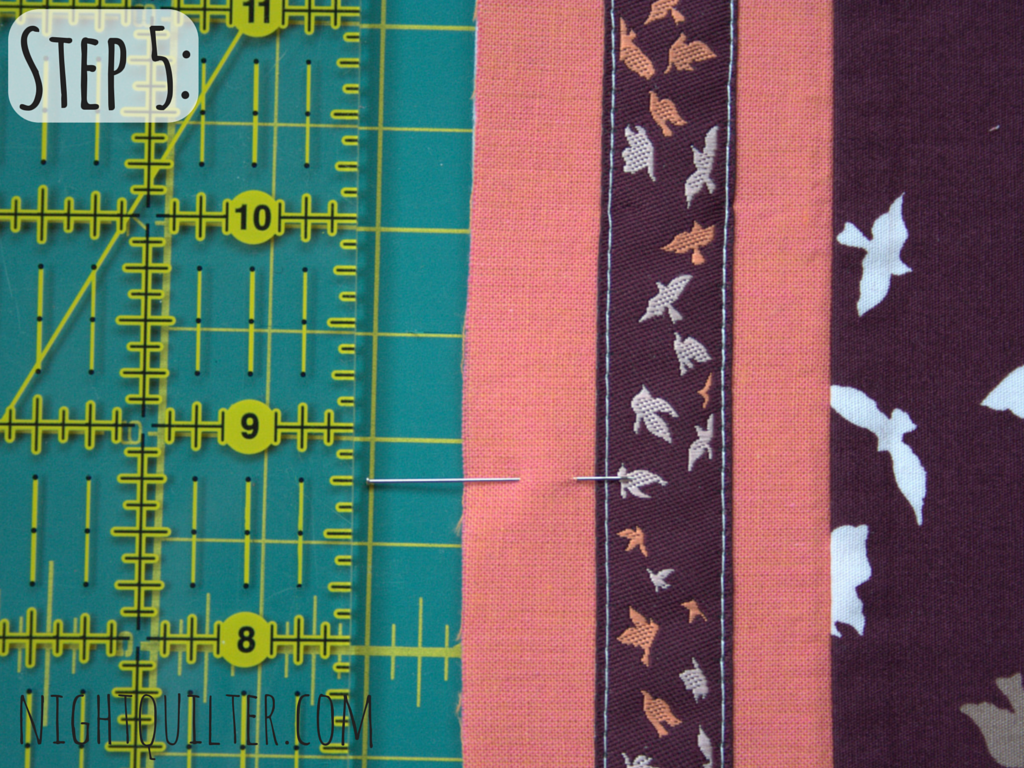
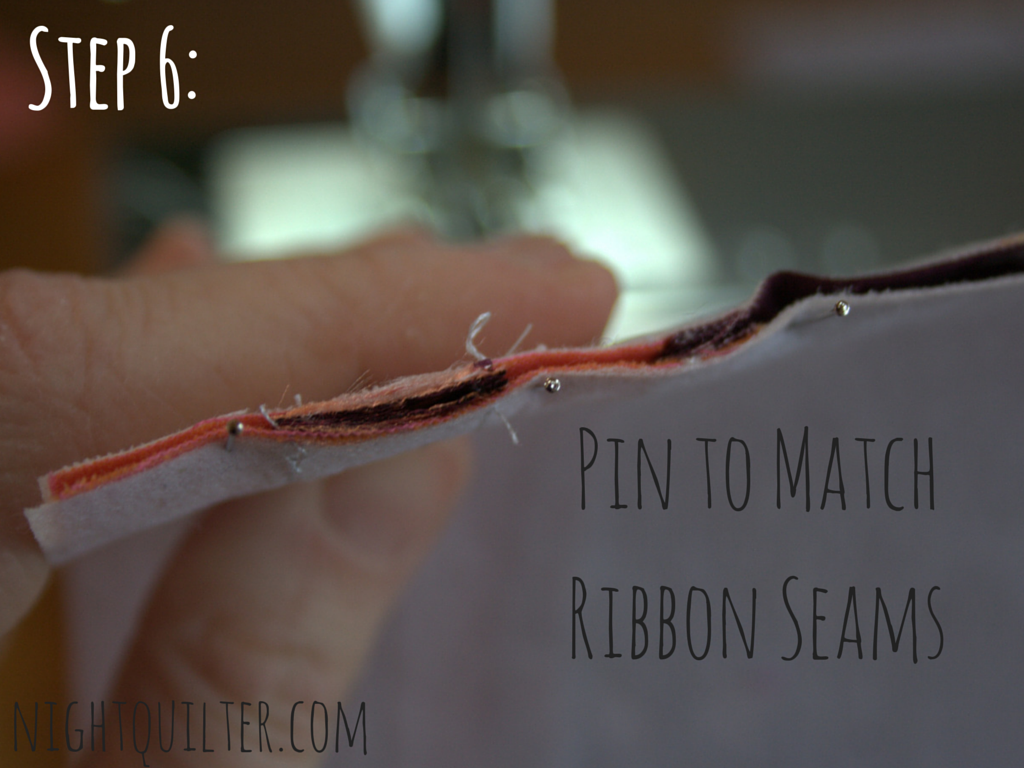
thread catch tutorialRight sides together, sew short ends of the outer panel together. Be sure to line up the ribbon and seams, pinning right next to the join for accuracy. Press seam open.

Step 7

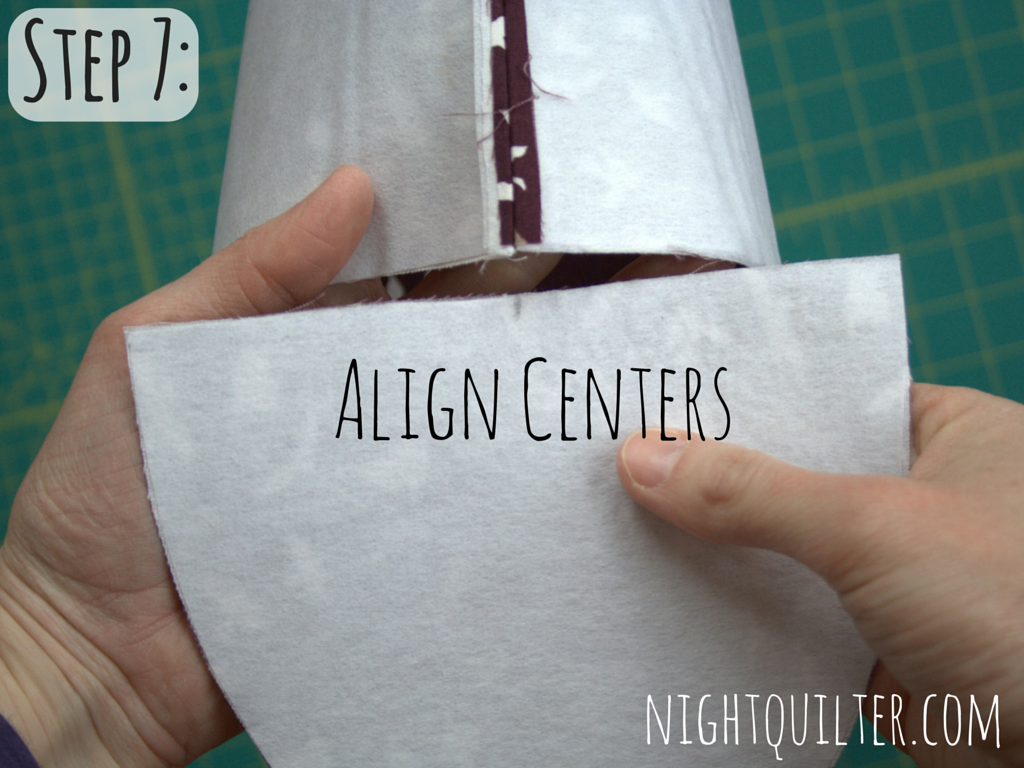
thread catch tutorialMark the center of your interfaced thread catch bottom (folding in half and creasing lightly to find the center point works wonderfully). Align the center of the bottom to the bottom seam of your outer panel. Be sure that right sides are facing away from you (you should be looking at a whole lot of interfacing) and also be sure that you are attaching your bottom to the bottom of the thread catch body (the ribbon is on the top).

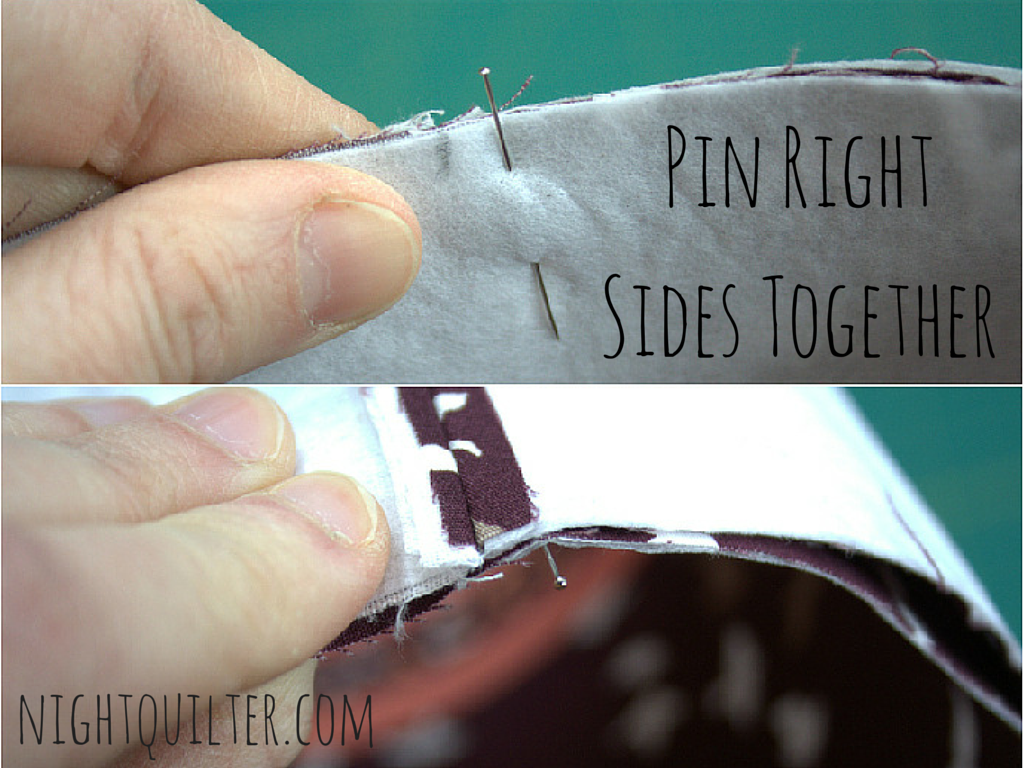
thread catch tutorialPin right sides together.

Step 8

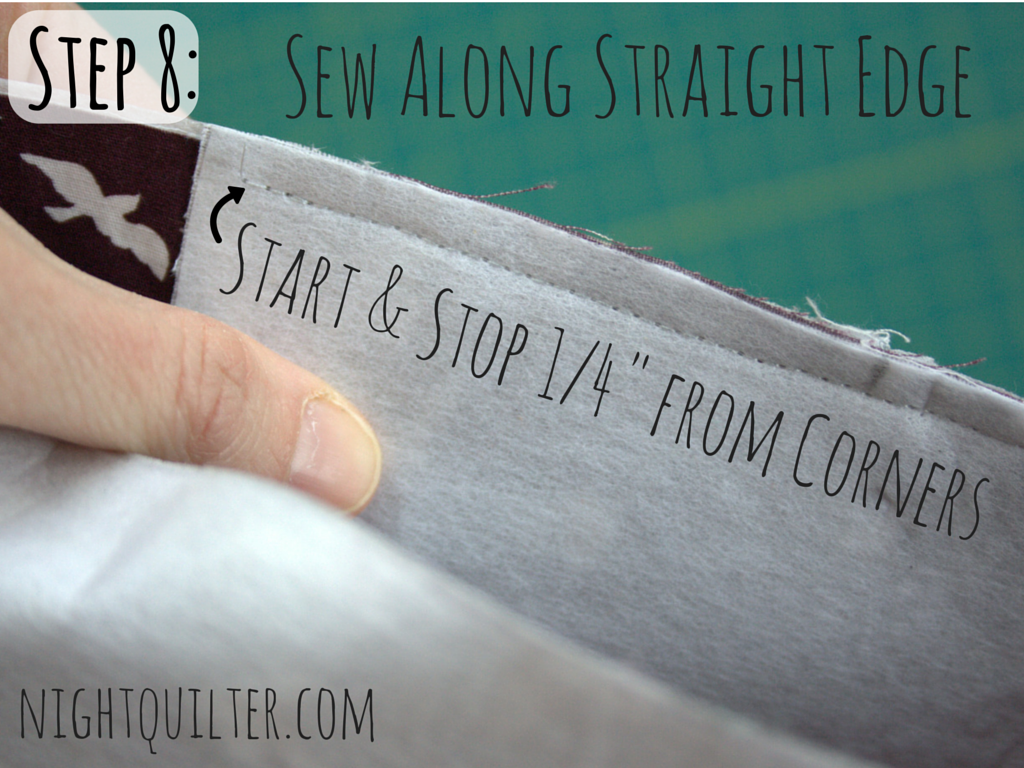
thread catch tutorialUsing the bottom of the thread catch as your reference and making sure it is lined up with the outer panel, sew along the straight edge of the bottom. Be sure to start and stop 1/4″ from both corners, backstitching at the beginning and end of your stitches.

Step 9

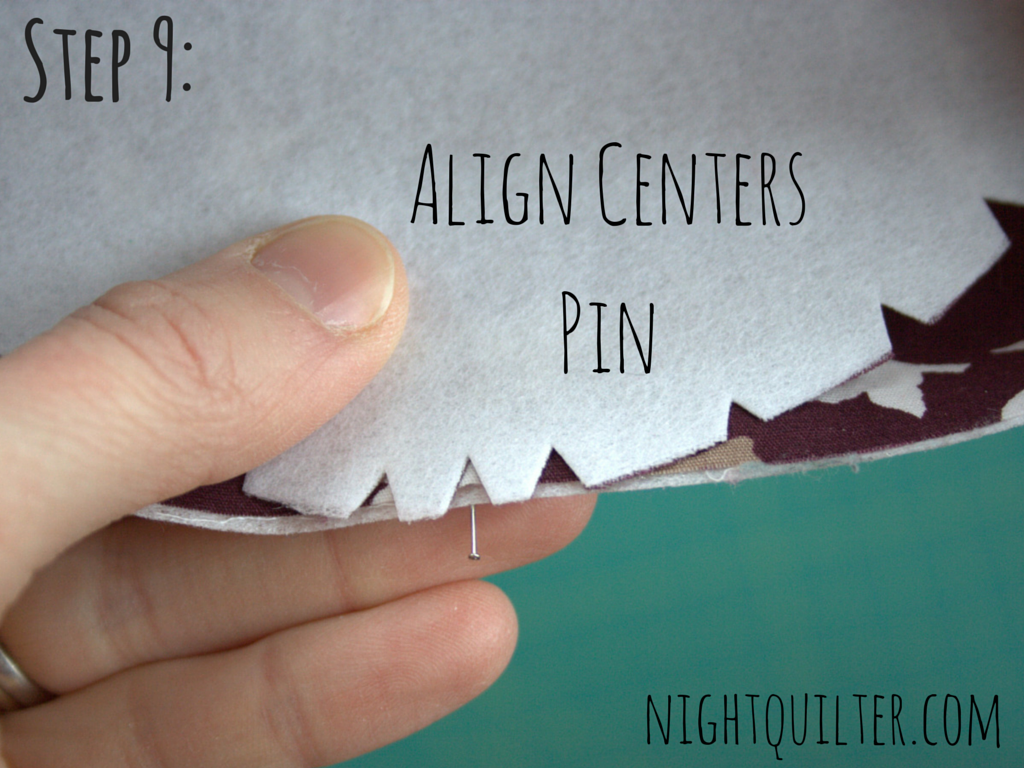
ribbon thread catch tutorialHere’s where that center-marking pin comes in handy! First, clip the curves on the bottom. Then, align the center of the bottom with the pin marking the center of your thread catch body, right sides together. Pin.

Step 10

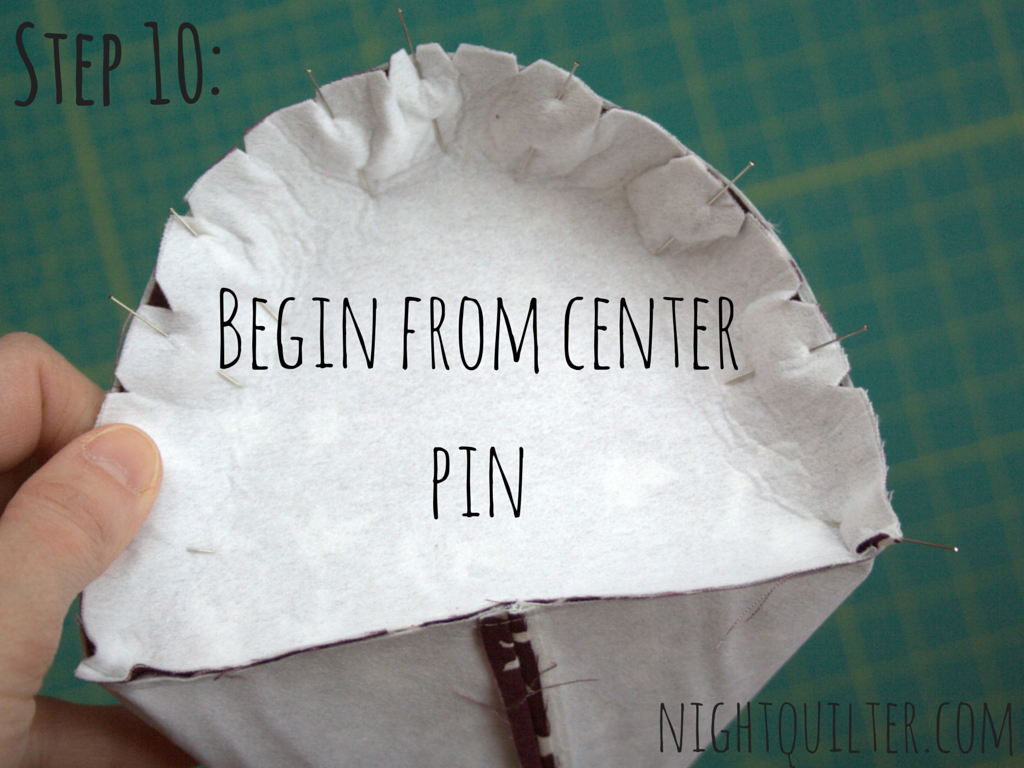
ribbon thread catch tutorialContinue to pin the bottom to the thread catch body, working from the center out, aligning the edges as best you can.

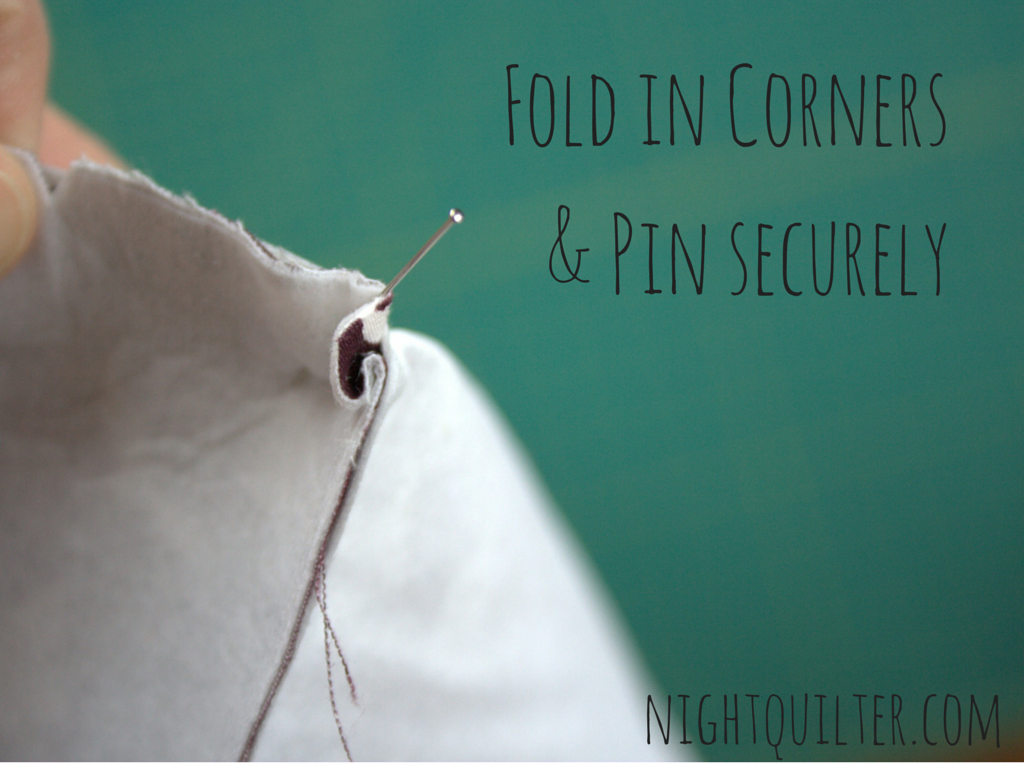
ribbon thread catch tutorialFor the corners, fold as if you were turning a corner while binding, and pin securely. Sew together, beginning in the center and working out toward the corners. To keep the corners crisp, I stopped about 1″ short of each corner, backstitched, cut my thread, and began again starting in the corner, sewing out to meet the spot where I left off. If you’re a pro at curves and 3D sewing, feel free to do what works for you! Press seams toward thread catch body if possible.

Repeat steps 6-10 for thread catch lining, disregarding the ribbon-specific bits.

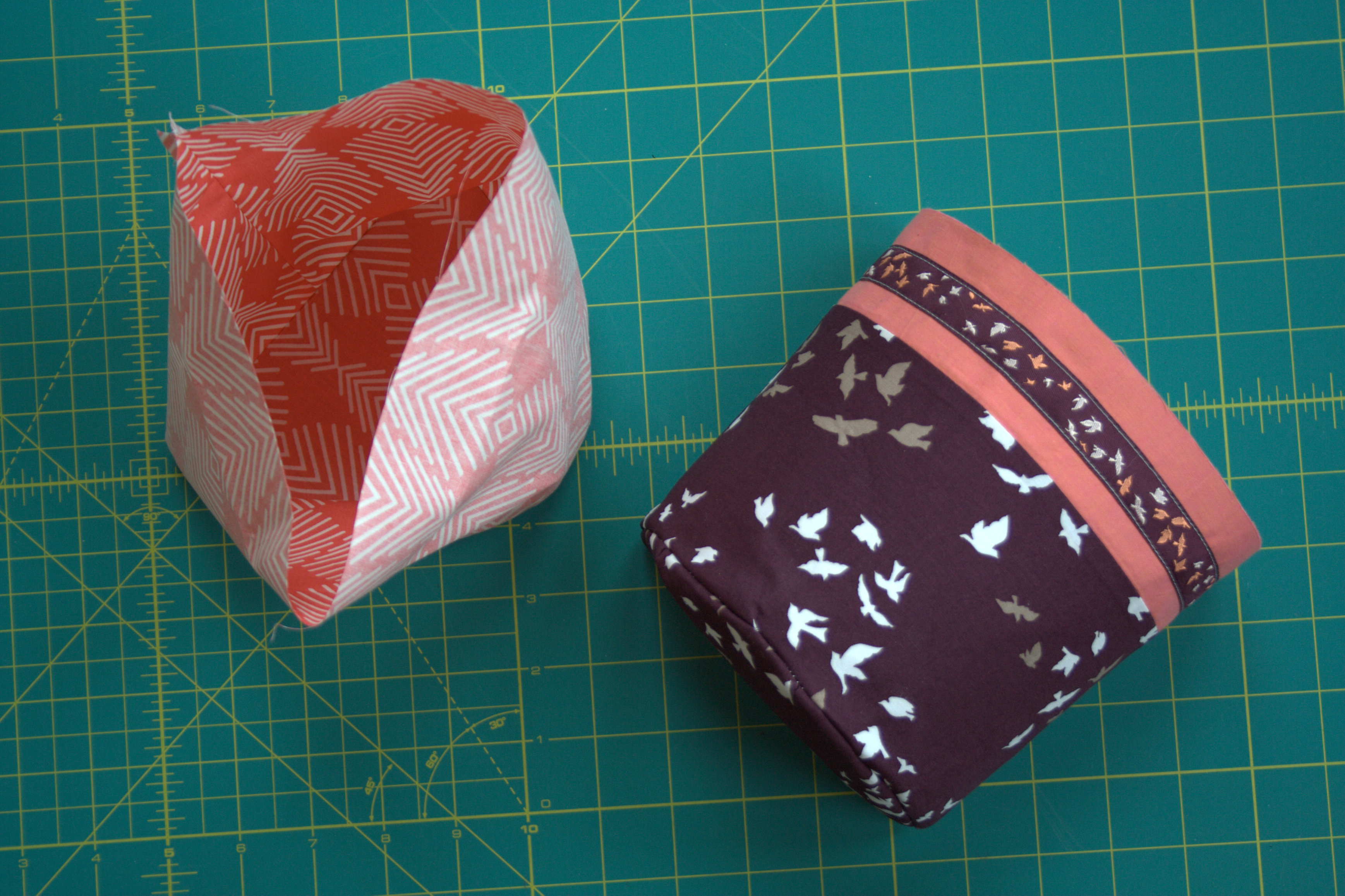
ribbon thread catch tutorialYou will now have the fully sewn outer body and liner for the thread catch! On to the final assembly!

Step 11

Turn outer thread catch body right side out. Slip the lining over the outer thread catch body, aligning raw edges, right sides together. Line up the center seams and back panels.

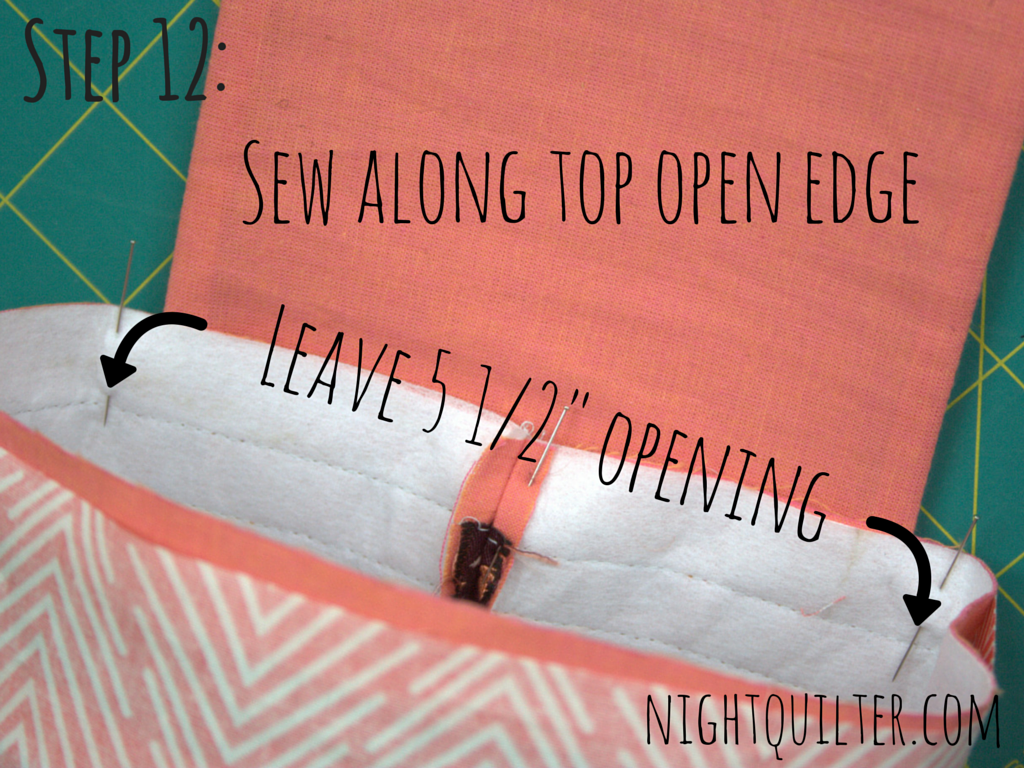
Step 12

ribbon thread catch tutorialPin in place and sew along top open edge, leaving an opening at least 5.5″ wide along the back panel (you can use your thread catch base and hanging tab to make sure there is enough space, but remove it before sewing. I found that it was easiest to sew together with the outside facing up.) Backstitch at the start and finish of your stitching to hold stitches during turning.

Step 13

Turn right side out through the opening in the top. Push lining down into the outer body. Press top edge, tucking in raw edges of the opening and pressing well.

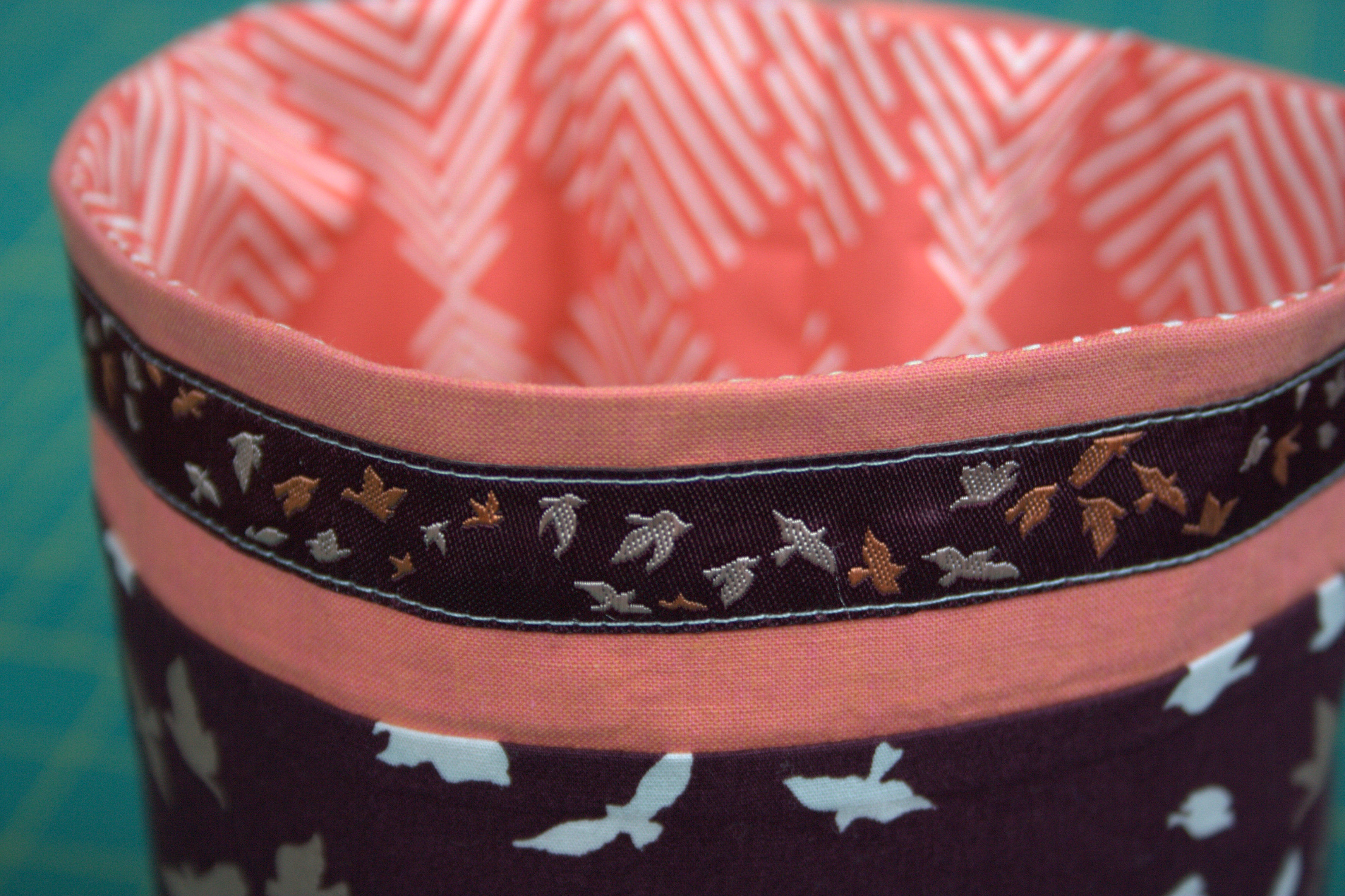
ribbon thread catch tutorialribbon thread catch tutorialYou now will have the thread catch body fully assembled, with an opening along the back top, flat edge.

Step 14

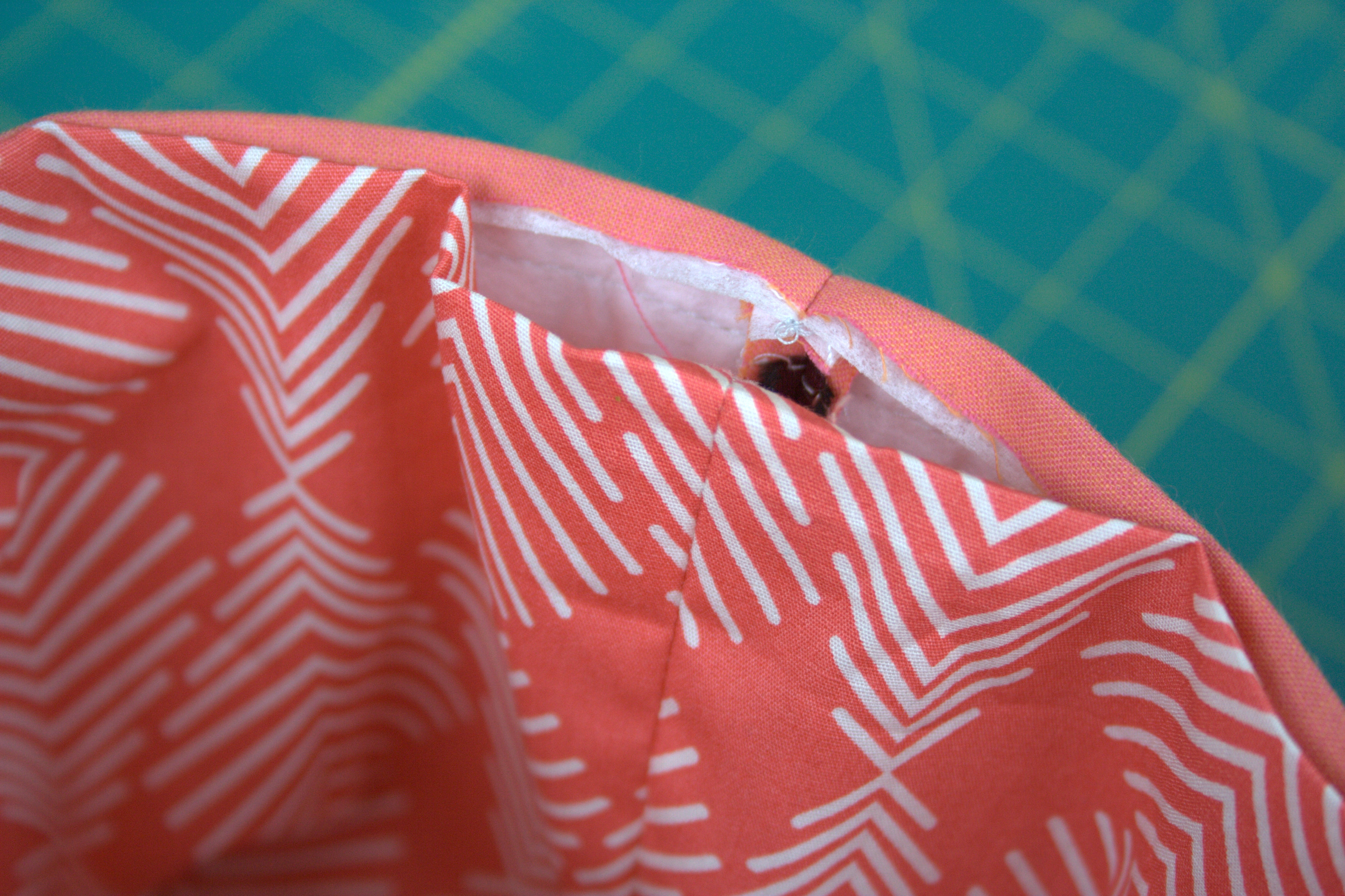
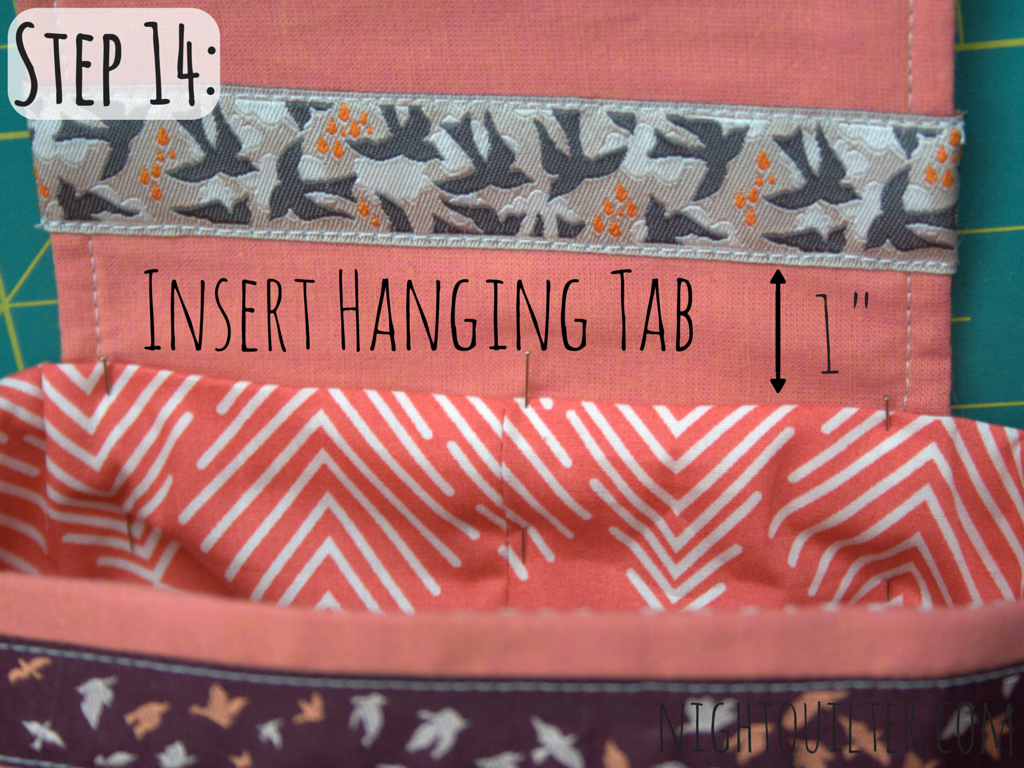
ribbon thread catch tutorialInsert the raw edge of the thread catch base and hanging tab into the space left open in the thread catch body. It should be inserted 1/2″ into the body, leaving 1″ between the thread catch and the accent ribbon on the hanging tab. Pin.

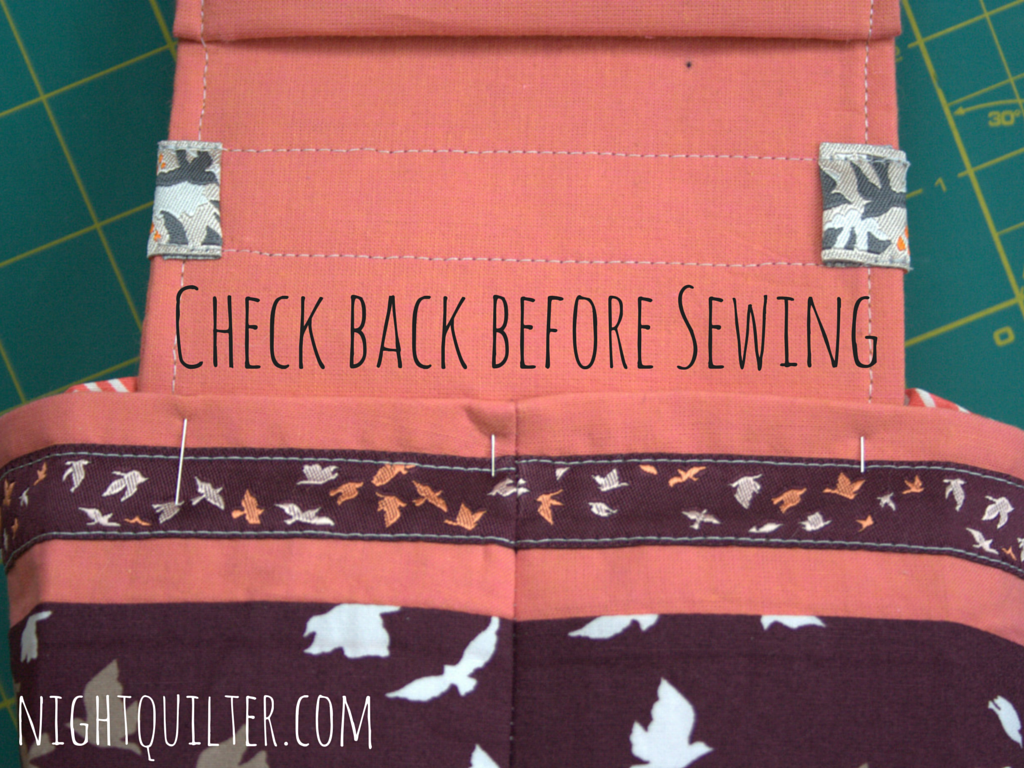
ribbon thread catch tutorialTip: Check the back to make sure that the back raw edge is properly tucked in before sewing.

Step 15

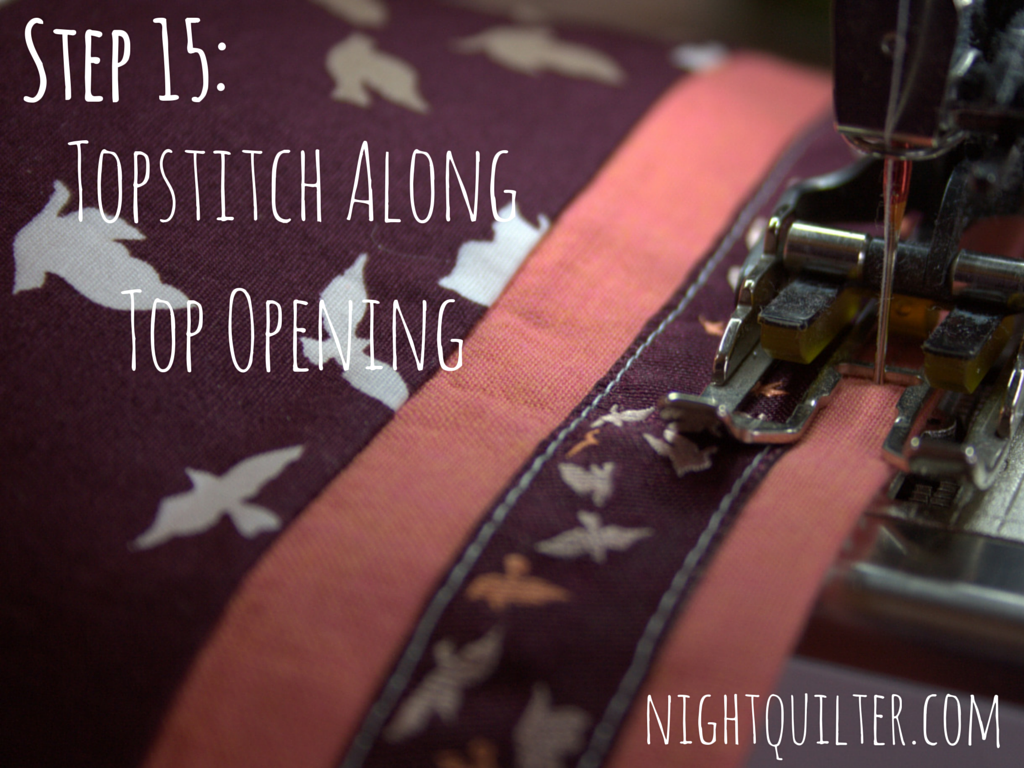
Sew along top edge, sewing the hanging tab into the thread catch body. I sewed the opening closed (with the hanging tab inside) first, with the thread catch body & lining facing up so that my top stitches show and I could control the seam distance better.

Thread Catch Step 15Next, top stitch along the entire top of the thread catch opening using a scant 1/4″ seam. Once the hanging tab was securely sewn in, I backstitched and cut my thread, again flipping the thread catch the other way (outside of the thread catch facing up) so that I could ensure that my top stitches are even since they are the ones that show.

You’re finished!!

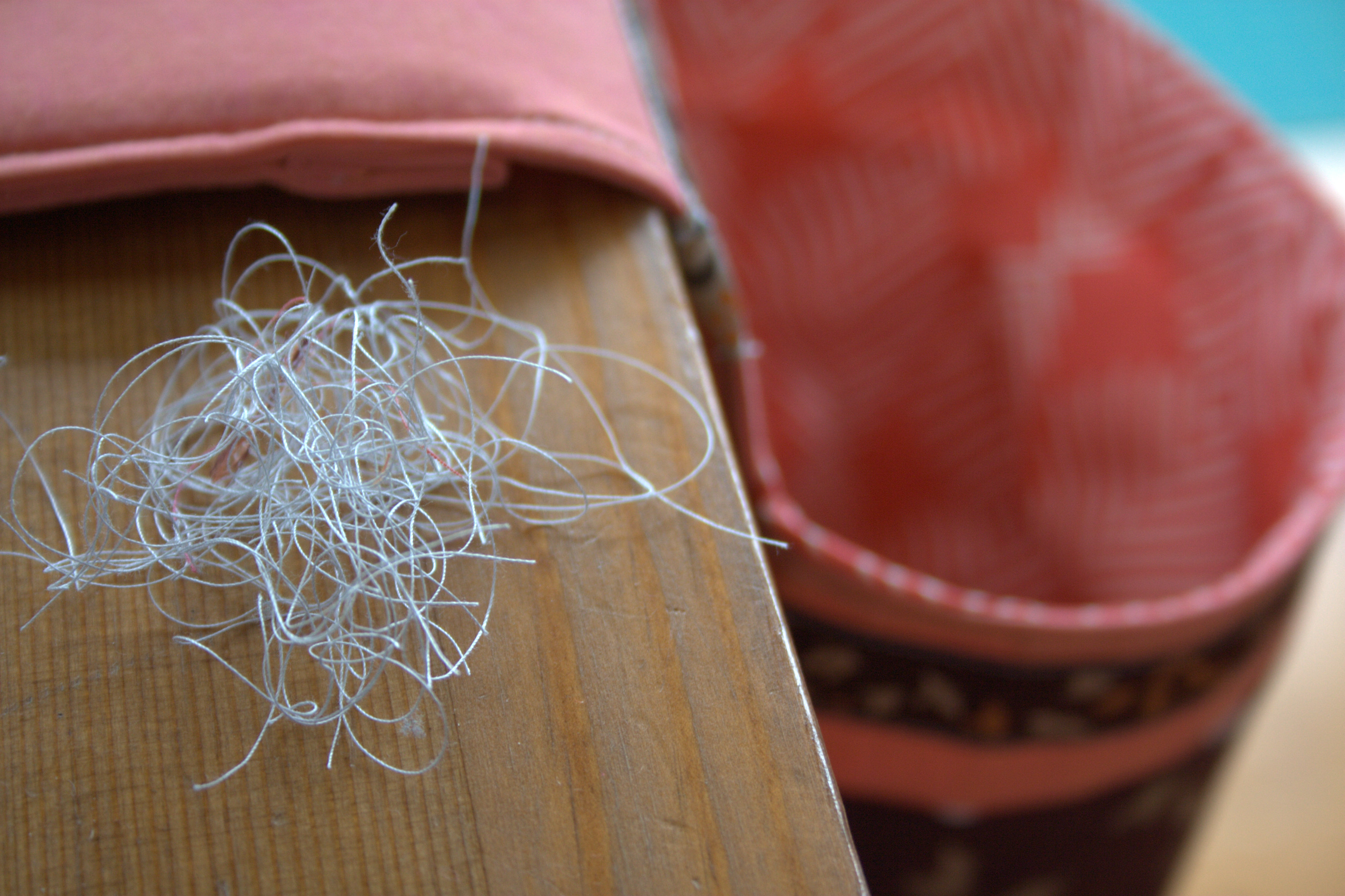
Go ahead and put your pile of threads accumulated during the making of this project into your gorgeous new thread catch!

thread catch tutorial

TUTORIAL- Ribbon Thread Catch and Pin Cushion

Phew! Congratulations, you made it! I sure hope that this tutorial/pattern is clear, and please let me know if you have any questions or comments. I would love to see if you make this, too. Please tag me @nightquilter if you post on Instagram or Twitter.

Thank you so much to Bonnie Christine for including me in this blog tour, and be sure to check out Caitlin Topham’s post at Salty Oat from yesterday, and visit the final stop on the tour, Corri Sheff at The Lions Dandy tomorrow to see what gorgeousness she creates.

I’m linking up with Late Night Quilter’s Tips & Tutorials Tuesday & Crazy Mom Quilts Finish it up Friday.