Category Archives: Patterns

Cloud9 New Block Blog Hop: Steady On {Tutorial}

My favorite colors! Flying geese! Curves! Precision delicately dancing with improv! Yessssss, this block has all of those things and I’m excited to share a detailed tutorial with you today. This new block was designed for the New Block Blog Hop sponsored by Cloud9 Fabrics and hosted by Yvonne at Quilting Jetgirl, Cheryl at Meadowmist Designs, and Stephanie at Late Night Quilter. Today is day three of the hop, which means that 46 new block tutorials have already been shared, and 23 more are being shared today. Amazing!

Cloud9 Fabrics new block blog hop tutorial Steady OnI’m calling my block Steady On, which just seemed fitting for such a classic made-by-me block. Those of you who know me know that I cannot keep anything simple, and this is a perfect case in point. This block has double improv curves, twenty (20) tiny flying geese, an hourglass block, and quite a few points that should match *just* so, all in the 12 1/2″ unfinished square block. But fear not, this tutorial has detailed photos and instructions on how to make each component of the block, and breaking it down into manageable chunks makes this block come together quite smoothly (Spoiler: we can make some of the flying geese 4 at a time!). There’s something about the determined light colored geese headed bravely into the dark and improvy unknown that urges me to encourage them… Steady on, now! That same encouragement goes for you, since I would LOVE to see you tackle this block and come out victorious (tag @nightquilter and #steadyonquilt when you do!). This is going to be fun, so let’s get started!

Gather your materials:
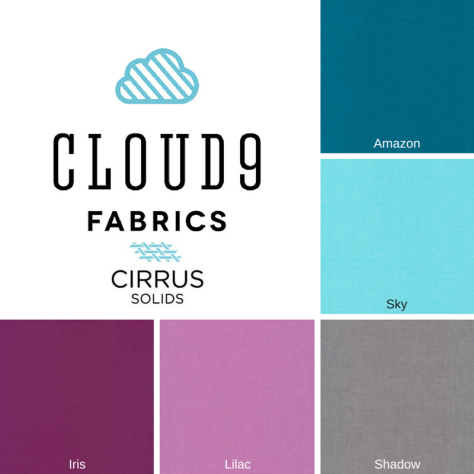
2016 cloud9 organic cirrus solids new block blog hop

  • Fat quarter (FQ) of each of the five (5) fabrics generously provided by Cloud9: Amazon, Sky, Shadow, Lilac, and Iris.  (There will be fabric left over–enough for a second block or more depending on how frugally you cut your scraps!).
  • Clover hera marker and/or other fabric marking tool
  • fabric scissors
  • washable school glue (I use Elmers)
  • Fine glue tip (optional but helpful)
  • rotary cutter & mat
  • quilting ruler with 1/4″ and 1/8″ markings (I use Omnigrid rulers)
  • sewing machine (I have a Bernina 560)
  • thread (I use Aurifil 50wt 2600-Dove for nearly all of my piecing)

Press your fabrics and use spray starch or Flatter by Soak to help stabilize them before cutting.

Cloud9 Fabrics new block Steady On tutorial
If you are really attune to detail, you may notice that the smallest squares and rectangles are a bit too small in this photo–you’re right, but I corrected the measurements for the tutorial! No worries. Steady on…

Then cut the following pieces from each fabric:

Iris:
– (8) 1 7/8″ squares (for geese 4 at a time)
– (4) 1 1/2″ squares (for single geese)
– (4) 5 1/2″ squares (for curved quadrants)

Lilac: 
– (1) 3 1/4″ square (for geese 4 at a time)
– (6) 1 1/2″ x 2 1/2″ rectangles (for single geese)
– (1) 3 1/4″ square (for hourglass block)

Amazon:
– (8) 1 1/2″ squares (for single geese)
– (4) 5 1/2″ squares (for curved quadrants)

Sky:
– (6) 1 1/2″ x 2 1/2″ rectangles (for single geese)
– (2) 3 1/4″ squares (for hourglass and geese 4 at a time)

Shadow:
– (12) 1 1/2″ squares (for single geese)
– (4) 5 1/2″ squares (for curved quadrants)

Now, we will break down the block into manageable pieces, and make a component at a time. Let’s start with the curved quadrants!

Making Double-Curved Quadrants

Cloud9 Fabrics new block Steady On tutorialFor this step, you will need your 5 1/2″ squares of Iris, Amazon, and Sky, washable school glue and tip, a marking pen or pencil, scissors, and an iron and pressing surface. To make the double-curved quadrants for this block, follow my tutorial on easy curved piecing using a visual layering approach and glue basting HERE.  Go ahead and read it now, I’ll wait for you. When you’ve read through it once and have a grasp on the general technique, grab three of your 5 1/2″ squares, one each of Iris, Amazon, and Sky. For this block, the Iris is the bottom layer, the Sky is the middle layer and the Shadow is the top layer.
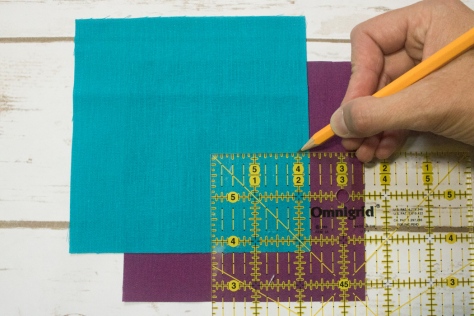
Cloud9 Fabrics new block Steady On tutorialSince this method begins from the bottom up, start with Iris and Amazon. Mark the Amazon square 2 1/4″ up along both sides from the bottom right corner. Make sure your mark extends 1/4″ in from the edges before beginning the curve. This will be your sew line, not your cut line, so by measuring the 2 1/4″ we are ensuring our seams will match up, even though the flying geese are exact and the curves can be improv. (Note here that if you are using fabric with a right and wrong side, you want to be marking the wrong side of the fabric. With the Cloud9 Cirrus Solids that’s not important).
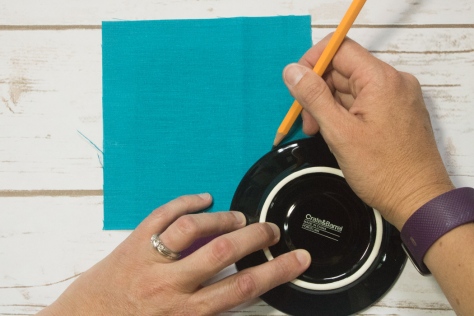
Cloud9 Fabrics new block Steady On tutorialDraw an improv curve from marked point to point, or trace a perfect curve using the edge of a small plate or glass. Make sure your curve begins and ends at your marked points 2 1/4″ up from the corner.

Using the drawn line as your sew line, follow the steps in my curved piecing tutorial here to sew your first curve. Beautiful, right!?
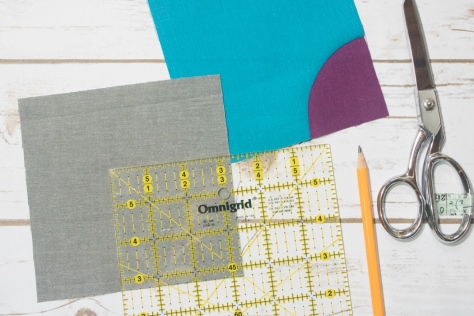
Cloud9 Fabrics new block Steady On tutorialNext, grab your Shadow 5 1/2″ square and mark 3 1/4″ up both sides from the bottom right corner. Again, draw your curve as desired, connecting from marked point to marked point, and using that line as the sew line.
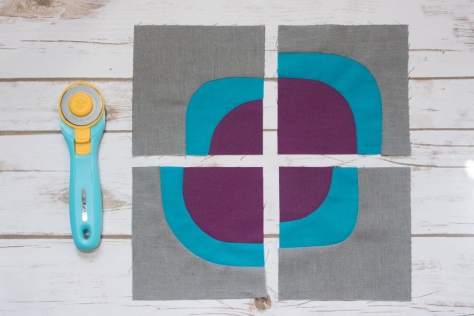
Cloud9 Fabrics new block Steady On tutorialMake four quadrants, measuring 2 1/4″ up on the Amazon square and 3 1/4″ up on the Shadow square for two of them, and measuring 3 1/4″ up on the Amazon and 4 1/4″ up on the Shadow square for the other two. Admire your smooth curves, and set those blocks aside for later!

Making Flying Geese 4 at a Time

Next we will crank out as many flying geese as we can, using the technique of making 4 at a time found in the Reference Section of the Quilter’s Planner. I use my Quilter’s Planner daily, and it sure did save some time with this block! Here’s how:

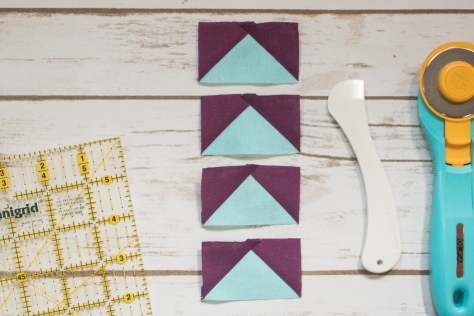
Cloud9 Fabrics new block Steady On tutorialPlace two 1 7/8″ Iris squares in the top right and bottom left corners of a 3 1/4″ Sky square as shown. Using your fabric marking tool of choice, draw a diagonal line from the top right corner to the bottom left corner. I love my Hera marker since it doesn’t actually mark the fabric, but makes a clear guide line.

Cloud9 Fabrics new block Steady On tutorialSew 1/4″ from either side of the drawn line. Press with a hot iron to set the seam (notice that I didn’t do this step? tsk tsk).
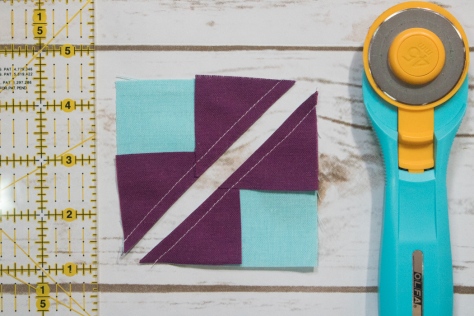
Cloud9 Fabrics new block Steady On tutorialCut along the drawn line.

Cloud9 Fabrics new block Steady On tutorialPress the small Iris triangles outward, with seams pressed toward the dark fabric. Then place another 1 7/8″ Iris square in the corner of each unit, and mark a diagonal line as shown above.

Cloud9 Fabrics new block Steady On tutorialAgain, carefully sew 1/4″ from either side of the drawn line. Cut along drawn line.

Cloud9 Fabrics new block Steady On tutorialPress open, with seams toward darker fabric.

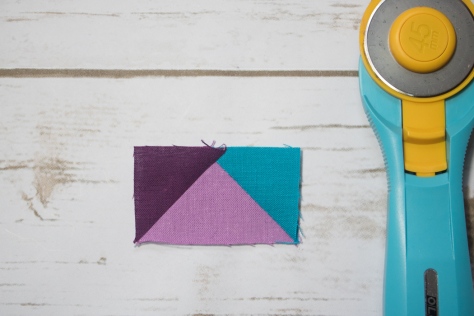
Cloud9 fabrics new block Steady On tutorialTrim to 1 1/2″ x 2 1/2″ and set aside.

Repeat instructions above using the remaining 1 7/8″ Iris squares and a 3 1/4″ Lilac square to make four Lilac geese with Iris corners.

Making Single Flying Geese

The remaining flying geese must be made one at a time since the corner colors are mixed up to flow into your improv curved quadrants.

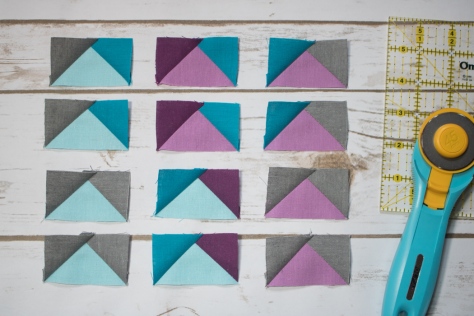
cloud9 fabrics new block tutorial steady onGrab your 1 1/2″ squares and 1 1/2″ x 2 1/2″ rectangles and lay them out to help plan which corners should be positioned on each rectangle. Use the finished flying geese above to help plan before you start sewing.

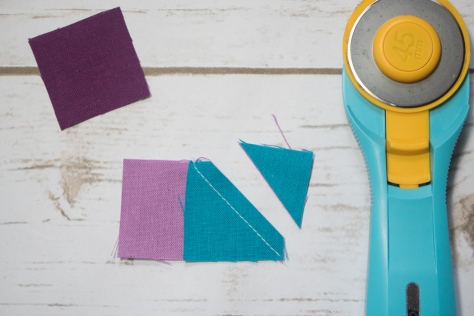
cloud9 fabrics new block tutorial steady onTo make a flying geese block (or would it be flying goose?), position a 1 1/2″ square right sides facing the right top corner of a 1 1/2″ x 2 1/2″ rectangle. Draw a diagonal line as shown above.

cloud9 fabrics new block tutorial steady onSew along the line and then trim a 1/4″ seam allowance.

cloud9 fabrics new block tutorial steady onI like to get mine all paired and drawn so that I can chain piece each side.

cloud9 fabrics new block tutorial steady onRepeat with the other 1 1/2″ square on the top left side of the block. Press seams open or up toward the corner.

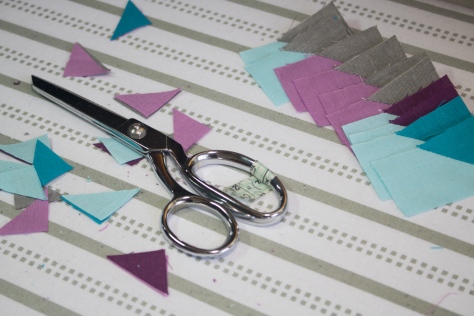
cloud9 fabrics new block tutorial steady onTime saving tip: I cut my 1/4″ seam allowances with scissors while pressing. As long as you are accurate with a pair of scissors, it takes much less time than rotary cutting, at least for me.

cloud9 fabrics new block tutorial steady onSquare your flying geese to 1 1/2″ x 2 1/2″ rectangles, making sure that your goose point is a perfect 1/4″ (or slightly further) from the top edge. Set aside.

Making Center Hourglass Block

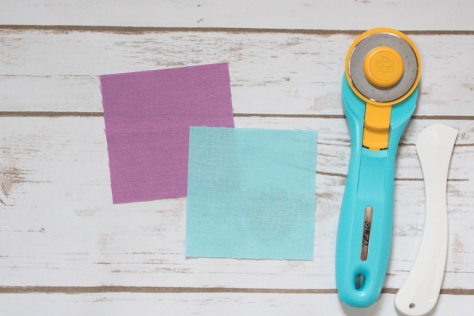
cloud9 fabrics new block tutorial steady onFinally, let’s make that center hourglass block. Grab your 3 1/4″ Lilac and Sky squares.

cloud9 fabrics new block tutorial steady onPlace right sides together and mark a diagonal line. I like to pin my pieces together since we are working with such a small scale. If you’d prefer some wiggle room, you can begin with 3 1/2″ squares and trim to size when you’re finished!

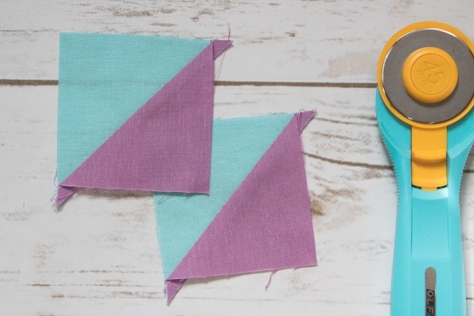
cloud9 fabrics new block tutorial steady onSew 1/4″ from either side of the drawn line. Cut along the drawn line.

cloud9 fabrics new block tutorial steady onPress toward darker fabric. You will have two half square triangles (HST).

cloud9 fabrics new block tutorial steady onPlace HSTs right sides together, with the Lilac half of one facing the Sky half of the other, and nesting the seams.

cloud9 fabrics new block tutorial steady onDraw a diagonal line perpendicular to the existing seam line, again pinning to keep the pieces in place while you sew.

cloud9 fabrics new block tutorial steady onSew 1/4″ on either side of the drawn line. Then, cut along drawn line.

cloud9 fabrics new block tutorial steady onPress seams open. You will have two hourglass blocks, but will only need one for this block. Save the other one for your next Steady On block!

cloud9 fabrics new block tutorial steady onTrim to 2 1/2″ square. Set aside.

Assembling the Block

cloud9 fabrics new block tutorial steady onNow that you’ve made all of the components, it’s time to sew the block together! Arrange all of your pieces as shown above, paying careful attention the positioning of the flying geese in relation to the large and small curves on your curved quadrants. There should be two Iris flying geese corners next to small curves and three Iris flying geese corners next to large curves.

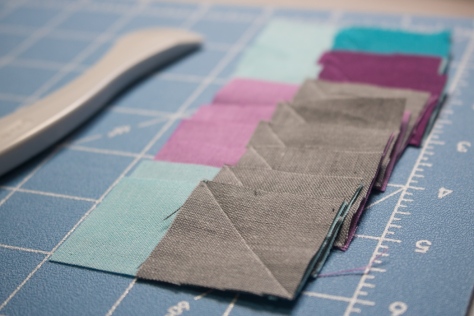
cloud9 fabrics new block tutorial steady onSew the top five and bottom five groupings of geese together, and sew the center horizontal strip of geese and center hourglass block together.

cloud9 fabrics new block tutorial steady onPerfect points tip: When sewing the flying geese together, keep the piece with the goose point on top. As you’re sewing, make sure your sewing machine needle sews exactly through the “x” that marks the point of the goose, or if anything, slightly to the right (above) the point. This way you won’t lose any points!
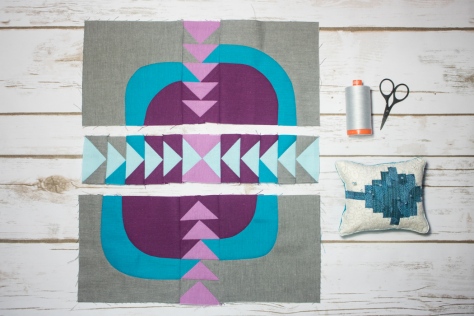
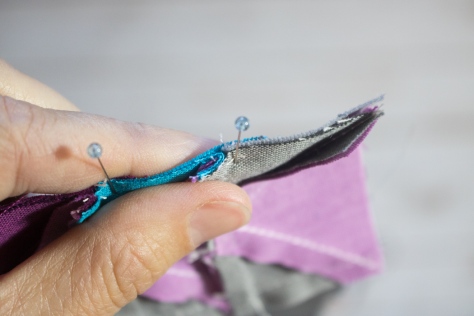
cloud9 fabrics new block tutorial steady oncloud9 fabrics new block tutorial steady onNext, sew the top left and top right curved quadrants to the top grouping of geese, pinning just after each seam that needs to match.

Press seams toward the less bulky side (toward the curved quadrants).
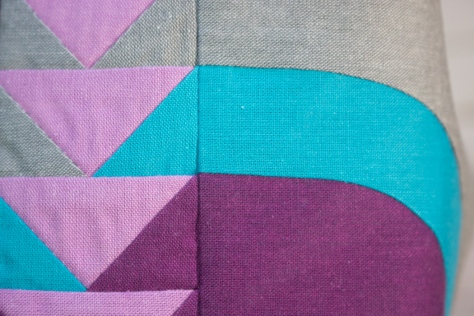
cloud9 fabrics new block tutorial steady onWhen aligned properly, the geese corners should flow into the curved piece perfectly–that’s why we so carefully marked our curve starting distances with our improv curves!
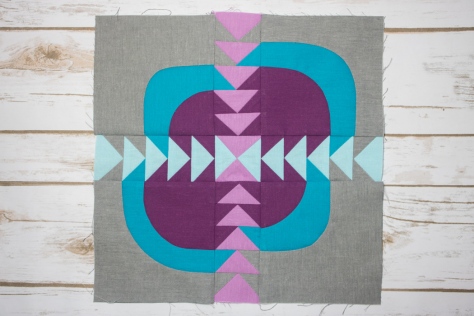
cloud9 fabrics new block tutorial steady onFinally, sew the top and bottom panels to the center horizontal strip, again pinning just after each important seam match. Press toward the less bulky sides (the curved quadrants), and viola! Steady on…

steady-on-quilt-block-tutorial-1I am really excited about how this block turned out, and I’m eager to play around with different color placements and curve arrangements. I’d love to see if you sew up this block, too, so please tag me @nightquilter #steadyonquilt when you do!

Thank you for visiting and I hope you found this tutorial helpful! Check out all of the other new block tutorials shared today, all of which will be combined to make one big gorgeous charity quilt:

Host: Stephanie @Late Night Quilter

Kathy @Kathys Kwilts and More
Paige @Quilted Blooms
Mary @Strip Quilts Pass it On
Allison @Woodberry Way
Seven @The Concerned Craft
Olusola @Alice Samuel’s Quilt Co.
Ann @Brown Paws Quilting
Jodie @Persimmon + Pear
Vicki @Orchid Owl Quilts
Kitty @Night Quilter <———————You’re here!
Francine @Mocha Wild Child
Shelley @The Carpenter’s Daughter who Quilts
Jayne @Twiggy and Opal
Geraldine @Living Water Quilter
Shannon @Shannon Fraser Designs
Lisa @Sunlight In Winter Quilts
Jessica @Quilty Habit
Cassandra @The (not so) Dramatic Life
Deanna @Stitches Quilting
Denise @Craft Traditions

Also, be sure to visit each host’s blog to find out how to enter to win one of three fabric bundle giveaways. The giving doesn’t stop!
Friday Giveaway & Back to School Pattern Sale

Like it or not, the final days of summer are here. The kids are heading back to school, the nights are getting cooler, and leaves are already beginning to change. Back to school time means that some of us may have more time for sewing, so I thought I’d kick off this Labor Day weekend with a double giveaway sponsored by the Fat Quarter Shop AND a pattern sale of all of my quilt patterns, both foundation paper pieced and traditionally pieced.

night quilter back to school sale patterns All of my quilt patterns are 20% off for one week only! Now is your chance to restock your pattern library so you’re sure not to run out of projects once the kids are in school.  Sale prices are already reflected in my Craftsy shop, and if you are in the EU, please use code BACK2SCHOOL to get 20% off any and all pattern purchases in my Payhip shop.
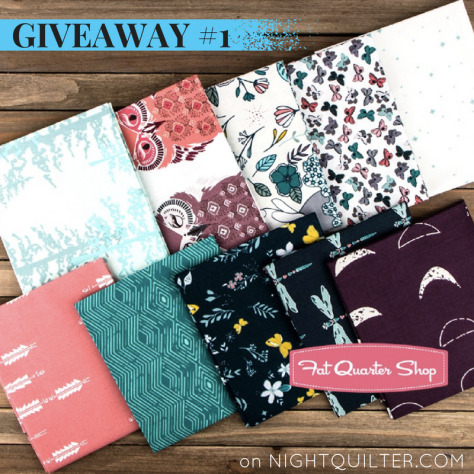
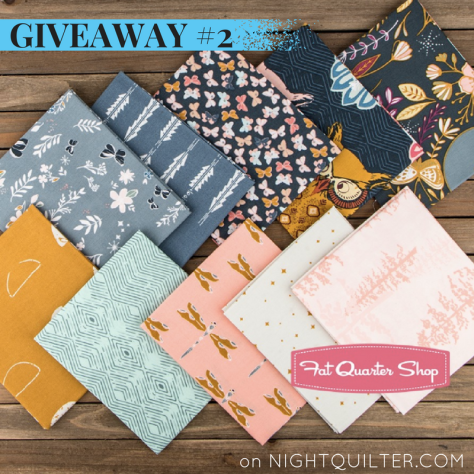
Giveaway #1 Nightfall fabric by maureen cracknell for art gallery fabrics fat quarter shopOn top of that, Fat Quarter Shop is generously sponsoring a double giveaway! Two lucky readers will win a bundle of Nightfall fabrics from Maureen Cracknell for Art Gallery Fabrics. Both the Moonrise and Moonset fat quarter bundles of 10 fat quarters each are up for grabs this week.

Giveaway #2 Nightfall fabric by maureen cracknell for art gallery fabrics fat quarter shopTo enter the giveaway today, tell me which bundle would be your first choice: Moonrise (Giveaway #2) or Moonset (Giveaway #1). I will select two winners, and will be sure to give the first choice to the first winner! Leave a comment and make sure I’m able to get ahold of you if you win.  For an additional entry, leave another comment telling me how you follow Night Quilter (email list, instagram, facebook, twitter, blog follower, etc.) Tell me how you follow Fat Quarter Shop (facebook,twitter, Instagramtheir blog Jolly Jabber, etc.) in a third comment for a third entry.
This giveaway is open to US and international participants.  The giveaway will be open until Friday September 9th at 8pm EST when I’ll select the winner randomly with random.org. Good luck, happy shopping, and enjoy your Labor Day weekend for those of you stateside! This giveaway is now closed! Congratulations Julianne and Rose!

Constant Flux: Flimsy Finish & Pattern Release

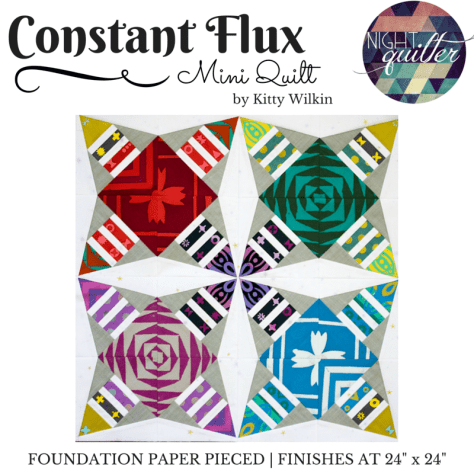
It’s no secret that I love to design foundation paper pieced patterns. You’ve seen me create the likes of Lupine, Love Struck, Bean SproutLove is the Key, Fish Panels, Buoys, and more. Recently, though, I’ve been wanting to play more with geometric foundation paper pieced patterns, and I’m excited to share my very first one with you today!

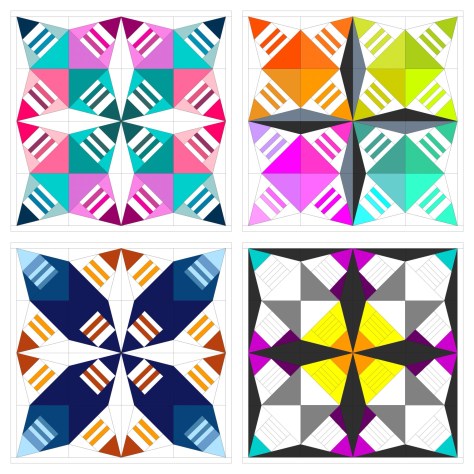
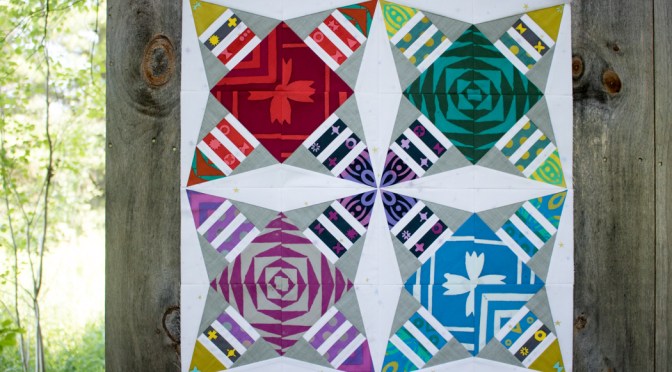
constant flux pattern coverConstant Flux is an easy, very beginner-friendly, and diverse pattern. There are no tricky angles, odd shapes, or difficult joins, yet the design options are boundless. The mini quilt consists of four 12″ blocks, finishing at 24″, but it’s easy to make a quilt of any size by simply making more blocks or adding borders!

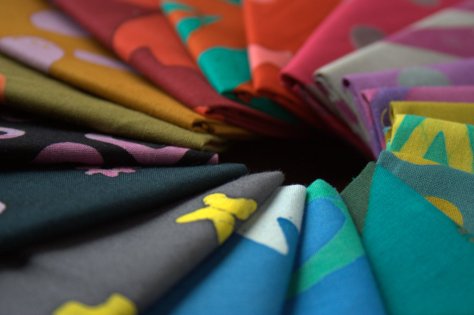
alison glass handcrafted patchwork fabric andoverAndover Fabrics asked me a while back if I would do a guest post on their blog. Of course I said yes, and decided to share a foundation paper piecing tutorial to try to spread the love of this oft-disparaged quilting style. This pattern is the result, and the tutorial will be posted on the Andover blog soon, so keep your eye out for it! The tutorial will take you step by step through how to foundation paper piece this pattern, which in turn can be applied to all other foundation paper pieced patterns! I’ll be sure to link to it as soon as it’s live. In the meantime, go ahead and buy the pattern and start choosing your fabrics!

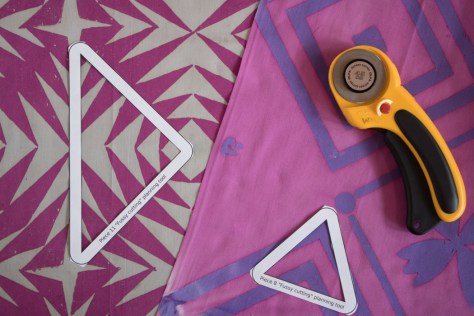
fussy cutting for foundation paper piecingI created my version of Constant Flux inspired by Handcrafted Patchwork by Alison Glass from Andover Fabrics and just had to keep her gorgeous large motifs intact, so the pattern includes tools to help you plan meticulously cut elements if you so desire. I also include measurements for precutting fabric to make the process move more smoothly, so be sure to check out the tutorial early next week.
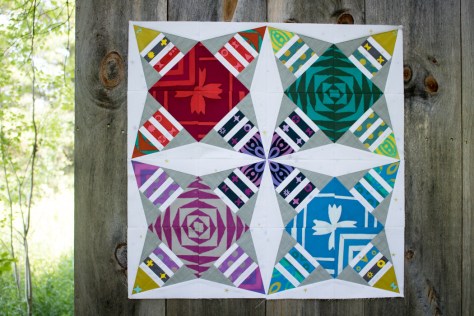
constant flux mini quiltConstant Flux is available in my Craftsy store (and Payhip for those of you in the EU) and will be on sale for only $5 for the first week, after which it will return to its normal price of $8.

The name of Constant Flux makes me happy because of the play on words. The visual aspect of the pattern strongly elicits movement, thus the “Flux” part. Yet aspects of the quilt can be meticulously cut as exact replicas, which is where the “Constant” part of the name comes in. Depending on the way you look at it, the constant can imply both that the movement is happening at all times, or that there are some things that are constant despite the movement! Constant Flux.

Constant Flux color optionsFor now, I haven’t quilted my first one and I already want to make Constant Flux in a different colorway. Look at all of the options I came up with in just a short moment of color arrangement play! The pattern comes with a full page coloring sheet so that you can explore your options before diving in. That bottom right version is calling to me–which one would you make first?!
I’d love to see what you create, so when you stitch up your Constant Flux quilt, please tag #constantfluxquilt and @nightquilter so that I can see your creation!

I’m linking up with Crazy Mom Quilts Finish it up Friday, Needle & Thread Thursday, and TGIFF. Happy stitching!

Bean Sprout: FPP Pattern Release

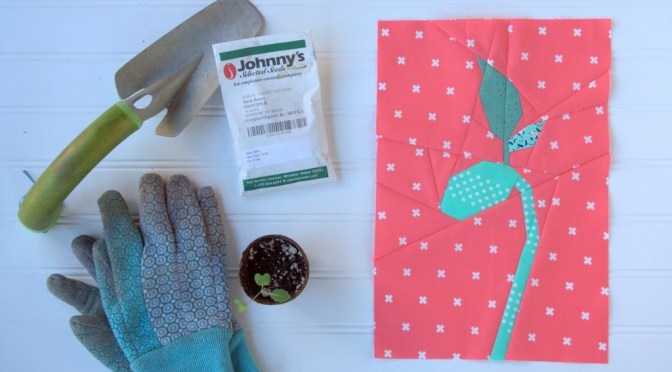
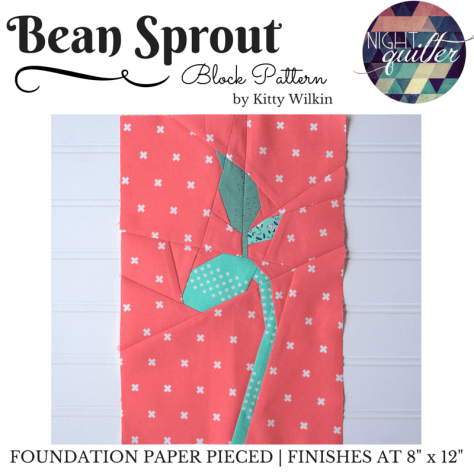
Today I am excited to release my newest foundation paper pieced (FPP) pattern, Bean Sprout. Today is arbor day, so for now I’m thinking of it as more of a tree sprout, but regardless of which species you’re growing, this block pattern is ready to roll!

bean sprout foundation paper pieced pattern nightquilterTo me, the bean sprout is the epitome of spring, new life, and the wonder of discovery. I have watched my children’s excitement over the first sprout of newly planted seeds, and wanted to capture that fresh promise. This block is perfect for the gardeners among you, and I can see it as a focal block in a quilt, or even turned into pillows, tote bags, wall hangings, or table runners.

grow bean sprout pillow finishYou may remember my first iteration of this Bean Sprout block, which I turned into a pillow and donated to my daughter’s school for their annual fundraiser auction/raffle. Since then, I made a few tiny tweaks to the pattern to make it a bit more versatile, easier to piece, and clearer to follow. The block finishes at 8″x12″, but can easily be made into a 12″x12″ finished block by adding two side strips, which is explained in the pattern.

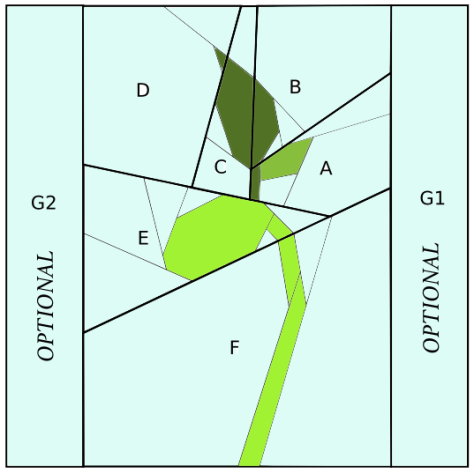
pattern piecing diagram bean sprout fppThe pattern includes clear piecing diagrams, sewing tips, and templates for the 8″x12″ finished block, with various shading to help with accurate fabric placement. Quarter inch seam allowances are included on all pattern pieces to help ensure easy piecing, and a 1″ reference square is on every printable page so that scale can be confirmed. Full foundation paper piecing instructions are not included in the pattern, but I have a thorough paper piecing tutorial HERE. Lee Heinrich from Freshly Pieced also has a fabulous tutorial on the Bernina We All Sew blog HERE, which will ensure you will never miss corners again. Knowing all of the information in these two tutorials will help demystify FPP, or at the very least will GREATLY reduce seam ripping.
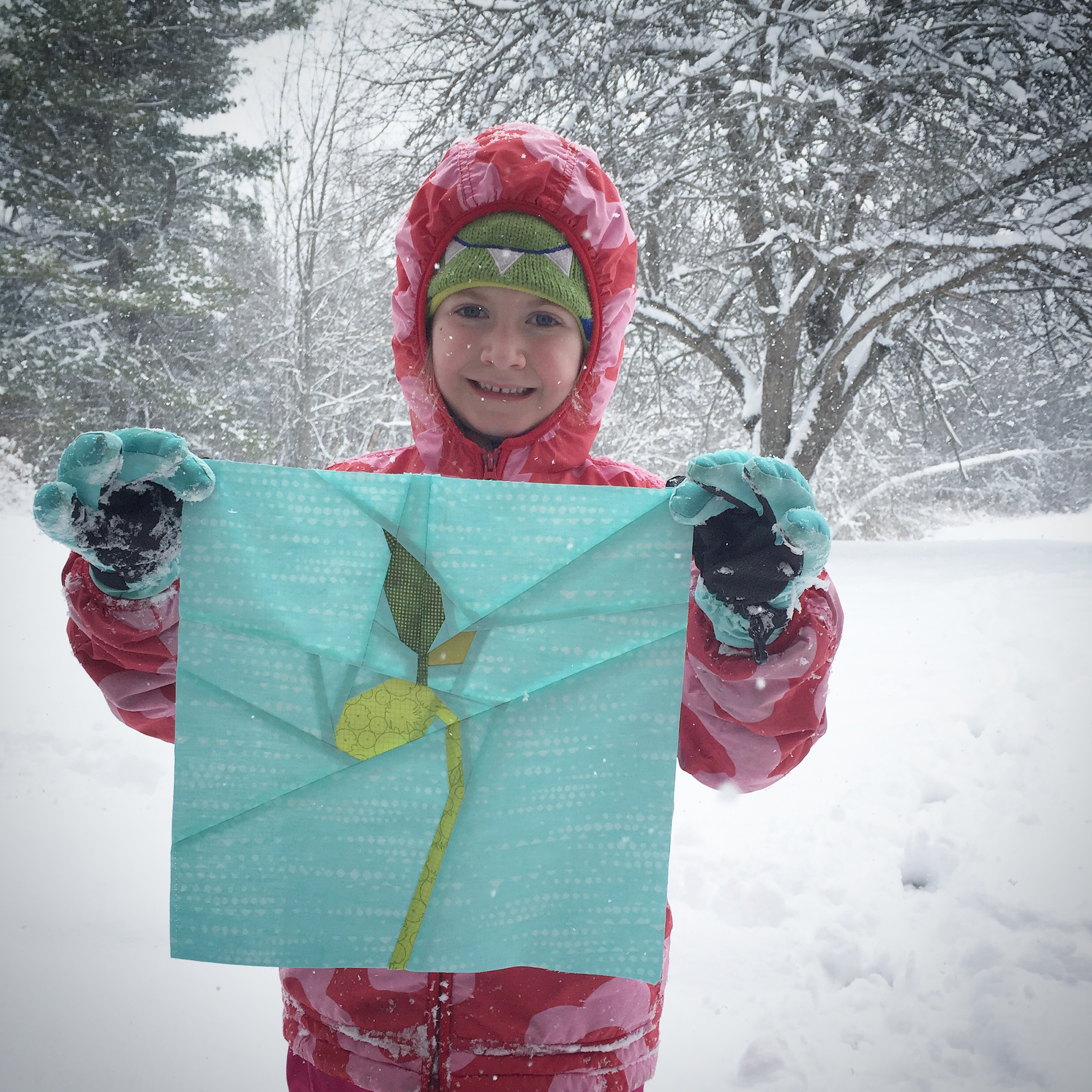
bean sprout block bring spring no matter the weather
Sew up the bean sprout block to bring spring no matter the weather!!

Bean Sprout is available for sale in my Payhip shop, at an introductory price of $2.50 through the weekend. Tuesday morning EST, it will go up to its standard price of $5.00.

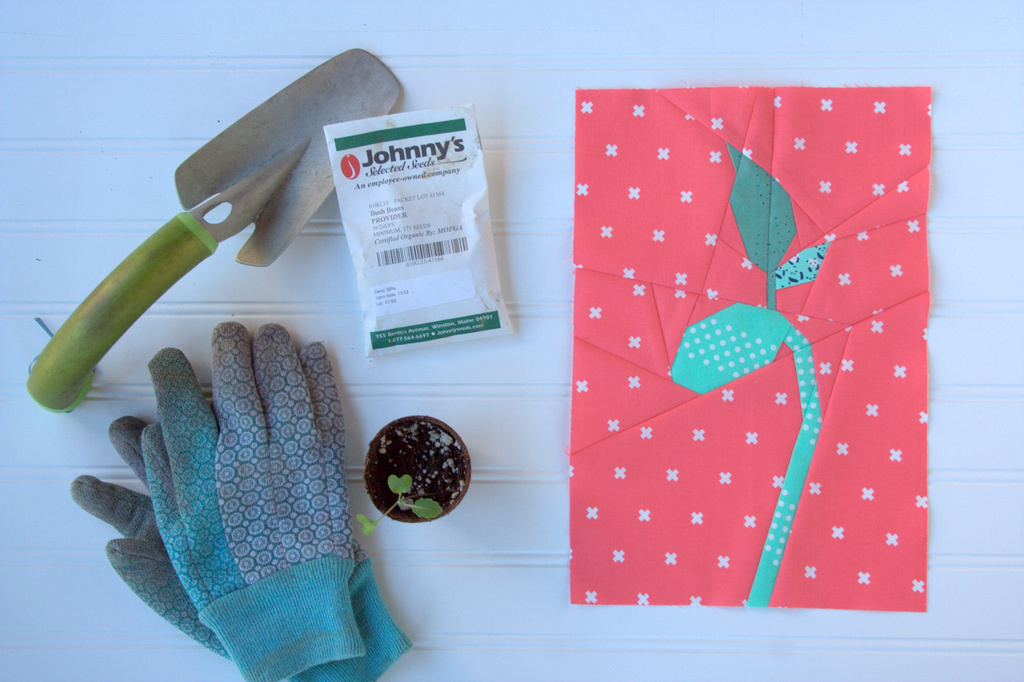
bean sprout foundation paper piecing pattern nightquilterI pushed spring into summer with my latest version of the block, using Cotton + Steel teals and coral that remind me of watermelon. I wanted to show the versatility of the color possibilities with this true-to-life block. While my brain initially goes to the greens and blues true to real life bean sprouts and summer sky, there are many other combinations that could work well to make the block shine! (For the avid gardeners among you, yes, I know the seedling shown is a brussel sprout plant, not a bean!)

There’s not much more exciting than seeing what others create with my patterns, so if you make this block, please use the tag #beansproutblock on social media and tag me @nightquilter. Sending an email would also work! Enjoy, spread the word, and go grow some quilts!

I’m linking up with Crazy Mom Quilts Finish it up Friday, Needle and Thread Thursday, and Let’s Bee Social.

Love is the Key: Pattern Release and Sale!

Love is always the key. We know that. But now we can also SEW that! Those who know me know that I am a sap for hearts and I see them literally everywhere. One of my proudest moments was the first time my daughter brought me a heart she found in nature. It was a dirty old dried up piece of orange peel that she had found in the gravel driveway, and she was filled to the brim with excitement that she had found a heart. Since then, Maddie and I (and now Max, a bit) have found countless heart rocks, heart sea glass, heart snowballs, heart leaves, and more… since truly, love is everywhere. Reminiscent story aside, today I’m excited to release my newest pattern: Love is the Key.

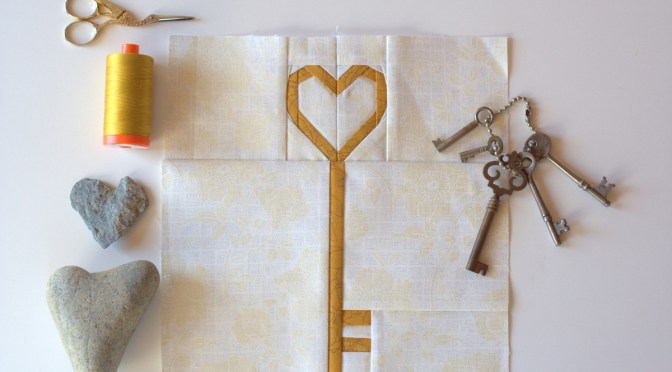
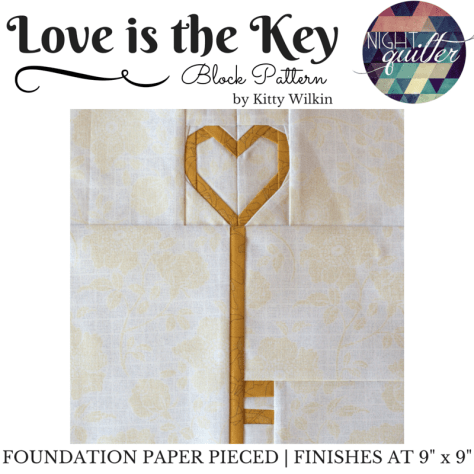
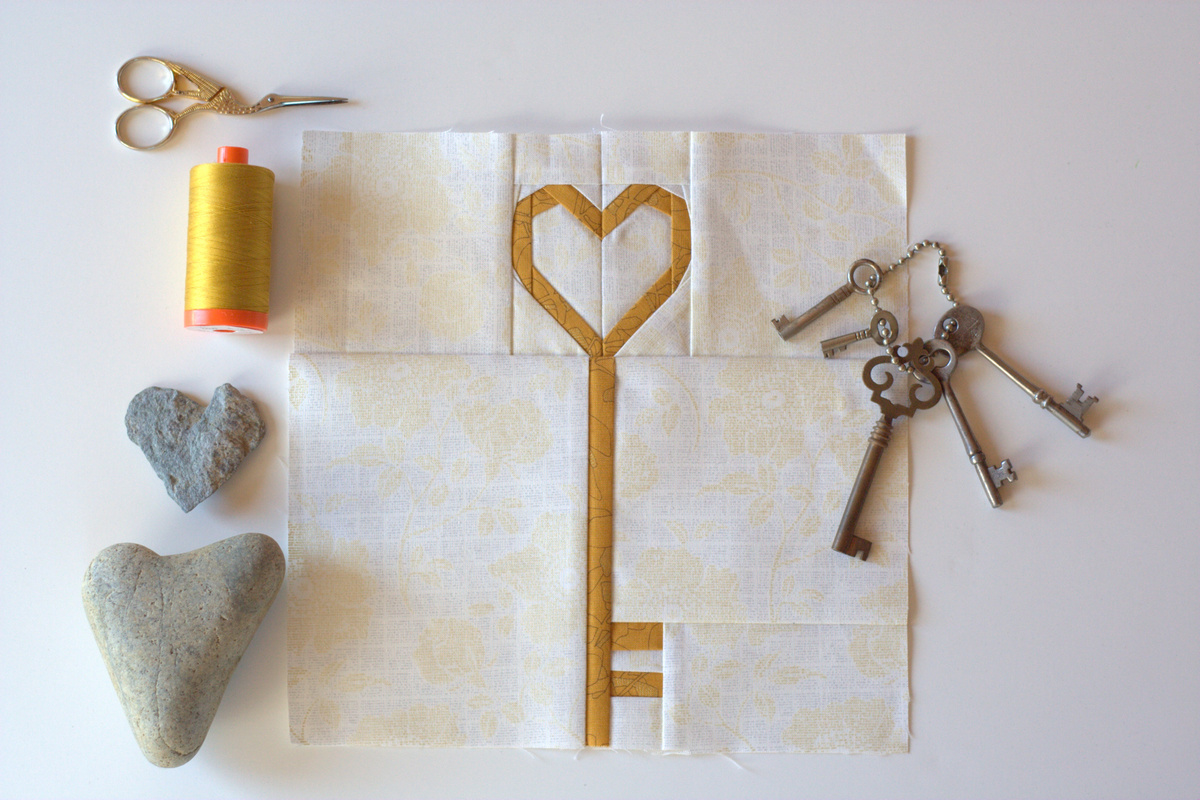
Love is the Key CoverLove is the Key is a foundation paper pieced pattern that measures 9″ square, but with an option for a 4.5″ wide by 9″ tall version. It features a heart-topped key and is a very easy, beginner-friendly paper piecing pattern. Believe it or not, this pattern was first conceptualized and sketched almost a year ago, on my flight home from QuiltCon. It’s a mash-up of my Unlocked and Love Struck patterns, since who doesn’t need more heart-filled pattern options?

love is the key foundation paper pieced patternTo help celebrate the month of love, this pattern release is also kicking off a pattern sale of all of my love-themed patterns, today through Valentine’s Day. That gives you ample time to sew up some love for your partner, your kids, your parents, or hey–even for yourself!

pattern sale loveGrab Love is the Key for only $3 while you can! The prices have already been reduced in my Craftsy and Payhip shops. After Valentine’s Day, all patterns will return to their standard prices of $4.50 (but my love will still be there).

I always love to see what you create, so please use the hashtag #loveisthekeypattern and tag me @nightquilter when you share on social media.

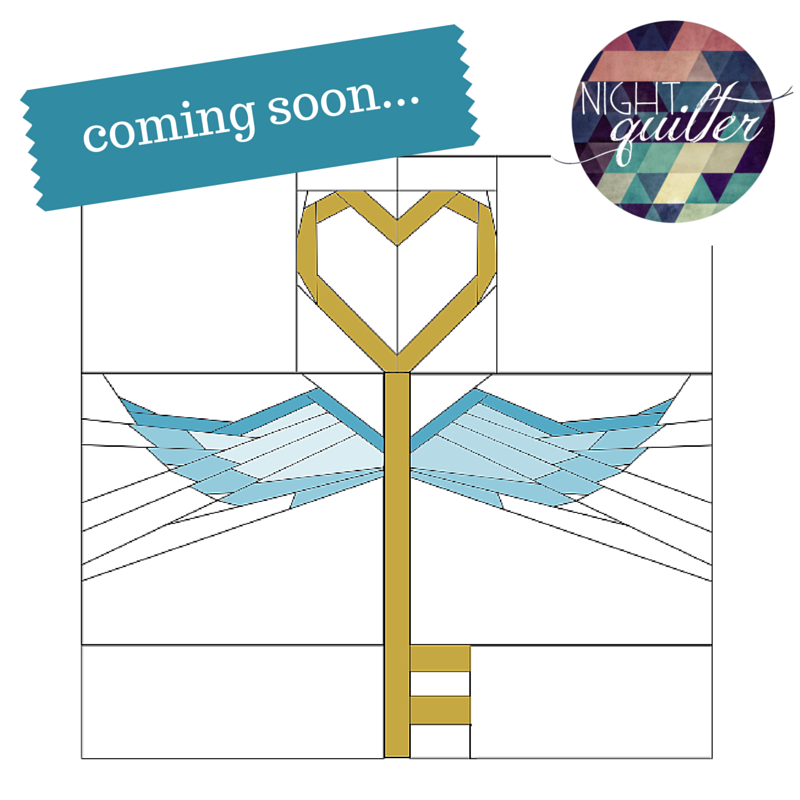
coming soon... Flying KeyI’m also excited about a few add-on pattern features I’m hoping to release soon. Most likely not by Valentine’s Day, but soon you will be able to stitch up a flying heart key, and will have top and bottom options for a “create your own adventure” key. So much fun. So much love.

I’m linking up with Crazy Mom Quilts’ Finish it up Friday since I’m psyched I finally finished this pattern, even if it did take me a year!


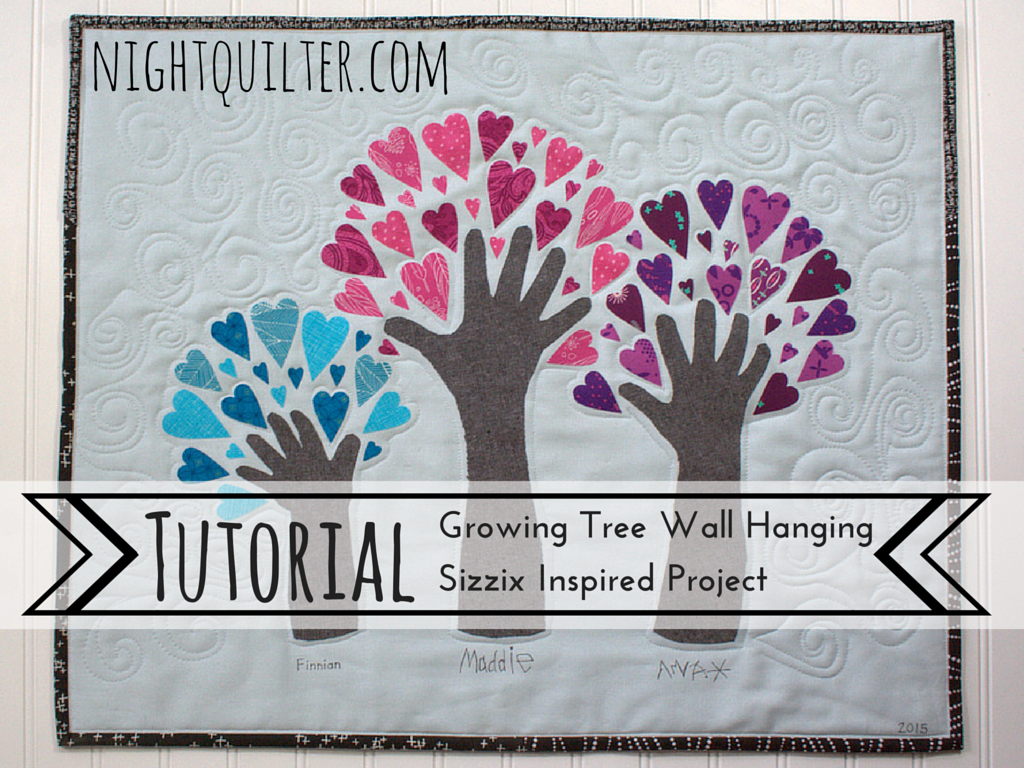
The Growing Tree Wall Hanging Tutorial

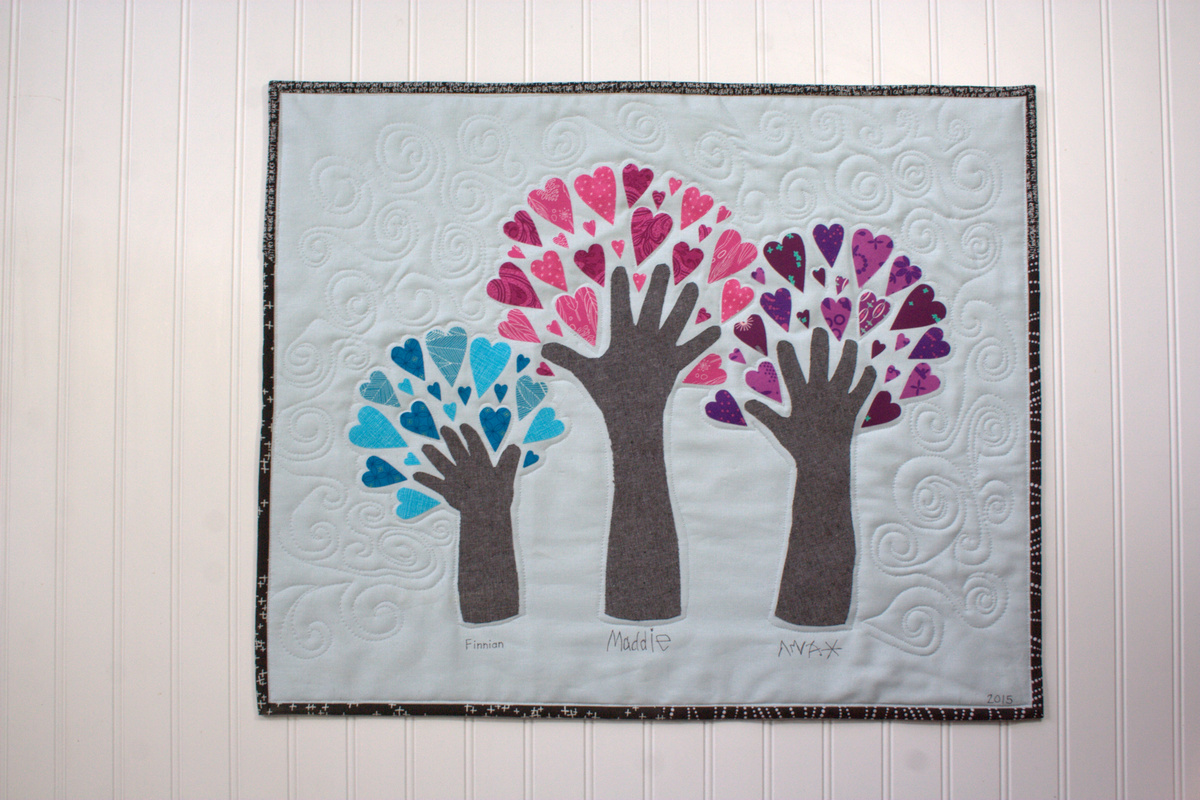
Today I’d like to share a tutorial for a great project that documents the growth of little ones while showing love in a beautiful way: the growing tree. In my case, it will be a growing grove of three trees, so feel free to adapt to fit your kiddos. I initially hoped to make four of these, one for each set of grandparents (we are blessed to have three sets!) and one for us to keep. Now that I’ve finally finished the first one, I’m accepting the fact that I may just stop at one, since I would like to cherish my little babies’ hands, too, and Christmas is less than three (3!?) days away. Since it involves hearts, this project would also be a fabulous Valentine’s Day gift for those doting grandparents.

growing tree sizzix tutorialFrom the moment I gave birth to my first child, my holiday gift giving style changed completely. Instead of trying to think of the “thing” each family member would like or need most and focusing all of my time on making handmade gifts of love for every family member possible, I acknowledge that presence is the best present if at all possible, and as a busy mom (of three lovely children, now), gift making time is much more rare. I am blessed to have a large family, and to have married into an even larger family, so potential gift recipients abound. But especially in recent years, my parents and in-laws–the grandparents–are usually the sole recipients of Christmas gifts, and such gifts nearly always involve their cherished grandchildren (our kids). This year, grandparents will get a whole lot of love, since time wasn’t on my side with this project. When I had the idea to make heart-filled trees out of my children’s hands, I did my typical google search to see if it had been done before. I found this post, about a creation inspired by another creation, and I knew that that inspiration would need to take one more step into the quilting world to become a quilted gift. Here’s how to make your own Growing Tree.

TUTORIAL- Growing TreeFirst, gather your materials. Note that material amounts will vary depending on the number of children you have and the size of the child. I’ve tried to include amounts for a single tree, but feel free to adjust as needed. I’ve also included affiliate links to products that I use and love. If you click through and purchase with these links, I will receive a small commission that will go toward funding all that goes into creating these tutorials and keeping my blog up and running.

Materials

*These items are not needed if you opt to frame your growing tree instead of quilting it, but you will also need a suitably sized picture frame, stiff acid-free cardboard if the frame doesn’t come with it, and a form of adhesive (glue or tape) to tightly wrap the fabric around the cardboard before insertion into the frame.

Let’s get started!

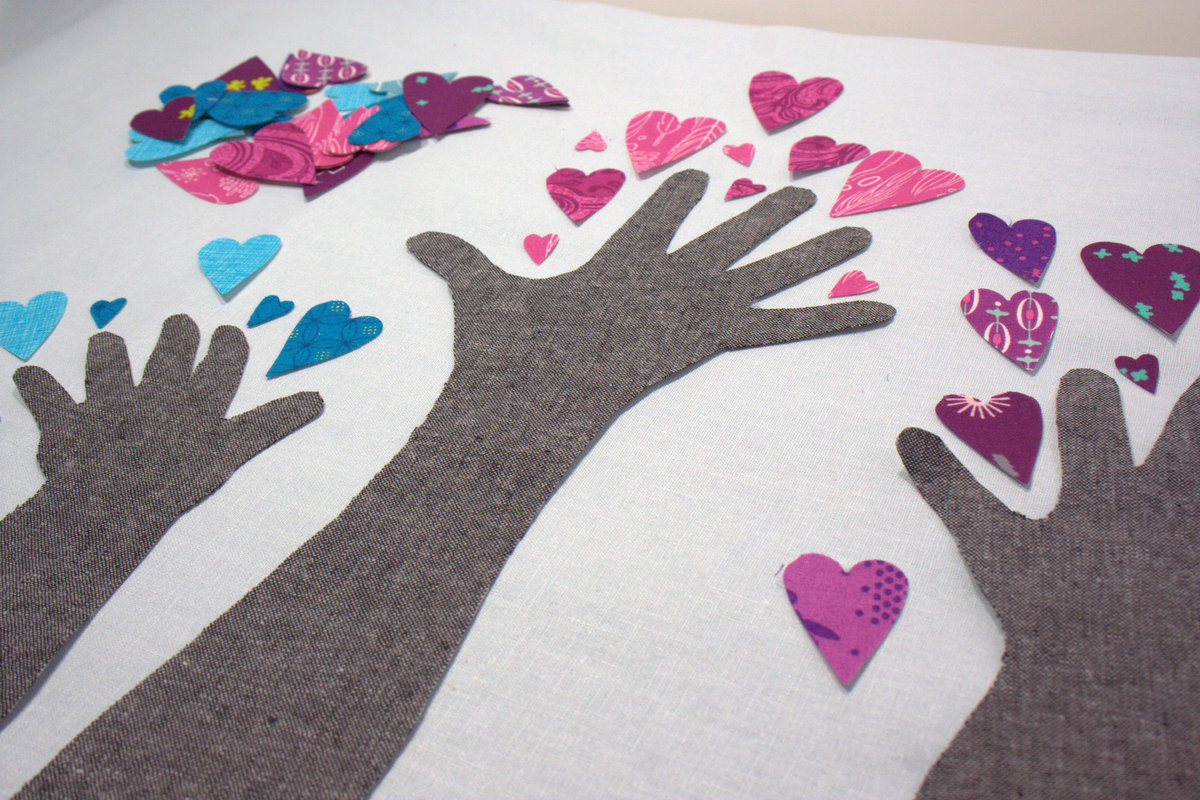
growing tree sizzix tutorialGather your children! Have them spread fingers wide and put forearms down onto the Heat’n Bond. With their excited help, trace each child’s forearm and hand onto the non-textured side of the Heat’n Bond. You want to trace from just below the elbow, up around each finger, and then down the other side. If you are making more than one version of this Growing Tree, trace as many forearm-hand tree trunks as you will need. (Because I initially aimed to make four versions of my Growing Grove of Trees–oh my boundless ambition!– I traced each patient child’s arm four times, except Finn’s. With squirmy 6 month old Finn, I struggled and wiggled and waggled until I got a somewhat accurate tracing of his arm and hand, cut it out, and traced THAT three more times. He was not interested in sitting still!)

Carefully cut out each tree trunk, either enlisting the help of your children if they are older and proficient at cutting, or sending them off to play for the next few steps.

Fuse your tree trunks to the wrong side of the tree trunk fabric, following the manufacturer’s directions. Always be extra cautious if using a hot iron with small children around. Toddlers are inherently curious and can not yet physiologically control their curious explorations, despite fervent warnings from mommy–as I’m sure you know! I do my ironing upstairs without any kids underfoot to be safe.

Set the tree trunks aside to cool. Once cool, carefully cut around each forearm tree trunk and set aside.

Fuse Heat’n Bond to the wrong sides of all of the fabric scraps that will become hearts. Remember to have the paper side of the Heat’n Bond facing up, and put a pressing cloth down to protect your ironing surface. Let cool completely.

growing tree sizzix tutorialOnce the fused heart-intended fabric has cooled completely, with paper-friendly scissors or rotary cutter (NOT your fabric scissors!), cut your fabric into 2 1/4″ x 3 1/4″ rectangles for ease of quick cutting.. Note that I am using the three smallest heart sizes for my trees, and am not worrying about directionality of the fabric. If you have smaller scraps or want the directionality of the fabric to be level, you can cut 3/4″ x 3/4″ for the smallest heart, 1 1/4″ x 1 3/4″ rectangles for the medium heart or 1 1/2″ x 2 1/4″ rectangles for the large. (I did not use the extra large heart). I mostly cut the medium and large hearts from 2 1/4″ x 3 1/4″ rectangles and then used the scraps from those to cut small hearts.

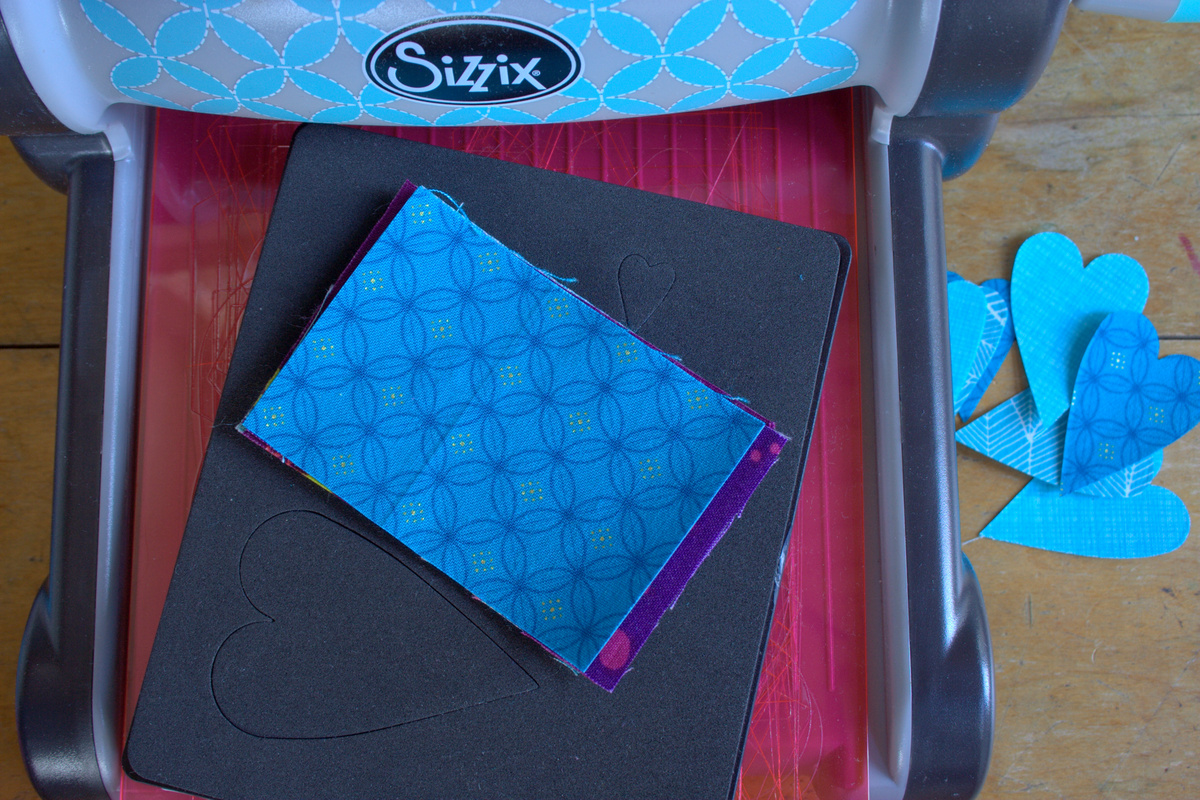
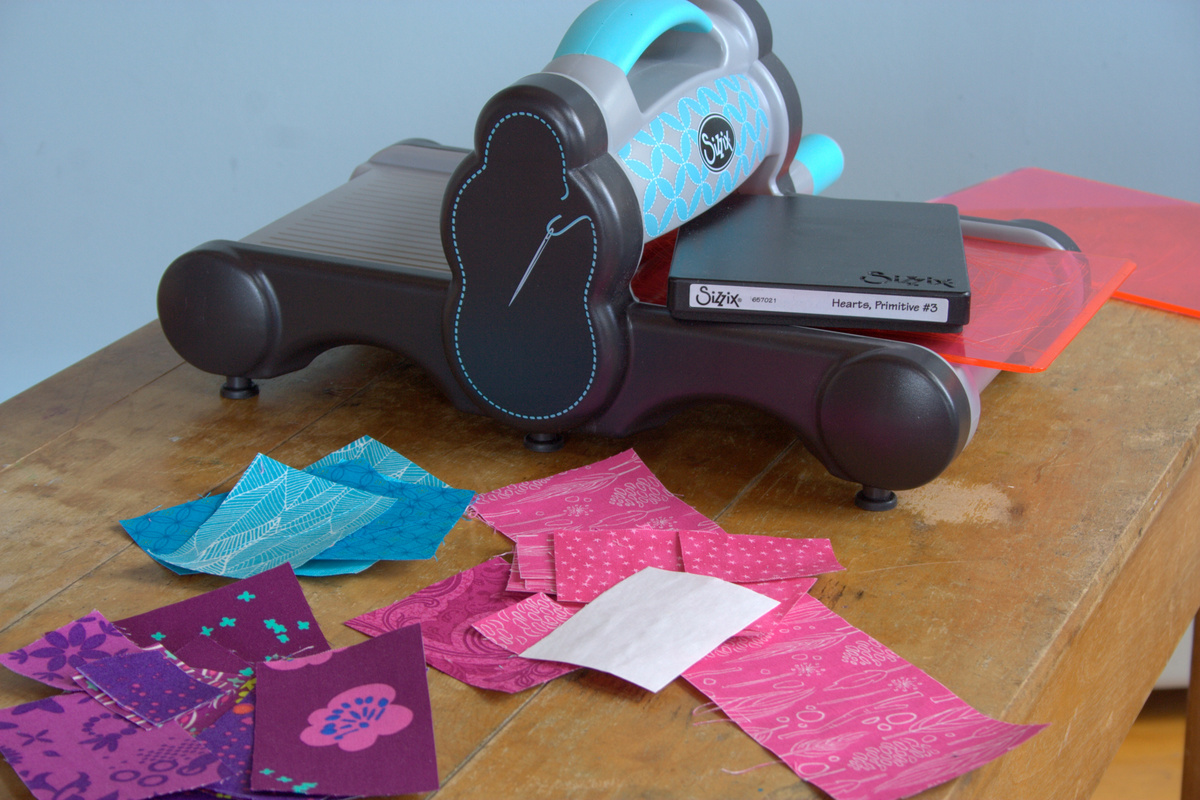
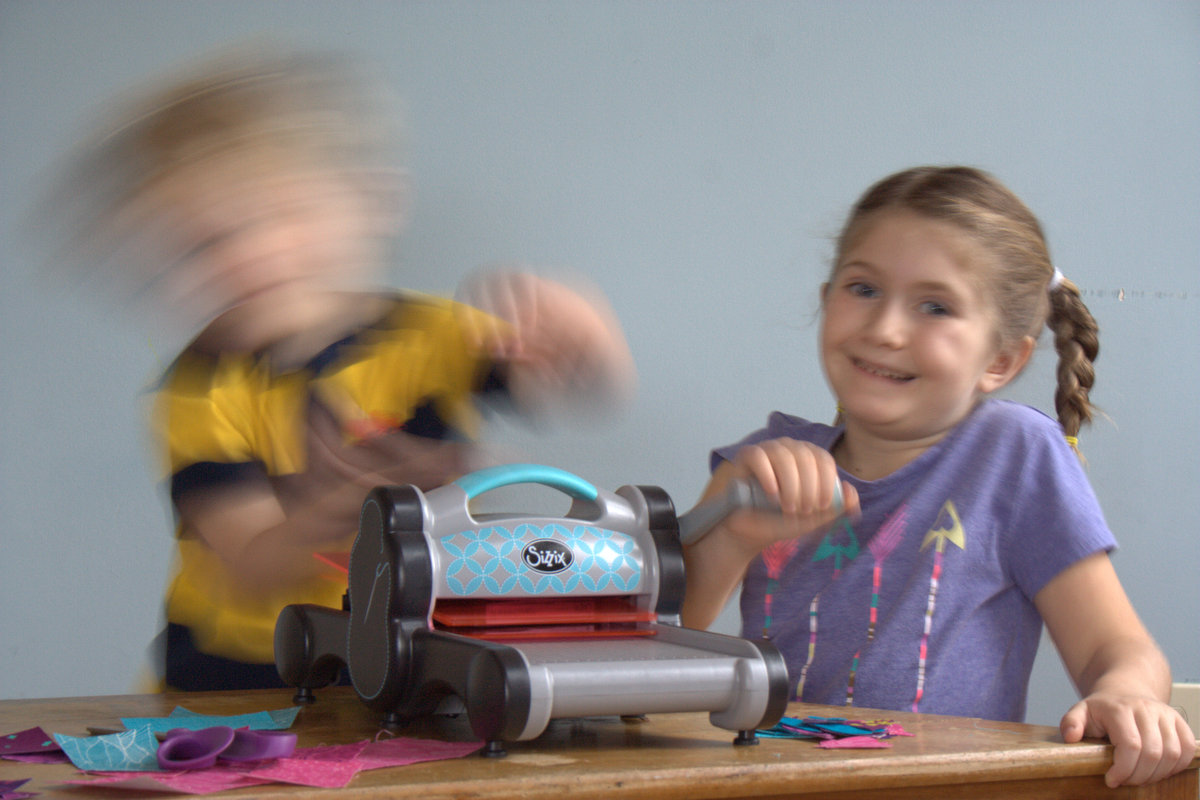
growing tree sizzix tutorialNext, pull out your Sizzix fabi die cutting machine and Primitive hearts #3 die. Call those children back! Layer the pre-fused fabric rectangles over the desired sized hearts on the Primitive Hearts die, four (4) at a time. The Sizzix can cut up to nine (9) layers of fabric at once, but since the fusible is pre-fused, each rectangle counts as two layers. Make your Sizzix sandwich: bottom cutting pad, die with the blades facing up, fabric centered over the heart blades, and top cutting pad.

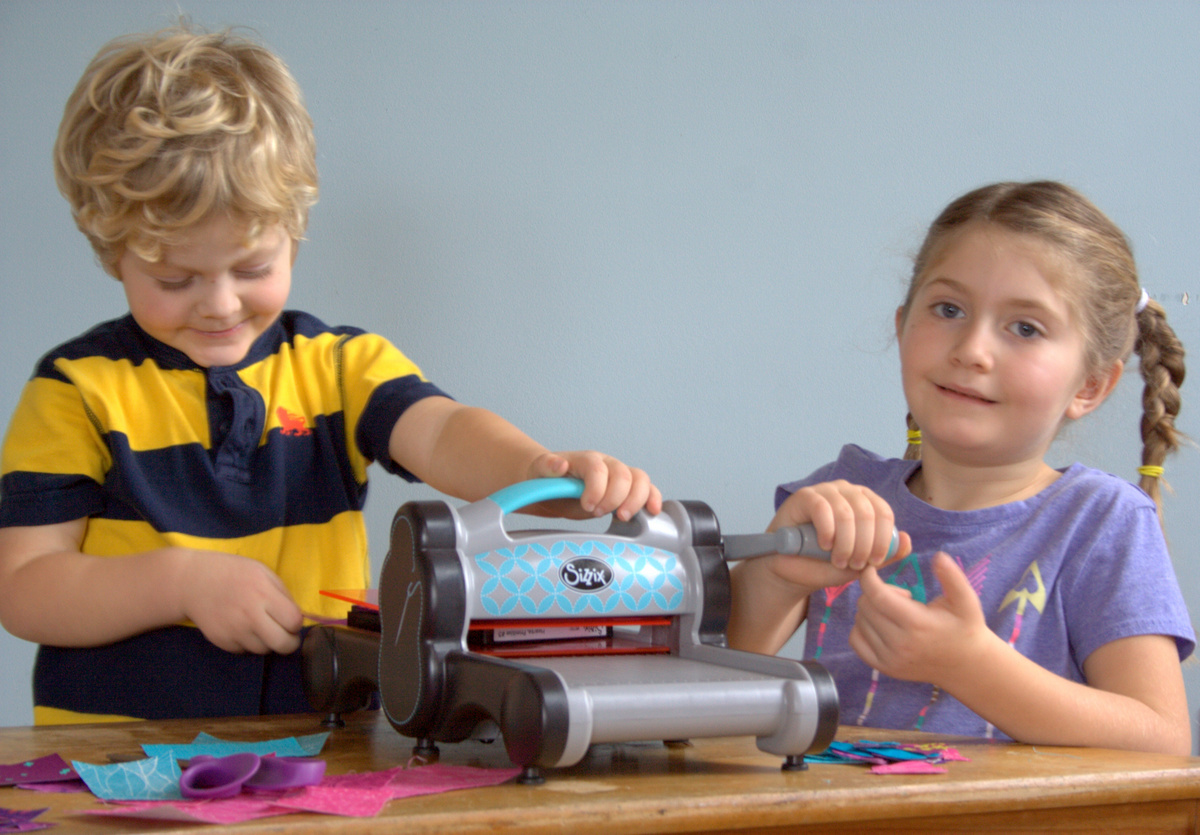
growing tree sizzix tutorialgrowing tree sizzix tutorialLet your kiddos carefully crank them through! If you don’t have a Sizzix, get the kids’ help and start cutting out hearts of different sizes, ranging from 1/2″ to 2″ in size. Depending on the ages of your children, you can either enlist their help or set them up with a different activity while you lay out the wall hanging once all of the hearts and trunks are cut.

growing tree sizzix tutorialLay out a large piece of your background fabric. I suggest arranging your tree or grove of trees BEFORE cutting the background fabric to size, since every child’s arm is different. Layout your tree trunk(s), arranging the hearts around the top like the leaves of a tree.

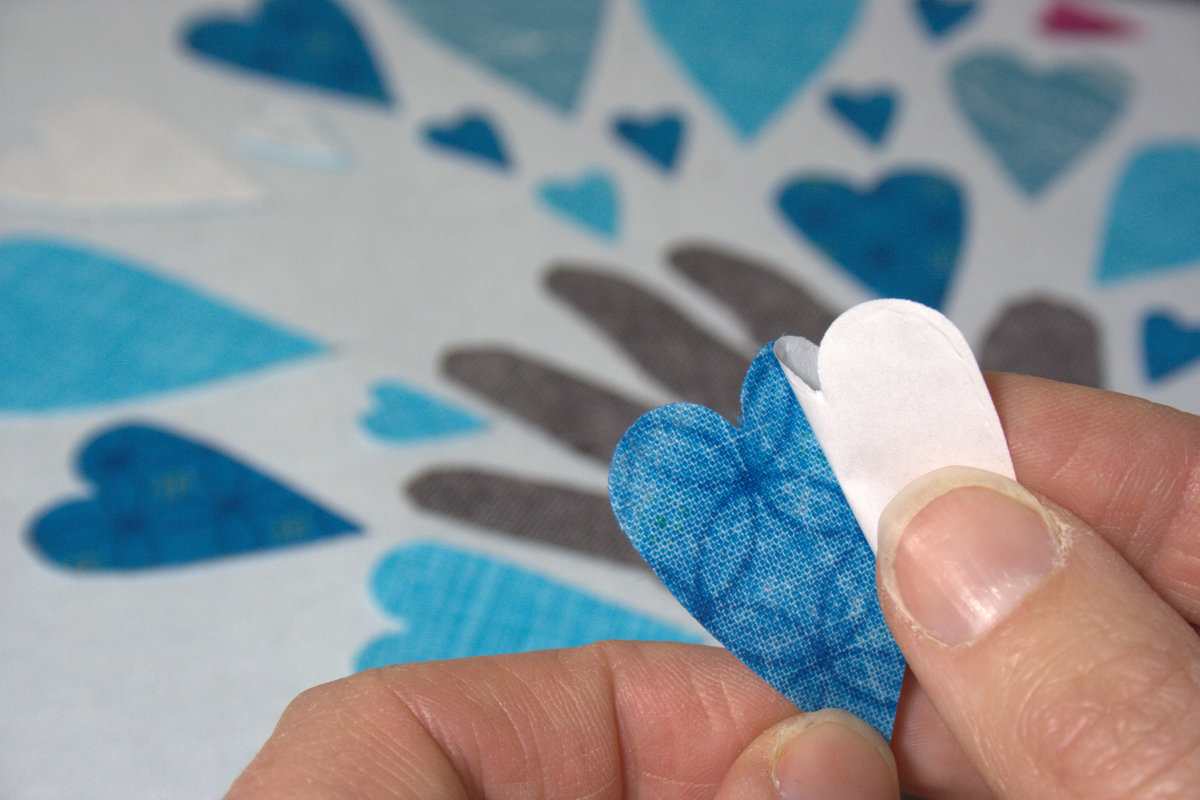
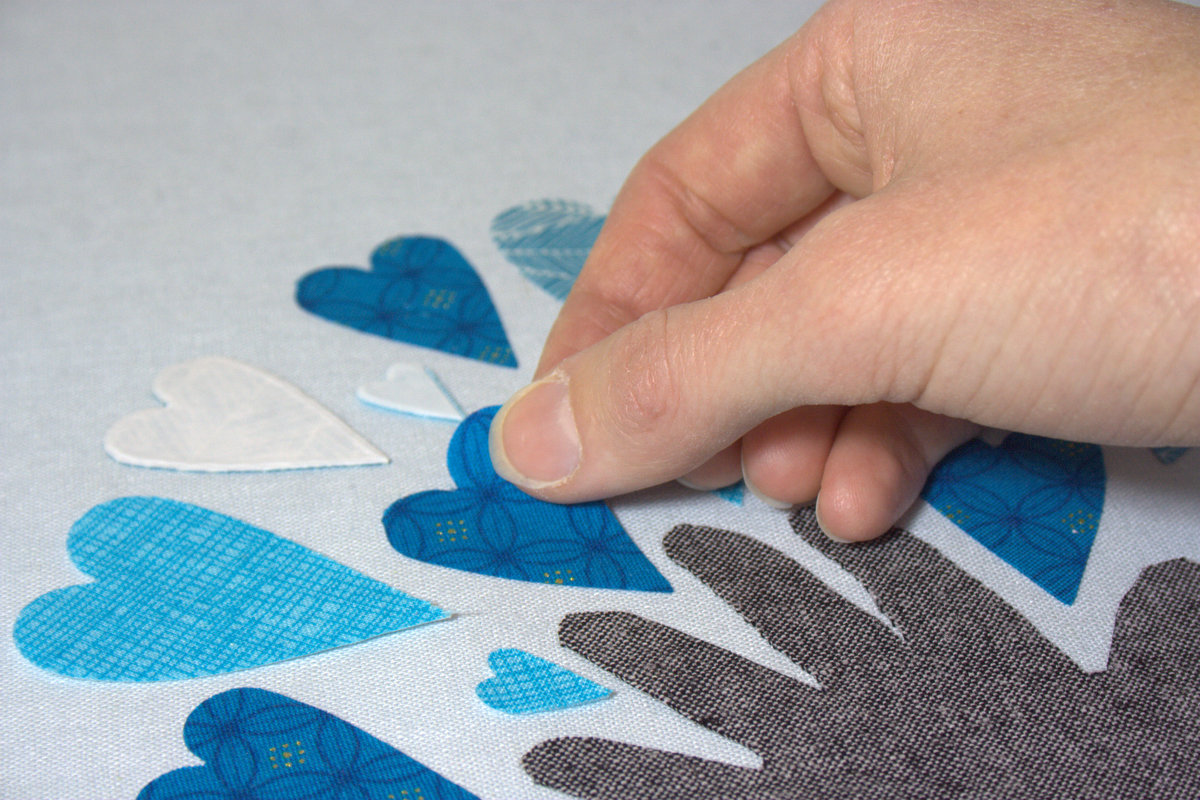
growing tree sizzix tutorialgrowing tree sizzix tutorialOnce they are arranged the way you want them, carefully remove the adhesive paper from each component, placing it back in its proper place as you go.

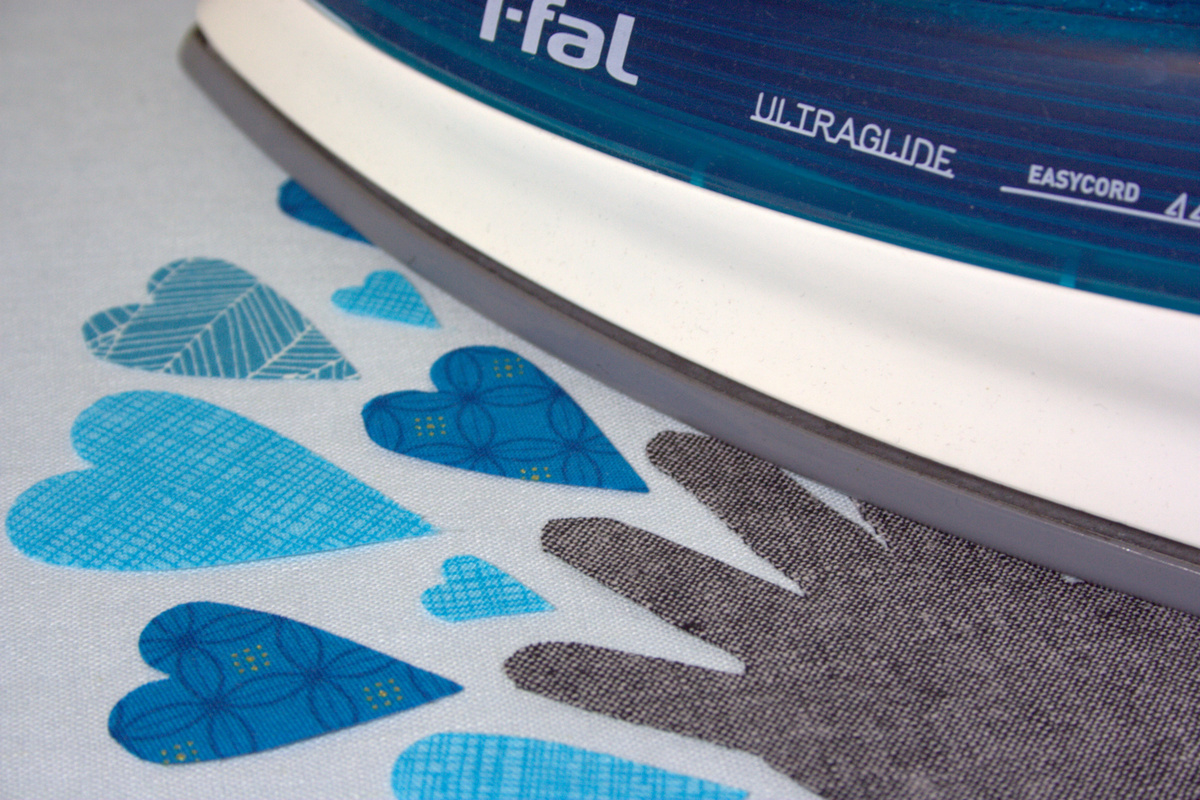
growing tree sizzix tutorialOnce you have an iron-surface-sized batch with the paper backings removed, fuse them down. *Note: If possible, lay out your arrangement on your ironing surface so that once all of the papers are removed and pieces stuck, you can simply fuse them down. I used a large foam board beneath mine, and actually pressed onto the foam board since my ironing surface is tiny. Always follow the manufacturer’s instructions when using Heat’n Bond!

growing tree sizzix tutorialIf you’re like me and are interrupted during this process, simply flip a row of hearts that haven’t been fused yet, so that you know where you are when you return.

Trim the background fabric approximately 3″ from each edge of your Growing Tree if you plan on quilting. Be sure to use the lines on your cutting mat to ensure your quilt is square as you cut.

Alternate ending

Alternatively, after fusing the hearts and tree trunks, you could wrap the fabric tightly around a thick acid free piece of cardboard and frame it in a picture frame. If you opt to frame yours, be sure to give yourself at least 2″ of overhang on all four sides, and plan your tree arrangement to fit into your desired frame.

Back to the quilting option…

Cut batting and backing fabric to extend about 1″ from each edge of your Growing Tree quilt top (For example, if your Growing Tree top measures 27″ x 22″ like mine does, cut your batting and backing 29″ x 24″)

growing tree sizzix tutorialBaste your quilt layers using your desired method (I used pins).

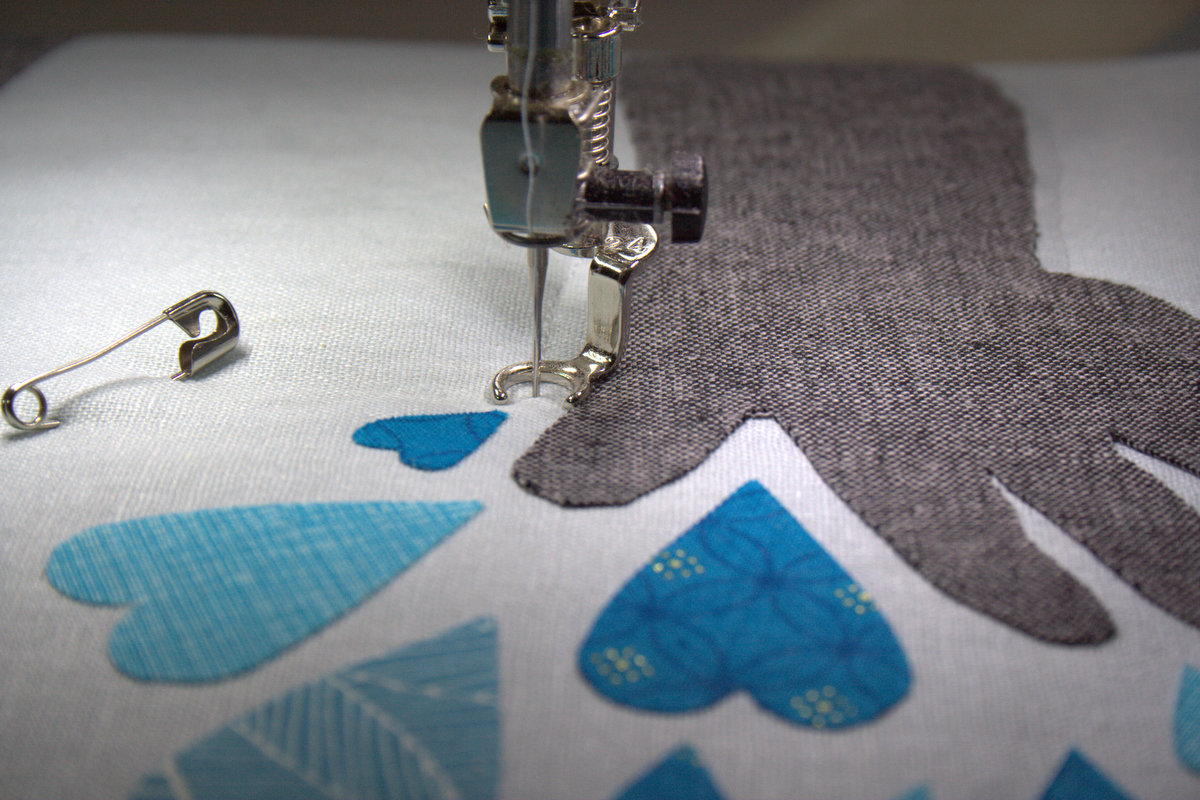
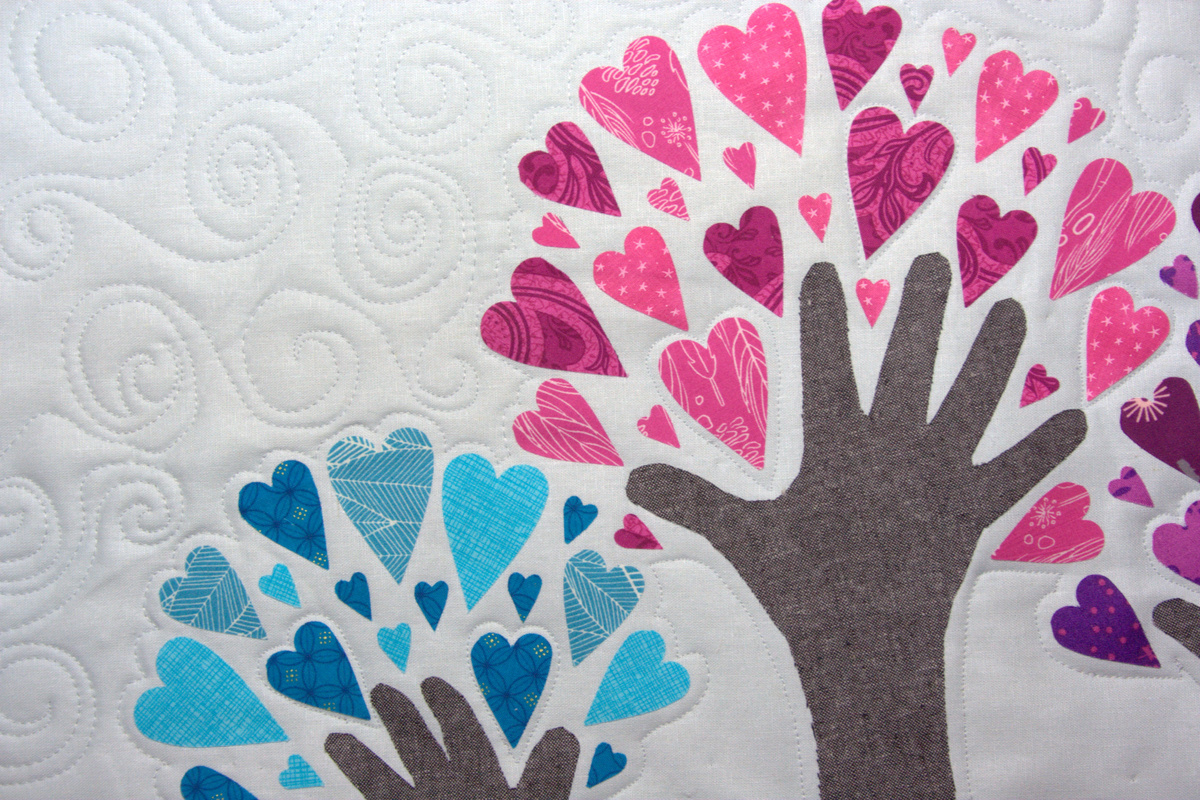
growing tree sizzix tutorialgrowing tree sizzix tutorialWith a thread that coordinates with your background fabric, free motion quilt AROUND the edges of your tree trunk(s) and hearts. I also stitched around a few single hearts (you don’t need to sew around all of them) within the tree. Remember that the Heat’n Bond is NO SEW, so be sure not to sew on top of the fused pieces. Feel free to free motion quilt the background to help hold everything in place. I used a windy spiral design and was reminded at how much fun free motion quilting is! I need to do it more often!

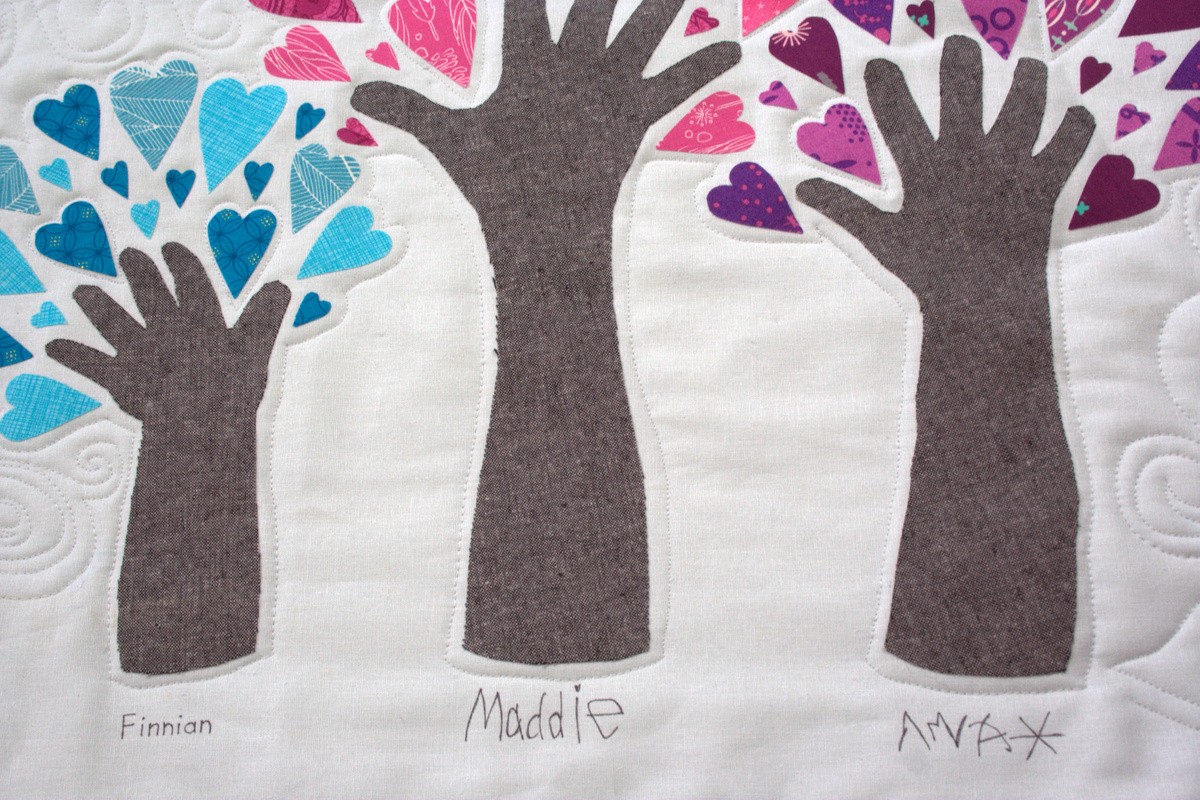
growing tree sizzix tutorialAdd each child’s name beneath each tree, either with embroidery or permanent fabric marker. I used fabric marker so that Maddie and Max could include their signatures. Don’t forget the date! (Confession: I copied Max’s signature from a recent art project since I didn’t dare let him and a permanent fabric marker near this finished project. Perhaps a 3 year old with a less impish nature might be able to sign right on the project, but use your judgement.)

growing tree sizzix tutorialTrim the batting and backing flush with the quilt top, square up, and bind as desired. I included corner hang tabs on the back of my Growing Tree Grove using THIS method, and bound the quilt using THIS great tutorial by Cluck Cluck Sew.

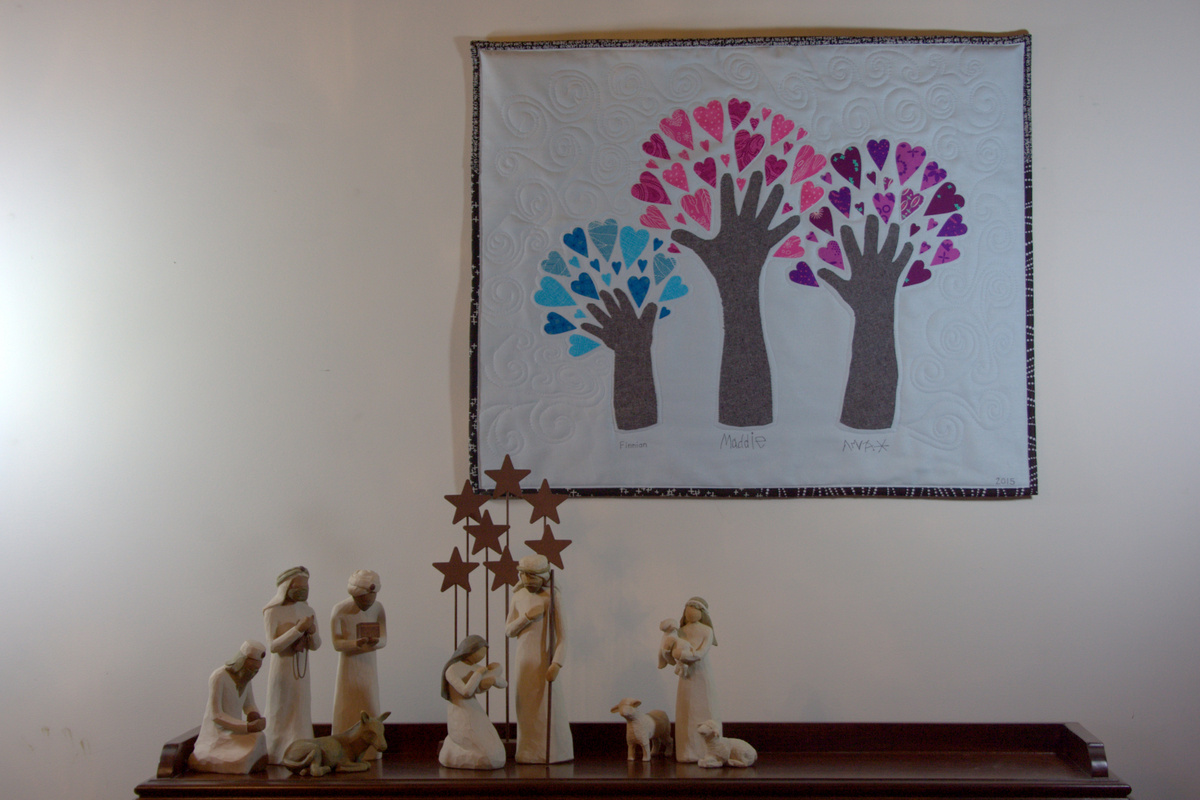
growing tree sizzix tutorialHang this Growing Grove on your wall so that you can immortalize those precious little hands, or wrap & gift to those doting grandparents if you’re superwoman, or if you are already planning ahead for Valentine’s Day!

Enjoy, and happy holidays!

Outtakes

Just for fun, here’s what the vast majority of the photographs of my kiddos using the Sizzix looked like:

growing tree sizzix tutorialMax does not. stop. moving! Enjoy the blurry laugh, and enjoy your holidays!


Welded Quilt: AGF Stitched {& Giveaway}

I’m excited to share one of the big behind-the-scenes projects I’ve been furiously sewing over the past few weeks: my version of the Welded Quilt, the newest free quilt pattern released as part of a collaboration between Art Gallery Fabrics and Fat Quarter Shop called AGF Stitched with Kimberly (or #agfstitched).

agf-stitched-LOGOwelded quilt agf stitchedThis quilt is the third pattern released by Fat Quarter Shop and Art Gallery fabrics (you may have seen the Birchen and Fractal quilt patterns already released). The original version of the Welded quilt features Artisan by Pat Bravo. There’s an awesome instructional video HERE that helps make the organization and piecing of this on-point quilt very straight forward, without having to worry about bias edges. Fat Quarter Shop also has quilt kits and backing sets available.

When I was invited to be a part of the team to make this quilt, I accepted excitedly. I loved the idea of making an on-point quilt, and I knew that I wanted to use the focal diamonds to feature some meticulous cutting (fussy cutting to the rest of the quilting world). I also know how easy Kimberly makes quilt-making with her simple instructions.

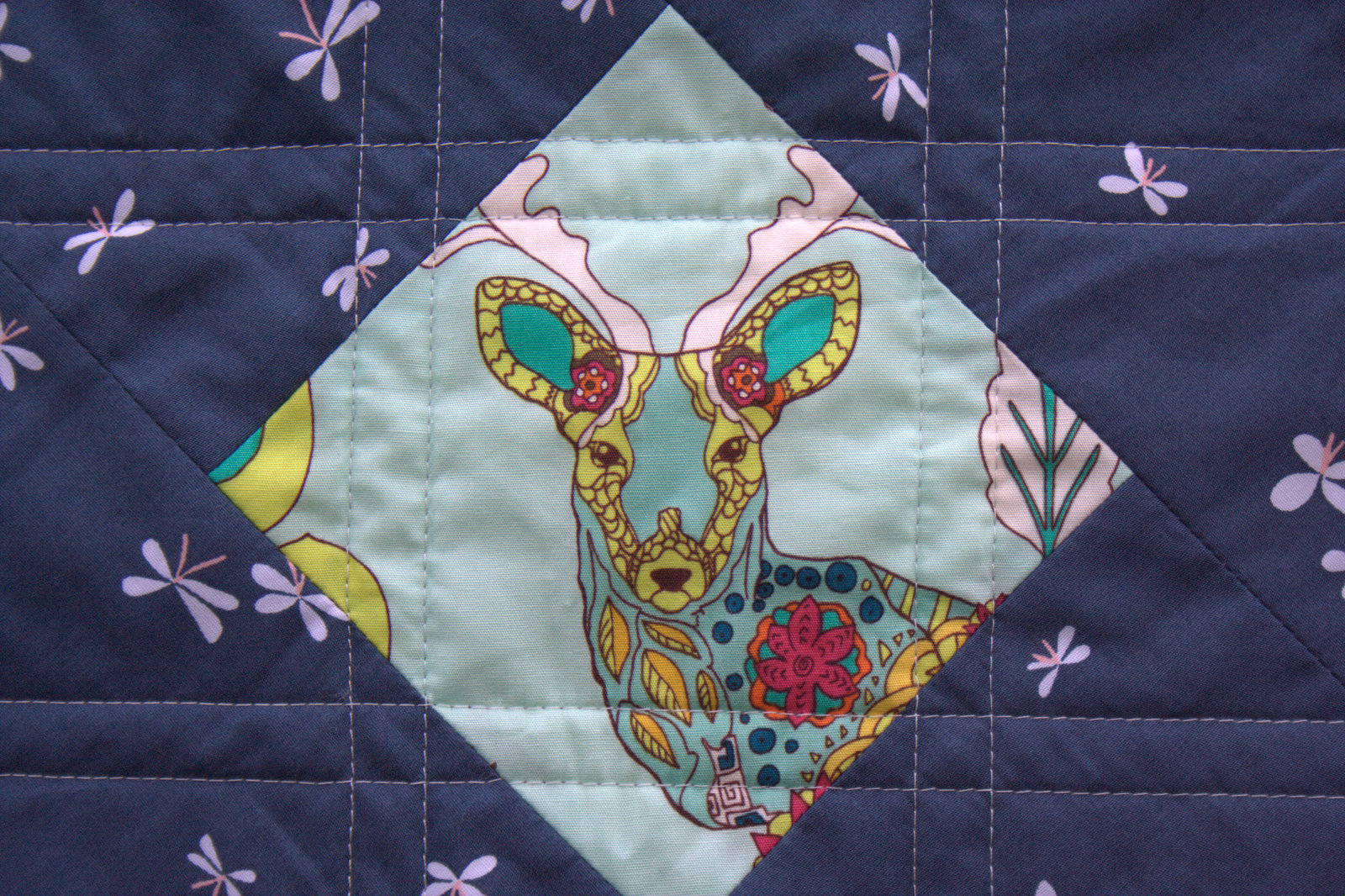
utopia fabric fussy cut welded quiltI was invited to use the Art Gallery fabrics of my choice to make this quilt, and the fabric was generously provided by AGF. I quickly selected fabrics from Utopia by Frances Newcombe, including this Dreamlandia Irradiated (featuring the awesome deer), and some coordinating Curiosities by Jeni Baker. I added Art Gallery Pure Elements in Raspberry Rose, Teensy Weensy Lotus from Littlest for the light sashing, and Optical Origami Mod from Urban Mod by the AGF Studio to round out the palette.

utopia welded quilt agfstitchedI did have a few extra dates with my BFF the seam ripper due to directionality miscalculations, so pay extra attention to directionality of your edge pieces if you choose fabric with a distinct top and bottom. Those seam ripping dates were well worth it, though. I’m thrilled with the resulting quilt.

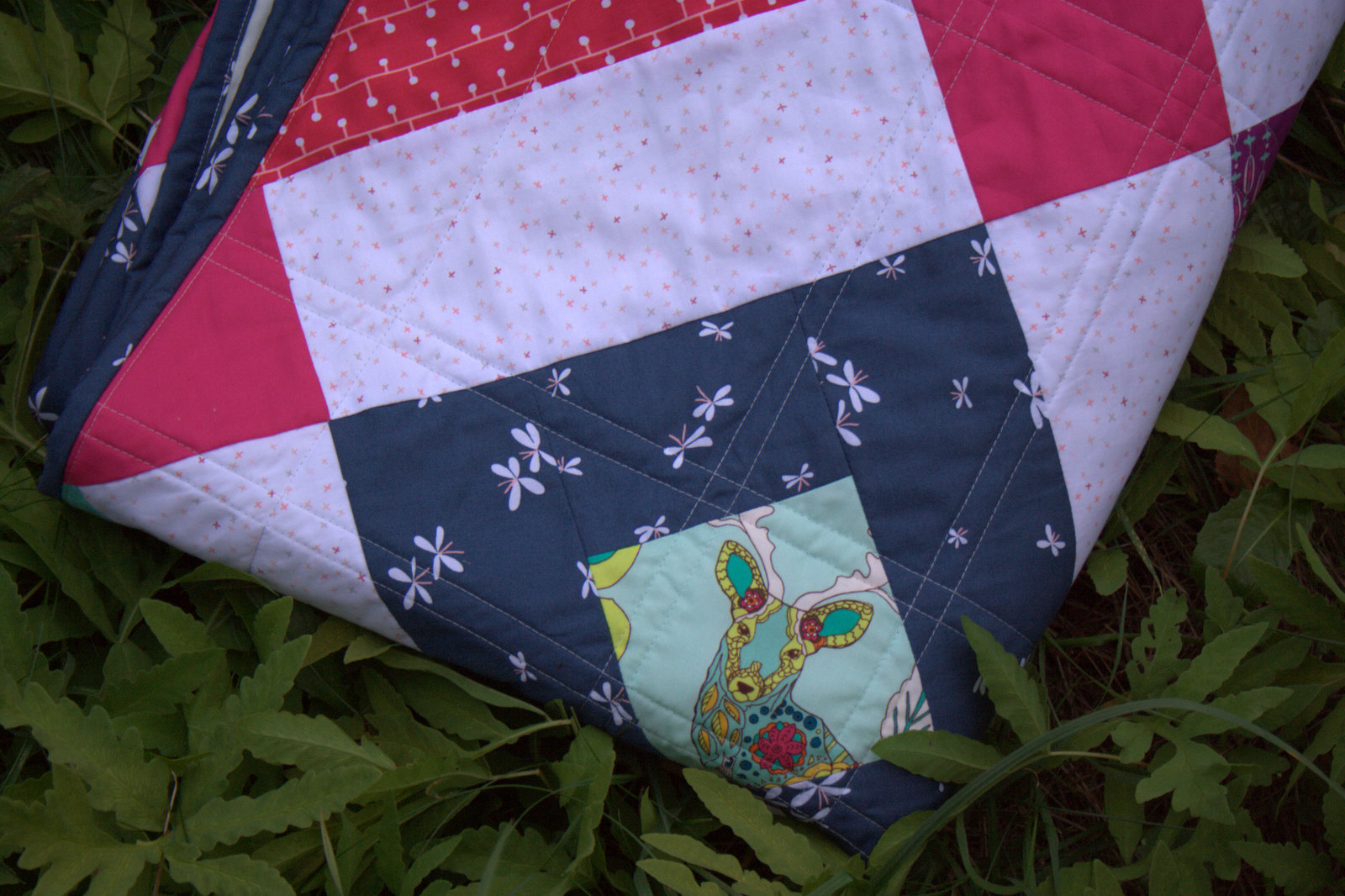
welded quilt in a treeI quilted it with straight lines in a grid work pattern framing the center diamonds, using my domestic Bernina 560 and a walking foot. I kept the quilting fairly minimal to preserve the super softness of the Art Gallery fabrics. I used my go-to thread, Aurifil 50wt in 2600-Dove for both piecing and quilting. I LOVE how this thread complements just about every fabric color combination and pattern.

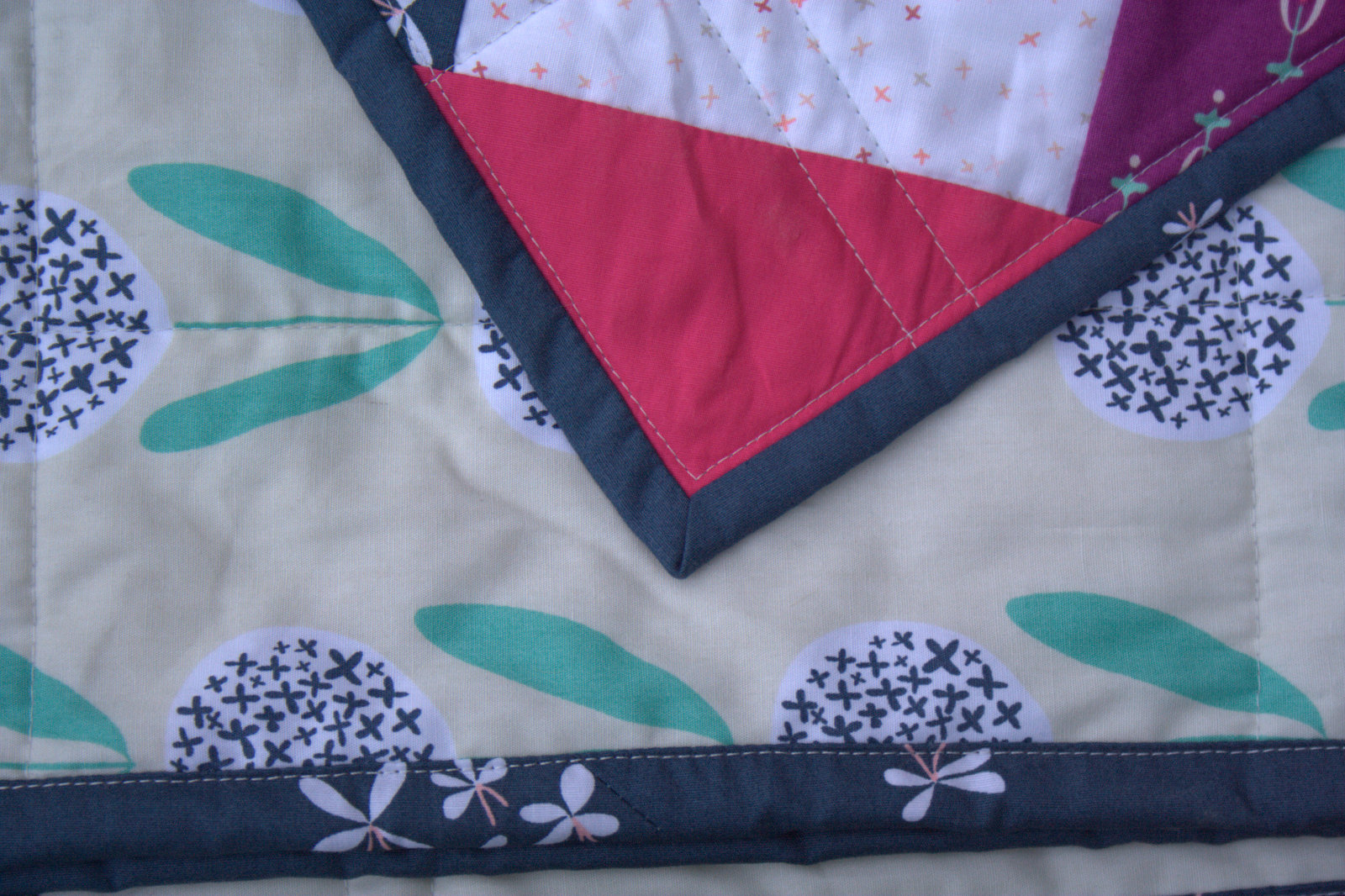
machine binding welded quiltI machine bound the quilt for durability using the fabulous machine binding tutorial by Allison at Cluck Cluck Sew, and it turned out so well. Practice certainly helps, but I’m finding myself favoring the sharp look of the machine binding more and more (although I will always love hand stitching binding!).

welded quilt deer peeking through fernsI just can’t get over how cute those Utopia deer are peeking out from this quilt. As you can probably tell, I had a blast prancing through our front field with the rest of my family for this quilt photo shoot.

Quilt Stats

Pattern: Welded, part of the AGF Stitched with Kimberly collaboration (instructional video here)

Size: 61” x 79.5″

Fabric (all by Art Gallery Fabrics):
Front: Dreamlandia Irradiated, Specks of Carambola, and Atomic Influx Perse from Utopia by Frances Newcombe;  String Lights Carmin, Book Pressed Memories, and Firefly Jar Dark from Curiosities by Jeni Baker; Art Gallery Pure Elements in Raspberry Rose, Teensy Weensy Lotus from Littlest, and Optical Origami Mod from Urban Mod by the AGF Studio.
Back: Candied Lollies Mint from Curiosities by Jeni Baker.
Binding: Firefly Jar Dark from Curiosities by Jeni Baker.

Batting: 100% cotton Soft n’ Crafty batting

Thread: Aurifil 50wt in 2600 – Dove for both piecing and quilting

Quilting: Straight line quilting in a grid work pattern using my Bernina 560 and a walking foot

Time:
Piecing the top: 14 hours 20 min (includes fussy cutting and seam ripping to fix directionality)
Piecing the back: 45 minutes
Squaring, layering, and basting: 1 hour
Quilting: 5 hrs 10 min
Finishing (squaring): 25 minutes
Binding: 2 hr 30 min
Total: Approx. 24 hours 10 min

Why did it take me so long to bind!? Meticulous machine binding, I suppose! It was worth every minute!
++++++++++++++++++

Now, for a giveaway!

Fat Quarter Shop has generously offered a giveaway to one of my readers. Comment below to be entered to win a bundle of your favorite Art Gallery Fabrics collection!  You can enter by leaving two comments:

  1. What Art Gallery Fabric collection would you choose?
  2. If you follow me, Night Quilter, let me know how–or visit my right sidebar to follow me if you don’t already, then tell me how! (e-mail, WordPress, Bloglovin’, Instagram, Twitter, Craftsy)

The giveaway will be open until Wednesday, September 30th 12noon EST. I will select one winner randomly from the comments below. Good luck!  Note: This giveaway is now closed! Congratulations, Nicole!

Once you enter, be sure to check out the versions of Welded created by the other talented quilt bloggers participating in this event (links will be added as soon as available):

Cara of That Crafty Cara
John of Quilt Dad
Dana of Old Red Barn and Co.
Michele-Renee of Quilt Matters
Corey of Little Miss Shabby
Christina of Sometimes Crafter
Erica of Kitchen Table Quilting
Sinta of Pink Pin Cushion
Jess of The Elven Garden
Svetlana of Sotak Handmade
Jemima of Tied with a Ribbon
Katarina Roccella
Caroline of Sew Caroline
Riane of Vessel Quilts
Megan of Quilt Story
Kaye of Miss Print
Natalia of Piece N Quilt

Just for fun, here are some behind the scenes shots from our frolicking fun family photo shoot:

behind the quilt
My awesome husband not only is a champion quilt holder, but he also climbs downed branches to help adjust the quilt *just so*.
behind the quilt
Finn cheered us on from the stroller while Maddie and Max ran wild.
behind the quilt
Max needed a piggy back all the way home after playing in the field and climbing the apple tree to pick apples.

SnapChat Welded Quilt Photo ShootEveryone’s husband makes a SnapChat story about his family’s quilt photoshoot adventures, right? Yes, my husband is a tech geek extraordinaire! We had fun. Thanks again to Fat Quarter Shop and Art Gallery Fabrics!

I’m linking up with Crazy Mom Quilts Finish it up Friday and TGIFF, because seriously…. I’m so glad it’s Friday and I finished this in time!

P.S. I always try to respond to comments, but may not be able to on the giveaway posts due to the high number of comments.  Please know I appreciate your visit and hope you follow or come back again!

Unlocked in Make Modern Magazine

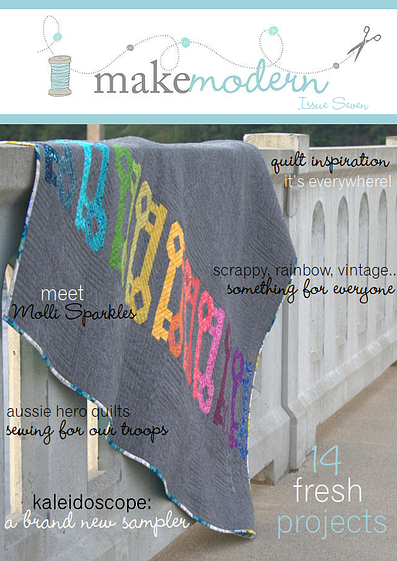
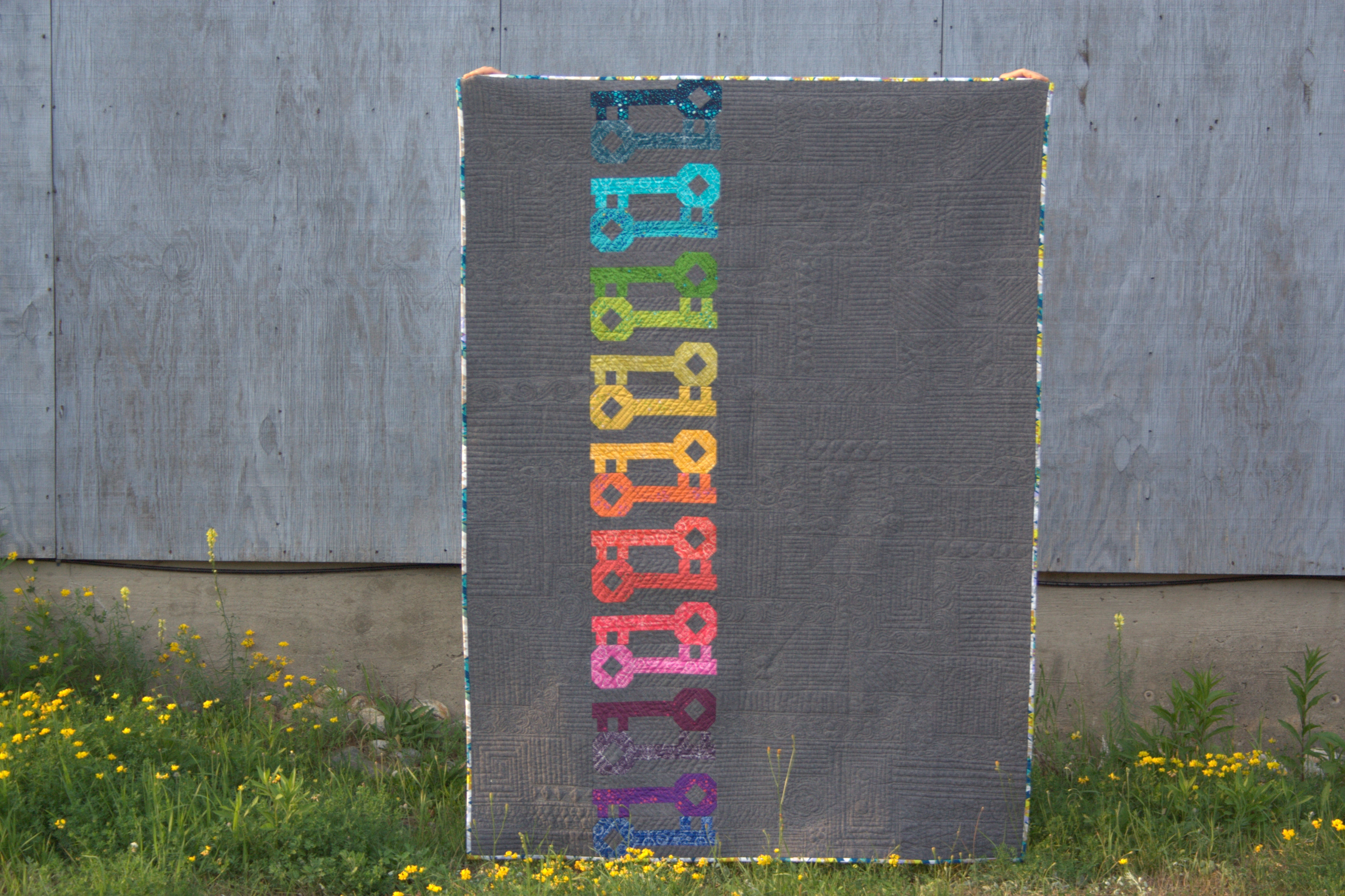
Today I’m so excited to share that my magazine debut (as the covergirl, no less!) is here. My pattern Unlocked appears in this month’s edition of Make Modern magazine, and even graces the cover (can you say excited!?!).

make modern cover issue 7

Make Modern is a digital modern quilting magazine, full of great patterns for quilts and smaller sewn items, articles, tips, and features. This issue (Issue 7) has a lovely meet and greet with none other than the most glittery quilter around: Molli Sparkles. Based in Australia, Make Modern was the brainchild of three quilting friends: Jane, Lara, and Kristy. You can read about their philosophy HERE, which I definitely recommend. From the sustainability and accessibility of a digital magazine, to being a positive driving force in the modern quilting world, they’ve got it going on.

You can purchase single issues of the magazine or can choose 3 issue (6 month) or 6 issue (yearly) digital subscriptions. I’m honored to be a part of this publication.

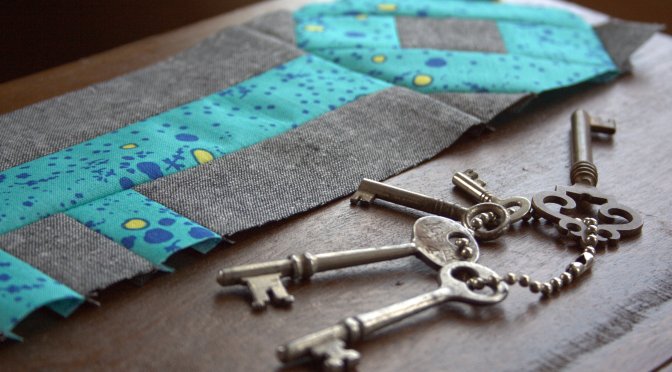
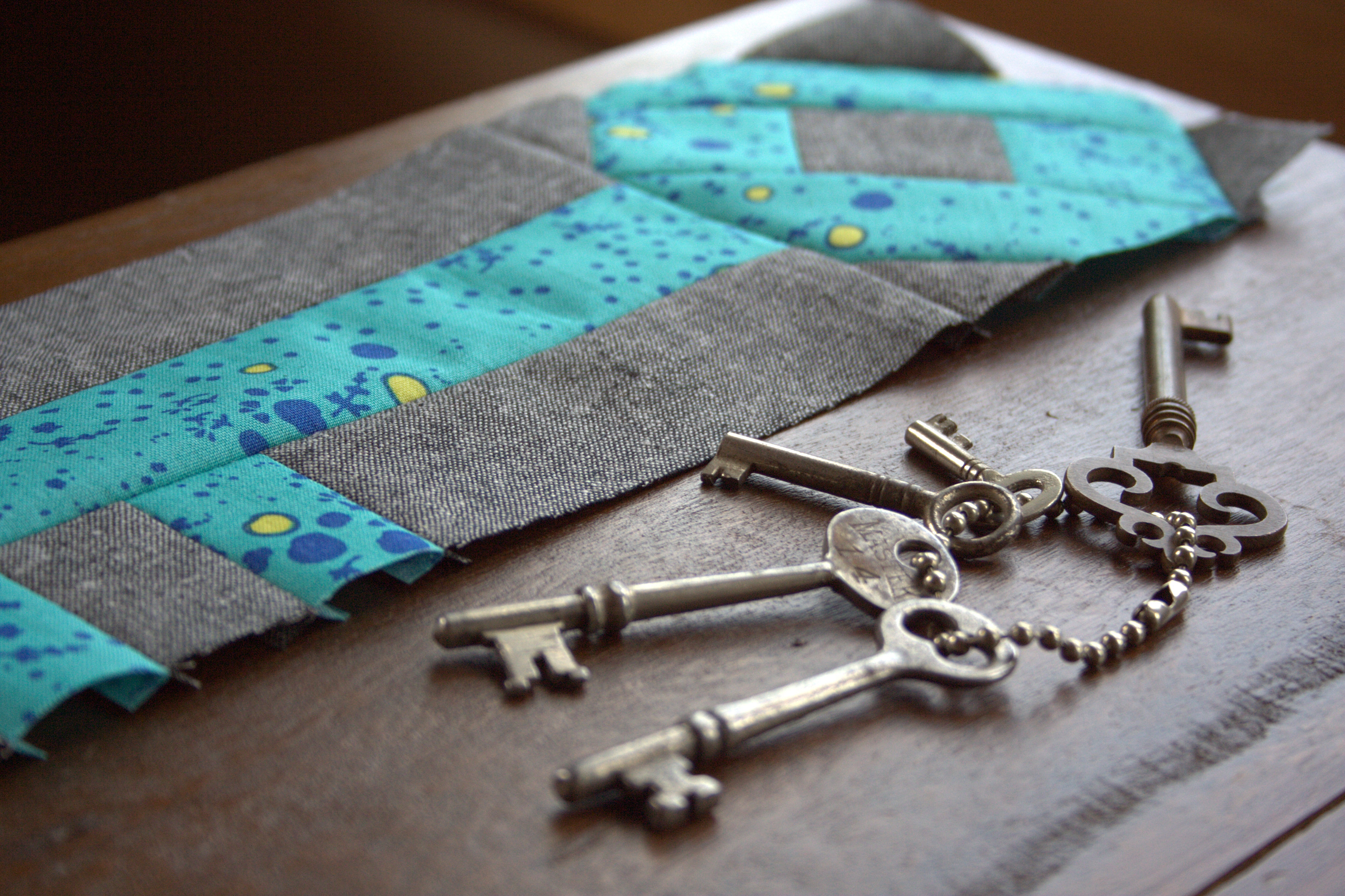
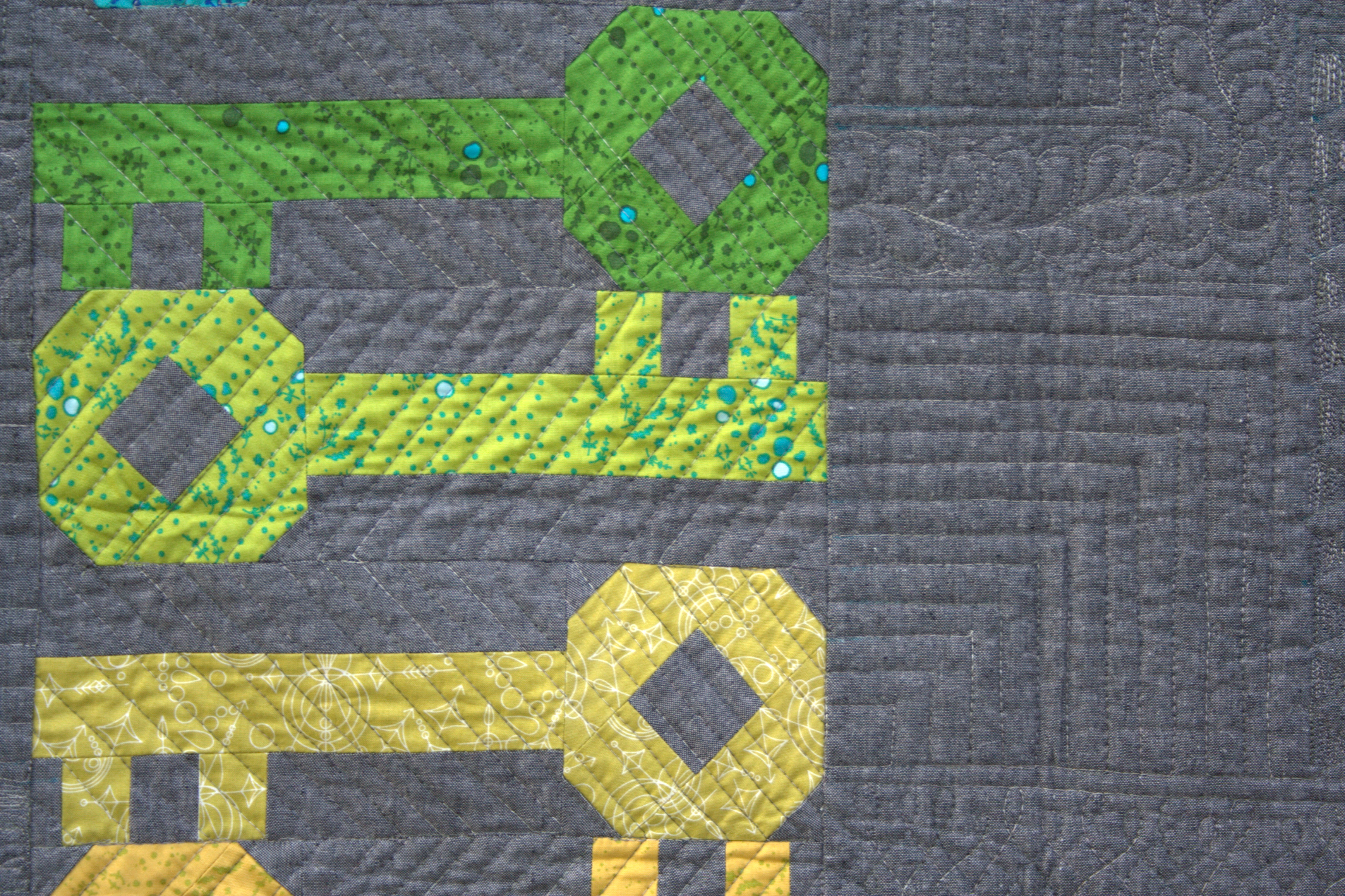
Unlocked single block artisticI’ve shown you tiny peeks at my quilt Unlocked, but really nothing that gave away more than the obvious: it features the full Mercury and Grove lines from Alison Glass’s 2015 Sun Prints, on a gorgeous Robert Kaufman Essex Yarn Dyed Linen in Charcoal background. I used my go-to thread panacea Aurifil Dove #2600 for piecing. It’s very scrap-friendly, since each key only needs a fat eighth of fabric. Unlocked is also super versatile since a simple adjustment of the number of keys made and surrounding background results in any sized quilt you want.

unlocked center

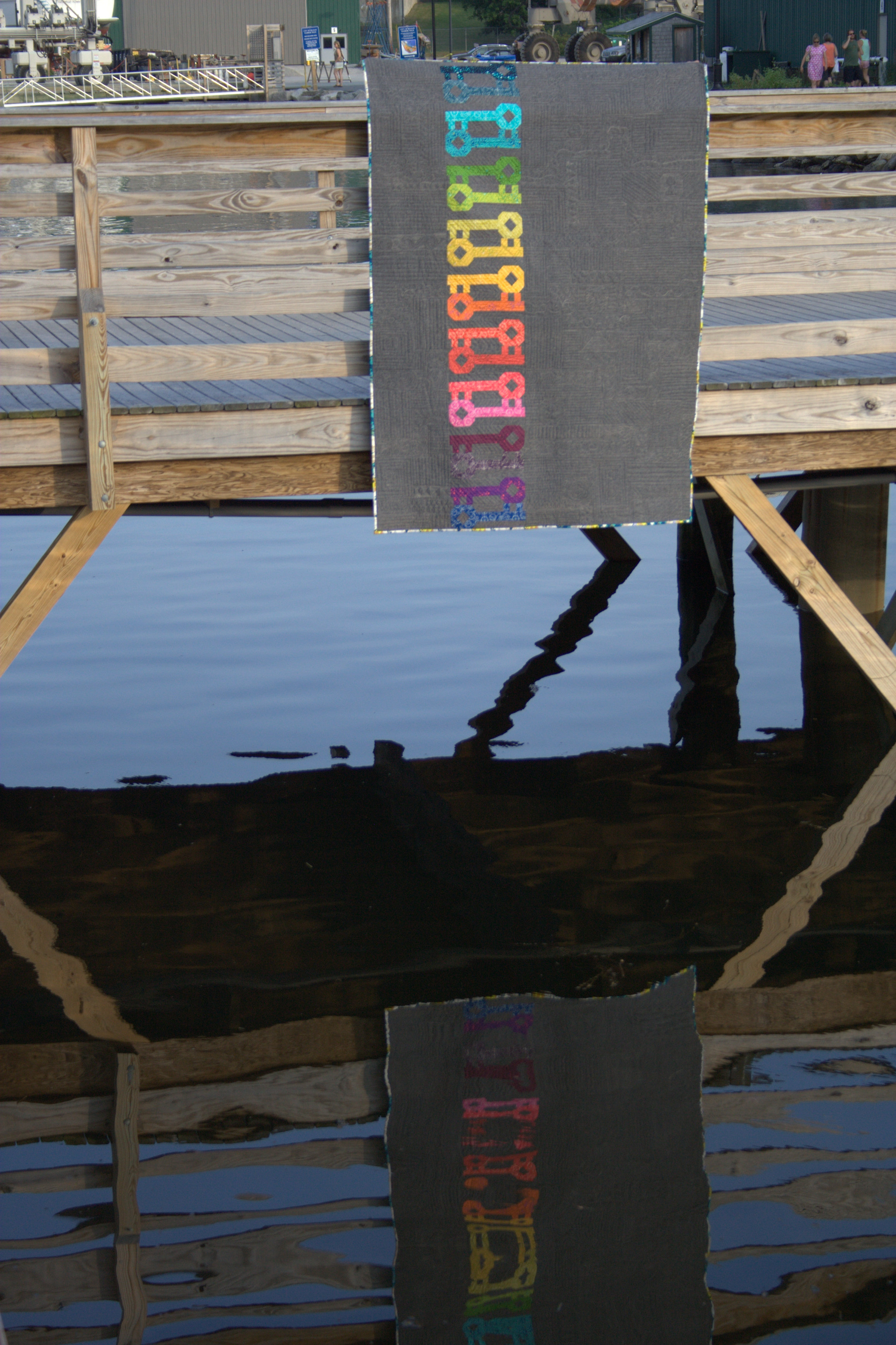
unlocked reflectionWhile I really wanted a castle door or giant gate in which to photograph this quilt, a trip to Ireland was not in the budget, so Belfast, Maine had to suffice. I have the world’s best quilt holding husband, who schlepped our kids and a quilt all over town at the whim of me, his crazy quilt-making photo-crazed wife. We got some great shots, though, so I’d say it was well worth it! He really should start a blog “Behind the Quilts”.

unlocked block detail

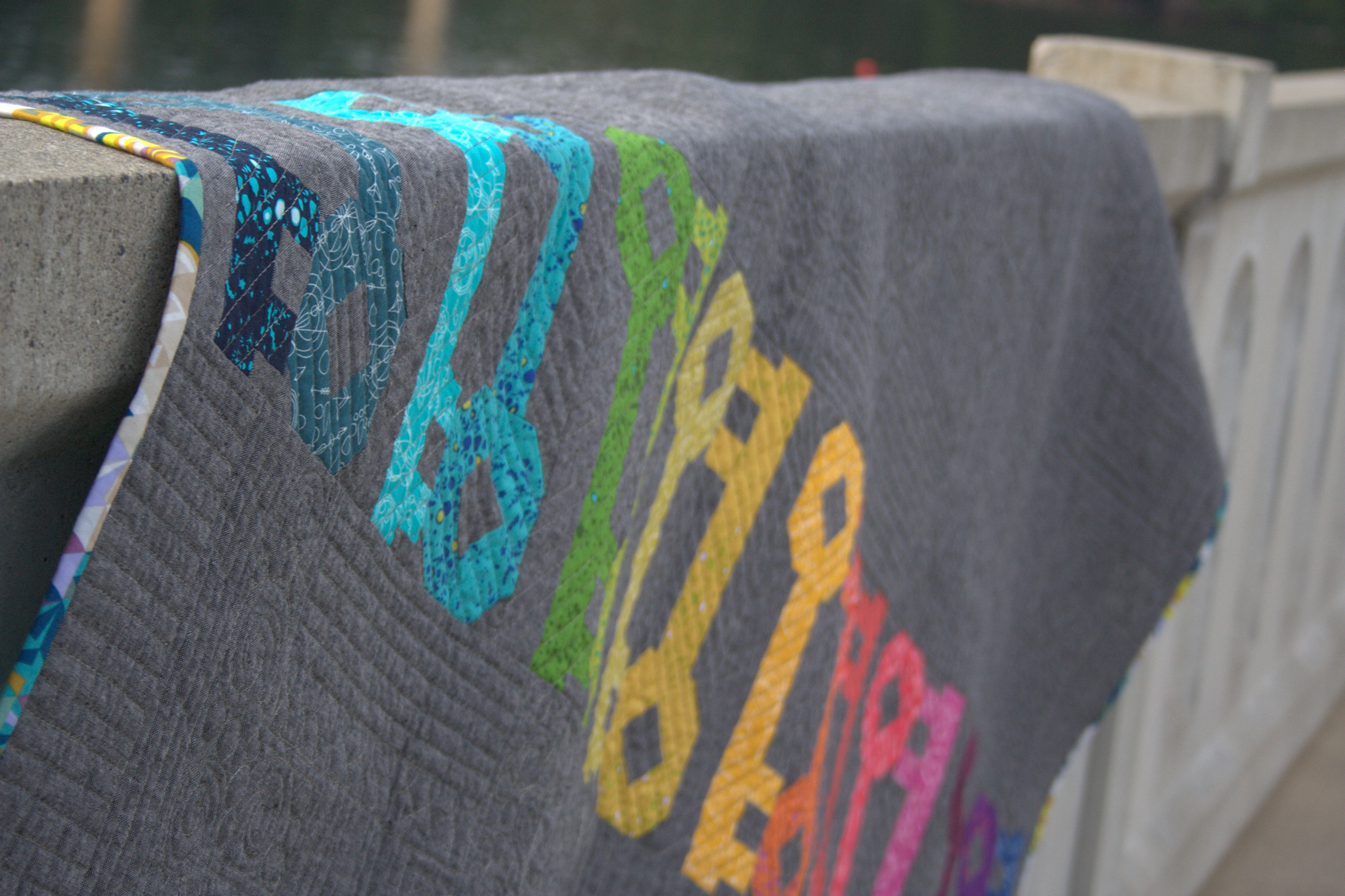
unlocked detailUnlocked was longarm quilted by my ever-talented friend Stephanie at Late Night Quilter and it looks amazing. She used the Cityscape Path straight line quilting style designed by Krista Withers and photos don’t even come close to doing it justice. I’m so grateful to Stephanie for quilting this, since I was able to finish the quilt top and mail it off to Stephanie right before giving birth to Finn. Then, she was able to quilt it and get it back to me a couple weeks postpartum so that I could bind it and photograph it in time for the publication deadline. Teamwork at its best!

Head on over to Make Modern and grab your copy of this fabulous modern quilting publication.

Hello, Love! Flimsy Finish & Pattern Release

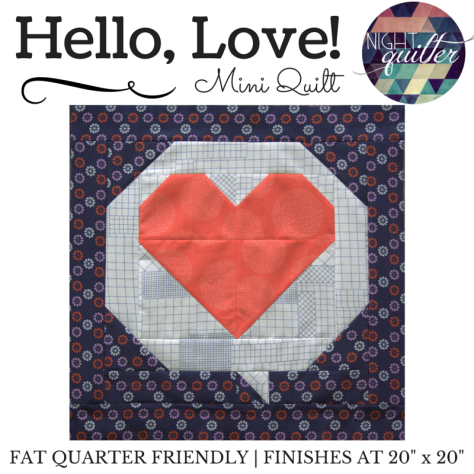
You’re probably familiar with the pinkalicious quilt I made for my sister in law a few months back. The heart in a speech bubble I designed for that quilt was begging to be made into a mini of its own, and I’m excited to announce that it’s ready for release!

Hello Love mini quilt patternI named this pattern Hello, Love! , which I, well… love! The mini quilt finishes at 20″x20″ and would also be perfect for a pillow or as part of a larger quilt. The pattern is my first publicly available traditionally pieced pattern (that’s right–it’s not paper pieced! *gasp*) and is fat quarter friendly. There are clear instructions for cutting and piecing, including diagrams and tips. The pattern also includes diagrams showing how to make two half square triangles (HST) at a time.

hello love mini quilt patternThis pattern is a great way to showcase your favorite fabrics, or show your love for anyone or anything. The heart is a great place to applique anything under the sun, be it the name of your bestie, your kiddos, your fur babies, or a picture of a unicorn, camera, or kale (don’t we all love kale?). Note that applique details are not included in the pattern.

Hello, Love! is available in my Craftsy store (and Payhip for those of you in the EU) and will be on sale for only $5 for the first week, after which it return to its normal price of $8.

hello love tester versions
Just a peek at some of the testers’ Hello Love minis! Makers left to right: Christopher @the_tattooed_quilter, Lisa @duhquilts, and Michelle @frustratedquilter.

Many thanks to my testers, who provided helpful feedback and spotted my late night typos. You may have seen a few of these minis around the Instagram world already, and can see more by checking out the tag #hellolovequilt. When you make your version, please tag #hellolovequilt and @nightquilter so that I can see!

I’m linking up my flimsy and pattern finish with Crazy Mom Quilts Finish it up Friday. I bought a new sewing machine, so I’m waiting until it arrives before I quilt this mini, but I just couldn’t wait to share the pattern! Enjoy, and I can’t wait to see what you create.

Lupine Season and a Summer Sale

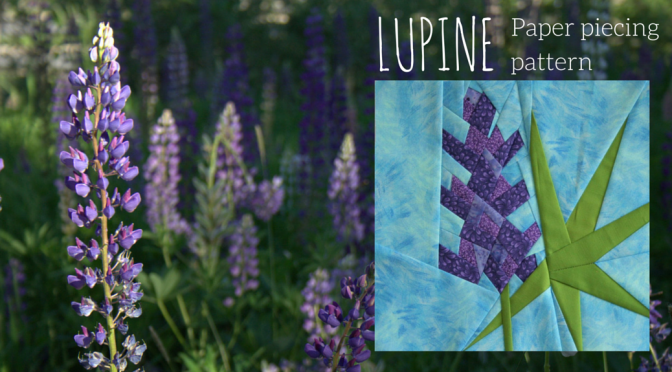
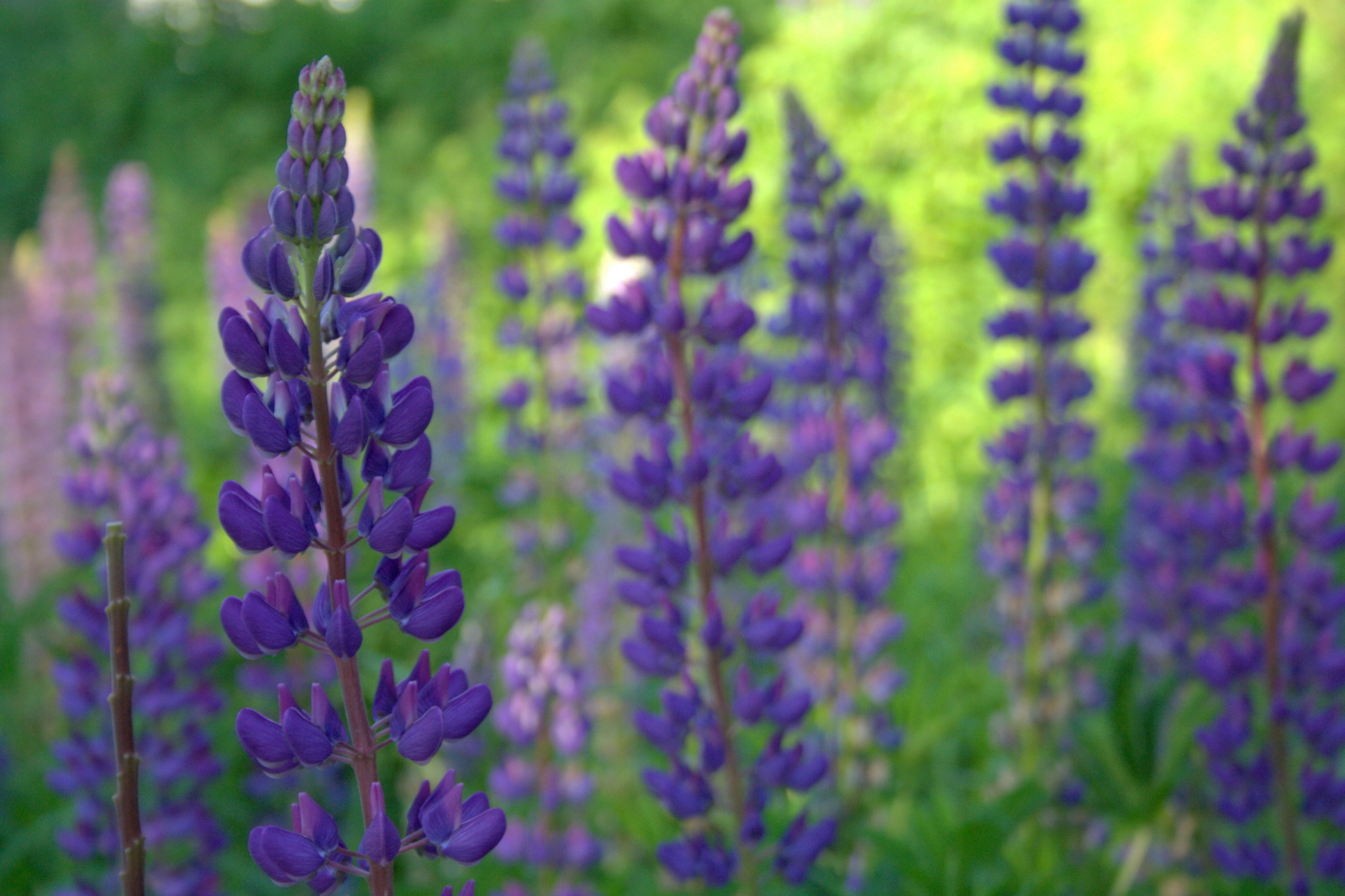
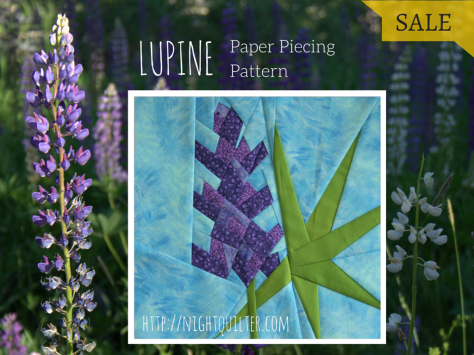
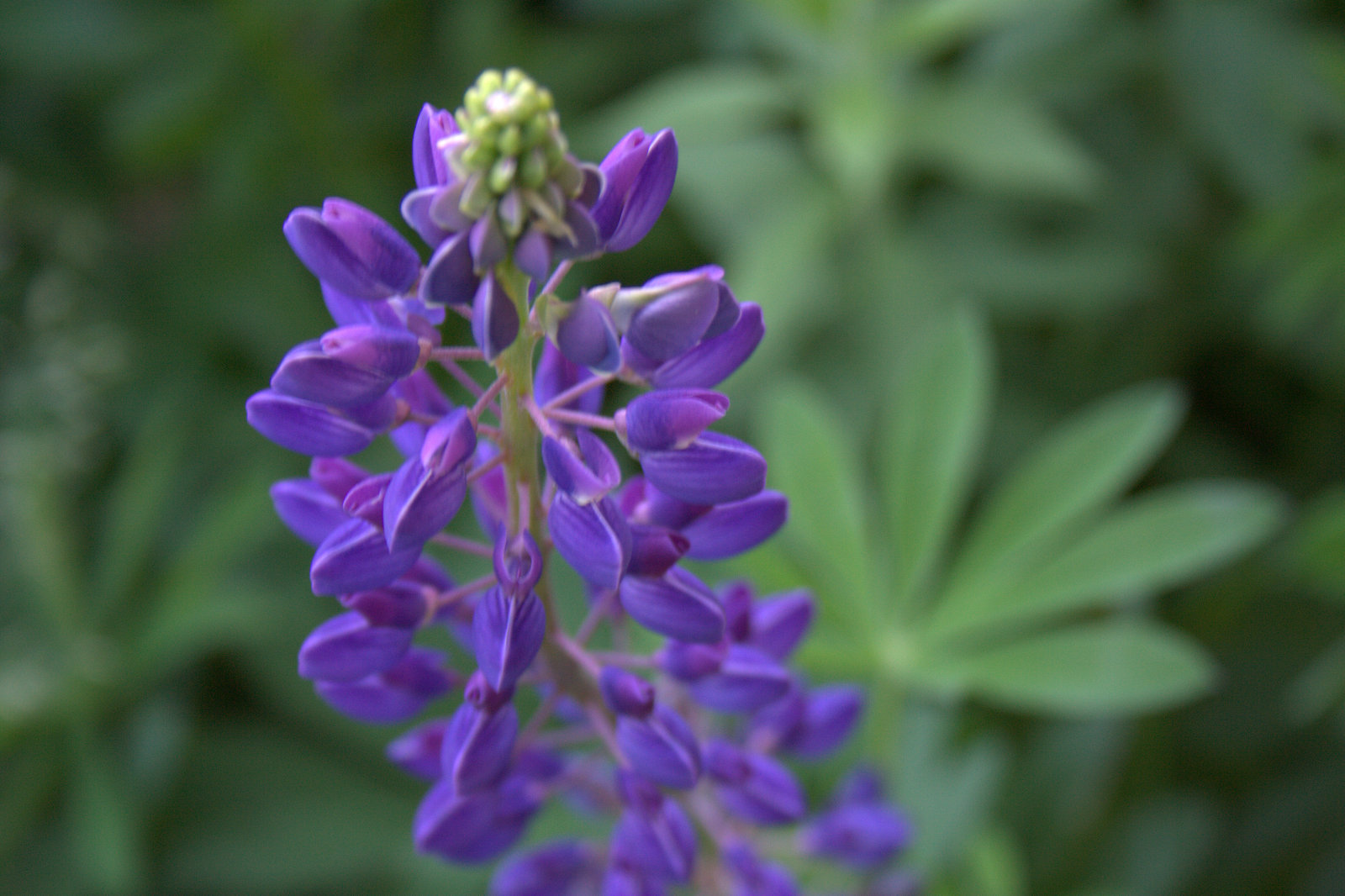
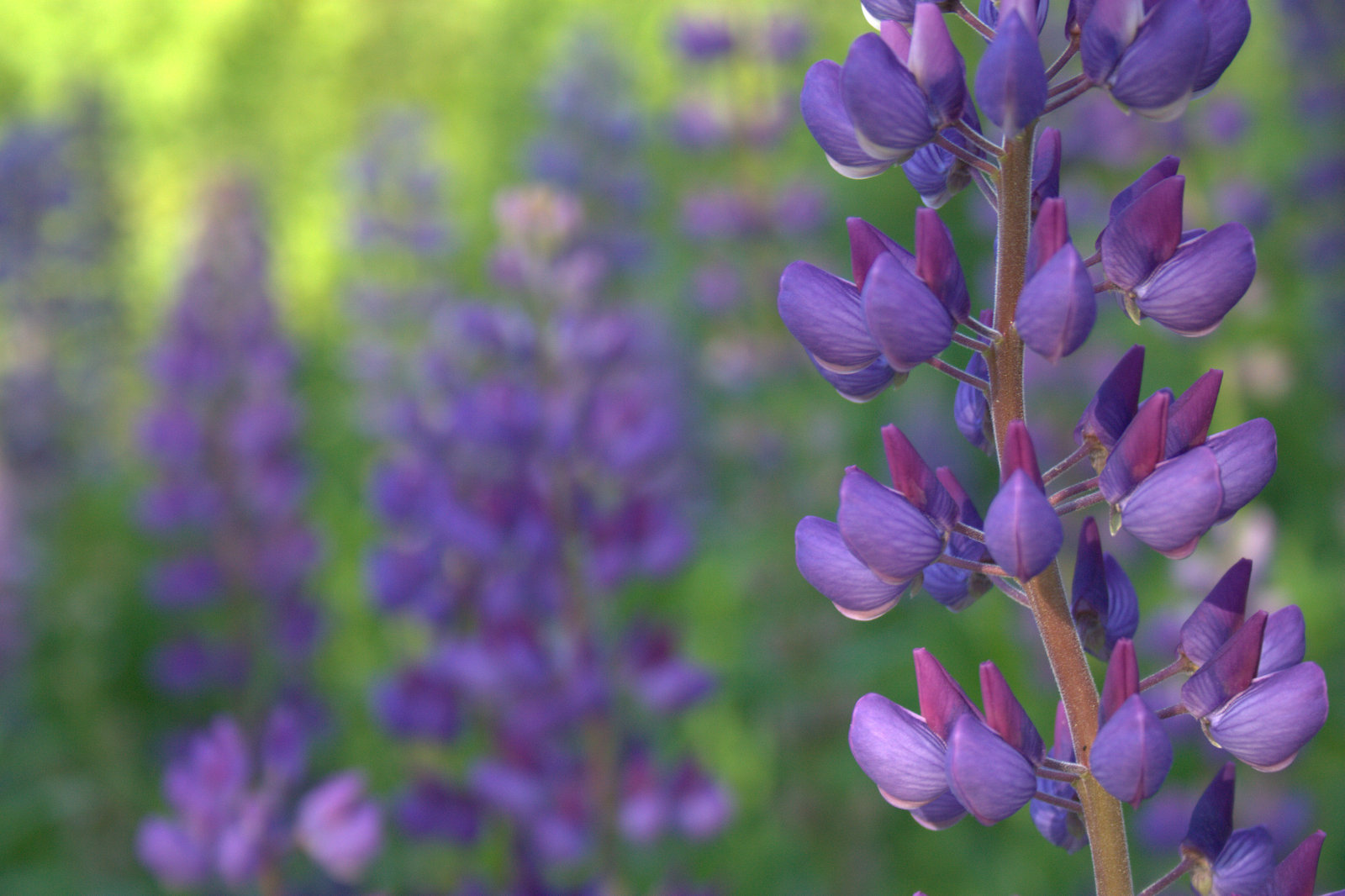
The lupines are in full bloom; some already on their way to seed. That means that country drives in our area are exceptionally beautiful, since lupines sprawl along roadways and in fields like a rolling purple sea, with splashes of pink and white. Summer is here!lupine in bloom maineLupine season makes me think of my paper pieced lupine pattern–one of the first ones I created, and still one of my favorites. I decided that summer is a great time for a sale, and what better inspiration than a field of lupine.  For the next month–through July 23rd–all of my summer themed paper piecing patterns will be on sale–nearly half off! Visit my Craftsy shop to peruse my patterns, add another fun project to your pile, and embrace summer!

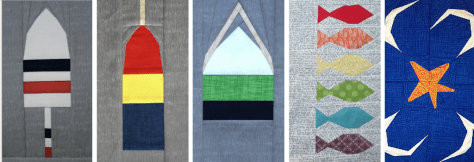
LUPINE foundation paper piecing pattern saleIn addition to my lupine pattern, my summer patterns include patterns for buoys, fishies, and some Matisse-style circling seagulls, with sale prices already reflected. If you’re new to foundation paper piecing, I created a beginner’s tutorial to take you step by step through the process HERE.

night quilter summer foundation paper piecing patterns sale

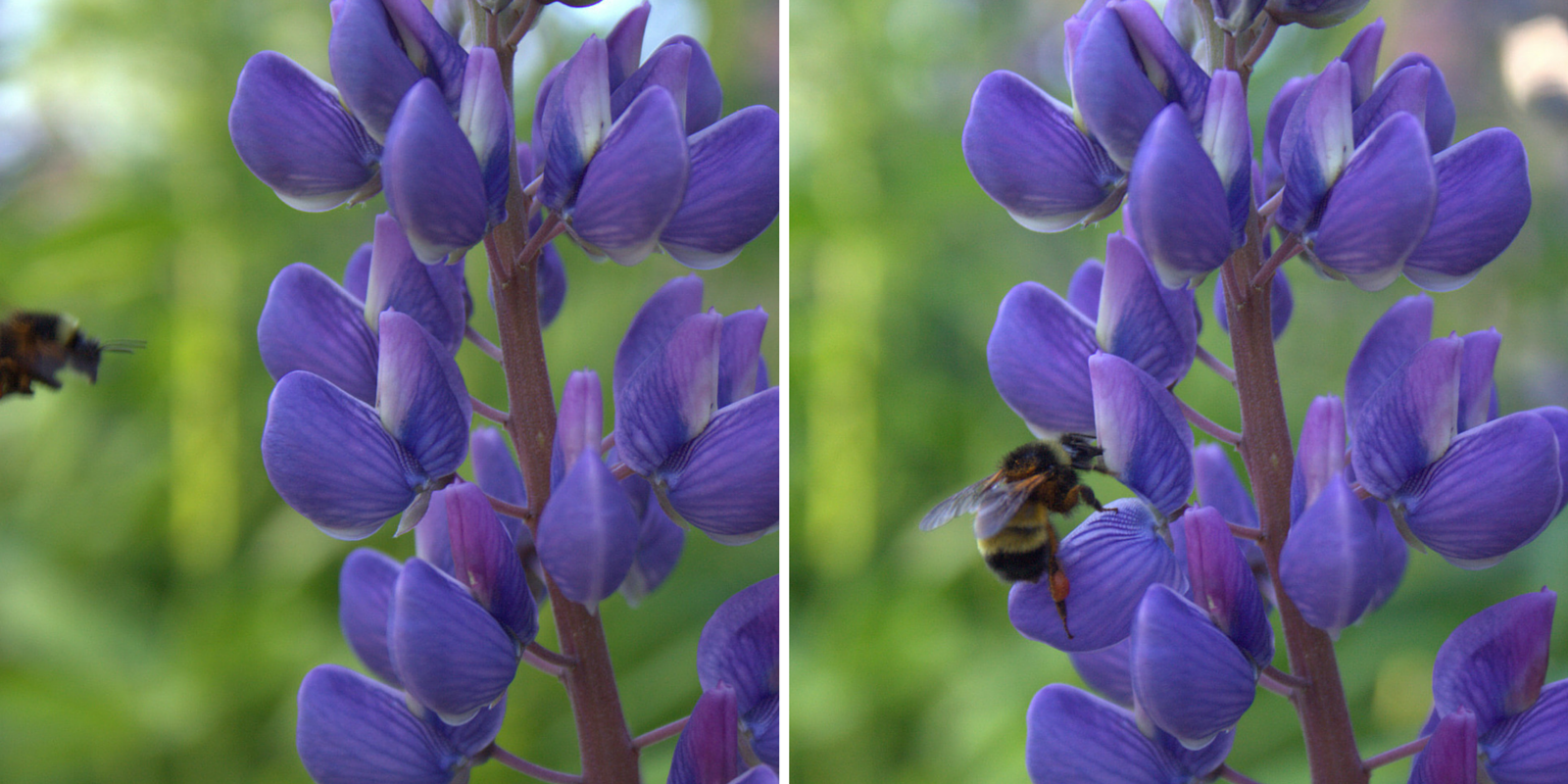
Last weekend while running errands as a family of five–it was my husband’s last day of paternity leave, so I wanted to make the most of it and run the errands I knew I would not be attempting for months with all three kids on my own: Target, especially–and after restocking chicken feed and laundry detergent, my awesome husband pulled off the road at a few stops so that I could get out and photograph the lupine fields. I’m always so inspired by the gorgeous beauty in nature, yet have learned to appreciate the fleeting nature of the sights. Before you know it, the lupines will go completely to seed and the next gorgeous wildflower will take its place.
lupine flower detail purple lupine field busy bee on lupineAhh, summertime! Enjoy the sale and please spread the word!